Smokeball and Thomson Reuters Partner to Provide Legal Tech Ecosystem
Smokeball and Thomson Reuters announced a partnership to provide a comprehensive legal technology ecosystem connecting the business and practice of law. The partnership will combine Smokeball's industry-leading practice management tools and AI matter assistant with Thomson Reuters CoCounsel Legal, the AI solution for authoritative legal research, document analysis, and drafting, into one integrated customer experience. Legal professionals will be able to leverage this partnership to deliver exceptional outcomes for their clients while saving time and reducing administrative tasks. Smokeball and Thomson Reuters are working together to create a seamless pathway for joint customers in the U.S. to access CoCounsel Legal-including Westlaw Advantage and Practical Law Dynamic Tool Set-and Smokeball through the platforms they already rely on. Initially, Thomson Reuters will launch a real-time data connector that syncs legal documents across platforms, allowing Smokeball users to push documents into CoCounsel Legal in bulk rather than uploading them one by one. Documents will flow directly from Smokeball into CoCounsel Legal, saving significant time and reducing the risk of errors or version mismatches. Further phases of integration are underway, with the trajectory pointing toward an experience where joint customers can access Thomson Reuters legal content, AI and know-how tools, combined with up-to-date matter facts and information in one seamless interface.
Trade with 70% Backtested Accuracy
Analyst Views on TRI

About TRI
About the author


WOODBRIDGE FIRM: CEO MICHAEL MEDLINE TO RUN FOR A POSITION ON THOMSON REUTERS' BOARD OF DIRECTORS DURING ANNUAL MEETING

CEO Announcement: Michael Medline, the CEO of Woodbridge Company, has announced his intention to stand for election to Thomson Reuters' Board of Directors.
Board of Directors: The election is part of the upcoming annual meeting for Thomson Reuters, where shareholders will vote on board members.
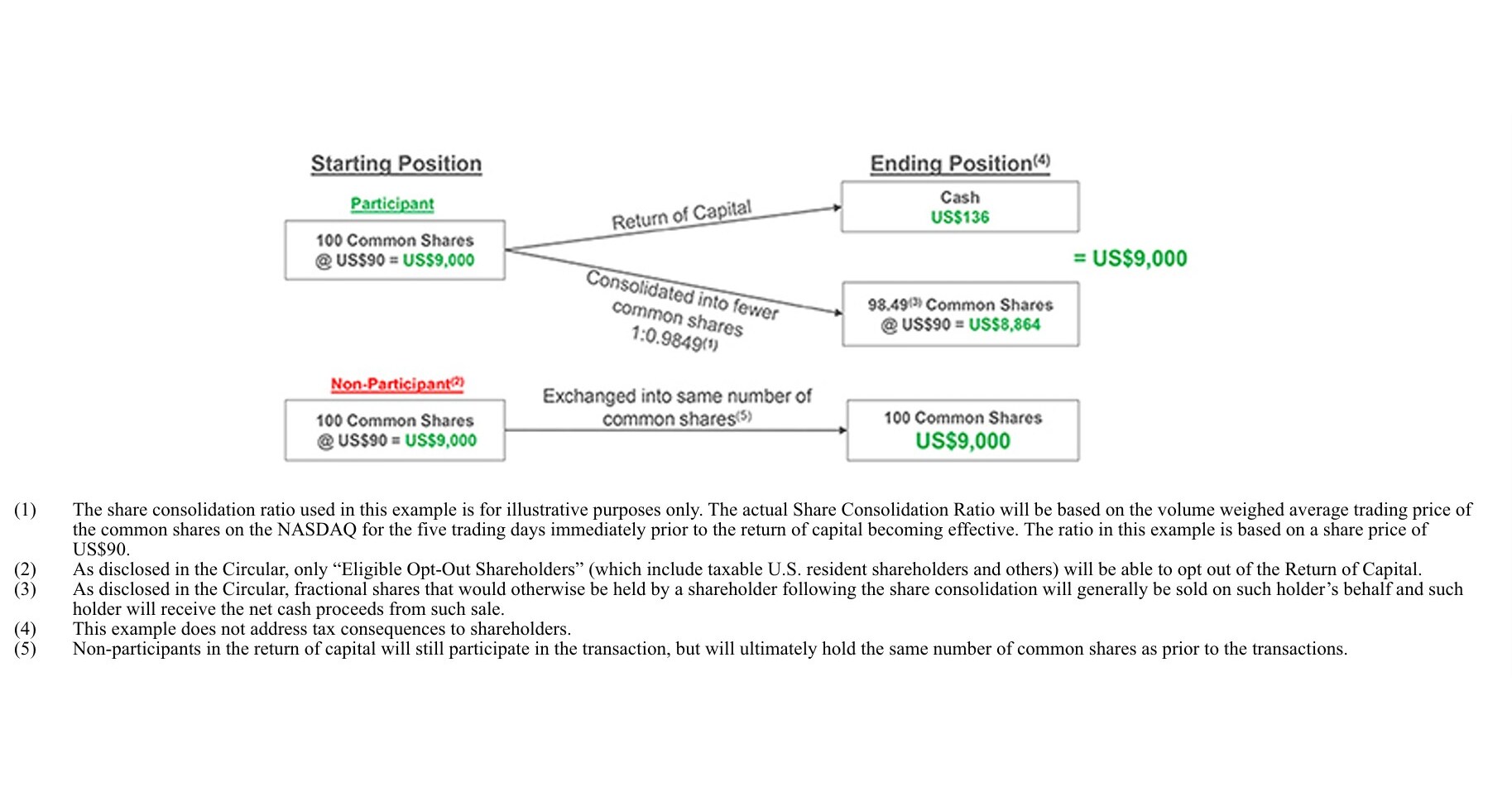
Thomson Reuters Reminds Shareholders to Opt-Out of Capital Return
- Capital Return Plan: Thomson Reuters announces a special cash distribution totaling $605 million, estimated at approximately $1.36 per share, providing non-Canadian tax residents the option to opt-out, thereby optimizing their tax liabilities.
- Eligibility Criteria: Only shareholders who are not residents of Canada and are subject to income tax in other jurisdictions can opt-out, indicating the company's focus on global shareholder tax interests and enhancing its international appeal.
- Share Consolidation Mechanism: Shareholders participating in the capital return will undergo share consolidation, while non-participants will retain their original share count, ensuring fairness in capital distribution while maintaining the stability of the company's equity structure.
- Tax Complexity Advisory: The company advises shareholders to carefully review the management proxy circular and consult financial and legal advisors to better understand the tax implications of the capital return and share consolidation, demonstrating the company's commitment to shareholder interests.

Thomson Reuters Reminds Shareholders to Opt-Out of Capital Return
- Capital Return Plan: Thomson Reuters announced a special cash distribution totaling $605 million, estimated at approximately $1.36 per share, aimed at providing tax optimization options for non-Canadian tax resident shareholders, thereby enhancing investment appeal.
- Opt-Out for Shareholders: Eligible shareholders can choose to opt-out of the capital return; while opting out means forfeiting the cash distribution, they will still participate in the share consolidation, resulting in an increase in their equity and voting interests in the company.
- Consolidation Ratio Calculation: Under the plan, non-participating shareholders' shares will be consolidated proportionally, ensuring their share count remains unchanged, while participating shareholders will see a reduction in their shares reflecting the capital return, ensuring fairness in the transaction.
- Tax Advisory: The company advises shareholders to carefully read the management proxy circular and consult financial and legal advisors before making decisions regarding the capital return and share consolidation, to understand the complex tax implications and ensure informed choices.

Outlook for the Business Services Industry

- Recovery Signals: The Services PMI at 54% and Manufacturing PMI at 52.7% in March, as reported by the Institute for Supply Management, indicate the business services sector's robust momentum in economic recovery, enhancing investor confidence in the industry.
- Financial Performance Rebound: In the post-pandemic era, industry revenues, operating income, and cash flows have not only recovered but surpassed pre-pandemic levels, reflecting strong financial health that supports sustained dividend payouts and boosts long-term investor confidence.
- AI-Driven Transformation: The rapid advancement of artificial intelligence and automation technologies is reshaping service delivery in the business sector, presenting efficiency gains and cost reductions while also posing challenges such as workforce displacement and the need for continuous upskilling, necessitating effective AI integration for competitive advantage.
- Market Underperformance: Despite signs of recovery, the Zacks Business Services industry has declined by 25.6% over the past 12 months, significantly underperforming the S&P 500's 32.5% growth, indicating weak near-term growth prospects for the sector.
BARCLAYS LOWERS THOMSON REUTERS CORP TARGET PRICE FROM $210 TO $170
- Barclays Target Price Adjustment: Barclays has reduced its target price for a specific stock from $210 to $170.
- Market Implications: This adjustment may reflect changing market conditions or company performance expectations.

Senators Raise Concerns Over Unemployment Benefit Systems
- Vendor Scrutiny: U.S. Senators Elizabeth Warren and Ron Wyden have sent letters to major technology vendors like Deloitte, Thomson Reuters, and Geographic Solutions, expressing concerns that their systems may disrupt unemployment benefits and demanding detailed operational insights.
- Black Box Risks: The letters highlight the risks of reliance on opaque systems from external vendors, which often do not disclose how eligibility or fraud determinations are made, potentially leaving eligible workers without necessary benefits due to algorithmic errors.
- AI Challenges: The senators emphasize that the increasing use of AI tools in unemployment systems has led to significant errors, such as incorrectly flagging legitimate claims as fraudulent, and system glitches that delay or halt payments, severely impacting workers' ability to meet basic needs.
- Transparency Demands: The letters request extensive information on how these companies design, test, and maintain their systems, including the data their algorithms rely on, error correction processes, and the level of state control over technology to ensure accuracy and timeliness in unemployment benefit payments.
WOODBRIDGE FIRM: CEO MICHAEL MEDLINE TO RUN FOR A POSITION ON THOMSON REUTERS' BOARD OF DIRECTORS DURING ANNUAL MEETING
CEO Announcement: Michael Medline, the CEO of Woodbridge Company, has announced his intention to stand for election to Thomson Reuters' Board of Directors.
Board of Directors: The election is part of the upcoming annual meeting for Thomson Reuters, where shareholders will vote on board members.
Thomson Reuters Reminds Shareholders to Opt-Out of Capital Return
- Capital Return Plan: Thomson Reuters announces a special cash distribution totaling $605 million, estimated at approximately $1.36 per share, providing non-Canadian tax residents the option to opt-out, thereby optimizing their tax liabilities.
- Eligibility Criteria: Only shareholders who are not residents of Canada and are subject to income tax in other jurisdictions can opt-out, indicating the company's focus on global shareholder tax interests and enhancing its international appeal.
- Share Consolidation Mechanism: Shareholders participating in the capital return will undergo share consolidation, while non-participants will retain their original share count, ensuring fairness in capital distribution while maintaining the stability of the company's equity structure.
- Tax Complexity Advisory: The company advises shareholders to carefully review the management proxy circular and consult financial and legal advisors to better understand the tax implications of the capital return and share consolidation, demonstrating the company's commitment to shareholder interests.
Thomson Reuters Reminds Shareholders to Opt-Out of Capital Return
- Capital Return Plan: Thomson Reuters announced a special cash distribution totaling $605 million, estimated at approximately $1.36 per share, aimed at providing tax optimization options for non-Canadian tax resident shareholders, thereby enhancing investment appeal.
- Opt-Out for Shareholders: Eligible shareholders can choose to opt-out of the capital return; while opting out means forfeiting the cash distribution, they will still participate in the share consolidation, resulting in an increase in their equity and voting interests in the company.
- Consolidation Ratio Calculation: Under the plan, non-participating shareholders' shares will be consolidated proportionally, ensuring their share count remains unchanged, while participating shareholders will see a reduction in their shares reflecting the capital return, ensuring fairness in the transaction.
- Tax Advisory: The company advises shareholders to carefully read the management proxy circular and consult financial and legal advisors before making decisions regarding the capital return and share consolidation, to understand the complex tax implications and ensure informed choices.
Outlook for the Business Services Industry
- Recovery Signals: The Services PMI at 54% and Manufacturing PMI at 52.7% in March, as reported by the Institute for Supply Management, indicate the business services sector's robust momentum in economic recovery, enhancing investor confidence in the industry.
- Financial Performance Rebound: In the post-pandemic era, industry revenues, operating income, and cash flows have not only recovered but surpassed pre-pandemic levels, reflecting strong financial health that supports sustained dividend payouts and boosts long-term investor confidence.
- AI-Driven Transformation: The rapid advancement of artificial intelligence and automation technologies is reshaping service delivery in the business sector, presenting efficiency gains and cost reductions while also posing challenges such as workforce displacement and the need for continuous upskilling, necessitating effective AI integration for competitive advantage.
- Market Underperformance: Despite signs of recovery, the Zacks Business Services industry has declined by 25.6% over the past 12 months, significantly underperforming the S&P 500's 32.5% growth, indicating weak near-term growth prospects for the sector.
BARCLAYS LOWERS THOMSON REUTERS CORP TARGET PRICE FROM $210 TO $170
- Barclays Target Price Adjustment: Barclays has reduced its target price for a specific stock from $210 to $170.
- Market Implications: This adjustment may reflect changing market conditions or company performance expectations.
Senators Raise Concerns Over Unemployment Benefit Systems
- Vendor Scrutiny: U.S. Senators Elizabeth Warren and Ron Wyden have sent letters to major technology vendors like Deloitte, Thomson Reuters, and Geographic Solutions, expressing concerns that their systems may disrupt unemployment benefits and demanding detailed operational insights.
- Black Box Risks: The letters highlight the risks of reliance on opaque systems from external vendors, which often do not disclose how eligibility or fraud determinations are made, potentially leaving eligible workers without necessary benefits due to algorithmic errors.
- AI Challenges: The senators emphasize that the increasing use of AI tools in unemployment systems has led to significant errors, such as incorrectly flagging legitimate claims as fraudulent, and system glitches that delay or halt payments, severely impacting workers' ability to meet basic needs.
- Transparency Demands: The letters request extensive information on how these companies design, test, and maintain their systems, including the data their algorithms rely on, error correction processes, and the level of state control over technology to ensure accuracy and timeliness in unemployment benefit payments.