Semiconductor Sector Continues Strong Growth
Written by Emily J. Thompson, Senior Investment Analyst
Updated: Feb 27 2026
0mins

Should l Buy TSM?
Source: Fool
- Sector Performance: Over the past three years, the PHLX Semiconductor Sector index has surged by 175%, significantly outperforming the S&P 500's 70% increase, highlighting the semiconductor industry's robust growth potential and market appeal.
- Company Performance Comparison: Nvidia's stock has skyrocketed over 700% in the past three years, while TSMC has also seen a respectable 311% increase, indicating substantial returns for investors amid soaring AI chip demand.
- Future Growth Expectations: Consensus estimates predict TSMC will achieve a 34% earnings increase in 2026, while Nvidia is expected to grow by 66% in fiscal 2027, reflecting Nvidia's dominant position in the AI chip market and its strong growth prospects.
- Market Opportunity Analysis: Nvidia anticipates a 40% compound annual growth rate in data center investments over the next five years, and as the world's largest semiconductor foundry, TSMC is also poised to benefit, further solidifying its market position.
Trade with 70% Backtested Accuracy
Stop guessing "Should I Buy TSM?" and start using high-conviction signals backed by rigorous historical data.
Sign up today to access powerful investing tools and make smarter, data-driven decisions.
Analyst Views on TSM
Wall Street analysts forecast TSM stock price to fall
8 Analyst Rating
7 Buy
1 Hold
0 Sell
Strong Buy
Current: 341.490

Low
63.24
Averages
313.46
High
390.00
Current: 341.490
Low
63.24
Averages
313.46
High
390.00
About TSM
Taiwan Semiconductor Manufacturing Co Ltd is a Taiwan-based integrated circuit foundry service provider. The Company is primarily engaged in integrated circuit manufacturing services. It offers advanced process technologies, specialised process solutions, advanced photomask and silicon stacking, and packaging-related technologies, while supporting a comprehensive design ecosystem. The Company's products serve diverse electronic sectors including artificial intelligence, high-performance computing, wired and wireless communications, automotive and industrial equipment, personal computing, information applications, consumer electronics, smart internet of things, and wearable devices.
About the author

Emily J. Thompson
Emily J. Thompson, a Chartered Financial Analyst (CFA) with 12 years in investment research, graduated with honors from the Wharton School. Specializing in industrial and technology stocks, she provides in-depth analysis for Intellectia’s earnings and market brief reports.

Taiwan Semiconductor Named One of the Best Stocks by Billionaire Steve Cohen

- Significant Shareholding Increase: Point72 Asset Management's latest filings for Q4 2025 reveal that it owns 4.6 million shares of TSMC, marking a 157% increase from Q3 2025, indicating a strong confidence in the company.
- Consistent Investment Trend: Since 2021, TSMC has been a constant presence in Point72's portfolio, reflecting its significance and attractiveness in the semiconductor industry amid ongoing technological advancements.
- Launch of 2nm Chip Production: TSMC officially commenced mass production of 2nm chips in January 2026, becoming the first company globally to achieve this milestone, which is expected to draw more institutional investor interest.
- High Demand and Profit Margins: Over 50% of the 2nm capacity has been pre-ordered by Apple, NVIDIA, and AMD, with wafers priced at $30,000, a 20% premium over the 3nm generation, significantly boosting the company's profit margins.
See More

Emerging Tech Stars in the Market

- TSMC's AI Potential: Taiwan Semiconductor Manufacturing (TSM), a global leader in chip manufacturing, holds a market cap of $1.8 trillion and is poised to benefit from broad market demand in AI chip production, particularly in smartphones and personal computers over the coming years.
- Broadcom's Custom Chip Advantage: Broadcom (AVGO) forecasts over $100 billion in AI chip revenue by 2027, successfully carving out a niche in the AI market with its custom chips designed for specific tasks, reflecting strong customer demand and market potential.
- Nebius Group's Rapid Growth: Nebius Group (NBIS) focuses on AI workloads, achieving annual recurring revenue of $1.25 billion in the recent year, with expectations to rise to $7 billion to $9 billion this year, showcasing its strong growth potential in the cloud computing sector.
- Market Environment Challenges: Despite concerns about the economy and geopolitical factors affecting the Magnificent Seven tech stocks, emerging companies like TSMC, Broadcom, and Nebius Group demonstrate robust growth potential, positioning themselves as future market leaders.
See More
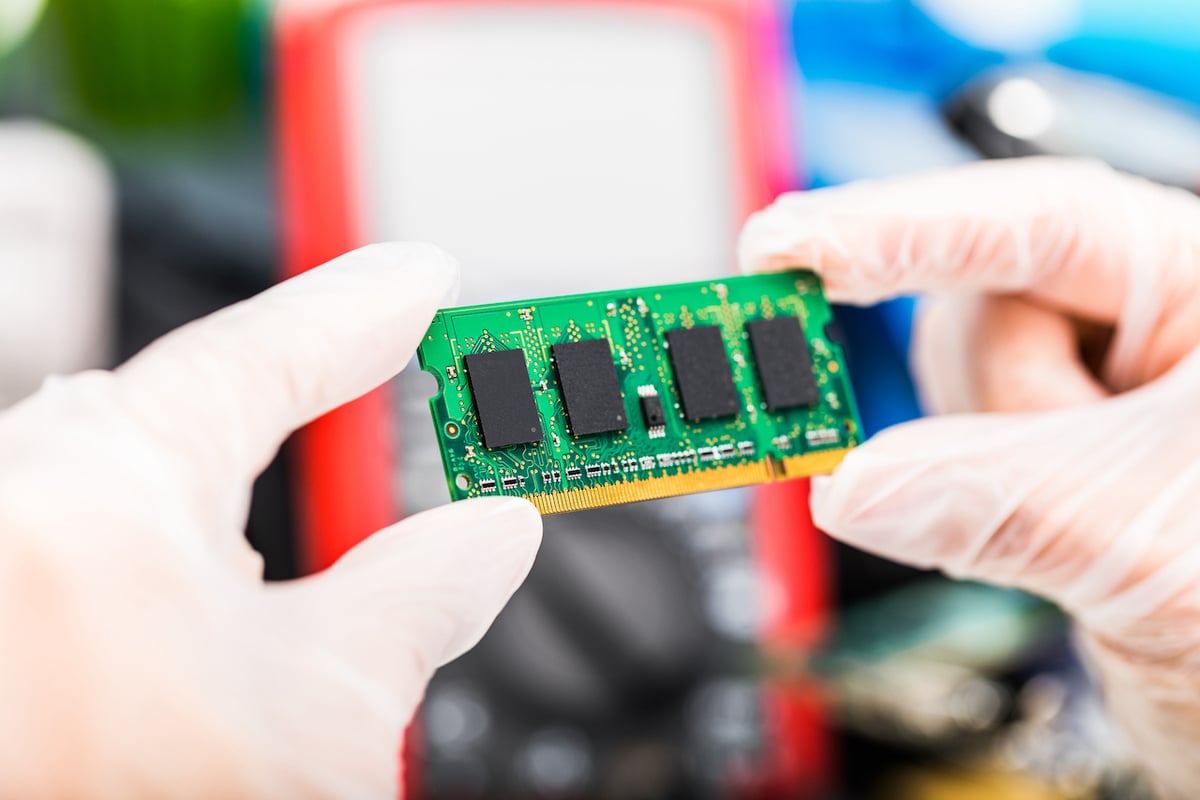
Can Micron Technology Reach a $1 Trillion Market Cap?

- Strong Market Demand: Micron Technology's market cap has surpassed $410 billion, with expectations of a 40% revenue growth by 2027 driven by surging AI demand, indicating a promising growth trajectory for the coming years.
- Share Buyback Plans: Management anticipates starting
See More

Micron Technology Faces Market Challenges and Opportunities
- Market Value Growth: Micron Technology's market cap has surpassed $410 billion, and despite a recent pullback, the company is expected to see significant profit growth by 2027 due to surging AI demand, indicating strong market potential.
- Supply Tightness Expectations: The company anticipates that supply-demand conditions will remain tight at least until 2027, with projected third-quarter revenue around $33.5 billion, a 40% increase from the second quarter, which will further drive stock price appreciation.
- Stock Buyback Plans: Cantor Fitzgerald expects Micron to initiate 'very aggressive' stock buybacks starting in December after restrictions from the CHIPS Act expire, which will help lift the stock price and provide lasting benefits to investors.
- Cyclical Market Risks: While Micron's growth outlook in the AI sector is optimistic, it still faces cyclical market volatility risks, and investors are concerned about potential cooling in pricing dynamics, necessitating close attention to how the company navigates these challenges.
See More

Investment Opportunities in the Great Rotation
- AI Infrastructure Growth: Broadcom forecasts its AI ASIC revenue will soar to over $100 billion next fiscal year, which is 1.5 times its total revenue from fiscal 2025, highlighting its critical role in AI infrastructure development and driving sustained growth for years to come.
- Data Center Networking Demand: With AI chip cluster sizes expected to exceed 1 million chips, Broadcom's leadership in the data center networking market will enable it to benefit by ensuring chips work efficiently together, thereby enhancing investment returns.
- Semiconductor Manufacturing Advantage: Taiwan Semiconductor Manufacturing Company (TSMC) holds a near-monopoly in advanced chip manufacturing, benefiting from both GPUs and AI ASICs, positioning itself at the forefront of every major chip trend over the next decade, driving continuous growth.
- High-Quality Growth Stocks: During market rotations, investors should focus on high-quality growth stocks like Broadcom and TSMC; while value and small-cap stocks gain traction, revenue and earnings growth remain the primary drivers of stock prices over the long term.
See More

AI Infrastructure Trends Favor Broadcom and TSMC
- Market Trends Favorable: With the rapid growth in AI infrastructure demand, Broadcom and TSMC are positioned to benefit significantly as core players, especially as market funds shift from large-cap tech stocks to value stocks, creating a buying opportunity amid stock price pullbacks.
- Chip Cluster Expansion: Broadcom anticipates AI chip clusters will exceed 1 million chips, which will greatly enhance the importance of data center networking; as a market leader, Broadcom will ensure efficient chip collaboration through its networking components, thereby maximizing client investment utilization.
- Surge in Custom Chip Demand: Broadcom leads in ASIC technology, forecasting its AI ASIC revenue to soar to over $100 billion next fiscal year, which is 1.5 times its total revenue for fiscal 2025, indicating strong market demand for custom AI chips.
- TSMC's Monopoly Advantage: As a near-monopoly in advanced chip manufacturing, TSMC is at the forefront of every major chip trend, particularly with the growing demand for AI workloads and high-performance CPUs, making its production capabilities crucial in the autonomous vehicle and robotaxi revolution.
See More
Taiwan Semiconductor Named One of the Best Stocks by Billionaire Steve Cohen
- Significant Shareholding Increase: Point72 Asset Management's latest filings for Q4 2025 reveal that it owns 4.6 million shares of TSMC, marking a 157% increase from Q3 2025, indicating a strong confidence in the company.
- Consistent Investment Trend: Since 2021, TSMC has been a constant presence in Point72's portfolio, reflecting its significance and attractiveness in the semiconductor industry amid ongoing technological advancements.
- Launch of 2nm Chip Production: TSMC officially commenced mass production of 2nm chips in January 2026, becoming the first company globally to achieve this milestone, which is expected to draw more institutional investor interest.
- High Demand and Profit Margins: Over 50% of the 2nm capacity has been pre-ordered by Apple, NVIDIA, and AMD, with wafers priced at $30,000, a 20% premium over the 3nm generation, significantly boosting the company's profit margins.
See More
Emerging Tech Stars in the Market
- TSMC's AI Potential: Taiwan Semiconductor Manufacturing (TSM), a global leader in chip manufacturing, holds a market cap of $1.8 trillion and is poised to benefit from broad market demand in AI chip production, particularly in smartphones and personal computers over the coming years.
- Broadcom's Custom Chip Advantage: Broadcom (AVGO) forecasts over $100 billion in AI chip revenue by 2027, successfully carving out a niche in the AI market with its custom chips designed for specific tasks, reflecting strong customer demand and market potential.
- Nebius Group's Rapid Growth: Nebius Group (NBIS) focuses on AI workloads, achieving annual recurring revenue of $1.25 billion in the recent year, with expectations to rise to $7 billion to $9 billion this year, showcasing its strong growth potential in the cloud computing sector.
- Market Environment Challenges: Despite concerns about the economy and geopolitical factors affecting the Magnificent Seven tech stocks, emerging companies like TSMC, Broadcom, and Nebius Group demonstrate robust growth potential, positioning themselves as future market leaders.
See More
Can Micron Technology Reach a $1 Trillion Market Cap?
- Strong Market Demand: Micron Technology's market cap has surpassed $410 billion, with expectations of a 40% revenue growth by 2027 driven by surging AI demand, indicating a promising growth trajectory for the coming years.
- Share Buyback Plans: Management anticipates starting
See More
Micron Technology Faces Market Challenges and Opportunities
- Market Value Growth: Micron Technology's market cap has surpassed $410 billion, and despite a recent pullback, the company is expected to see significant profit growth by 2027 due to surging AI demand, indicating strong market potential.
- Supply Tightness Expectations: The company anticipates that supply-demand conditions will remain tight at least until 2027, with projected third-quarter revenue around $33.5 billion, a 40% increase from the second quarter, which will further drive stock price appreciation.
- Stock Buyback Plans: Cantor Fitzgerald expects Micron to initiate 'very aggressive' stock buybacks starting in December after restrictions from the CHIPS Act expire, which will help lift the stock price and provide lasting benefits to investors.
- Cyclical Market Risks: While Micron's growth outlook in the AI sector is optimistic, it still faces cyclical market volatility risks, and investors are concerned about potential cooling in pricing dynamics, necessitating close attention to how the company navigates these challenges.
See More
Investment Opportunities in the Great Rotation
- AI Infrastructure Growth: Broadcom forecasts its AI ASIC revenue will soar to over $100 billion next fiscal year, which is 1.5 times its total revenue from fiscal 2025, highlighting its critical role in AI infrastructure development and driving sustained growth for years to come.
- Data Center Networking Demand: With AI chip cluster sizes expected to exceed 1 million chips, Broadcom's leadership in the data center networking market will enable it to benefit by ensuring chips work efficiently together, thereby enhancing investment returns.
- Semiconductor Manufacturing Advantage: Taiwan Semiconductor Manufacturing Company (TSMC) holds a near-monopoly in advanced chip manufacturing, benefiting from both GPUs and AI ASICs, positioning itself at the forefront of every major chip trend over the next decade, driving continuous growth.
- High-Quality Growth Stocks: During market rotations, investors should focus on high-quality growth stocks like Broadcom and TSMC; while value and small-cap stocks gain traction, revenue and earnings growth remain the primary drivers of stock prices over the long term.
See More
AI Infrastructure Trends Favor Broadcom and TSMC
- Market Trends Favorable: With the rapid growth in AI infrastructure demand, Broadcom and TSMC are positioned to benefit significantly as core players, especially as market funds shift from large-cap tech stocks to value stocks, creating a buying opportunity amid stock price pullbacks.
- Chip Cluster Expansion: Broadcom anticipates AI chip clusters will exceed 1 million chips, which will greatly enhance the importance of data center networking; as a market leader, Broadcom will ensure efficient chip collaboration through its networking components, thereby maximizing client investment utilization.
- Surge in Custom Chip Demand: Broadcom leads in ASIC technology, forecasting its AI ASIC revenue to soar to over $100 billion next fiscal year, which is 1.5 times its total revenue for fiscal 2025, indicating strong market demand for custom AI chips.
- TSMC's Monopoly Advantage: As a near-monopoly in advanced chip manufacturing, TSMC is at the forefront of every major chip trend, particularly with the growing demand for AI workloads and high-performance CPUs, making its production capabilities crucial in the autonomous vehicle and robotaxi revolution.
See More