Roomba's bankruptcy could have far-reaching effects beyond just one vacuum manufacturer.
iRobot's Bankruptcy: iRobot, the maker of Roomba, has filed for bankruptcy with significant debts and assets, largely due to competition from cheaper knock-offs and failed acquisition attempts by Amazon, which regulators blocked.
Regulatory Impact on M&A: Experts argue that regulatory scrutiny of mergers and acquisitions is harming struggling companies like iRobot, as it prevents potential buyouts that could save them, ultimately benefiting foreign competitors instead.
Trade Policy Effects: iRobot's financial troubles were exacerbated by U.S. trade policies, including tariffs on imports from Vietnam, which increased costs and contributed to its liquidity issues.
Future of Tech Acquisitions: The current regulatory environment may lead to more bankruptcies in the tech sector, as companies face challenges in finding viable exit strategies, pushing them towards complex and inefficient solutions to survive.
Trade with 70% Backtested Accuracy
Analyst Views on AMZN

About AMZN
About the author

Amazon's AWS Business Grows 28%, Fastest in 15 Quarters

- AWS Growth Surge: Amazon's AWS cloud business achieved a 28% year-over-year growth in Q1, reaching $37.6 billion, marking its fastest pace in 15 quarters, which underscores its strong competitive position in the cloud market and is expected to drive further revenue growth.
- Custom Chip Revenue: Amazon's custom chips now generate over $20 billion in annual revenue, up nearly 40% from the previous quarter, enhancing its cost control in cloud services and laying a foundation for future profit growth.
- Capital Expenditure Plans: Amazon plans to invest approximately $200 billion in capital expenditures by 2026, which will pressure short-term free cash flow; however, the company believes this investment is essential for long-term growth, particularly in AWS and AI.
- Optimistic Market Outlook: Despite facing market volatility and rising costs, Amazon's cloud platform remains the largest globally, with a backlog of $364 billion, indicating strong market demand and significant growth potential ahead.
Amazon Launches Next-Gen Cloud Instances with Enhanced Performance
- Performance Boost: Amazon announced the general availability of its AWS Graviton5-powered M9g and M9gd instances, which deliver up to 25% better compute performance than the previous generation, significantly enhancing the competitiveness of its cloud services.
- AI Optimization: The new instances are designed for the demands of agentic AI, featuring 192 cores and a 5x larger L3 cache, supporting DDR5-8800 memory and PCIe Gen 6, enabling acceleration of machine learning inference and database performance by up to 30%.
- Architectural Efficiency: Built on 3nm technology, the new architecture achieves a 33% reduction in inter-core latency and increases network and storage bandwidth, ensuring high performance and energy efficiency under heavy workloads.
- Enhanced Security: The introduction of the Nitro Isolation Engine through the sixth-generation AWS Nitro System employs formal verification and mathematical proofs to ensure strict isolation between virtual machines, protecting customer data from unauthorized access and further solidifying AWS's position in sensitive sectors like government and finance.

SpaceX Faces Market Cap Fluctuations and Challenges Post-IPO


- Market Cap Fluctuations: Since its IPO on June 12, SpaceX briefly surpassed Microsoft and Amazon in market capitalization, but has since fallen 18% from its intraday high, indicating market concerns about its profitability prospects.
- Operational Losses: The company reported an operational loss of $2.59 billion in 2025 and a further loss of $1.94 billion for Q1 2026, yet some investors remain optimistic about its growth potential, particularly from the expansion of its Starlink network.
- Light Pollution Challenges: By the end of 2025, SpaceX had launched 9,600 Starlink satellites, representing 75% of active maneuverable satellites, but increasing light pollution poses significant challenges for future AI satellite deployments.
- Future Goals: SpaceX aims to achieve an annualized orbital AI compute capacity of 1 terawatt by 2030, despite facing challenges related to light pollution and energy bottlenecks, necessitating close attention to how it addresses these issues for sustained long-term growth.

SpaceX Faces Financial Challenges Amid Future Growth Prospects

- Financial Losses: SpaceX reported an operational loss of $2.59 billion in 2025 and $1.94 billion in Q1 2026, indicating that while the company has significant future growth potential, it currently faces severe financial challenges.
- Satellite Deployment Plans: The company aims to achieve an annualized AI compute capacity of 1 GW by the end of 2027, scaling to 1 TW by 2030, but this ambitious goal is hindered by light pollution and energy bottlenecks.
- Light Pollution Concerns: The plan to deploy AI compute satellites in sun-synchronous orbit could lead to significant light pollution, adversely affecting astronomical research and potentially provoking public backlash.
- Simplified Technology: Unlike Starlink satellites, the AI satellites are expected to have a simpler design with a wingspan of 70 meters and a height of 20 meters, aiming to reduce production costs and enhance operational efficiency.
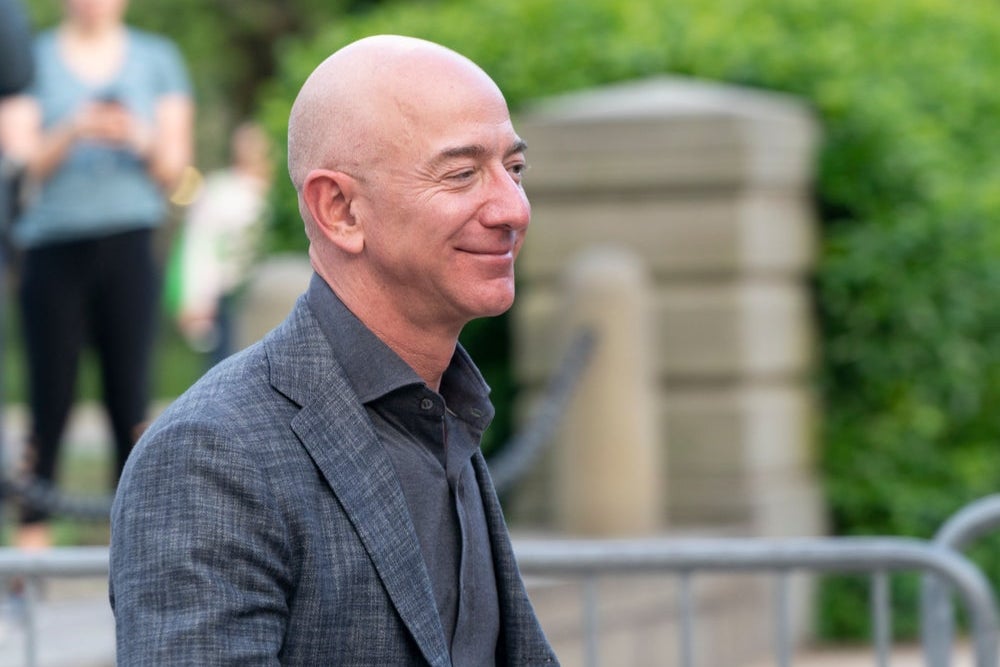
Amazon's Cloud Services Accelerate Growth Amid Market Volatility
- Cloud Revenue Surge: Amazon's first-quarter AWS revenue rose 28% year-over-year to $37.6 billion, marking its fastest growth in 15 quarters and demonstrating strong competitiveness in the cloud computing market.
- Significant Profit Contribution: AWS accounted for 21% of Amazon's total revenue of $181.5 billion in the first quarter but contributed approximately 59% of operating income, boosting the company's overall operating margin to a record 13.1%, reflecting its robust profitability.
- Capital Expenditure Plans: Amazon plans to invest about $200 billion in capital expenditures by 2026, with $43.2 billion spent in the first quarter primarily on AWS and AI, although this has led to a significant reduction in free cash flow to about $1 billion.
- Chip Design Advantage: Amazon's custom chips now generate over $20 billion in annual revenue, up nearly 40% from the previous quarter, allowing the company to reduce reliance on external suppliers while saving tens of billions in capital expenditures, further enhancing AWS's margins.
Netflix's Strategic Decisions on Warner and Roku Acquisitions Analyzed

- Warner Acquisition Bid: Netflix's initial bid of $82.7 billion for Warner Bros. Discovery was initially accepted, but ultimately lost to Paramount's $110.9 billion offer, reflecting Netflix's cautious and rational approach in competitive bidding scenarios.
- Roku Acquisition Attempt: Although Netflix's interest in acquiring Roku was less publicized, its pursuit indicates a strategic focus on hardware platforms; however, Roku was ultimately acquired by Fox for $22 billion, highlighting Netflix's conservative strategy in hardware ventures.
- Content Investment Strategy: Netflix's release of 'K-Pop Demon Hunters' last year, which became its most-watched film with 325.1 million views, illustrates its success in original content, indicating that while acquiring Warner's content library would have been beneficial, it was not essential for Netflix's strategy.
- Market Position and Profitability: With over 325 million subscribers globally, Netflix maintains a significant lead over Amazon's 250 million and Disney's 200 million, showcasing its strength in content investment and profitability, with a net profit margin of approximately 28%, far exceeding Roku's 2%.
Amazon's AWS Business Grows 28%, Fastest in 15 Quarters
- AWS Growth Surge: Amazon's AWS cloud business achieved a 28% year-over-year growth in Q1, reaching $37.6 billion, marking its fastest pace in 15 quarters, which underscores its strong competitive position in the cloud market and is expected to drive further revenue growth.
- Custom Chip Revenue: Amazon's custom chips now generate over $20 billion in annual revenue, up nearly 40% from the previous quarter, enhancing its cost control in cloud services and laying a foundation for future profit growth.
- Capital Expenditure Plans: Amazon plans to invest approximately $200 billion in capital expenditures by 2026, which will pressure short-term free cash flow; however, the company believes this investment is essential for long-term growth, particularly in AWS and AI.
- Optimistic Market Outlook: Despite facing market volatility and rising costs, Amazon's cloud platform remains the largest globally, with a backlog of $364 billion, indicating strong market demand and significant growth potential ahead.
Amazon Launches Next-Gen Cloud Instances with Enhanced Performance
- Performance Boost: Amazon announced the general availability of its AWS Graviton5-powered M9g and M9gd instances, which deliver up to 25% better compute performance than the previous generation, significantly enhancing the competitiveness of its cloud services.
- AI Optimization: The new instances are designed for the demands of agentic AI, featuring 192 cores and a 5x larger L3 cache, supporting DDR5-8800 memory and PCIe Gen 6, enabling acceleration of machine learning inference and database performance by up to 30%.
- Architectural Efficiency: Built on 3nm technology, the new architecture achieves a 33% reduction in inter-core latency and increases network and storage bandwidth, ensuring high performance and energy efficiency under heavy workloads.
- Enhanced Security: The introduction of the Nitro Isolation Engine through the sixth-generation AWS Nitro System employs formal verification and mathematical proofs to ensure strict isolation between virtual machines, protecting customer data from unauthorized access and further solidifying AWS's position in sensitive sectors like government and finance.
SpaceX Faces Market Cap Fluctuations and Challenges Post-IPO
- Market Cap Fluctuations: Since its IPO on June 12, SpaceX briefly surpassed Microsoft and Amazon in market capitalization, but has since fallen 18% from its intraday high, indicating market concerns about its profitability prospects.
- Operational Losses: The company reported an operational loss of $2.59 billion in 2025 and a further loss of $1.94 billion for Q1 2026, yet some investors remain optimistic about its growth potential, particularly from the expansion of its Starlink network.
- Light Pollution Challenges: By the end of 2025, SpaceX had launched 9,600 Starlink satellites, representing 75% of active maneuverable satellites, but increasing light pollution poses significant challenges for future AI satellite deployments.
- Future Goals: SpaceX aims to achieve an annualized orbital AI compute capacity of 1 terawatt by 2030, despite facing challenges related to light pollution and energy bottlenecks, necessitating close attention to how it addresses these issues for sustained long-term growth.
SpaceX Faces Financial Challenges Amid Future Growth Prospects
- Financial Losses: SpaceX reported an operational loss of $2.59 billion in 2025 and $1.94 billion in Q1 2026, indicating that while the company has significant future growth potential, it currently faces severe financial challenges.
- Satellite Deployment Plans: The company aims to achieve an annualized AI compute capacity of 1 GW by the end of 2027, scaling to 1 TW by 2030, but this ambitious goal is hindered by light pollution and energy bottlenecks.
- Light Pollution Concerns: The plan to deploy AI compute satellites in sun-synchronous orbit could lead to significant light pollution, adversely affecting astronomical research and potentially provoking public backlash.
- Simplified Technology: Unlike Starlink satellites, the AI satellites are expected to have a simpler design with a wingspan of 70 meters and a height of 20 meters, aiming to reduce production costs and enhance operational efficiency.
Amazon's Cloud Services Accelerate Growth Amid Market Volatility
- Cloud Revenue Surge: Amazon's first-quarter AWS revenue rose 28% year-over-year to $37.6 billion, marking its fastest growth in 15 quarters and demonstrating strong competitiveness in the cloud computing market.
- Significant Profit Contribution: AWS accounted for 21% of Amazon's total revenue of $181.5 billion in the first quarter but contributed approximately 59% of operating income, boosting the company's overall operating margin to a record 13.1%, reflecting its robust profitability.
- Capital Expenditure Plans: Amazon plans to invest about $200 billion in capital expenditures by 2026, with $43.2 billion spent in the first quarter primarily on AWS and AI, although this has led to a significant reduction in free cash flow to about $1 billion.
- Chip Design Advantage: Amazon's custom chips now generate over $20 billion in annual revenue, up nearly 40% from the previous quarter, allowing the company to reduce reliance on external suppliers while saving tens of billions in capital expenditures, further enhancing AWS's margins.
Netflix's Strategic Decisions on Warner and Roku Acquisitions Analyzed
- Warner Acquisition Bid: Netflix's initial bid of $82.7 billion for Warner Bros. Discovery was initially accepted, but ultimately lost to Paramount's $110.9 billion offer, reflecting Netflix's cautious and rational approach in competitive bidding scenarios.
- Roku Acquisition Attempt: Although Netflix's interest in acquiring Roku was less publicized, its pursuit indicates a strategic focus on hardware platforms; however, Roku was ultimately acquired by Fox for $22 billion, highlighting Netflix's conservative strategy in hardware ventures.
- Content Investment Strategy: Netflix's release of 'K-Pop Demon Hunters' last year, which became its most-watched film with 325.1 million views, illustrates its success in original content, indicating that while acquiring Warner's content library would have been beneficial, it was not essential for Netflix's strategy.
- Market Position and Profitability: With over 325 million subscribers globally, Netflix maintains a significant lead over Amazon's 250 million and Disney's 200 million, showcasing its strength in content investment and profitability, with a net profit margin of approximately 28%, far exceeding Roku's 2%.