Rocket Lab Stock Outlook Analysis
Written by Emily J. Thompson, Senior Investment Analyst
Updated: Feb 12 2026
0mins
Should l Buy RKLB?
Source: Fool
- Valuation Challenges: Rocket Lab's current market cap stands at $39 billion with a price-to-sales ratio of 67, and despite rapid revenue growth, its low gross margins raise concerns about disappointing future returns, potentially leading to stock price declines.
- Significant Revenue Growth: Over the past 12 months, Rocket Lab generated $554 million in revenue, reflecting nearly a 1,000% increase over five years, indicating strong demand in the small rocket launch and space systems sectors.
- Rocket Project Delays: The first test flight of Rocket Lab's new Neutron rocket has been postponed to 2026, which may hinder the company's commercial revenue prospects in the coming year and increase uncertainty regarding profitability.
- Increased Competitive Pressure: The Neutron rocket aims to compete directly with SpaceX, and while its larger payload capacity could drive revenue growth, the lack of proven effectiveness raises significant market uncertainties for the company.
Trade with 70% Backtested Accuracy
Stop guessing "Should I Buy RKLB?" and start using high-conviction signals backed by rigorous historical data.
Sign up today to access powerful investing tools and make smarter, data-driven decisions.
Analyst Views on RKLB
Wall Street analysts forecast RKLB stock price to rise
11 Analyst Rating
7 Buy
4 Hold
0 Sell
Moderate Buy
Current: 65.520

Low
63.00
Averages
86.89
High
120.00
Current: 65.520
Low
63.00
Averages
86.89
High
120.00
About RKLB
Rocket Lab Corporation is an end-to-end space company. The Company designs and manufactures small and medium-class rockets, spacecraft and spacecraft components, and related software and services to support the space economy. The Company delivers reliable launch services, satellite manufacture, spacecraft design services, spacecraft components, spacecraft manufacturing, and other spacecraft and on-orbit management solutions that make it easier to access space. Its Launch Services segment provides launch and launch-related services to customers on a dedicated mission or ride-share basis. Its Space Systems segment comprises the design and manufacture of spacecraft components and spacecraft program management services, space data applications, and mission operations. Its space systems solutions are the building blocks for spacecraft, which include composite structures, reaction wheels, star trackers, solar solutions, radios, separation systems, and command and control spacecraft software.
About the author

Emily J. Thompson
Emily J. Thompson, a Chartered Financial Analyst (CFA) with 12 years in investment research, graduated with honors from the Wharton School. Specializing in industrial and technology stocks, she provides in-depth analysis for Intellectia’s earnings and market brief reports.

Rocket Lab Launches $1 Billion Share Sale Program Amid Analyst Optimism

- Analyst Optimism: Analysts have become more bullish on Rocket Lab's future growth, indicating market recognition of its potential opportunities, which could drive stock prices higher and attract more investor interest.
- Share Sale Program: The company's management has announced a share sale program of up to $1 billion, aimed at funding future expansion and R&D, although this may dilute existing shareholders' stakes.
- Market Reaction Potential: Despite the risks, the market has not fully priced in the potential impact of this share sale program, which could lead to short-term stock price volatility, but may provide long-term funding support for growth.
- Investment Opportunity: With analysts' positive ratings and the backdrop of the share sale program, investors may view Rocket Lab as an attractive investment opportunity, especially in the context of rapid developments in the technology and aerospace sectors.
See More

SpaceX Achieves Rocket Recovery, IPO on the Horizon


- Rocket Recovery Milestone: In October 2024, SpaceX successfully landed a previously launched rocket, marking a historic first that signifies a major breakthrough in aerospace technology, likely attracting increased investor interest in the space sector.
- Massive IPO Potential: SpaceX is projected to reach a valuation of $1.75 trillion, and if it goes public, it would become the largest IPO in market history, expected to have a profound impact on space-related stocks, similar to Tesla's influence on the electric vehicle market.
- Stock Price Surge: Following the news of SpaceX's impending IPO, stocks of companies like AST SpaceMobile, Rocket Lab, and Firefly Aerospace surged by 12%, 11.78%, and nearly 20% respectively, reflecting growing market confidence in the space economy.
- Reduced Launch Costs: SpaceX's reusable rocket technology is set to significantly lower launch costs, with traditional launches costing up to $1.5 billion compared to SpaceX's average of $62 million, and further reductions are anticipated, promoting sustainable growth in the aerospace industry.
See More

SpaceX IPO Set to Transform Space Economy
- IPO Buzz Ignites Market: SpaceX's impending IPO could value the company at $1.75 trillion, making it the largest IPO in market history, which is expected to instill confidence in space stocks similarly to how Tesla transformed the EV market.
- Space Stocks Surge: Following the IPO news, shares of AST SpaceMobile rose by 12%, Rocket Lab by 11.78%, and Firefly Aerospace by nearly 20%, reflecting a growing optimism and investment enthusiasm in the space sector.
- Significant Cost Reductions: SpaceX's reusable rocket technology has dramatically cut launch costs from approximately $2.1 billion for the Space Shuttle to around $62 million, with expectations for further reductions, enhancing the economic viability of space travel.
- Investment Opportunities in Smaller Firms: As SpaceX's IPO approaches, interest in smaller space companies is rising, encouraging investors to consider these firms ahead of the IPO to capitalize on the anticipated growth in the space economy.
See More
SpaceX Targets $1.75 Trillion Valuation for Historic IPO


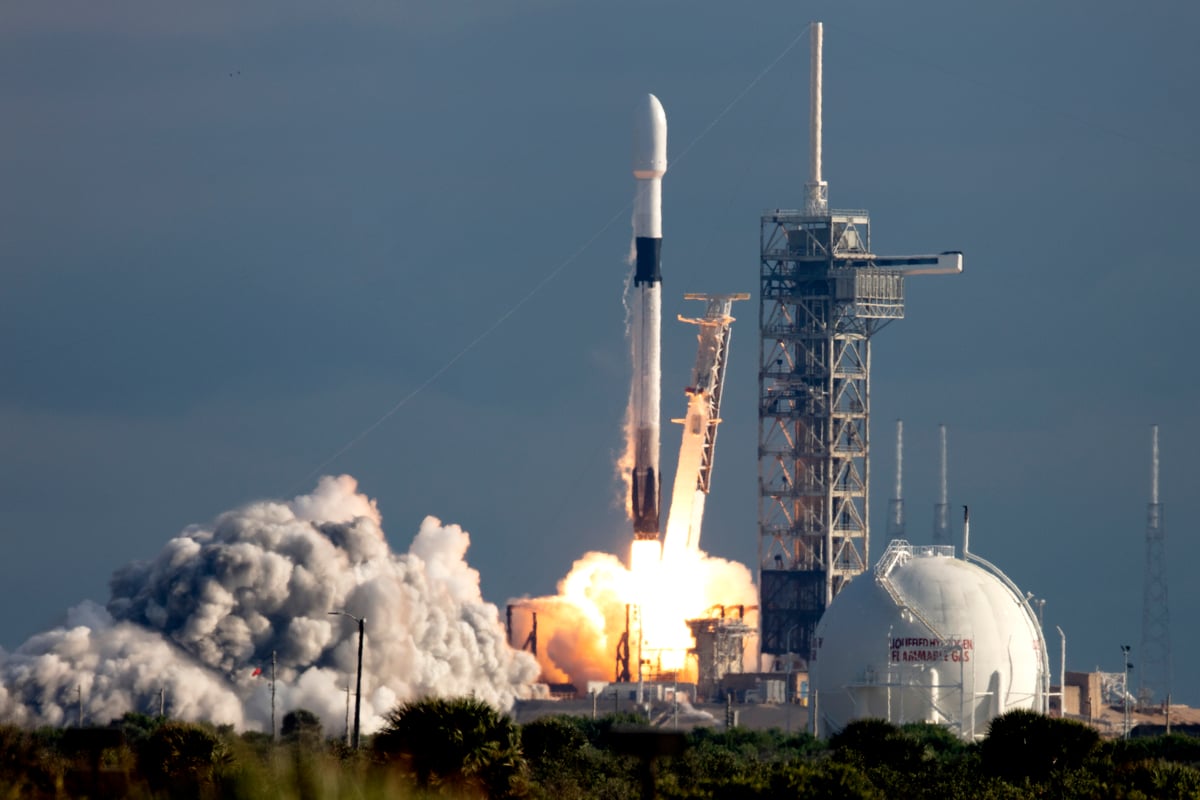
- Massive IPO Potential: SpaceX is targeting a valuation of up to $1.75 trillion for its IPO, which, if successful, would surpass Saudi Aramco's record $1.7 trillion debut in 2019, highlighting its strong appeal in the capital markets.
- Significant Launch Advantages: By utilizing reusable Falcon rockets, SpaceX has drastically reduced the cost of reaching orbit, creating operational efficiencies that not only attract more contract demand but also fund innovation, establishing a virtuous cycle.
- Starlink Revenue Growth: Starlink serves as SpaceX's primary revenue driver, providing high-speed internet access, particularly in underdeveloped regions, through a predictable high-margin subscription model that helps offset R&D and infrastructure costs.
- Investment Risks to Consider: While SpaceX's prospects are enticing, it faces regulatory scrutiny and the potential for execution and governance risks due to founder Elon Musk's divided attention across multiple ventures, necessitating careful evaluation of its future profitability viability.
See More

SpaceX Targets $1.75 Trillion IPO Valuation
- IPO Valuation Target: SpaceX is reportedly seeking an IPO valuation of up to $1.75 trillion, a figure that could surpass Saudi Aramco's record $1.7 trillion debut in 2019, highlighting its immense potential in the space economy.
- Business Model Advantage: The company's reusable rockets significantly reduce the cost of reaching orbit, enabling periodic launches that attract more contract demand and drive innovation, creating a virtuous cycle that enhances its competitive position in the market.
- Starlink Revenue Growth: Starlink serves as SpaceX's primary cash flow source, providing high-speed internet access, particularly in underdeveloped regions, with a subscription model that generates high-margin revenue to offset R&D and infrastructure costs.
- Risks and Challenges: While SpaceX offers unique investment opportunities in the space economy, its future is heavily reliant on founder Elon Musk's decisions, and regulatory scrutiny along with execution risks could impact its business performance, necessitating cautious evaluation by investors.
See More

U.S. Space Force Budget Sees Significant Increase

- Significant Budget Increase: The U.S. Space Force's budget for fiscal 2026 reaches approximately $40 billion, more than doubling from $15 billion in 2021, reflecting Congress's heightened focus on space defense and expected to drive growth for related companies.
- Investment in Hypersonic Weapons: The Air Force allocates $387.1 million to resume production of the Air-Launched Rapid Response Weapon and $802.8 million for the Hypersonic Attack Cruise Missile flight testing, indicating a shift in defense spending towards advanced technology weapons.
- Strategic Partnership: Starfighters Space announces a strategic partnership with Blackstar Orbital to advance flight testing of reusable hypersonic systems, marking a critical transition from simulation to real-world flight validation, enhancing its competitive edge in the defense market.
- Expanding Market Opportunities: Starfighters Space operates the only commercial fleet of F-104 aircraft capable of sustained Mach 2+ speeds, positioning itself as a unique provider of flight testing environments, likely attracting more defense contracts and commercial partnerships to solidify its market position.
See More
Rocket Lab Launches $1 Billion Share Sale Program Amid Analyst Optimism
- Analyst Optimism: Analysts have become more bullish on Rocket Lab's future growth, indicating market recognition of its potential opportunities, which could drive stock prices higher and attract more investor interest.
- Share Sale Program: The company's management has announced a share sale program of up to $1 billion, aimed at funding future expansion and R&D, although this may dilute existing shareholders' stakes.
- Market Reaction Potential: Despite the risks, the market has not fully priced in the potential impact of this share sale program, which could lead to short-term stock price volatility, but may provide long-term funding support for growth.
- Investment Opportunity: With analysts' positive ratings and the backdrop of the share sale program, investors may view Rocket Lab as an attractive investment opportunity, especially in the context of rapid developments in the technology and aerospace sectors.
See More
SpaceX Achieves Rocket Recovery, IPO on the Horizon
- Rocket Recovery Milestone: In October 2024, SpaceX successfully landed a previously launched rocket, marking a historic first that signifies a major breakthrough in aerospace technology, likely attracting increased investor interest in the space sector.
- Massive IPO Potential: SpaceX is projected to reach a valuation of $1.75 trillion, and if it goes public, it would become the largest IPO in market history, expected to have a profound impact on space-related stocks, similar to Tesla's influence on the electric vehicle market.
- Stock Price Surge: Following the news of SpaceX's impending IPO, stocks of companies like AST SpaceMobile, Rocket Lab, and Firefly Aerospace surged by 12%, 11.78%, and nearly 20% respectively, reflecting growing market confidence in the space economy.
- Reduced Launch Costs: SpaceX's reusable rocket technology is set to significantly lower launch costs, with traditional launches costing up to $1.5 billion compared to SpaceX's average of $62 million, and further reductions are anticipated, promoting sustainable growth in the aerospace industry.
See More
SpaceX IPO Set to Transform Space Economy
- IPO Buzz Ignites Market: SpaceX's impending IPO could value the company at $1.75 trillion, making it the largest IPO in market history, which is expected to instill confidence in space stocks similarly to how Tesla transformed the EV market.
- Space Stocks Surge: Following the IPO news, shares of AST SpaceMobile rose by 12%, Rocket Lab by 11.78%, and Firefly Aerospace by nearly 20%, reflecting a growing optimism and investment enthusiasm in the space sector.
- Significant Cost Reductions: SpaceX's reusable rocket technology has dramatically cut launch costs from approximately $2.1 billion for the Space Shuttle to around $62 million, with expectations for further reductions, enhancing the economic viability of space travel.
- Investment Opportunities in Smaller Firms: As SpaceX's IPO approaches, interest in smaller space companies is rising, encouraging investors to consider these firms ahead of the IPO to capitalize on the anticipated growth in the space economy.
See More
SpaceX Targets $1.75 Trillion Valuation for Historic IPO
- Massive IPO Potential: SpaceX is targeting a valuation of up to $1.75 trillion for its IPO, which, if successful, would surpass Saudi Aramco's record $1.7 trillion debut in 2019, highlighting its strong appeal in the capital markets.
- Significant Launch Advantages: By utilizing reusable Falcon rockets, SpaceX has drastically reduced the cost of reaching orbit, creating operational efficiencies that not only attract more contract demand but also fund innovation, establishing a virtuous cycle.
- Starlink Revenue Growth: Starlink serves as SpaceX's primary revenue driver, providing high-speed internet access, particularly in underdeveloped regions, through a predictable high-margin subscription model that helps offset R&D and infrastructure costs.
- Investment Risks to Consider: While SpaceX's prospects are enticing, it faces regulatory scrutiny and the potential for execution and governance risks due to founder Elon Musk's divided attention across multiple ventures, necessitating careful evaluation of its future profitability viability.
See More
SpaceX Targets $1.75 Trillion IPO Valuation
- IPO Valuation Target: SpaceX is reportedly seeking an IPO valuation of up to $1.75 trillion, a figure that could surpass Saudi Aramco's record $1.7 trillion debut in 2019, highlighting its immense potential in the space economy.
- Business Model Advantage: The company's reusable rockets significantly reduce the cost of reaching orbit, enabling periodic launches that attract more contract demand and drive innovation, creating a virtuous cycle that enhances its competitive position in the market.
- Starlink Revenue Growth: Starlink serves as SpaceX's primary cash flow source, providing high-speed internet access, particularly in underdeveloped regions, with a subscription model that generates high-margin revenue to offset R&D and infrastructure costs.
- Risks and Challenges: While SpaceX offers unique investment opportunities in the space economy, its future is heavily reliant on founder Elon Musk's decisions, and regulatory scrutiny along with execution risks could impact its business performance, necessitating cautious evaluation by investors.
See More
U.S. Space Force Budget Sees Significant Increase
- Significant Budget Increase: The U.S. Space Force's budget for fiscal 2026 reaches approximately $40 billion, more than doubling from $15 billion in 2021, reflecting Congress's heightened focus on space defense and expected to drive growth for related companies.
- Investment in Hypersonic Weapons: The Air Force allocates $387.1 million to resume production of the Air-Launched Rapid Response Weapon and $802.8 million for the Hypersonic Attack Cruise Missile flight testing, indicating a shift in defense spending towards advanced technology weapons.
- Strategic Partnership: Starfighters Space announces a strategic partnership with Blackstar Orbital to advance flight testing of reusable hypersonic systems, marking a critical transition from simulation to real-world flight validation, enhancing its competitive edge in the defense market.
- Expanding Market Opportunities: Starfighters Space operates the only commercial fleet of F-104 aircraft capable of sustained Mach 2+ speeds, positioning itself as a unique provider of flight testing environments, likely attracting more defense contracts and commercial partnerships to solidify its market position.
See More