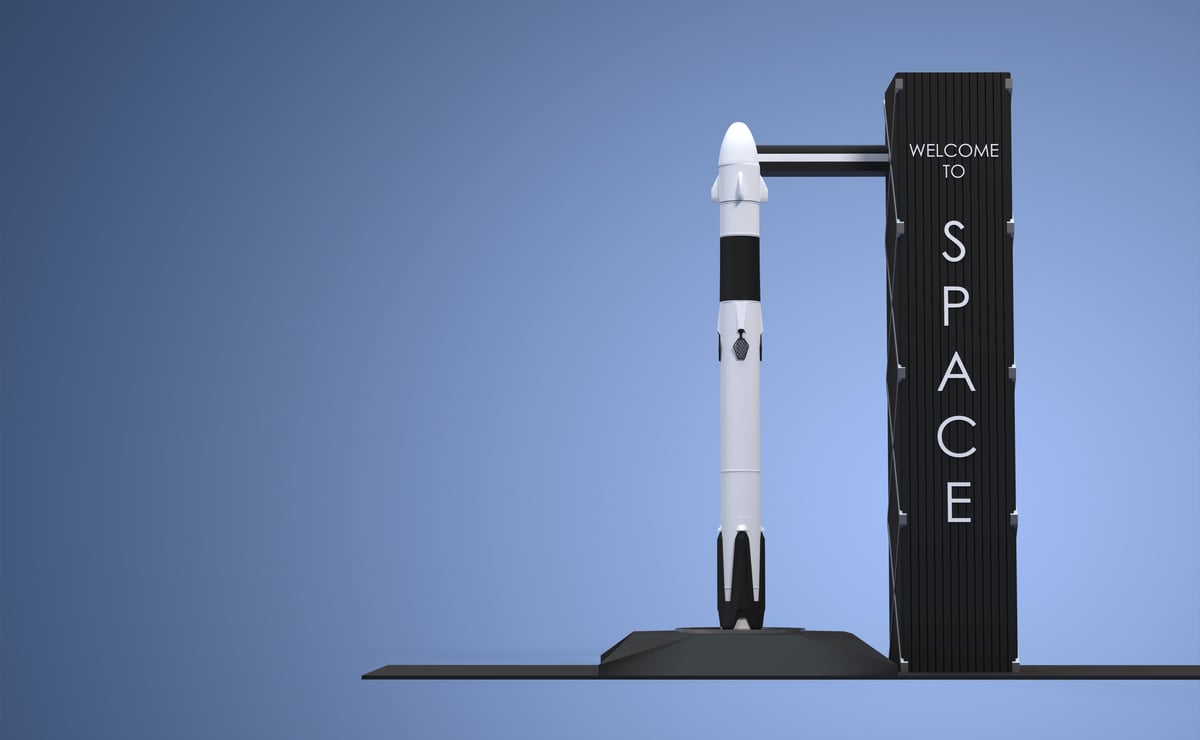
Rocket Lab Poised for Growth in Space Economy
Written by Emily J. Thompson, Senior Investment Analyst
Updated: 9 hours ago
0mins
Should l Buy RKLB?
Source: Fool
- Massive Market Potential: Analysts at McKinsey & Company project the global space economy could reach $1.8 trillion by 2035, driven by rising demand for satellite transport, internet connectivity, and tourism, presenting Rocket Lab with significant growth opportunities as a smaller player.
- Strong Business Growth: Rocket Lab's fourth-quarter revenue rose 38% year-over-year to $180 million, successfully completing seven Electron launches with a 100% success rate, instilling strong confidence among clients in both public and private sectors and showcasing robust business momentum.
- Technical Differentiation Advantage: Rocket Lab's Electron platform can carry payloads of 300 kg to low Earth orbit, and while smaller than SpaceX's Starship (150 tons) and Blue Origin's New Glenn (45 tons), its speed and flexibility provide a unique market position for smaller clients.
- Future Development Outlook: Rocket Lab plans to launch its new rocket platform Neutron in Q4 this year, with a payload capacity of 8,000 kg, over 25 times that of Electron; despite multiple delays, a successful launch could significantly enhance the company's growth potential.
Trade with 70% Backtested Accuracy
Stop guessing "Should I Buy RKLB?" and start using high-conviction signals backed by rigorous historical data.
Sign up today to access powerful investing tools and make smarter, data-driven decisions.
Analyst Views on RKLB
Wall Street analysts forecast RKLB stock price to rise
11 Analyst Rating
7 Buy
4 Hold
0 Sell
Moderate Buy
Current: 67.730

Low
63.00
Averages
86.89
High
120.00
Current: 67.730
Low
63.00
Averages
86.89
High
120.00
About RKLB
Rocket Lab Corporation is an end-to-end space company. The Company designs and manufactures small and medium-class rockets, spacecraft and spacecraft components, and related software and services to support the space economy. The Company delivers reliable launch services, satellite manufacture, spacecraft design services, spacecraft components, spacecraft manufacturing, and other spacecraft and on-orbit management solutions that make it easier to access space. Its Launch Services segment provides launch and launch-related services to customers on a dedicated mission or ride-share basis. Its Space Systems segment comprises the design and manufacture of spacecraft components and spacecraft program management services, space data applications, and mission operations. Its space systems solutions are the building blocks for spacecraft, which include composite structures, reaction wheels, star trackers, solar solutions, radios, separation systems, and command and control spacecraft software.
About the author

Emily J. Thompson
Emily J. Thompson, a Chartered Financial Analyst (CFA) with 12 years in investment research, graduated with honors from the Wharton School. Specializing in industrial and technology stocks, she provides in-depth analysis for Intellectia’s earnings and market brief reports.
Rocket Lab Poised for Growth in Space Economy
- Massive Market Potential: Analysts at McKinsey & Company project the global space economy could reach $1.8 trillion by 2035, driven by rising demand for satellite transport, internet connectivity, and tourism, presenting Rocket Lab with significant growth opportunities as a smaller player.
- Strong Business Growth: Rocket Lab's fourth-quarter revenue rose 38% year-over-year to $180 million, successfully completing seven Electron launches with a 100% success rate, instilling strong confidence among clients in both public and private sectors and showcasing robust business momentum.
- Technical Differentiation Advantage: Rocket Lab's Electron platform can carry payloads of 300 kg to low Earth orbit, and while smaller than SpaceX's Starship (150 tons) and Blue Origin's New Glenn (45 tons), its speed and flexibility provide a unique market position for smaller clients.
- Future Development Outlook: Rocket Lab plans to launch its new rocket platform Neutron in Q4 this year, with a payload capacity of 8,000 kg, over 25 times that of Electron; despite multiple delays, a successful launch could significantly enhance the company's growth potential.
See More

Rocket Lab's Stock Surge: Misplaced Catalyst?
- Stock Price Surge: Rocket Lab's stock rose on March 30, 2026, with the market seemingly celebrating news related to SpaceX's IPO; however, analysts suggest this may be a misplaced catalyst, indicating investor over-optimism about future prospects.
- Importance of Neutron Timeline: Analysts emphasize that the development timeline of the Neutron rocket is crucial for Rocket Lab's long-term success, warning that if execution falls short of expectations, the stock may face a risk of correction, urging investors to focus on actual progress rather than market sentiment.
- Market Reaction Analysis: Despite the short-term stock increase, analysts caution that market confidence in Rocket Lab may be built on unrealistic expectations, highlighting the critical role of execution in achieving the company's vision.
- Long-Term Outlook: Rocket Lab's future growth potential hinges on its technical execution capabilities; timely launch of the Neutron rocket could enhance market confidence and drive further stock price increases.
See More

Rocket Lab's Stock Surge: Analyzing the Real Catalyst
- Market Reaction Analysis: Rocket Lab (NASDAQ: RKLB) saw a significant stock price surge on March 30, 2026, indicating that the market may be celebrating the wrong catalyst, suggesting a potential misunderstanding of investor confidence in the company's future.
- Importance of Neutron Timeline: Analysis highlights that the progress timeline of Neutron is more critical than the SpaceX IPO hype, emphasizing the gap between the company's execution and market expectations, which could impact long-term stock performance.
- Long-Term Growth Potential: Despite the current stock price increase, analysts warn that Rocket Lab's long-term upside still hinges on its ability to execute; failure to meet expectations could lead to a price correction.
- Investment Recommendations: In the current market environment, expert teams suggest that investors pay attention to potential opportunities within Rocket Lab, particularly regarding its technology and market positioning, which could yield substantial returns in the future.
See More

SpaceX Set for IPO, Poised to Disrupt Space Industry

- IPO Valuation Potential: SpaceX is preparing for an initial public offering (IPO) that could value the company at up to $1.5 trillion, positioning it as the world's most valuable private company and drawing significant investor interest.
- Market Leadership: SpaceX dominates the global satellite launch market, with its Falcon 9 rocket achieving 633 launches, showcasing reliability and cost-effectiveness, thereby solidifying its market share.
- Starlink Revenue Growth: SpaceX's Starlink satellite internet service is projected to generate approximately $11.8 billion in revenue by 2025, indicating that this figure may only scratch the surface of its potential, highlighting its importance in future markets.
- Technological Integration Advantage: SpaceX's acquisition of Elon Musk's AI startup, xAI, combined with the potential of harnessing solar energy in space, could lead to breakthroughs in power demand and technological innovation, enhancing the company's overall competitiveness.
See More

Rocket Lab and Fluor Corp. Financial Highlights

- Rocket Lab Revenue Growth: In 2025, Rocket Lab reported revenue of $602 million and completed 21 launches, demonstrating its competitiveness in the end-to-end space sector, with projections indicating revenue could rise to $880 million in 2026, further solidifying its market position.
- Significant Contract Backlog: Rocket Lab's contract backlog reached $1.85 billion, a 73% year-over-year increase, including an $816 million contract with the U.S. Space Development Agency, enhancing the predictability of future revenues.
- Fluor's Financial Stability: In 2025, Fluor achieved revenue of $15.5 billion with a backlog of $25.5 billion, of which 81% consists of reimbursable contracts, significantly reducing revenue risk and improving financial stability.
- Stock Buyback Plan: Fluor plans to execute a $1.4 billion stock buyback in 2026, funded by the sale of its NuScale Power shares, which is expected to further enhance shareholder value and improve market confidence.
See More

SpaceX IPO Could Be a Once-in-a-Generation Investment Opportunity
- Market Leadership: SpaceX is currently the world's most valuable private company, with a potential valuation of $1.5 trillion, having achieved 633 launches with its Falcon 9 rocket, which is known for its cost-effectiveness and reliability, solidifying its dominance in the satellite launch market.
- Innovative Technology: SpaceX's Starship is the first fully reusable spacecraft designed to carry humans to the moon, Mars, and beyond, capable of transporting 150 metric tonnes of cargo, with plans to establish a self-sustaining city on Mars, showcasing its long-term strategic vision.
- Revenue Potential: SpaceX's Starlink satellite internet service is projected to generate approximately $11.8 billion in revenue by 2025, indicating strong profitability in a rapidly growing market and potentially becoming a major driver of future growth for the company.
- AI and Energy Integration: SpaceX's acquisition of Elon Musk's AI startup xAI aims to harness solar energy in space to power AI data centers, which could enhance SpaceX's competitive edge in energy utilization and technology integration.
See More
Rocket Lab Poised for Growth in Space Economy
- Massive Market Potential: Analysts at McKinsey & Company project the global space economy could reach $1.8 trillion by 2035, driven by rising demand for satellite transport, internet connectivity, and tourism, presenting Rocket Lab with significant growth opportunities as a smaller player.
- Strong Business Growth: Rocket Lab's fourth-quarter revenue rose 38% year-over-year to $180 million, successfully completing seven Electron launches with a 100% success rate, instilling strong confidence among clients in both public and private sectors and showcasing robust business momentum.
- Technical Differentiation Advantage: Rocket Lab's Electron platform can carry payloads of 300 kg to low Earth orbit, and while smaller than SpaceX's Starship (150 tons) and Blue Origin's New Glenn (45 tons), its speed and flexibility provide a unique market position for smaller clients.
- Future Development Outlook: Rocket Lab plans to launch its new rocket platform Neutron in Q4 this year, with a payload capacity of 8,000 kg, over 25 times that of Electron; despite multiple delays, a successful launch could significantly enhance the company's growth potential.
See More
Rocket Lab's Stock Surge: Misplaced Catalyst?
- Stock Price Surge: Rocket Lab's stock rose on March 30, 2026, with the market seemingly celebrating news related to SpaceX's IPO; however, analysts suggest this may be a misplaced catalyst, indicating investor over-optimism about future prospects.
- Importance of Neutron Timeline: Analysts emphasize that the development timeline of the Neutron rocket is crucial for Rocket Lab's long-term success, warning that if execution falls short of expectations, the stock may face a risk of correction, urging investors to focus on actual progress rather than market sentiment.
- Market Reaction Analysis: Despite the short-term stock increase, analysts caution that market confidence in Rocket Lab may be built on unrealistic expectations, highlighting the critical role of execution in achieving the company's vision.
- Long-Term Outlook: Rocket Lab's future growth potential hinges on its technical execution capabilities; timely launch of the Neutron rocket could enhance market confidence and drive further stock price increases.
See More
Rocket Lab's Stock Surge: Analyzing the Real Catalyst
- Market Reaction Analysis: Rocket Lab (NASDAQ: RKLB) saw a significant stock price surge on March 30, 2026, indicating that the market may be celebrating the wrong catalyst, suggesting a potential misunderstanding of investor confidence in the company's future.
- Importance of Neutron Timeline: Analysis highlights that the progress timeline of Neutron is more critical than the SpaceX IPO hype, emphasizing the gap between the company's execution and market expectations, which could impact long-term stock performance.
- Long-Term Growth Potential: Despite the current stock price increase, analysts warn that Rocket Lab's long-term upside still hinges on its ability to execute; failure to meet expectations could lead to a price correction.
- Investment Recommendations: In the current market environment, expert teams suggest that investors pay attention to potential opportunities within Rocket Lab, particularly regarding its technology and market positioning, which could yield substantial returns in the future.
See More
SpaceX Set for IPO, Poised to Disrupt Space Industry
- IPO Valuation Potential: SpaceX is preparing for an initial public offering (IPO) that could value the company at up to $1.5 trillion, positioning it as the world's most valuable private company and drawing significant investor interest.
- Market Leadership: SpaceX dominates the global satellite launch market, with its Falcon 9 rocket achieving 633 launches, showcasing reliability and cost-effectiveness, thereby solidifying its market share.
- Starlink Revenue Growth: SpaceX's Starlink satellite internet service is projected to generate approximately $11.8 billion in revenue by 2025, indicating that this figure may only scratch the surface of its potential, highlighting its importance in future markets.
- Technological Integration Advantage: SpaceX's acquisition of Elon Musk's AI startup, xAI, combined with the potential of harnessing solar energy in space, could lead to breakthroughs in power demand and technological innovation, enhancing the company's overall competitiveness.
See More
Rocket Lab and Fluor Corp. Financial Highlights
- Rocket Lab Revenue Growth: In 2025, Rocket Lab reported revenue of $602 million and completed 21 launches, demonstrating its competitiveness in the end-to-end space sector, with projections indicating revenue could rise to $880 million in 2026, further solidifying its market position.
- Significant Contract Backlog: Rocket Lab's contract backlog reached $1.85 billion, a 73% year-over-year increase, including an $816 million contract with the U.S. Space Development Agency, enhancing the predictability of future revenues.
- Fluor's Financial Stability: In 2025, Fluor achieved revenue of $15.5 billion with a backlog of $25.5 billion, of which 81% consists of reimbursable contracts, significantly reducing revenue risk and improving financial stability.
- Stock Buyback Plan: Fluor plans to execute a $1.4 billion stock buyback in 2026, funded by the sale of its NuScale Power shares, which is expected to further enhance shareholder value and improve market confidence.
See More
SpaceX IPO Could Be a Once-in-a-Generation Investment Opportunity
- Market Leadership: SpaceX is currently the world's most valuable private company, with a potential valuation of $1.5 trillion, having achieved 633 launches with its Falcon 9 rocket, which is known for its cost-effectiveness and reliability, solidifying its dominance in the satellite launch market.
- Innovative Technology: SpaceX's Starship is the first fully reusable spacecraft designed to carry humans to the moon, Mars, and beyond, capable of transporting 150 metric tonnes of cargo, with plans to establish a self-sustaining city on Mars, showcasing its long-term strategic vision.
- Revenue Potential: SpaceX's Starlink satellite internet service is projected to generate approximately $11.8 billion in revenue by 2025, indicating strong profitability in a rapidly growing market and potentially becoming a major driver of future growth for the company.
- AI and Energy Integration: SpaceX's acquisition of Elon Musk's AI startup xAI aims to harness solar energy in space to power AI data centers, which could enhance SpaceX's competitive edge in energy utilization and technology integration.
See More