Robots Prevail: The Smart Investment is in Companies Producing Them.


Automation Concerns: There is widespread fear that Amazon's robots will take over jobs, but the article argues that many of these jobs never existed to begin with.
Milestone Achievement: Amazon reached a significant milestone by surpassing one million robots in 2025, prompting discussions about the implications of automation on employment.
Political and Economic Reactions: The rise of automation has led politicians to prepare speeches on job displacement and economists to revisit concepts like Universal Basic Income.
Media Coverage: The topic has garnered significant media attention, with discussions ranging from the impact of robots on jobs to philosophical questions about the nature of robots.
Trade with 70% Backtested Accuracy
Analyst Views on SYM

About SYM
About the author


Investment Opportunities in the AI Era


- Symbotic's Growth Potential: In Q1 2026, Symbotic reported $630 million in revenue, a 29% year-over-year increase, with expectations for Q2 revenue between $650 million and $670 million, highlighting its strong performance in the rapidly expanding global AI robotics market.
- Fastly's Revenue Surge: Fastly achieved $172.6 million in revenue for Q4 2025, representing a 23% year-over-year growth, and has seen consistent growth over the past six quarters, indicating robust market demand amid rising AI traffic.
- Astera Labs' Rapid Growth: Astera Labs recorded $270.6 million in revenue for Q4 2025, a staggering 92% year-over-year increase, and strengthened its competitive edge in AI connectivity solutions through the acquisition of aiXscale Photonics.
- Strategic Opportunities in AI Market: With the rapid expansion of the AI market, companies like Symbotic, Fastly, and Astera Labs are showcasing strong growth potential in their respective fields, making them attractive investment opportunities for future performance.
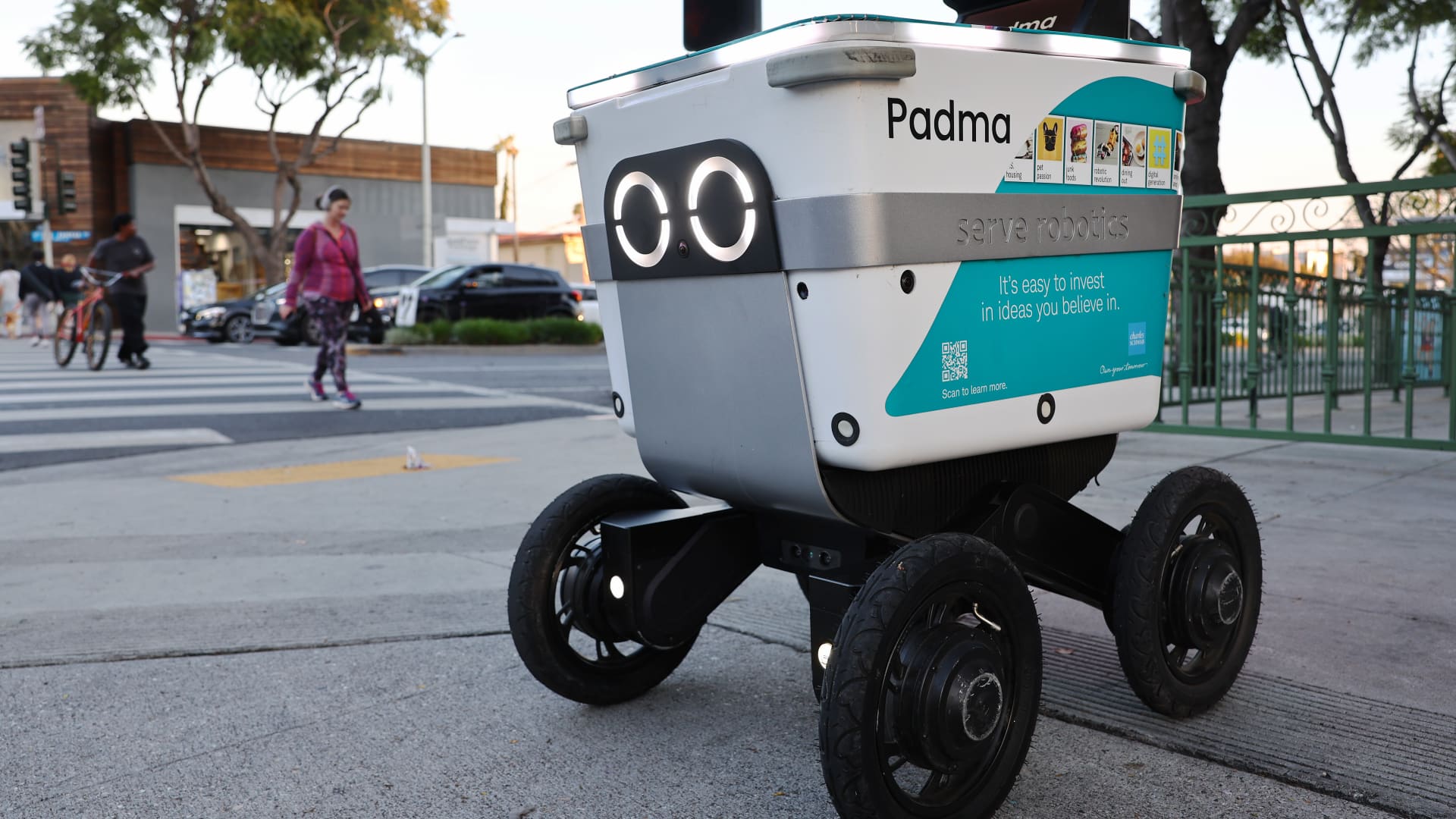
AI Sparks Potential Blue-Collar Renaissance Amid Job Disruption Fears

- Blue-Collar Employment Revival: Oppenheimer analysts suggest that while AI may rapidly displace white-collar jobs, it could simultaneously drive demand for blue-collar roles, particularly in manufacturing, with employment projected to remain below pre-pandemic levels by 2026.
- Investment Theme Analysis: Oppenheimer outlined five investable themes, including the physical-to-digital connection, emphasizing the value of sensors and data pipelines, with companies in this space expected to benefit from automation trends, including Aeva Technologies and Tesla.
- Automation Tools Opportunity: The analysts identified automation tools that can reskill transitioning workforces, recommending companies like Caterpillar and Rockwell Automation, which enhance worksite experiences through task automation and AI agents.
- Autonomous Systems Development: Oppenheimer also highlighted companies supporting autonomous physical systems, such as Mobileye Global and Aurora Innovation, noting that as fully autonomous solutions are commercialized, human roles will still be essential for remote monitoring and maintenance to ensure safety and problem resolution.

Symbotic Faces Customer Concentration Risk

- Revenue Concentration Risk: Approximately 84% of Symbotic's revenue is derived from Walmart, creating significant risk as any changes in Walmart's capital spending plans could lead to revenue fluctuations, jeopardizing the company's long-term stability.
- Profitability Challenges: Despite achieving $630 million in revenue last quarter, a 29% year-over-year increase, Symbotic reported an EPS of only $0.02, missing the $0.08 consensus estimate by 75%, indicating uncertainty in project timing that led to a 4.8% drop in stock price.
- Reality of Backlog Orders: While Symbotic claims a $22.3 billion backlog, only 13% is expected to convert within 12 months, making future revenue recognition unpredictable due to reliance on customer approvals and deployment schedules.
- Market Valuation Discrepancy: Trading around $51 with a 17x trailing revenue multiple, Symbotic's valuation is inflated compared to its 10.6% EBITDA margin, with independent DCF analyses suggesting a fair value between $40 and $48, indicating potential overvaluation at current prices.

Symbotic's Revenue Dependency on Walmart Raises Concerns
- Revenue Concentration Risk: Symbotic derives 84% of its revenue from Walmart, indicating a high concentration in its business model, which poses significant risks if Walmart's capital spending plans change, potentially affecting future revenue stability.
- Poor Performance: Despite achieving $590 million in revenue for Q1 fiscal 2026, Symbotic reported an EPS of only $0.02, significantly below the $0.08 consensus estimate, leading to a 4.8% drop in stock price, reflecting market concerns about its profitability.
- Earnings Estimates Downgrade: Following the recent earnings miss, some analysts have cut next year's earnings estimates by over 20%, which could further impact investor confidence and lead to stock price volatility.
- Valuation Pressure: With a stock price around $51 and a trailing revenue multiple of 17x, significantly above its 10.6% EBITDA margin, multiple independent DCF analyses suggest a fair value between $40 and $48, indicating potential downside risk at current price levels.
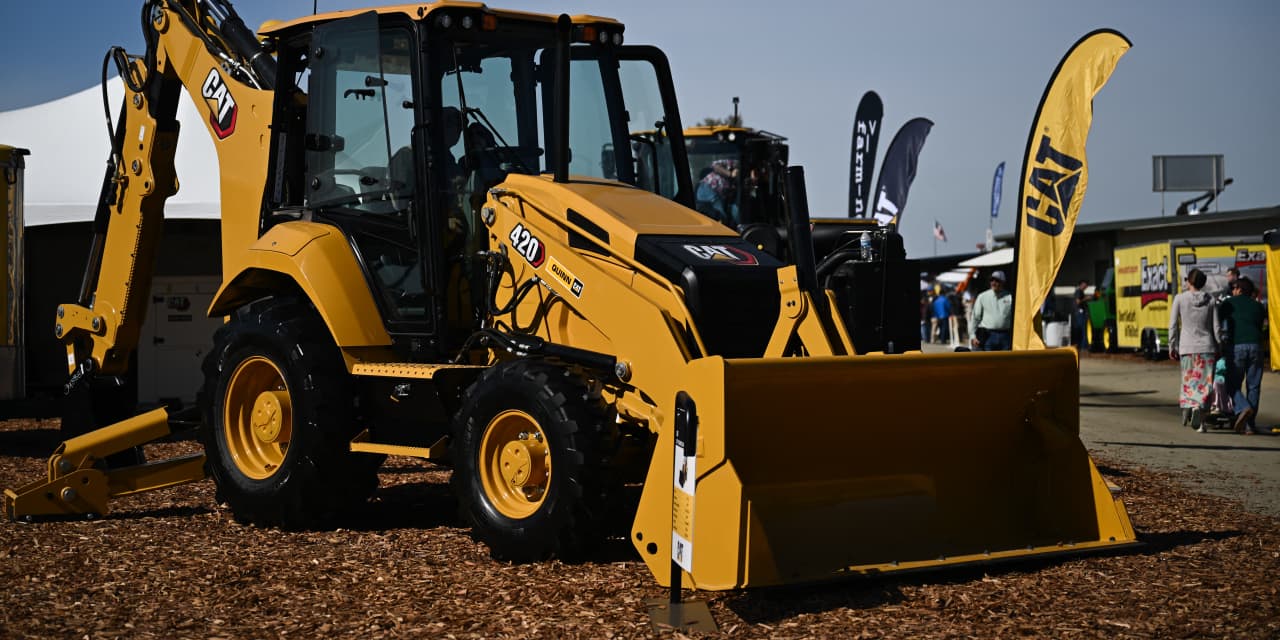
Deere, Caterpillar, and 10 Additional Stocks Driving a Blue Collar Revival Fueled by AI


AI's Impact on Stock Trades: Artificial intelligence is significantly influencing stock market activities, acting as both a catalyst for growth and a source of concern for investors.
Hyperscaler Spending: Companies associated with hyperscalers are experiencing stock boosts due to increased spending on AI data centers.
Software Companies at Risk: Conversely, fears of obsolescence are causing declines in the stock prices of software companies that may not adapt to AI advancements.
Dual Nature of AI: The dual role of AI as both a beneficial and detrimental force highlights the volatility and uncertainty in the tech sector.

KeyBanc Upgrades Symbotic Stock to Overweight with $70 Price Target
- Rating Upgrade: KeyBanc has upgraded Symbotic Inc. (SYM) from 'Sector Weight' to 'Overweight' with a price target of $70, reflecting strong confidence in the company's growth trajectory.
- Order Backlog: With approximately $22.3 billion in order backlog, KeyBanc believes that recent cost-saving measures will enable Symbotic to accelerate installations, enhancing its competitive position in the market.
- Financial Performance: In Q1 2026, Symbotic reported revenue of $630 million, a 29% year-over-year increase, and a net income of $13 million, a significant turnaround from a net loss of $17 million in Q1 2025, indicating substantial profitability improvement.
- Future Outlook: The company expects Q2 2026 revenue to range between $650 million and $670 million, with further growth potential anticipated as it deploys next-gen storage systems, particularly in new verticals like frozen and perishable goods.
Investment Opportunities in the AI Era
- Symbotic's Growth Potential: In Q1 2026, Symbotic reported $630 million in revenue, a 29% year-over-year increase, with expectations for Q2 revenue between $650 million and $670 million, highlighting its strong performance in the rapidly expanding global AI robotics market.
- Fastly's Revenue Surge: Fastly achieved $172.6 million in revenue for Q4 2025, representing a 23% year-over-year growth, and has seen consistent growth over the past six quarters, indicating robust market demand amid rising AI traffic.
- Astera Labs' Rapid Growth: Astera Labs recorded $270.6 million in revenue for Q4 2025, a staggering 92% year-over-year increase, and strengthened its competitive edge in AI connectivity solutions through the acquisition of aiXscale Photonics.
- Strategic Opportunities in AI Market: With the rapid expansion of the AI market, companies like Symbotic, Fastly, and Astera Labs are showcasing strong growth potential in their respective fields, making them attractive investment opportunities for future performance.
AI Sparks Potential Blue-Collar Renaissance Amid Job Disruption Fears
- Blue-Collar Employment Revival: Oppenheimer analysts suggest that while AI may rapidly displace white-collar jobs, it could simultaneously drive demand for blue-collar roles, particularly in manufacturing, with employment projected to remain below pre-pandemic levels by 2026.
- Investment Theme Analysis: Oppenheimer outlined five investable themes, including the physical-to-digital connection, emphasizing the value of sensors and data pipelines, with companies in this space expected to benefit from automation trends, including Aeva Technologies and Tesla.
- Automation Tools Opportunity: The analysts identified automation tools that can reskill transitioning workforces, recommending companies like Caterpillar and Rockwell Automation, which enhance worksite experiences through task automation and AI agents.
- Autonomous Systems Development: Oppenheimer also highlighted companies supporting autonomous physical systems, such as Mobileye Global and Aurora Innovation, noting that as fully autonomous solutions are commercialized, human roles will still be essential for remote monitoring and maintenance to ensure safety and problem resolution.
Symbotic Faces Customer Concentration Risk
- Revenue Concentration Risk: Approximately 84% of Symbotic's revenue is derived from Walmart, creating significant risk as any changes in Walmart's capital spending plans could lead to revenue fluctuations, jeopardizing the company's long-term stability.
- Profitability Challenges: Despite achieving $630 million in revenue last quarter, a 29% year-over-year increase, Symbotic reported an EPS of only $0.02, missing the $0.08 consensus estimate by 75%, indicating uncertainty in project timing that led to a 4.8% drop in stock price.
- Reality of Backlog Orders: While Symbotic claims a $22.3 billion backlog, only 13% is expected to convert within 12 months, making future revenue recognition unpredictable due to reliance on customer approvals and deployment schedules.
- Market Valuation Discrepancy: Trading around $51 with a 17x trailing revenue multiple, Symbotic's valuation is inflated compared to its 10.6% EBITDA margin, with independent DCF analyses suggesting a fair value between $40 and $48, indicating potential overvaluation at current prices.
Symbotic's Revenue Dependency on Walmart Raises Concerns
- Revenue Concentration Risk: Symbotic derives 84% of its revenue from Walmart, indicating a high concentration in its business model, which poses significant risks if Walmart's capital spending plans change, potentially affecting future revenue stability.
- Poor Performance: Despite achieving $590 million in revenue for Q1 fiscal 2026, Symbotic reported an EPS of only $0.02, significantly below the $0.08 consensus estimate, leading to a 4.8% drop in stock price, reflecting market concerns about its profitability.
- Earnings Estimates Downgrade: Following the recent earnings miss, some analysts have cut next year's earnings estimates by over 20%, which could further impact investor confidence and lead to stock price volatility.
- Valuation Pressure: With a stock price around $51 and a trailing revenue multiple of 17x, significantly above its 10.6% EBITDA margin, multiple independent DCF analyses suggest a fair value between $40 and $48, indicating potential downside risk at current price levels.
Deere, Caterpillar, and 10 Additional Stocks Driving a Blue Collar Revival Fueled by AI
AI's Impact on Stock Trades: Artificial intelligence is significantly influencing stock market activities, acting as both a catalyst for growth and a source of concern for investors.
Hyperscaler Spending: Companies associated with hyperscalers are experiencing stock boosts due to increased spending on AI data centers.
Software Companies at Risk: Conversely, fears of obsolescence are causing declines in the stock prices of software companies that may not adapt to AI advancements.
Dual Nature of AI: The dual role of AI as both a beneficial and detrimental force highlights the volatility and uncertainty in the tech sector.
KeyBanc Upgrades Symbotic Stock to Overweight with $70 Price Target
- Rating Upgrade: KeyBanc has upgraded Symbotic Inc. (SYM) from 'Sector Weight' to 'Overweight' with a price target of $70, reflecting strong confidence in the company's growth trajectory.
- Order Backlog: With approximately $22.3 billion in order backlog, KeyBanc believes that recent cost-saving measures will enable Symbotic to accelerate installations, enhancing its competitive position in the market.
- Financial Performance: In Q1 2026, Symbotic reported revenue of $630 million, a 29% year-over-year increase, and a net income of $13 million, a significant turnaround from a net loss of $17 million in Q1 2025, indicating substantial profitability improvement.
- Future Outlook: The company expects Q2 2026 revenue to range between $650 million and $670 million, with further growth potential anticipated as it deploys next-gen storage systems, particularly in new verticals like frozen and perishable goods.