QuantumScape Faces Commercialization Challenges
Written by Emily J. Thompson, Senior Investment Analyst
Updated: Mar 05 2026
0mins


Source: Fool
- Poor Stock Performance: QuantumScape went public via SPAC in November 2020 with an opening price of $24.80, but it currently trades at $7, reflecting investor disappointment over its overpromises, which may hinder future fundraising efforts.
- Battery Technology Advantage: Its QSE-5 battery boasts an energy density of 844 Wh/L and can charge from 10% to 80% in just 12.2 minutes, significantly outperforming traditional lithium-ion batteries with 300-700 Wh/L and 20 minutes to an hour charging times, though production costs remain high.
- Strategic Shift: QuantumScape abandoned its joint manufacturing plan with Volkswagen, opting instead to license its technology to Volkswagen's battery subsidiary PowerCo, aiming to generate higher-margin royalty revenues by licensing to other automakers, despite fierce competition from companies like Blue Solutions and Toyota.
- Uncertain Future Outlook: While QuantumScape's revenue is projected to rise from under $1 million in 2026 to $545 million in 2028, analysts remain cautious about its ability to meet these targets due to ongoing share dilution and competitive pressures, suggesting its stock may stagnate or decline over the next three years.
Trade with 70% Backtested Accuracy
Stop guessing "Should I Buy QS?" and start using high-conviction signals backed by rigorous historical data.
Sign up today to access powerful investing tools and make smarter, data-driven decisions.
Analyst Views on QS
Wall Street analysts forecast QS stock price to rise
8 Analyst Rating
0 Buy
6 Hold
2 Sell
Hold
Current: 6.810

Low
2.50
Averages
11.29
High
16.00
Current: 6.810
Low
2.50
Averages
11.29
High
16.00
About QS
QuantumScape Corporation is developing solid-state lithium-metal battery technology for electric vehicles (EVs) and other applications. The Company’s solid-state lithium-metal battery technology is designed to offer energy density, faster charging, and enhanced safety. Its battery cells have none of the host materials used in conventional anodes. The Company's cells are anode-free in that they are manufactured without anodes in a discharged state. It has demonstrated a solid-state separator for lithium-metal batteries capable of resisting dendrite formation at higher power densities, such as those required for automotive applications and fast charging, for at least 800 cycles at around 25 degrees Celsius. The Company's solid-state electrolyte-separator is a dense, entirely inorganic ceramic. The Company's solid-state battery technology has applicability in other markets, including stationary storage and consumer electronics, data centers, defense, and others.
About the author

Emily J. Thompson
Emily J. Thompson, a Chartered Financial Analyst (CFA) with 12 years in investment research, graduated with honors from the Wharton School. Specializing in industrial and technology stocks, she provides in-depth analysis for Intellectia’s earnings and market brief reports.
Sion Power Shifts Focus to Defense Battery Market Amid Rising Demand


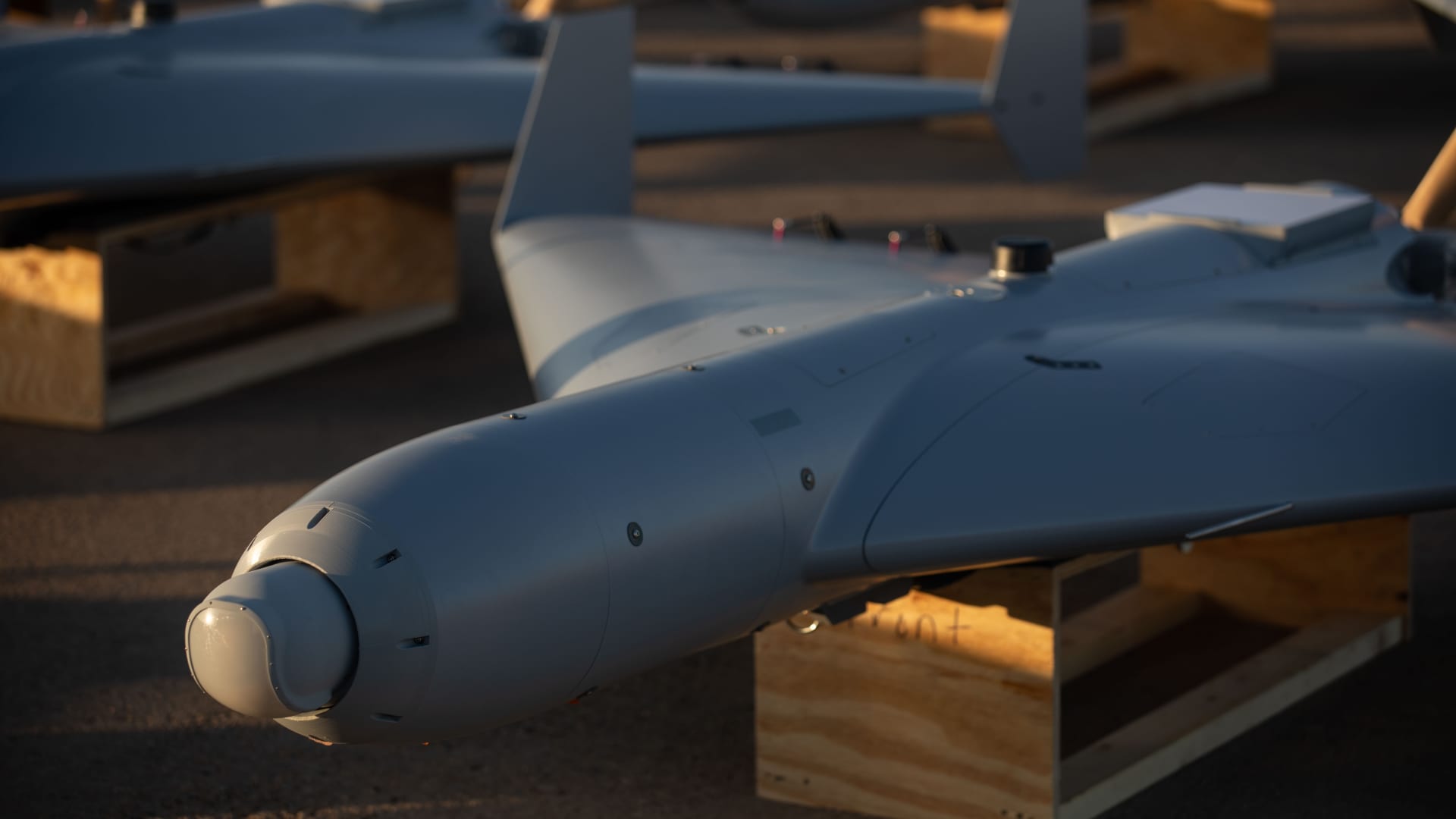
- Market Shift: Sion Power is transitioning from electric vehicle battery production to the defense sector, expecting to commercialize high-energy lithium-metal batteries later this year in response to rising U.S. drone demand, demonstrating the company's adaptability to market changes.
- Technological Advantage: The newly developed 'Licerion HE' lithium-metal battery cells boast energy densities exceeding 500 watt-hours per kilogram, significantly higher than the 300-350 Wh/kg of current lithium-ion batteries, making them suitable for drones and other critical platforms, enhancing competitiveness in the defense market.
- Production Capacity Enhancement: Sion Power's 110,000-square-foot facility in Arizona is being repurposed to focus on defense product manufacturing, with plans to convert production lines to meet the growing defense demand, further solidifying its market position.
- Investment and Funding: The company has raised over $200 million for lithium-metal cell development, with investors including LG Energy Solution, and plans to launch new products between the second half of 2026 and into 2027, indicating strong market prospects and growth potential.
See More

QuantumScape Aims to Transform EV Industry with Solid-State Batteries
- Battery Technology Innovation: QuantumScape is developing solid-state batteries that, if successful, could revolutionize the EV industry by meeting automakers' urgent needs for faster charging and higher energy density storage.
- Enormous Market Potential: Should solid-state battery technology be widely adopted, QuantumScape stands to gain substantial returns, driving rapid growth in the EV market and enhancing the company's leadership position in the industry.
- Stock Performance: As of March 6, 2026, QuantumScape's stock price was $2.25, reflecting the market's keen interest in its technological prospects and investor expectations.
- Intensifying Industry Competition: With the rapid development of the EV market, QuantumScape's success could position it advantageously in the competitive landscape, attracting more automaker partnerships and further solidifying its market presence.
See More

QuantumScape's Ambitious EV Battery Prospects
- Battery Technology Innovation: QuantumScape is developing solid-state batteries that, if successful, could revolutionize the EV industry by meeting automakers' demands for faster charging and higher energy density, potentially leading to enormous payoffs.
- Market Performance Analysis: As of March 6, 2026, QuantumScape's stock performance is under scrutiny, especially since it was not included in Motley Fool Stock Advisor's list of the top 10 stocks, indicating a cautious market outlook on its future potential.
- Investment Return Comparison: Motley Fool Stock Advisor boasts an average return of 930%, significantly outperforming the S&P 500's 187%, highlighting the need for investors to be discerning, particularly given QuantumScape's absence from the recommended stocks.
- Industry Competitive Dynamics: With the rapid growth of the EV market, QuantumScape's solid-state battery technology, if commercialized successfully, could secure a significant position in the competitive landscape, attracting more investor interest in its future developments.
See More
QuantumScape Achieves Key Milestones in Battery Technology
- Production Process Upgrade: QuantumScape has integrated its Cobra process into baseline cell production, significantly improving heat-treatment speed while requiring less floor space, laying the groundwork for mass production.
- New Product Delivery: The company has shipped Cobra-based QSE-5 cells to Volkswagen, which showcased them on the Ducati V21L race bike, demonstrating the practical application potential of its technology.
- Market Expansion Plans: QuantumScape aims to expand beyond the automotive sector, actively exploring high-value markets such as data centers, robotics, aviation, and defense, leveraging the high energy density of its solid-state batteries to meet diverse demands.
- Financial Concerns: Despite having $971 million in liquidity, the company reported a net loss of $435 million in 2025 and does not expect to begin commercial production soon, prompting investors to closely monitor its financial health.
See More

QuantumScape Achieves Significant Milestones in Battery Technology
- Production Process Upgrade: QuantumScape has integrated its Cobra process, significantly improving heat-treatment speed and reducing floor space requirements, paving the way for mass production of solid-state lithium-metal batteries, despite a 63% decline in stock from its 52-week high.
- Market Expansion: Beyond the automotive sector, QuantumScape is actively exploring high-value markets such as data centers, robotics, aviation, and defense, anticipating that these areas will provide new growth opportunities, particularly given the potential of solid-state batteries in high energy density applications.
- Financial Status: As of the end of last year, QuantumScape had $971 million in liquidity, expected to support its working capital and capital expenditures for at least the next 12 months, although it reported a net loss of $435 million in 2025, highlighting challenges in the commercialization process.
- Production Line Development: The company has installed a highly automated pilot production line, known as the Eagle Line, in San Jose, California, which incorporates the Cobra process and aims to provide a scalable production blueprint for high-quality ceramic separators, further advancing its commercialization efforts.
See More
Garmin, Synaptics, and QuantumScape Report Key Financial Highlights


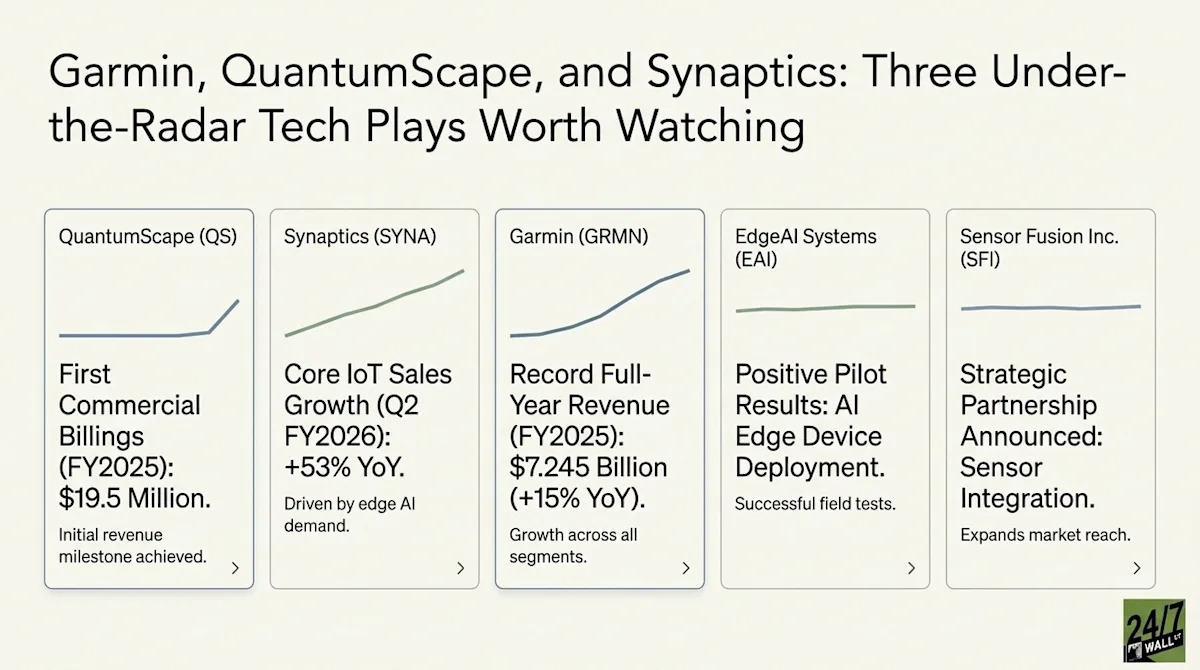
- Garmin Financial Performance: Garmin achieved record revenue of $7.245 billion in FY2025, a 15% year-over-year increase, with all five business segments posting record results, showcasing the company's strong market competitiveness and sustained growth potential.
- Synaptics Growth Momentum: Synaptics reported Q2 FY2026 revenue of $302.5 million, up 13% year over year, with core IoT product sales surging 53%, indicating the company's significant position in the rapidly growing edge AI market.
- QuantumScape Commercial Milestone: QuantumScape generated its first-ever customer billings of $19.5 million in FY2025, marking a successful transition from pre-revenue to commercial production, although it still faces significant losses, the technological advancements and customer base expansion indicate future growth potential.
- Capital Return Plan: Garmin announced a 17% increase in its annual dividend to $4.20 per share and authorized a new $500 million share repurchase program, reflecting the company's confidence in future performance and commitment to shareholders.
See More
Sion Power Shifts Focus to Defense Battery Market Amid Rising Demand
- Market Shift: Sion Power is transitioning from electric vehicle battery production to the defense sector, expecting to commercialize high-energy lithium-metal batteries later this year in response to rising U.S. drone demand, demonstrating the company's adaptability to market changes.
- Technological Advantage: The newly developed 'Licerion HE' lithium-metal battery cells boast energy densities exceeding 500 watt-hours per kilogram, significantly higher than the 300-350 Wh/kg of current lithium-ion batteries, making them suitable for drones and other critical platforms, enhancing competitiveness in the defense market.
- Production Capacity Enhancement: Sion Power's 110,000-square-foot facility in Arizona is being repurposed to focus on defense product manufacturing, with plans to convert production lines to meet the growing defense demand, further solidifying its market position.
- Investment and Funding: The company has raised over $200 million for lithium-metal cell development, with investors including LG Energy Solution, and plans to launch new products between the second half of 2026 and into 2027, indicating strong market prospects and growth potential.
See More
QuantumScape Aims to Transform EV Industry with Solid-State Batteries
- Battery Technology Innovation: QuantumScape is developing solid-state batteries that, if successful, could revolutionize the EV industry by meeting automakers' urgent needs for faster charging and higher energy density storage.
- Enormous Market Potential: Should solid-state battery technology be widely adopted, QuantumScape stands to gain substantial returns, driving rapid growth in the EV market and enhancing the company's leadership position in the industry.
- Stock Performance: As of March 6, 2026, QuantumScape's stock price was $2.25, reflecting the market's keen interest in its technological prospects and investor expectations.
- Intensifying Industry Competition: With the rapid development of the EV market, QuantumScape's success could position it advantageously in the competitive landscape, attracting more automaker partnerships and further solidifying its market presence.
See More
QuantumScape's Ambitious EV Battery Prospects
- Battery Technology Innovation: QuantumScape is developing solid-state batteries that, if successful, could revolutionize the EV industry by meeting automakers' demands for faster charging and higher energy density, potentially leading to enormous payoffs.
- Market Performance Analysis: As of March 6, 2026, QuantumScape's stock performance is under scrutiny, especially since it was not included in Motley Fool Stock Advisor's list of the top 10 stocks, indicating a cautious market outlook on its future potential.
- Investment Return Comparison: Motley Fool Stock Advisor boasts an average return of 930%, significantly outperforming the S&P 500's 187%, highlighting the need for investors to be discerning, particularly given QuantumScape's absence from the recommended stocks.
- Industry Competitive Dynamics: With the rapid growth of the EV market, QuantumScape's solid-state battery technology, if commercialized successfully, could secure a significant position in the competitive landscape, attracting more investor interest in its future developments.
See More
QuantumScape Achieves Key Milestones in Battery Technology
- Production Process Upgrade: QuantumScape has integrated its Cobra process into baseline cell production, significantly improving heat-treatment speed while requiring less floor space, laying the groundwork for mass production.
- New Product Delivery: The company has shipped Cobra-based QSE-5 cells to Volkswagen, which showcased them on the Ducati V21L race bike, demonstrating the practical application potential of its technology.
- Market Expansion Plans: QuantumScape aims to expand beyond the automotive sector, actively exploring high-value markets such as data centers, robotics, aviation, and defense, leveraging the high energy density of its solid-state batteries to meet diverse demands.
- Financial Concerns: Despite having $971 million in liquidity, the company reported a net loss of $435 million in 2025 and does not expect to begin commercial production soon, prompting investors to closely monitor its financial health.
See More
QuantumScape Achieves Significant Milestones in Battery Technology
- Production Process Upgrade: QuantumScape has integrated its Cobra process, significantly improving heat-treatment speed and reducing floor space requirements, paving the way for mass production of solid-state lithium-metal batteries, despite a 63% decline in stock from its 52-week high.
- Market Expansion: Beyond the automotive sector, QuantumScape is actively exploring high-value markets such as data centers, robotics, aviation, and defense, anticipating that these areas will provide new growth opportunities, particularly given the potential of solid-state batteries in high energy density applications.
- Financial Status: As of the end of last year, QuantumScape had $971 million in liquidity, expected to support its working capital and capital expenditures for at least the next 12 months, although it reported a net loss of $435 million in 2025, highlighting challenges in the commercialization process.
- Production Line Development: The company has installed a highly automated pilot production line, known as the Eagle Line, in San Jose, California, which incorporates the Cobra process and aims to provide a scalable production blueprint for high-quality ceramic separators, further advancing its commercialization efforts.
See More
Garmin, Synaptics, and QuantumScape Report Key Financial Highlights
- Garmin Financial Performance: Garmin achieved record revenue of $7.245 billion in FY2025, a 15% year-over-year increase, with all five business segments posting record results, showcasing the company's strong market competitiveness and sustained growth potential.
- Synaptics Growth Momentum: Synaptics reported Q2 FY2026 revenue of $302.5 million, up 13% year over year, with core IoT product sales surging 53%, indicating the company's significant position in the rapidly growing edge AI market.
- QuantumScape Commercial Milestone: QuantumScape generated its first-ever customer billings of $19.5 million in FY2025, marking a successful transition from pre-revenue to commercial production, although it still faces significant losses, the technological advancements and customer base expansion indicate future growth potential.
- Capital Return Plan: Garmin announced a 17% increase in its annual dividend to $4.20 per share and authorized a new $500 million share repurchase program, reflecting the company's confidence in future performance and commitment to shareholders.
See More