Palo Alto Networks Shows Steady Revenue Growth
Written by Emily J. Thompson, Senior Investment Analyst
Updated: 37 minutes ago
0mins
Should l Buy PANW?
Source: Fool
- Significant Revenue Growth: Palo Alto Networks reported $2.6 billion in revenue for Q1 2026, reflecting a year-over-year growth of approximately 17%, underscoring its strong demand and leadership in the cybersecurity sector.
- Acquisition Impact: The completion of a $25 billion acquisition of CyberArk Software not only enhances its product portfolio but also potentially increases future market share and competitive strength.
- Zscaler Revenue Dynamics: Zscaler achieved $815.8 million in revenue for Q1 2026, despite a net loss of $34 million, indicating its rapid sales growth outpaces that of Palo Alto Networks, showcasing its expansion potential.
- Market Reaction and AI Influence: Concerns over AI potentially affecting customer retention led to a sell-off in the cybersecurity sector, yet both companies successfully integrated AI into their solutions, demonstrating continued strong market demand for their products.
Trade with 70% Backtested Accuracy
Stop guessing "Should I Buy PANW?" and start using high-conviction signals backed by rigorous historical data.
Sign up today to access powerful investing tools and make smarter, data-driven decisions.
Analyst Views on PANW
Wall Street analysts forecast PANW stock price to rise
34 Analyst Rating
28 Buy
5 Hold
1 Sell
Strong Buy
Current: 213.660

Low
157.00
Averages
232.49
High
265.00
Current: 213.660
Low
157.00
Averages
232.49
High
265.00
About PANW
Palo Alto Networks, Inc. is a global artificial intelligence (AI) cybersecurity company, with a comprehensive portfolio of cybersecurity solutions and platforms across network, cloud, security operations, AI and Identity. Its network security platform includes Secure Access Service Edge (SASE), Next-Generation Firewalls, Cloud Delivered Security Services (CDSS), Prisma AIRS, and Strata Cloud Manager (SCM). It delivers security operations capabilities that unifies standalone Security Information and Event Management (SIEM) tools, endpoint security, security automation, cloud detection and response (CDR), as well as attack surface management (ASM) capabilities on its Cortex platform. It delivers comprehensive security across the cloud application development lifecycle through Cortex Cloud. Its Unit 42 brings together expertise across threat research, incident response, and security consulting to deliver intelligence-driven, response-ready outcomes that help customers reduce cyber risk.
About the author

Emily J. Thompson
Emily J. Thompson, a Chartered Financial Analyst (CFA) with 12 years in investment research, graduated with honors from the Wharton School. Specializing in industrial and technology stocks, she provides in-depth analysis for Intellectia’s earnings and market brief reports.
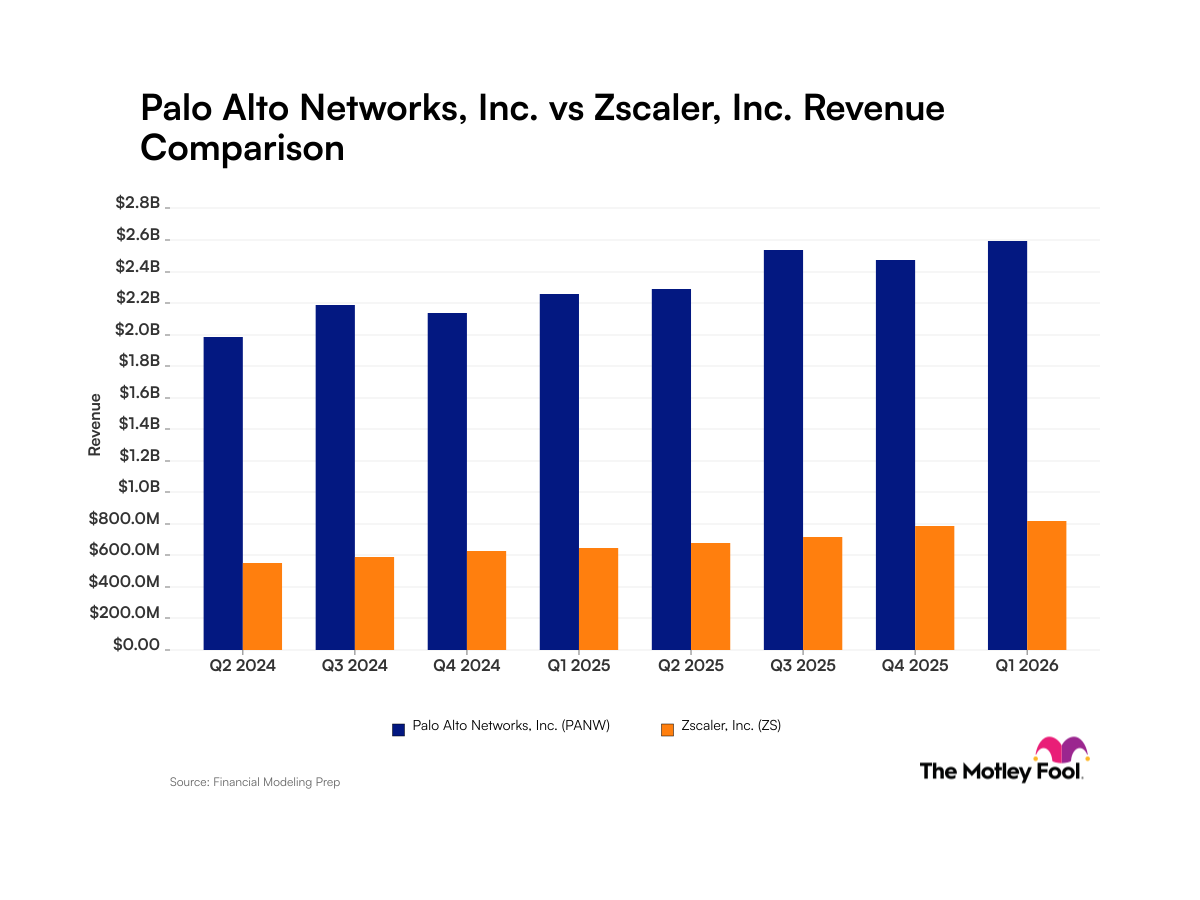
Palo Alto Networks Shows Steady Revenue Growth


- Significant Revenue Growth: Palo Alto Networks reported $2.6 billion in revenue for Q1 2026, reflecting a year-over-year growth of approximately 17%, underscoring its strong demand and leadership in the cybersecurity sector.
- Acquisition Impact: The completion of a $25 billion acquisition of CyberArk Software not only enhances its product portfolio but also potentially increases future market share and competitive strength.
- Zscaler Revenue Dynamics: Zscaler achieved $815.8 million in revenue for Q1 2026, despite a net loss of $34 million, indicating its rapid sales growth outpaces that of Palo Alto Networks, showcasing its expansion potential.
- Market Reaction and AI Influence: Concerns over AI potentially affecting customer retention led to a sell-off in the cybersecurity sector, yet both companies successfully integrated AI into their solutions, demonstrating continued strong market demand for their products.
See More
Palo Alto Networks Launches Idira Identity Security Platform
- Identity Security Platform Launch: Palo Alto Networks has unveiled Idira™, an identity security platform designed to eliminate silos in identity management within enterprises, providing modern privilege access management (PAM) to tackle increasingly complex identity threats.
- Dynamic Privilege Control: Idira ensures the security of all human, machine, and agentic identities by eliminating standing privileges and extending dynamic privilege controls, thereby reducing the risk of identity-related breaches experienced by 90% of organizations in the past year.
- AI-Driven Governance: The platform leverages AI technology to provide visibility and governance capabilities, enabling organizations to effectively manage identities in the rapidly evolving AI landscape, ensuring that every identity is secured rather than merely managed.
- Market Demand Response: The launch of Idira not only offers a seamless transition for existing CyberArk customers but also signifies a new standard in identity security from Palo Alto Networks, addressing modern enterprises' need for proactive protection.
See More

Palo Alto Networks Launches Idira Identity Security Platform
- Identity Security Platform Launch: Palo Alto Networks has unveiled Idira™, an identity security platform designed to eliminate silos in identity management within enterprises, providing modern privilege access management (PAM) to address identity security challenges posed by the rapid adoption of AI.
- Dynamic Privilege Control: Idira ensures the security of every identity by eliminating standing privileges and extending dynamic privilege controls to all users, thereby reducing the risk of identity-related breaches experienced by 90% of organizations in the past year.
- AI-Driven Governance: The platform leverages AI to continuously discover and remediate identity risks, automating compliance management across the entire identity lifecycle, which helps organizations achieve efficient governance in complex identity environments.
- Seamless Upgrade for Existing Customers: Existing CyberArk customers can seamlessly access next-generation capabilities of Idira, enjoying enhanced user experience and dynamic privilege controls, further strengthening their identity security posture.
See More

Google Exposes Hackers Using AI for Attacks


- Hacker Attack Plans: Google's Threat Intelligence Group reported that hackers attempted to use AI models to orchestrate a mass vulnerability exploitation event, highlighting the complexity and severity of cybersecurity threats.
- Zero-Day Exploitation: Hackers utilized AI models to discover and exploit zero-day vulnerabilities, bypassing two-factor authentication, indicating that cyber attackers are leveraging advanced technologies to enhance their attack capabilities, potentially causing significant harm to businesses and government agencies.
- Industry Response: Following Google's report, concerns within the industry about the misuse of AI tools intensified, particularly as Anthropic delayed the rollout of its Mythos model due to fears of criminal exploitation, reflecting a heightened focus on cybersecurity.
- National Security Threats: The report noted that hacker groups linked to China and North Korea have shown significant interest in using AI for vulnerability discovery, underscoring potential risks to national security and prompting governments and businesses to strengthen their defenses.
See More

Google Exposes Hackers Using AI for Vulnerability Exploitation
- AI Attack Threat: Google's Threat Intelligence Group reported that hackers are using AI models like OpenClaw to discover and exploit zero-day software vulnerabilities, highlighting severe risks to cybersecurity that could lead to significant losses for businesses and government agencies.
- Attack Plan Thwarted: Google stated it successfully thwarted an attempt by hackers to use AI models for a mass vulnerability exploitation operation, and while the name of the hacker group remains undisclosed, its proactive countermeasures significantly reduced potential security threats.
- Industry Response: Concerns over AI models potentially being used to identify and exploit software vulnerabilities led Anthropic to delay the rollout of its Mythos model, a decision that sent shockwaves through the industry and prompted White House meetings with technology and business leaders.
- International Hacker Activity: The report noted that hacker groups linked to China and North Korea have shown significant interest in leveraging AI for vulnerability discovery, indicating an increasingly severe global cybersecurity landscape that necessitates enhanced defensive investments by companies.
See More

Market Watch: Oil Prices, Tech Stocks, and Earnings

- Oil Prices and Refinery Output: U.S. refineries are processing an average of 16.3 million barrels of crude per day, significantly up from 13.5 million, which, while unsustainable, is boosting refinery margins amid ongoing geopolitical tensions, stabilizing the market.
- CoreWeave Price Target Raised: Barclays increased CoreWeave's price target from $106 to $120, noting strong first-quarter earnings that exceeded expectations; however, light guidance for Q2 led to an 11% drop in shares, highlighting the tension between revenue growth and rising operating expenses.
- Strong Performance for Corning: Corning's stock rose 3.4% in premarket trading after Bank of America added it to its
See More
Palo Alto Networks Shows Steady Revenue Growth
- Significant Revenue Growth: Palo Alto Networks reported $2.6 billion in revenue for Q1 2026, reflecting a year-over-year growth of approximately 17%, underscoring its strong demand and leadership in the cybersecurity sector.
- Acquisition Impact: The completion of a $25 billion acquisition of CyberArk Software not only enhances its product portfolio but also potentially increases future market share and competitive strength.
- Zscaler Revenue Dynamics: Zscaler achieved $815.8 million in revenue for Q1 2026, despite a net loss of $34 million, indicating its rapid sales growth outpaces that of Palo Alto Networks, showcasing its expansion potential.
- Market Reaction and AI Influence: Concerns over AI potentially affecting customer retention led to a sell-off in the cybersecurity sector, yet both companies successfully integrated AI into their solutions, demonstrating continued strong market demand for their products.
See More
Palo Alto Networks Launches Idira Identity Security Platform
- Identity Security Platform Launch: Palo Alto Networks has unveiled Idira™, an identity security platform designed to eliminate silos in identity management within enterprises, providing modern privilege access management (PAM) to tackle increasingly complex identity threats.
- Dynamic Privilege Control: Idira ensures the security of all human, machine, and agentic identities by eliminating standing privileges and extending dynamic privilege controls, thereby reducing the risk of identity-related breaches experienced by 90% of organizations in the past year.
- AI-Driven Governance: The platform leverages AI technology to provide visibility and governance capabilities, enabling organizations to effectively manage identities in the rapidly evolving AI landscape, ensuring that every identity is secured rather than merely managed.
- Market Demand Response: The launch of Idira not only offers a seamless transition for existing CyberArk customers but also signifies a new standard in identity security from Palo Alto Networks, addressing modern enterprises' need for proactive protection.
See More
Palo Alto Networks Launches Idira Identity Security Platform
- Identity Security Platform Launch: Palo Alto Networks has unveiled Idira™, an identity security platform designed to eliminate silos in identity management within enterprises, providing modern privilege access management (PAM) to address identity security challenges posed by the rapid adoption of AI.
- Dynamic Privilege Control: Idira ensures the security of every identity by eliminating standing privileges and extending dynamic privilege controls to all users, thereby reducing the risk of identity-related breaches experienced by 90% of organizations in the past year.
- AI-Driven Governance: The platform leverages AI to continuously discover and remediate identity risks, automating compliance management across the entire identity lifecycle, which helps organizations achieve efficient governance in complex identity environments.
- Seamless Upgrade for Existing Customers: Existing CyberArk customers can seamlessly access next-generation capabilities of Idira, enjoying enhanced user experience and dynamic privilege controls, further strengthening their identity security posture.
See More
Google Exposes Hackers Using AI for Attacks
- Hacker Attack Plans: Google's Threat Intelligence Group reported that hackers attempted to use AI models to orchestrate a mass vulnerability exploitation event, highlighting the complexity and severity of cybersecurity threats.
- Zero-Day Exploitation: Hackers utilized AI models to discover and exploit zero-day vulnerabilities, bypassing two-factor authentication, indicating that cyber attackers are leveraging advanced technologies to enhance their attack capabilities, potentially causing significant harm to businesses and government agencies.
- Industry Response: Following Google's report, concerns within the industry about the misuse of AI tools intensified, particularly as Anthropic delayed the rollout of its Mythos model due to fears of criminal exploitation, reflecting a heightened focus on cybersecurity.
- National Security Threats: The report noted that hacker groups linked to China and North Korea have shown significant interest in using AI for vulnerability discovery, underscoring potential risks to national security and prompting governments and businesses to strengthen their defenses.
See More
Google Exposes Hackers Using AI for Vulnerability Exploitation
- AI Attack Threat: Google's Threat Intelligence Group reported that hackers are using AI models like OpenClaw to discover and exploit zero-day software vulnerabilities, highlighting severe risks to cybersecurity that could lead to significant losses for businesses and government agencies.
- Attack Plan Thwarted: Google stated it successfully thwarted an attempt by hackers to use AI models for a mass vulnerability exploitation operation, and while the name of the hacker group remains undisclosed, its proactive countermeasures significantly reduced potential security threats.
- Industry Response: Concerns over AI models potentially being used to identify and exploit software vulnerabilities led Anthropic to delay the rollout of its Mythos model, a decision that sent shockwaves through the industry and prompted White House meetings with technology and business leaders.
- International Hacker Activity: The report noted that hacker groups linked to China and North Korea have shown significant interest in leveraging AI for vulnerability discovery, indicating an increasingly severe global cybersecurity landscape that necessitates enhanced defensive investments by companies.
See More
Market Watch: Oil Prices, Tech Stocks, and Earnings
- Oil Prices and Refinery Output: U.S. refineries are processing an average of 16.3 million barrels of crude per day, significantly up from 13.5 million, which, while unsustainable, is boosting refinery margins amid ongoing geopolitical tensions, stabilizing the market.
- CoreWeave Price Target Raised: Barclays increased CoreWeave's price target from $106 to $120, noting strong first-quarter earnings that exceeded expectations; however, light guidance for Q2 led to an 11% drop in shares, highlighting the tension between revenue growth and rising operating expenses.
- Strong Performance for Corning: Corning's stock rose 3.4% in premarket trading after Bank of America added it to its
See More