Palo Alto Networks CEO Makes First Share Purchase Since 2019
Written by Emily J. Thompson, Senior Investment Analyst
Updated: Mar 30 2026
0mins


Source: Newsfilter
- First Share Purchase: Palo Alto Networks CEO Nikesh Arora disclosed his first stock purchase since November 2019, totaling approximately $10 million for 68,085 shares, which Wall Street interpreted as a positive sign for the struggling cybersecurity sector, resulting in a 6% increase in the company's stock price.
- Sector Pressure: Cybersecurity stocks have plummeted over recent months due to concerns surrounding the rise of AI tools, with Palo Alto's shares down 15% year-to-date, highlighting the significant challenges faced by the industry amid fears of disruption.
- Call for AI Collaboration: In a blog post, Arora emphasized the need for AI labs and cybersecurity firms to collaborate in order to tackle increasingly sophisticated hacking threats, stating that this is the industry's
Trade with 70% Backtested Accuracy
Stop guessing "Should I Buy PANW?" and start using high-conviction signals backed by rigorous historical data.
Sign up today to access powerful investing tools and make smarter, data-driven decisions.
Analyst Views on PANW
Wall Street analysts forecast PANW stock price to fall
34 Analyst Rating
28 Buy
5 Hold
1 Sell
Strong Buy
Current: 252.920

Low
157.00
Averages
232.49
High
265.00
Current: 252.920
Low
157.00
Averages
232.49
High
265.00
About PANW
Palo Alto Networks, Inc. is a global artificial intelligence (AI) cybersecurity company, with a comprehensive portfolio of cybersecurity solutions and platforms across network, cloud, security operations, AI and Identity. Its network security platform includes Secure Access Service Edge (SASE), Next-Generation Firewalls, Cloud Delivered Security Services (CDSS), Prisma AIRS, and Strata Cloud Manager (SCM). It delivers security operations capabilities that unifies standalone Security Information and Event Management (SIEM) tools, endpoint security, security automation, cloud detection and response (CDR), as well as attack surface management (ASM) capabilities on its Cortex platform. It delivers comprehensive security across the cloud application development lifecycle through Cortex Cloud. Its Unit 42 brings together expertise across threat research, incident response, and security consulting to deliver intelligence-driven, response-ready outcomes that help customers reduce cyber risk.
About the author

Emily J. Thompson
Emily J. Thompson, a Chartered Financial Analyst (CFA) with 12 years in investment research, graduated with honors from the Wharton School. Specializing in industrial and technology stocks, she provides in-depth analysis for Intellectia’s earnings and market brief reports.

Comparison of Cybersecurity Companies' Earnings Reports


- Revenue Gap Analysis: Palo Alto Networks reported $2.6 billion in revenue while Fortinet generated $1.8 billion in its latest earnings report; despite Palo Alto's higher revenue, Fortinet's 20% year-over-year growth indicates a faster business expansion that may narrow the revenue gap in the future.
- Net Margin Comparison: Fortinet achieved a net income margin of 29% for Q1 2026, compared to Palo Alto Networks' 17%, suggesting that Fortinet is performing better in cost control and profitability, which may attract more investor interest in its stock.
- Stock Price Fluctuations: On May 22, Fortinet's stock hit a 52-week high of $134.19, while Palo Alto Networks reached $261.41, reflecting market optimism about both companies' future growth potential, despite previous sell-offs due to AI concerns.
- Strong Market Demand: Despite fears of competition from AI, the cybersecurity sector continues to show robust customer demand, as evidenced by the year-over-year revenue growth of both Palo Alto Networks and Fortinet, indicating a positive outlook for the industry.
See More
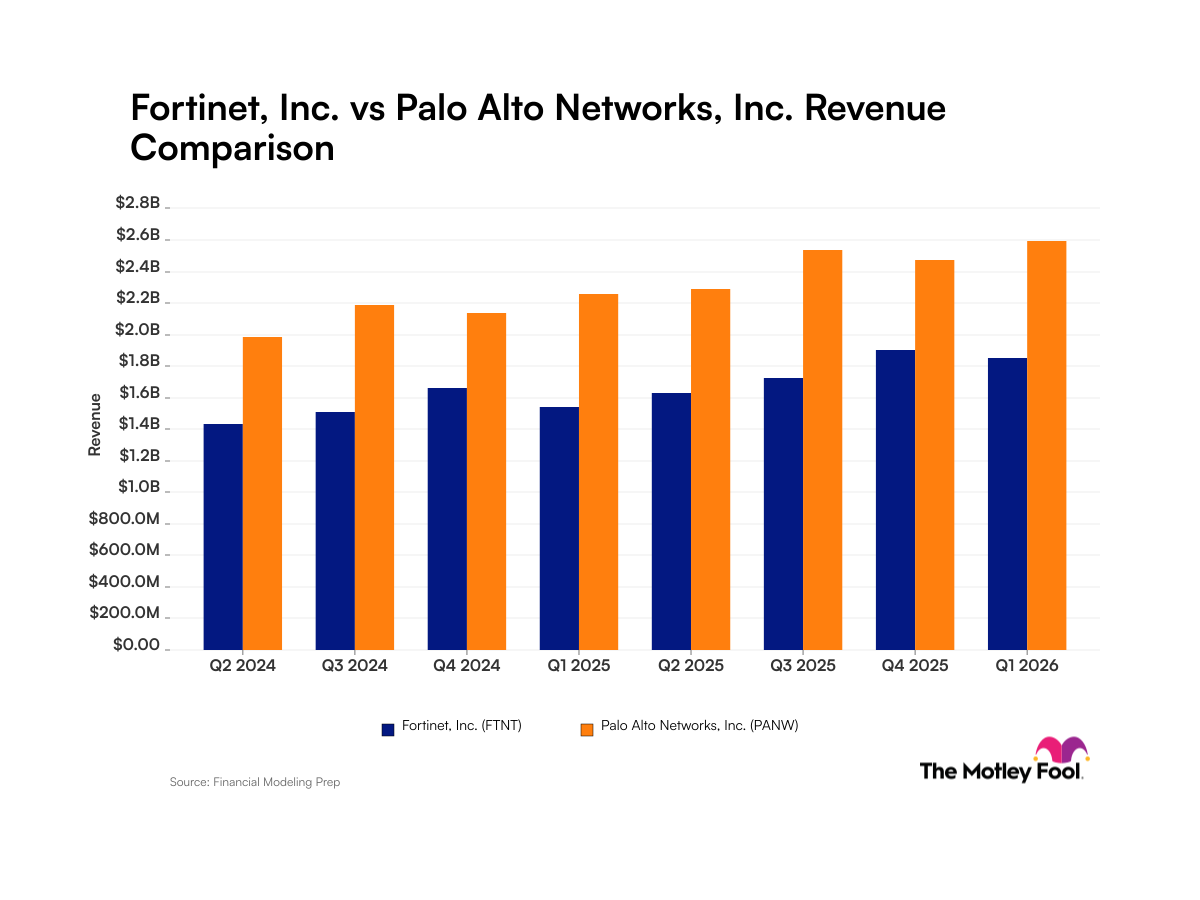
Fortinet and Palo Alto Networks Revenue Growth
- Fortinet Revenue Growth: Fortinet reported $1.8 billion in revenue for Q1 2026, reflecting a 20% year-over-year increase, which underscores its robust growth in the network security hardware and software services sector, further solidifying its market position.
- Palo Alto Networks Performance: Palo Alto Networks generated $2.6 billion in revenue for Q1 2026, marking a 15% year-over-year growth; while its growth rate is lower than Fortinet's, it maintains a strong leadership position in the large enterprise and government markets.
- Stock Price Rebound: On May 22, Fortinet's stock reached a 52-week high of $134.19, while Palo Alto Networks hit $261.41, reflecting a restored investor confidence in cybersecurity demand, particularly in the context of the AI era.
- Strong Market Demand: The sales growth of both companies in their latest quarterly results indicates that despite initial market fears regarding AI, the demand for cybersecurity remains robust, highlighting the urgent need for protective measures among clients.
See More

S&P 500 Index Approaches New Record High


- Market Rebound: The S&P 500 index has advanced for eight consecutive weeks, nearing its record close of 7,501 from May 14, indicating strong investor confidence in economic recovery despite earlier volatility.
- Oil and Bond Yield Impact: Although oil prices surged above $100 per barrel and the 30-year Treasury yield hit its highest level since 2007, the market rebounded on Wednesday, suggesting a restoration of investor optimism regarding economic prospects.
- Nvidia's Strong Earnings: Nvidia reported a blockbuster quarter on Wednesday, exceeding analyst expectations with CEO Jensen Huang stating that demand has gone parabolic, although the stock fell 2.6% post-earnings, highlighting its growth potential in the AI sector.
- CrowdStrike's Strong Performance: CrowdStrike shares climbed nearly 12% over the past week, with multiple Wall Street firms raising their price targets, reflecting optimistic market expectations for cybersecurity demand despite competitive pressures from AI technologies.
See More

U.S. Stocks Close Higher, S&P 500 Approaches 7,500

- Market Performance: The S&P 500 is nearing 7,500, on track for its eighth consecutive week of gains, reflecting strong market performance driven by sectors like healthcare and information technology, indicating investor confidence in economic recovery.
- Stock Dynamics: Merck leads the healthcare sector with encouraging trial results, while Dell's stock surges over 16%, showcasing a robust rebound in tech stocks that may attract more investor interest in these sectors' growth potential.
- Arm Holdings Surge: Arm Holdings rallies nearly 50% this week, and despite trimming shares on Monday, it still locked in a 20% gain, highlighting its significance and growth potential within the portfolio, reflecting optimistic market expectations for its future performance.
- Starbucks AI Project Adjustment: Starbucks has ended an AI program for automating inventory accounting, which may impact its $2 billion cost savings target; however, CEO Brian Niccol is set to discuss this goal at next week's conference, indicating the company's ongoing focus on cost control during its turnaround efforts.
See More

Stock Price Fluctuations of Multiple Companies


- Layoff Impact: Intuit announced a workforce reduction of about 3,000 employees, or 17% of its total staff, leading to a more than 3% drop in stock price, indicating urgent cost control measures that may affect its market competitiveness.
- Financial Guidance Reaffirmed: Hasbro reaffirmed its full-year adjusted EBITDA guidance of $1.40 billion to $1.45 billion, slightly below the market consensus of $1.44 billion, with shares dropping over 8%, reflecting market concerns about its profitability.
- Shareholder Confidence Boost: AMC Entertainment's stock surged 13% after CEO Adam Aron disclosed the purchase of 250,000 shares valued at approximately $344,000, demonstrating management's confidence in the company's future, potentially attracting more investor interest.
- Earnings Beat: Toll Brothers reported second-quarter earnings of $2.72 per share, exceeding analyst expectations of $2.57, with shares rising nearly 8%, indicating strong performance and growth potential in the real estate market.
See More

Stifel Raises Palo Alto's Price Target to $275 Ahead of Q3 Results
- Positive Demand Trends: Analyst Adam Borg spoke with five Tier-1 cybersecurity VARs/SIs with a combined annual Palo spend of over $2 billion, revealing that three partners exceeded expectations in Palo's F3Q results, indicating strong market demand and platform opportunities.
- Acquisition and AI Positioning: Partners expressed positive sentiments regarding Palo's CyberArk acquisition and AI strategy, suggesting the company's competitiveness and growth potential in the cybersecurity sector, which is expected to support reaffirmation of FY26 guidance.
- Price Target Increase: Stifel raised Palo Alto's price target from $185 to $275 while reiterating a Buy rating, reflecting increased confidence in the company's future performance and enhanced market recognition.
- Positive Stock Reaction: Palo Alto shares rose nearly 3% in Wednesday's trading, indicating investor optimism ahead of the upcoming earnings report, further validating market confidence in its growth prospects.
See More
Comparison of Cybersecurity Companies' Earnings Reports
- Revenue Gap Analysis: Palo Alto Networks reported $2.6 billion in revenue while Fortinet generated $1.8 billion in its latest earnings report; despite Palo Alto's higher revenue, Fortinet's 20% year-over-year growth indicates a faster business expansion that may narrow the revenue gap in the future.
- Net Margin Comparison: Fortinet achieved a net income margin of 29% for Q1 2026, compared to Palo Alto Networks' 17%, suggesting that Fortinet is performing better in cost control and profitability, which may attract more investor interest in its stock.
- Stock Price Fluctuations: On May 22, Fortinet's stock hit a 52-week high of $134.19, while Palo Alto Networks reached $261.41, reflecting market optimism about both companies' future growth potential, despite previous sell-offs due to AI concerns.
- Strong Market Demand: Despite fears of competition from AI, the cybersecurity sector continues to show robust customer demand, as evidenced by the year-over-year revenue growth of both Palo Alto Networks and Fortinet, indicating a positive outlook for the industry.
See More
Fortinet and Palo Alto Networks Revenue Growth
- Fortinet Revenue Growth: Fortinet reported $1.8 billion in revenue for Q1 2026, reflecting a 20% year-over-year increase, which underscores its robust growth in the network security hardware and software services sector, further solidifying its market position.
- Palo Alto Networks Performance: Palo Alto Networks generated $2.6 billion in revenue for Q1 2026, marking a 15% year-over-year growth; while its growth rate is lower than Fortinet's, it maintains a strong leadership position in the large enterprise and government markets.
- Stock Price Rebound: On May 22, Fortinet's stock reached a 52-week high of $134.19, while Palo Alto Networks hit $261.41, reflecting a restored investor confidence in cybersecurity demand, particularly in the context of the AI era.
- Strong Market Demand: The sales growth of both companies in their latest quarterly results indicates that despite initial market fears regarding AI, the demand for cybersecurity remains robust, highlighting the urgent need for protective measures among clients.
See More
S&P 500 Index Approaches New Record High
- Market Rebound: The S&P 500 index has advanced for eight consecutive weeks, nearing its record close of 7,501 from May 14, indicating strong investor confidence in economic recovery despite earlier volatility.
- Oil and Bond Yield Impact: Although oil prices surged above $100 per barrel and the 30-year Treasury yield hit its highest level since 2007, the market rebounded on Wednesday, suggesting a restoration of investor optimism regarding economic prospects.
- Nvidia's Strong Earnings: Nvidia reported a blockbuster quarter on Wednesday, exceeding analyst expectations with CEO Jensen Huang stating that demand has gone parabolic, although the stock fell 2.6% post-earnings, highlighting its growth potential in the AI sector.
- CrowdStrike's Strong Performance: CrowdStrike shares climbed nearly 12% over the past week, with multiple Wall Street firms raising their price targets, reflecting optimistic market expectations for cybersecurity demand despite competitive pressures from AI technologies.
See More
U.S. Stocks Close Higher, S&P 500 Approaches 7,500
- Market Performance: The S&P 500 is nearing 7,500, on track for its eighth consecutive week of gains, reflecting strong market performance driven by sectors like healthcare and information technology, indicating investor confidence in economic recovery.
- Stock Dynamics: Merck leads the healthcare sector with encouraging trial results, while Dell's stock surges over 16%, showcasing a robust rebound in tech stocks that may attract more investor interest in these sectors' growth potential.
- Arm Holdings Surge: Arm Holdings rallies nearly 50% this week, and despite trimming shares on Monday, it still locked in a 20% gain, highlighting its significance and growth potential within the portfolio, reflecting optimistic market expectations for its future performance.
- Starbucks AI Project Adjustment: Starbucks has ended an AI program for automating inventory accounting, which may impact its $2 billion cost savings target; however, CEO Brian Niccol is set to discuss this goal at next week's conference, indicating the company's ongoing focus on cost control during its turnaround efforts.
See More
Stock Price Fluctuations of Multiple Companies
- Layoff Impact: Intuit announced a workforce reduction of about 3,000 employees, or 17% of its total staff, leading to a more than 3% drop in stock price, indicating urgent cost control measures that may affect its market competitiveness.
- Financial Guidance Reaffirmed: Hasbro reaffirmed its full-year adjusted EBITDA guidance of $1.40 billion to $1.45 billion, slightly below the market consensus of $1.44 billion, with shares dropping over 8%, reflecting market concerns about its profitability.
- Shareholder Confidence Boost: AMC Entertainment's stock surged 13% after CEO Adam Aron disclosed the purchase of 250,000 shares valued at approximately $344,000, demonstrating management's confidence in the company's future, potentially attracting more investor interest.
- Earnings Beat: Toll Brothers reported second-quarter earnings of $2.72 per share, exceeding analyst expectations of $2.57, with shares rising nearly 8%, indicating strong performance and growth potential in the real estate market.
See More
Stifel Raises Palo Alto's Price Target to $275 Ahead of Q3 Results
- Positive Demand Trends: Analyst Adam Borg spoke with five Tier-1 cybersecurity VARs/SIs with a combined annual Palo spend of over $2 billion, revealing that three partners exceeded expectations in Palo's F3Q results, indicating strong market demand and platform opportunities.
- Acquisition and AI Positioning: Partners expressed positive sentiments regarding Palo's CyberArk acquisition and AI strategy, suggesting the company's competitiveness and growth potential in the cybersecurity sector, which is expected to support reaffirmation of FY26 guidance.
- Price Target Increase: Stifel raised Palo Alto's price target from $185 to $275 while reiterating a Buy rating, reflecting increased confidence in the company's future performance and enhanced market recognition.
- Positive Stock Reaction: Palo Alto shares rose nearly 3% in Wednesday's trading, indicating investor optimism ahead of the upcoming earnings report, further validating market confidence in its growth prospects.
See More