

OpenAI to Launch GPT-5.6 on Thursday

Catch up on the top artificial intelligence news and commentary by Wall Street analysts on publicly traded companies in the space with this daily recap compiled by The Fly.GPT-5.6 MODEL:OpenAI will publicly launch GPT-5.6, its most advanced AI model, on Thursday following a delay last month prompted by U.S. government requests over heightened national security concerns about the potential misuse of powerful AI technologies, Reuters' Devika Madhusudhanan Nair and Shubham Kalia. The U.S. and China are in a race to develop cutting-edge AI models the likes of which, experts have said, could dramatically accelerate sophisticated cyberattacks in sectors relying on complex, interconnected and often decades-old technology systems, the authors note.GROK 4.5:Cursor said in a blogthat the company is "releasing Grok 4.5 together with SpaceXAI, our most intelligent model and the first we've built for more than software engineering. Grok 4.5 can handle difficult, long-running tasks that require creatively using tools to solve problems, whether in software engineering, data science, finance, legal work, or anything else you do on a computer." Grok 4.5 is available today in Cursor across desktop, web, iOS, CLI, and the company's SDK. Individual and team plans include significant usage of the model as part of our first-party model pool, and Cursor is doubling usage for the first week. The base model is priced at $2/M input tokens and $6/M output tokens. There is also a fast variant at $4/M input tokens and $18/M output tokens. "Grok 4.5 and Composer 2.5 are two different model weight classes, and we're excited to support both sizes and weights. Composer 2.5 will remain offered, and we will release new models of this size going forward," the company added.NVIDIA H200 CHIPS:China plans to allow some of the country's biggest AI companies to buy a small number of Nvidia'sH200 chips, The Information's Qianer Liu, citing two people with direct knowledge of the matter. The chip purchase approvals would offset a shortage caused by soaring demand for AI chips, the author notes. U.S. President Donald Trump gave Nvidia permission in December to ship H200 chips to approved Chinese customers, but Beijing had not yet given local companies permission to buy the chips, out of Protection for domestic chipmakers.SUPER SENSING AI GLASSES:Metais testing "super sensing" AI glasses that use cameras and audio to capture every moment, continuously collecting audio while taking photos every few seconds, Hannah Murphy of The Financial Times, citing multiple people familiar with the matter. Additionally, a user could use AI to ask what they saw or heard, or recall the day.ADVERTISING TECHNOLOGY:Warner Bros. Discoveryand Amazon Web Services, its preferred cloud provider,the development of next-generation advertising experiences built with AWS agentic AI. "WBD is expanding its advertising technology stack on AWS and deploying an agentic AI-driven approach to how premium inventory across its U.S. linear and digital channels is planned, activated, optimized, and monetized. By rebuilding its longstanding traditional internal workflows from the ground up with automated, data-driven processes on a single platform, WBD has reimagined its infrastructure for advertisers - unifying the buying experience across previously siloed business units and enabling ongoing automated campaign optimization," the company stated.AI COMPUTE PILOT PROGRAM:Sunrunannounced the launch of a distributed artificial intelligence compute pilot program, marking its entry into distributed edge computing. The pilot program will place compute nodes in homes equipped with Sunrun solar and battery storage systems, with plans to coordinate the sale of inference capacity to enterprise buyers. Participating homeowners will be compensated for hosting the nodes. Sunrun expects to complete the pilot over the coming months to assess compute performance and evaluate potential for a broader commercial rollout. "AI companies are scrambling to secure greater access to energy and computing power," said Paul Dickson, president and chief revenue officer. "Over nearly two decades, we have perfected our ability to operationalize, finance, and scale distributed assets. We are now using our leadership position in distributed home energy and proven infrastructure to bring compute closer to the sources of energy and inference."KUBERNETES EDGE AI:Super Micro Computerannounced the launch of Kubernetes Edge AI appliances in collaboration with Red Hat and Everpure. "AI inferencing at the edge requires more than just hardware it demands a validated, scalable platform that customers can deploy with confidence," said Vik Malyala, chief business officer, Supermicro. "Together with Red Hat and Everpure, we are delivering a turnkey Kubernetes Edge AI Appliance that simplifies deployment, accelerates time-to-revenue, and enables customers to efficiently scale AI workloads across distributed edge environments."
Trade with 70% Backtested Accuracy
Analyst Views on SPCX

About SPCX
About the author

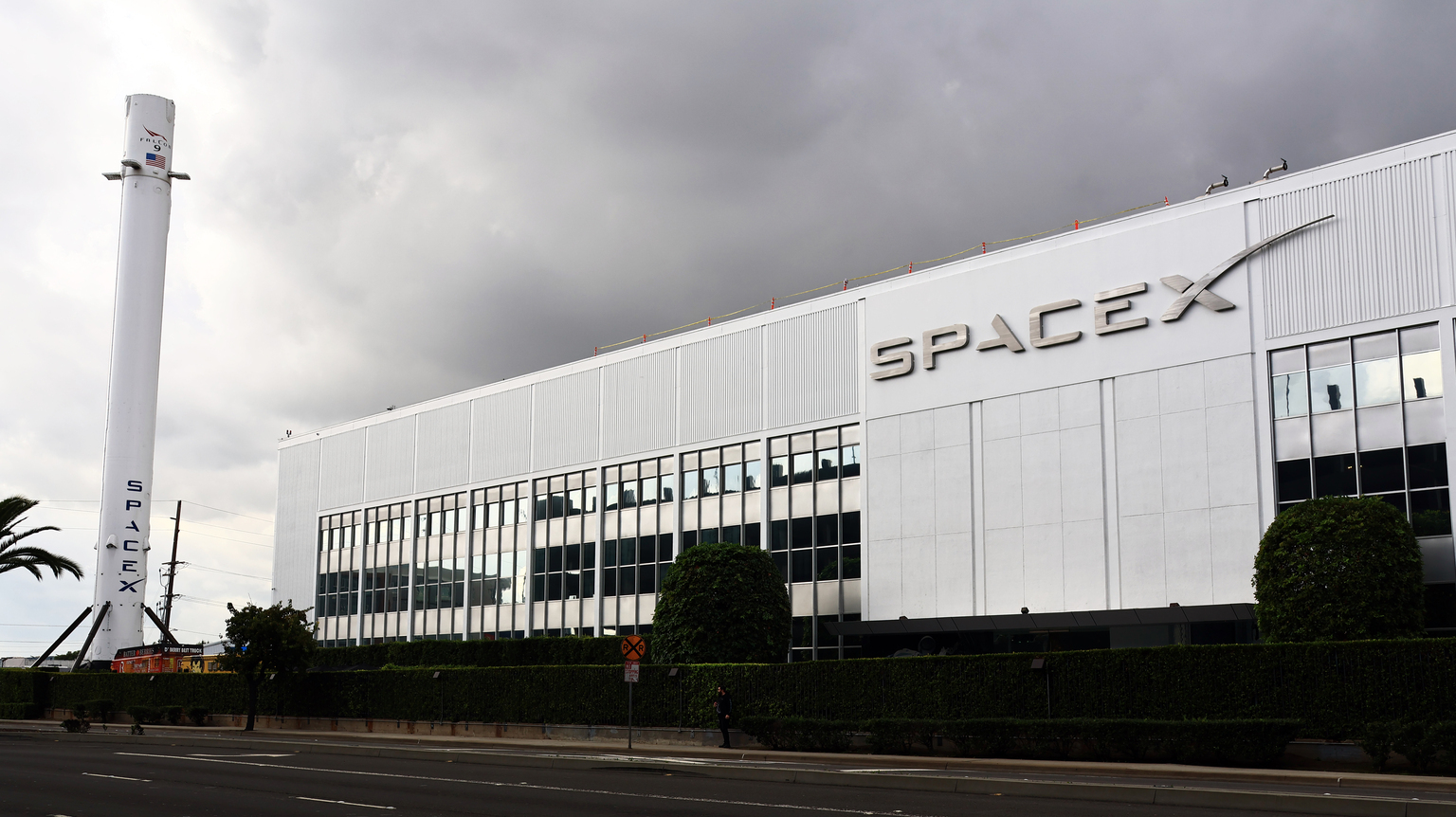
SpaceX Stock Falls Below Critical Support Line

- Technical Support Breach: SpaceX's stock has closed below the $150 'Genesis Line' for two consecutive trading sessions, indicating a critical technical juncture that could lead to a retest of the IPO price near $135.
- Market Behavior Pattern: According to The Chart Report, many high-profile IPOs often fall below their anchored volume-weighted average price shortly after listing, typically taking four to six weeks to build a base before reclaiming that level, similar to the patterns seen with Palantir and CoreWeave.
- Options Activity Signal: Heavy put option activity in SpaceX shares indicates protection rather than pessimism, as early venture capital investors with substantial gains are driving elevated put volume, reflecting a cautious market sentiment regarding future price movements.
- Nasdaq-100 Impact: The recent weakness following SpaceX's addition to the Nasdaq-100 illustrates traders adjusting positions ahead of an anticipated price increase that did not materialize, while future inclusion in the S&P 500 is expected to trigger a significantly larger market response.

SpaceX to Acquire Anysphere for $60 Billion
- Acquisition Context: SpaceX announced a $60 billion all-stock acquisition of Anysphere, the developer of the AI coding platform Cursor, marking a significant pivot towards AI following its IPO, although the immediate impact on stock performance has been limited.
- Shareholder Impact: The acquisition will increase SpaceX's share count by approximately 3%, or 365.9 million shares, relative to its current diluted share count of 13.2 billion, indicating a relatively minor dilution for existing investors and showcasing the deal's financing rationale.
- Market Competition: Once the acquisition closes, SpaceX plans to integrate Cursor's AI coding tool into its xAI platform, which could enhance its competitiveness against rivals like Anthropic and OpenAI, although it still faces significant competitive pressures in the AI coding space.
- Future Outlook: While Cursor is currently unprofitable and expected to add to SpaceX's overall losses, the market remains optimistic about SpaceX's potential in the AI sector, with key projects like Starlink and Starship likely to have a more substantial impact on stock performance in the near term.
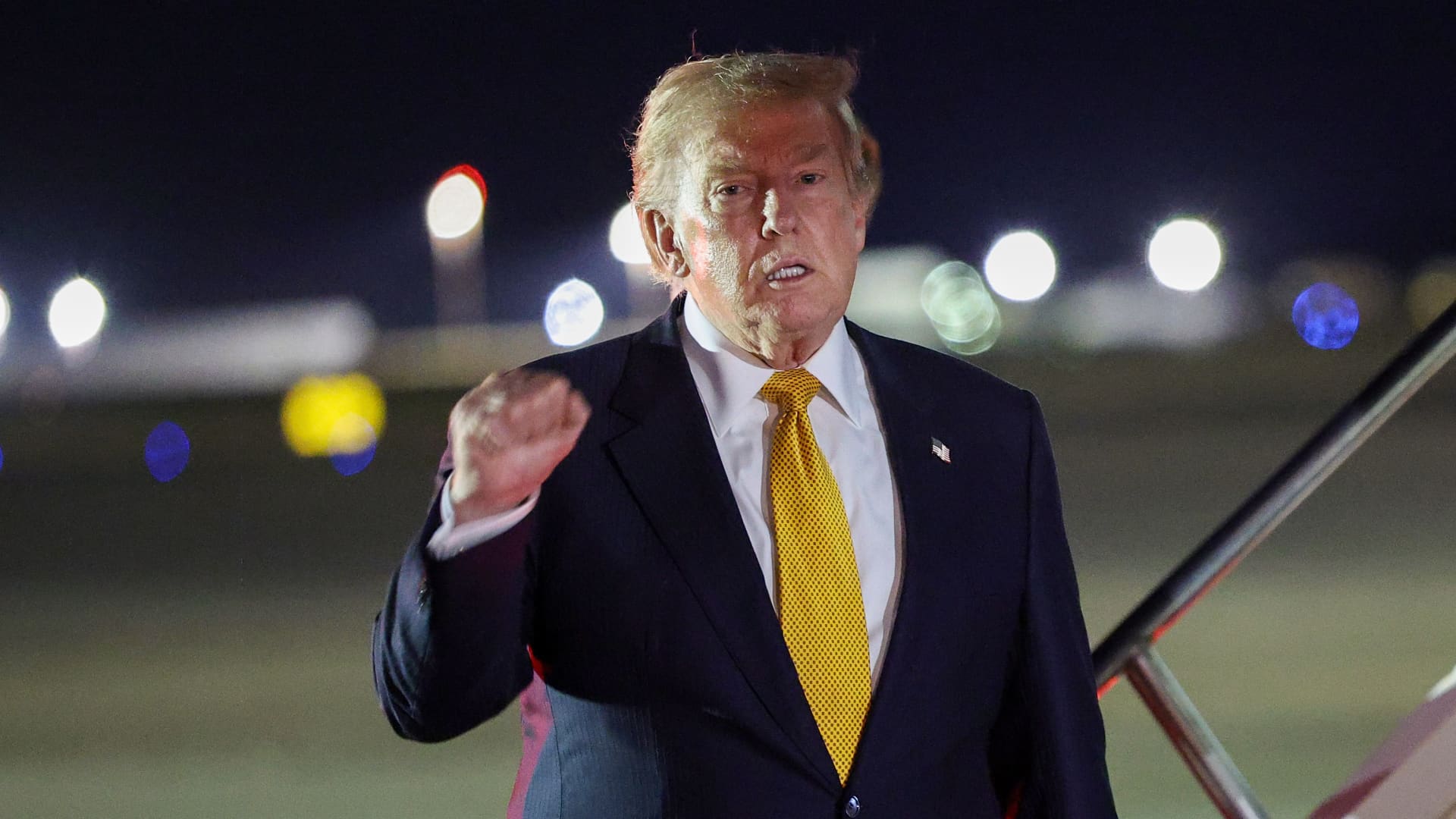
Trump Declares End of Middle East Ceasefire Amid NATO Criticism

- Ceasefire Declared Over: Trump announced the end of the ceasefire with Iran during the NATO summit, citing renewed hostilities in the Strait of Hormuz, which has led to fresh U.S. airstrikes, significantly destabilizing the Middle East situation.
- NATO Allies Criticized: Trump criticized NATO allies for insufficient defense spending, particularly targeting Spain with threats to cut off trade, which could strain U.S.-Spain relations and impact global trade dynamics.
- Market Reaction Notable: Trump's comments and U.S. military actions caused the Dow Jones Industrial Average and S&P 500 to drop, while Brent crude futures surged 5.43% to $78.19 per barrel, indicating the market's heightened sensitivity to Middle Eastern tensions.
- Fed Policy Divergence: Amid escalating tensions in the Middle East, the Federal Reserve revealed internal divisions regarding future interest rates, with some officials suggesting easing inflation could lead to lower rates, while others anticipated the opposite, highlighting economic policy uncertainty.
Oil Prices Surge Amid Tech Stock Volatility


- Oil Price Surge: Brent crude futures surpassed $80 on Wednesday, primarily driven by U.S. military actions against Iran, with the energy sector being the top performer of the day, up 1.45%, indicating strong market reactions to energy demand.
- Tech Stock Volatility: Nvidia's stock is down 14% from its May high, while AMD, Applied Materials, and Micron Technology have seen declines of 11.5%, 22%, and 24% respectively, reflecting investor caution towards tech stocks that may influence future investment decisions.
- PepsiCo Earnings Preview: PepsiCo is set to report earnings on Thursday, with its stock down about 8% over the past three months and 17% from its 52-week high, which could affect market perceptions of its future growth potential.
- Blue Origin Funding: Jeff Bezos' Blue Origin secured a $4 billion investment from Coatue Management as part of a new $10 billion fundraising round, expected to value the company at $130 billion, showcasing the investment enthusiasm and growth potential in the space industry.
Analysis of SpaceX's Nasdaq-100 Index Performance
- Forced Buying Effect: SpaceX's inclusion in the Nasdaq-100 on July 7 triggered billions in forced buying, yet the stock price fell about 6% within a day, indicating market skepticism about its high valuation.
- Market Reaction Analysis: While joining the Nasdaq-100 typically boosts stock demand, SpaceX's shares are trading below their IPO starting price, reflecting investor concerns over its future profitability, especially as the company remains unprofitable.
- Revenue vs. Loss Comparison: In 2025, SpaceX generated approximately $18.7 billion in revenue, a 33% increase, but reported a net loss of $4.9 billion, highlighting potential financial risks behind its high market cap, necessitating cautious evaluation of its growth sustainability.
- Valuation Challenges: With a market cap of about $1.9 trillion, SpaceX's strong Starlink performance is overshadowed by a staggering 100 times sales valuation, meaning any operational missteps could lead to significant stock price fluctuations, prompting investors to monitor its profitability improvements closely.
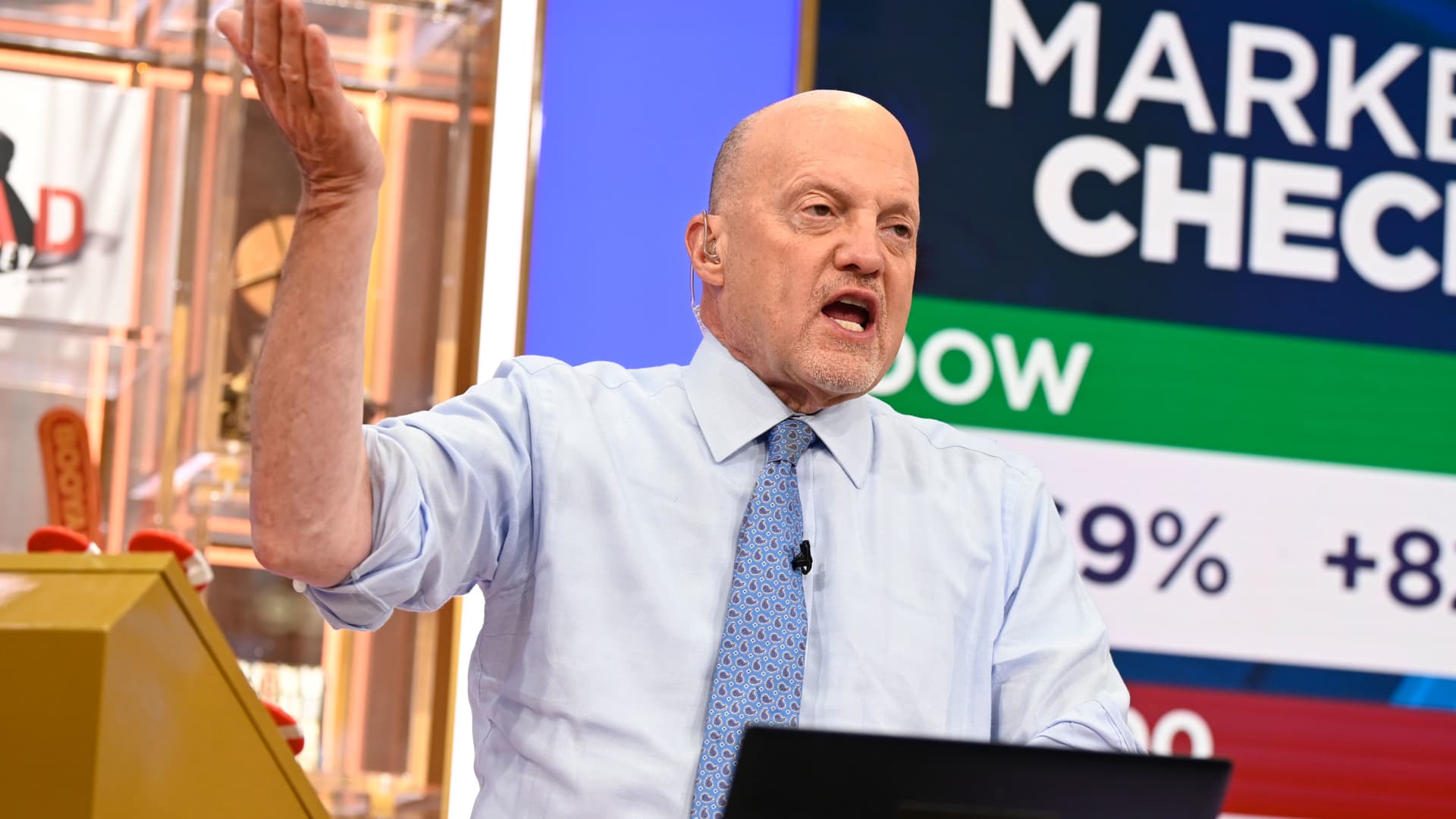
Flood of New Stock and Bond Issuance Threatens Bull Market


- Market Supply Pressure: Jim Cramer highlighted that the stock and bond markets are facing significant pressure from a flood of new issuances, including Alphabet's stock sale and SpaceX's $85 billion IPO, which could push demand to its limits and threaten the sustainability of the bull market.
- Rivian Discount Offering Warning: Cramer noted that Rivian's discounted stock offering suggests that the market may no longer be willing to absorb new equity at lofty valuations, raising concerns among investors about future issuances and increasing selling pressure in the market.
- Impact of SK Hynix Listing: Cramer expressed concerns over SK Hynix's planned $28 billion Nasdaq listing, suggesting that it may force institutions to sell existing holdings to make room, potentially exacerbating selling pressure elsewhere in the market.
- Fragile Balance of the Bull Market: Although the market has not yet reached a breaking point, Cramer warned that if new issuances continue at the current pace, the bull market could face severe oversupply risks, urging a pause in IPOs and secondary market activities to maintain market stability.
SpaceX Stock Falls Below Critical Support Line
- Technical Support Breach: SpaceX's stock has closed below the $150 'Genesis Line' for two consecutive trading sessions, indicating a critical technical juncture that could lead to a retest of the IPO price near $135.
- Market Behavior Pattern: According to The Chart Report, many high-profile IPOs often fall below their anchored volume-weighted average price shortly after listing, typically taking four to six weeks to build a base before reclaiming that level, similar to the patterns seen with Palantir and CoreWeave.
- Options Activity Signal: Heavy put option activity in SpaceX shares indicates protection rather than pessimism, as early venture capital investors with substantial gains are driving elevated put volume, reflecting a cautious market sentiment regarding future price movements.
- Nasdaq-100 Impact: The recent weakness following SpaceX's addition to the Nasdaq-100 illustrates traders adjusting positions ahead of an anticipated price increase that did not materialize, while future inclusion in the S&P 500 is expected to trigger a significantly larger market response.
SpaceX to Acquire Anysphere for $60 Billion
- Acquisition Context: SpaceX announced a $60 billion all-stock acquisition of Anysphere, the developer of the AI coding platform Cursor, marking a significant pivot towards AI following its IPO, although the immediate impact on stock performance has been limited.
- Shareholder Impact: The acquisition will increase SpaceX's share count by approximately 3%, or 365.9 million shares, relative to its current diluted share count of 13.2 billion, indicating a relatively minor dilution for existing investors and showcasing the deal's financing rationale.
- Market Competition: Once the acquisition closes, SpaceX plans to integrate Cursor's AI coding tool into its xAI platform, which could enhance its competitiveness against rivals like Anthropic and OpenAI, although it still faces significant competitive pressures in the AI coding space.
- Future Outlook: While Cursor is currently unprofitable and expected to add to SpaceX's overall losses, the market remains optimistic about SpaceX's potential in the AI sector, with key projects like Starlink and Starship likely to have a more substantial impact on stock performance in the near term.
Trump Declares End of Middle East Ceasefire Amid NATO Criticism
- Ceasefire Declared Over: Trump announced the end of the ceasefire with Iran during the NATO summit, citing renewed hostilities in the Strait of Hormuz, which has led to fresh U.S. airstrikes, significantly destabilizing the Middle East situation.
- NATO Allies Criticized: Trump criticized NATO allies for insufficient defense spending, particularly targeting Spain with threats to cut off trade, which could strain U.S.-Spain relations and impact global trade dynamics.
- Market Reaction Notable: Trump's comments and U.S. military actions caused the Dow Jones Industrial Average and S&P 500 to drop, while Brent crude futures surged 5.43% to $78.19 per barrel, indicating the market's heightened sensitivity to Middle Eastern tensions.
- Fed Policy Divergence: Amid escalating tensions in the Middle East, the Federal Reserve revealed internal divisions regarding future interest rates, with some officials suggesting easing inflation could lead to lower rates, while others anticipated the opposite, highlighting economic policy uncertainty.
Oil Prices Surge Amid Tech Stock Volatility
- Oil Price Surge: Brent crude futures surpassed $80 on Wednesday, primarily driven by U.S. military actions against Iran, with the energy sector being the top performer of the day, up 1.45%, indicating strong market reactions to energy demand.
- Tech Stock Volatility: Nvidia's stock is down 14% from its May high, while AMD, Applied Materials, and Micron Technology have seen declines of 11.5%, 22%, and 24% respectively, reflecting investor caution towards tech stocks that may influence future investment decisions.
- PepsiCo Earnings Preview: PepsiCo is set to report earnings on Thursday, with its stock down about 8% over the past three months and 17% from its 52-week high, which could affect market perceptions of its future growth potential.
- Blue Origin Funding: Jeff Bezos' Blue Origin secured a $4 billion investment from Coatue Management as part of a new $10 billion fundraising round, expected to value the company at $130 billion, showcasing the investment enthusiasm and growth potential in the space industry.
Analysis of SpaceX's Nasdaq-100 Index Performance
- Forced Buying Effect: SpaceX's inclusion in the Nasdaq-100 on July 7 triggered billions in forced buying, yet the stock price fell about 6% within a day, indicating market skepticism about its high valuation.
- Market Reaction Analysis: While joining the Nasdaq-100 typically boosts stock demand, SpaceX's shares are trading below their IPO starting price, reflecting investor concerns over its future profitability, especially as the company remains unprofitable.
- Revenue vs. Loss Comparison: In 2025, SpaceX generated approximately $18.7 billion in revenue, a 33% increase, but reported a net loss of $4.9 billion, highlighting potential financial risks behind its high market cap, necessitating cautious evaluation of its growth sustainability.
- Valuation Challenges: With a market cap of about $1.9 trillion, SpaceX's strong Starlink performance is overshadowed by a staggering 100 times sales valuation, meaning any operational missteps could lead to significant stock price fluctuations, prompting investors to monitor its profitability improvements closely.
Flood of New Stock and Bond Issuance Threatens Bull Market
- Market Supply Pressure: Jim Cramer highlighted that the stock and bond markets are facing significant pressure from a flood of new issuances, including Alphabet's stock sale and SpaceX's $85 billion IPO, which could push demand to its limits and threaten the sustainability of the bull market.
- Rivian Discount Offering Warning: Cramer noted that Rivian's discounted stock offering suggests that the market may no longer be willing to absorb new equity at lofty valuations, raising concerns among investors about future issuances and increasing selling pressure in the market.
- Impact of SK Hynix Listing: Cramer expressed concerns over SK Hynix's planned $28 billion Nasdaq listing, suggesting that it may force institutions to sell existing holdings to make room, potentially exacerbating selling pressure elsewhere in the market.
- Fragile Balance of the Bull Market: Although the market has not yet reached a breaking point, Cramer warned that if new issuances continue at the current pace, the bull market could face severe oversupply risks, urging a pause in IPOs and secondary market activities to maintain market stability.





