Nvidia's AI Dominance and Associated Risks
Written by Emily J. Thompson, Senior Investment Analyst
Updated: 1 hour ago
0mins

Should l Buy NVDA?
Source: NASDAQ.COM
- Significant Revenue Growth: Nvidia's fiscal 2026 revenue reached $215.9 billion, a 65% year-over-year increase, with data center revenue alone hitting $62.3 billion in Q4, driven almost entirely by AI demand, showcasing the company's robust performance in the AI market.
- Developer Lock-In Effect: Nvidia's CUDA software platform, developed over 20 years, has become the de facto standard in the AI industry, creating a strong developer lock-in effect that makes it difficult for businesses to switch to competitors' hardware when building AI infrastructure, further solidifying the company's market position.
- Technical Leadership: Nvidia's GPUs not only lead the market in technical capabilities but also positioned the company advantageously during the AI boom, making it challenging for competitors like AMD and Intel to catch up, demonstrating Nvidia's dual advantage in both hardware and software layers.
- Investment Risk Warning: Despite Nvidia's strong market position, the realization of AI investment returns remains uncertain, with numerous studies indicating minimal effects on productivity, prompting investors to carefully assess the actual return potential of AI to avoid significant losses in a bubble scenario.
Trade with 70% Backtested Accuracy
Stop guessing "Should I Buy NVDA?" and start using high-conviction signals backed by rigorous historical data.
Sign up today to access powerful investing tools and make smarter, data-driven decisions.
Analyst Views on NVDA
Wall Street analysts forecast NVDA stock price to rise
41 Analyst Rating
39 Buy
1 Hold
1 Sell
Strong Buy
Current: 199.640

Low
200.00
Averages
264.97
High
352.00
Current: 199.640
Low
200.00
Averages
264.97
High
352.00
About NVDA
NVIDIA Corporation is an artificial intelligence (AI) infrastructure company. The Company is engaged in accelerated computing to help solve the challenging computational problems. Its segments include Compute & Networking and Graphics. The Compute & Networking segment includes its Data Center accelerated computing and networking platforms and AI solutions and software, and automotive platforms and autonomous and electric vehicle solutions, including software. The Graphics segment includes GeForce GPUs for gaming and personal computers (PCs), and Quadro/NVIDIA RTX GPUs for enterprise workstation graphics. Its technology stack includes the foundational NVIDIA CUDA development platform that runs on all NVIDIA GPUs, as well as hundreds of domain-specific software libraries, frameworks, algorithms, software development kits (SDKs), and application programming interfaces (APIs). Its platforms address four markets, which include Data Center, Gaming, Professional Visualization, and Automotive.
About the author

Emily J. Thompson
Emily J. Thompson, a Chartered Financial Analyst (CFA) with 12 years in investment research, graduated with honors from the Wharton School. Specializing in industrial and technology stocks, she provides in-depth analysis for Intellectia’s earnings and market brief reports.

REFLECTION AI CEO MISHA LASKIN: AFFIRMS FUNDRAISING AT A $25 BILLION VALUATION IN CNBC INTERVIEW

- Raising Money: Reflection AI, led by CEO Misha Laskin, is reportedly raising funds at a valuation of $25 billion.
- Media Coverage: The news was highlighted in a recent interview with CNBC, emphasizing the company's significant financial growth and market position.
See More

Intel's Strong Earnings Propel Semiconductor Stocks Higher


- Intel's Earnings Boost: Intel's data center business reported a 22% growth, indicating that AI-driven hardware demand is significantly recovering, which has bolstered optimism across the semiconductor sector and enhanced investor confidence.
- Sector-Wide Rally: Following Intel's results, peers like AMD, Qualcomm, and ARM saw their stock prices rise over 10%, reflecting a growing market consensus that the 'AI trade' is expanding beyond Nvidia's specialized chips into the broader silicon ecosystem.
- Forecast Upgrade: Research firm Omdia significantly raised its semiconductor revenue forecast for 2026, anticipating robust growth driven by surging demand for memory and data storage components fueled by artificial intelligence.
- Nova's Stock Volatility: Nova's shares jumped 4.5%, marking a 57.8% increase year-to-date and reaching a new 52-week high, indicating market interest in the company's future prospects despite its high volatility.
See More

Lattice Semiconductor Shares Rise Amid Semiconductor Sector Recovery

- Industry Recovery Signal: Lattice Semiconductor shares rose 3.9% in the afternoon session, driven by a 22% growth in Intel's data center business, indicating that AI-driven hardware demand is significantly boosting the semiconductor sector and enhancing investor confidence.
- Market Consensus Boost: Following Intel's strong earnings and Omdia's raised semiconductor revenue forecast for 2026, stocks across the semiconductor industry surged, with peers like AMD, Qualcomm, and ARM rising over 10%, reflecting a growing market consensus on the broadening 'AI trade'.
- Stock Volatility Analysis: Lattice Semiconductor has experienced 29 moves greater than 5% in the past year; despite today's 3.6% increase to $122.71, the market perceives this news as meaningful but not fundamentally altering its view of the business, indicating cautious investor sentiment.
- Long-term Investment Returns: With a 56% increase since the beginning of the year, Lattice Semiconductor has reached a new 52-week high, and an investment of $1,000 made five years ago would now be worth $2,236, showcasing the company's strong growth potential over the long term.
See More

Analysis of Investment Choices Between XLK and VGT
- Negligible Fee Difference: XLK charges an expense ratio of 0.08% compared to VGT's 0.09%, resulting in a mere one cent savings per $100 invested, indicating that fees should not be the primary factor in ETF selection; investors should focus on structure and liquidity instead.
- Benchmark Impact on Performance: XLK tracks the S&P 500 Technology Select Sector Index, concentrating on 73 large-cap stocks, while VGT includes over 300 stocks; although VGT has slightly outperformed with a 21.44% annualized return over the past decade compared to XLK's 20.91%, this alone is not a decisive factor for selection.
- Trading Efficiency Advantage: XLK's median bid-ask spread over 30 days is 0.01%, compared to 0.04% for VGT, providing active traders with higher trading volume and better execution efficiency, particularly when using derivatives, which is crucial for frequent trading.
- Tax Strategy Flexibility: Since XLK and VGT are issued by different providers and track different benchmarks, investors can hold both ETFs in taxable accounts for tax-loss harvesting without triggering wash sale rules, allowing them to stay invested in the tech sector while effectively managing market fluctuations.
See More
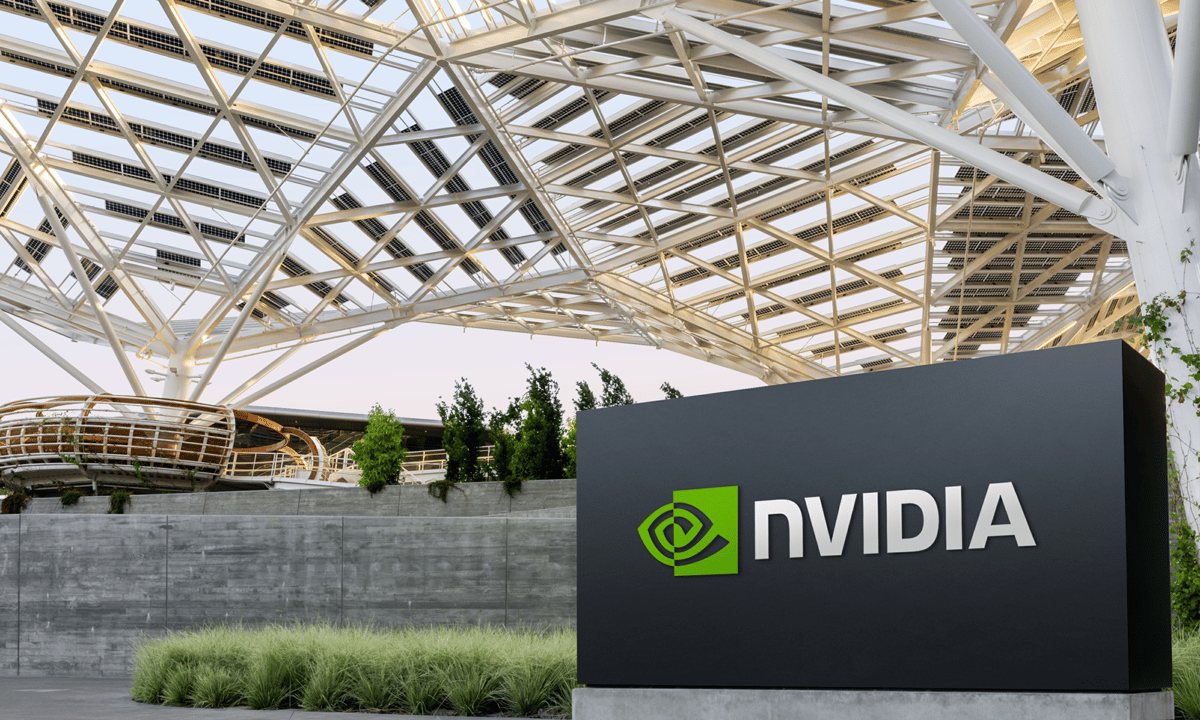
Nvidia's 1100% Stock Surge Driven by AI Opportunities

- Significant Revenue Growth: Nvidia reported $215.9 billion in revenue for fiscal year 2026, marking a 65% increase year-over-year and a nearly ninefold rise from $27 billion three years ago, highlighting its strong performance and growth potential in the AI market.
- Surge in Data Center Revenue: The company’s data center revenue reached $62.3 billion in Q4, up 75% year-over-year, primarily driven by AI demand, indicating its dominant market position and profitability in this segment.
- CUDA Ecosystem Advantage: Nvidia's CUDA software platform provides a unique competitive edge for its GPUs, creating a developer lock-in effect as businesses build their AI infrastructure on its hardware, further solidifying its market position.
- Investment Risk Warning: Despite Nvidia's strong performance in AI, investors should be cautious of the risk that AI may not deliver the expected returns, especially given the unprecedented scale of infrastructure investment and ongoing doubts about AI's actual benefits in productivity.
See More

Nvidia's AI Dominance and Associated Risks
- Significant Revenue Growth: Nvidia's fiscal 2026 revenue reached $215.9 billion, a 65% year-over-year increase, with data center revenue alone hitting $62.3 billion in Q4, driven almost entirely by AI demand, showcasing the company's robust performance in the AI market.
- Developer Lock-In Effect: Nvidia's CUDA software platform, developed over 20 years, has become the de facto standard in the AI industry, creating a strong developer lock-in effect that makes it difficult for businesses to switch to competitors' hardware when building AI infrastructure, further solidifying the company's market position.
- Technical Leadership: Nvidia's GPUs not only lead the market in technical capabilities but also positioned the company advantageously during the AI boom, making it challenging for competitors like AMD and Intel to catch up, demonstrating Nvidia's dual advantage in both hardware and software layers.
- Investment Risk Warning: Despite Nvidia's strong market position, the realization of AI investment returns remains uncertain, with numerous studies indicating minimal effects on productivity, prompting investors to carefully assess the actual return potential of AI to avoid significant losses in a bubble scenario.
See More
REFLECTION AI CEO MISHA LASKIN: AFFIRMS FUNDRAISING AT A $25 BILLION VALUATION IN CNBC INTERVIEW
- Raising Money: Reflection AI, led by CEO Misha Laskin, is reportedly raising funds at a valuation of $25 billion.
- Media Coverage: The news was highlighted in a recent interview with CNBC, emphasizing the company's significant financial growth and market position.
See More
Intel's Strong Earnings Propel Semiconductor Stocks Higher
- Intel's Earnings Boost: Intel's data center business reported a 22% growth, indicating that AI-driven hardware demand is significantly recovering, which has bolstered optimism across the semiconductor sector and enhanced investor confidence.
- Sector-Wide Rally: Following Intel's results, peers like AMD, Qualcomm, and ARM saw their stock prices rise over 10%, reflecting a growing market consensus that the 'AI trade' is expanding beyond Nvidia's specialized chips into the broader silicon ecosystem.
- Forecast Upgrade: Research firm Omdia significantly raised its semiconductor revenue forecast for 2026, anticipating robust growth driven by surging demand for memory and data storage components fueled by artificial intelligence.
- Nova's Stock Volatility: Nova's shares jumped 4.5%, marking a 57.8% increase year-to-date and reaching a new 52-week high, indicating market interest in the company's future prospects despite its high volatility.
See More
Lattice Semiconductor Shares Rise Amid Semiconductor Sector Recovery
- Industry Recovery Signal: Lattice Semiconductor shares rose 3.9% in the afternoon session, driven by a 22% growth in Intel's data center business, indicating that AI-driven hardware demand is significantly boosting the semiconductor sector and enhancing investor confidence.
- Market Consensus Boost: Following Intel's strong earnings and Omdia's raised semiconductor revenue forecast for 2026, stocks across the semiconductor industry surged, with peers like AMD, Qualcomm, and ARM rising over 10%, reflecting a growing market consensus on the broadening 'AI trade'.
- Stock Volatility Analysis: Lattice Semiconductor has experienced 29 moves greater than 5% in the past year; despite today's 3.6% increase to $122.71, the market perceives this news as meaningful but not fundamentally altering its view of the business, indicating cautious investor sentiment.
- Long-term Investment Returns: With a 56% increase since the beginning of the year, Lattice Semiconductor has reached a new 52-week high, and an investment of $1,000 made five years ago would now be worth $2,236, showcasing the company's strong growth potential over the long term.
See More
Analysis of Investment Choices Between XLK and VGT
- Negligible Fee Difference: XLK charges an expense ratio of 0.08% compared to VGT's 0.09%, resulting in a mere one cent savings per $100 invested, indicating that fees should not be the primary factor in ETF selection; investors should focus on structure and liquidity instead.
- Benchmark Impact on Performance: XLK tracks the S&P 500 Technology Select Sector Index, concentrating on 73 large-cap stocks, while VGT includes over 300 stocks; although VGT has slightly outperformed with a 21.44% annualized return over the past decade compared to XLK's 20.91%, this alone is not a decisive factor for selection.
- Trading Efficiency Advantage: XLK's median bid-ask spread over 30 days is 0.01%, compared to 0.04% for VGT, providing active traders with higher trading volume and better execution efficiency, particularly when using derivatives, which is crucial for frequent trading.
- Tax Strategy Flexibility: Since XLK and VGT are issued by different providers and track different benchmarks, investors can hold both ETFs in taxable accounts for tax-loss harvesting without triggering wash sale rules, allowing them to stay invested in the tech sector while effectively managing market fluctuations.
See More
Nvidia's 1100% Stock Surge Driven by AI Opportunities
- Significant Revenue Growth: Nvidia reported $215.9 billion in revenue for fiscal year 2026, marking a 65% increase year-over-year and a nearly ninefold rise from $27 billion three years ago, highlighting its strong performance and growth potential in the AI market.
- Surge in Data Center Revenue: The company’s data center revenue reached $62.3 billion in Q4, up 75% year-over-year, primarily driven by AI demand, indicating its dominant market position and profitability in this segment.
- CUDA Ecosystem Advantage: Nvidia's CUDA software platform provides a unique competitive edge for its GPUs, creating a developer lock-in effect as businesses build their AI infrastructure on its hardware, further solidifying its market position.
- Investment Risk Warning: Despite Nvidia's strong performance in AI, investors should be cautious of the risk that AI may not deliver the expected returns, especially given the unprecedented scale of infrastructure investment and ongoing doubts about AI's actual benefits in productivity.
See More
Nvidia's AI Dominance and Associated Risks
- Significant Revenue Growth: Nvidia's fiscal 2026 revenue reached $215.9 billion, a 65% year-over-year increase, with data center revenue alone hitting $62.3 billion in Q4, driven almost entirely by AI demand, showcasing the company's robust performance in the AI market.
- Developer Lock-In Effect: Nvidia's CUDA software platform, developed over 20 years, has become the de facto standard in the AI industry, creating a strong developer lock-in effect that makes it difficult for businesses to switch to competitors' hardware when building AI infrastructure, further solidifying the company's market position.
- Technical Leadership: Nvidia's GPUs not only lead the market in technical capabilities but also positioned the company advantageously during the AI boom, making it challenging for competitors like AMD and Intel to catch up, demonstrating Nvidia's dual advantage in both hardware and software layers.
- Investment Risk Warning: Despite Nvidia's strong market position, the realization of AI investment returns remains uncertain, with numerous studies indicating minimal effects on productivity, prompting investors to carefully assess the actual return potential of AI to avoid significant losses in a bubble scenario.
See More