Nvidia Invests $2 Billion in CoreWeave to Boost AI Infrastructure
Written by Emily J. Thompson, Senior Investment Analyst
Updated: Jan 26 2026
0mins


Should l Buy NVDA?
Source: CNBC
- Investment Expansion: Nvidia announced a $2 billion investment in CoreWeave aimed at supporting the development of over 5 gigawatts of data center capacity by 2030, further solidifying its leadership in AI infrastructure.
- Positive Stock Reaction: CoreWeave issued nearly 22.94 million shares at $87.20 each in a private placement, with the stock surging 16.8% post-announcement, reflecting strong market confidence in Nvidia's strategic investments.
- Deepening Technology Integration: CoreWeave will implement Nvidia's Vera CPU and BlueField storage, enhancing its AI factory capabilities and ensuring competitive advantages in the future AI market.
- China Market Outlook: Nvidia CEO Jensen Huang reiterated that while current financial forecasts do not include revenue from China, demand for H200 chips remains strong, with hopes to re-enter the Chinese market and expand business opportunities.
Trade with 70% Backtested Accuracy
Stop guessing "Should I Buy NVDA?" and start using high-conviction signals backed by rigorous historical data.
Sign up today to access powerful investing tools and make smarter, data-driven decisions.
Analyst Views on NVDA
Wall Street analysts forecast NVDA stock price to rise
41 Analyst Rating
39 Buy
1 Hold
1 Sell
Strong Buy
Current: 175.750

Low
200.00
Averages
264.97
High
352.00
Current: 175.750
Low
200.00
Averages
264.97
High
352.00
About NVDA
NVIDIA Corporation is an artificial intelligence (AI) infrastructure company. The Company is engaged in accelerated computing to help solve the challenging computational problems. Its segments include Compute & Networking and Graphics. The Compute & Networking segment includes its Data Center accelerated computing and networking platforms and AI solutions and software, and automotive platforms and autonomous and electric vehicle solutions, including software. The Graphics segment includes GeForce GPUs for gaming and personal computers (PCs), and Quadro/NVIDIA RTX GPUs for enterprise workstation graphics. Its technology stack includes the foundational NVIDIA CUDA development platform that runs on all NVIDIA GPUs, as well as hundreds of domain-specific software libraries, frameworks, algorithms, software development kits (SDKs), and application programming interfaces (APIs). Its platforms address four markets, which include Data Center, Gaming, Professional Visualization, and Automotive.
About the author

Emily J. Thompson
Emily J. Thompson, a Chartered Financial Analyst (CFA) with 12 years in investment research, graduated with honors from the Wharton School. Specializing in industrial and technology stocks, she provides in-depth analysis for Intellectia’s earnings and market brief reports.

Nvidia's Future Outlook Remains Bullish

- Strong Earnings Report: Nvidia reported total revenue of $215.9 billion for fiscal year 2026, marking a 65% year-over-year increase, which underscores the company's robust growth potential in the AI chip market and solidifies its market leadership.
- Surging Order Forecast: CEO Jensen Huang indicated that Nvidia expects approximately $1 trillion in purchase orders for its Blackwell and Vera Rubin chips by 2027, doubling last year's forecast of $500 billion, signaling sustained strong demand for AI chips.
- Future Revenue Expectations: Nvidia anticipates first-quarter revenue of $78 billion for fiscal year 2027, representing an almost 77% increase compared to the same period last year, reflecting strong growth potential in the Agentic AI applications sector, which will further drive demand for AI chips.
- High Market Valuation: Despite Nvidia's forward P/E ratio of 30, significantly above the average of 20.9 for the tech sector, investors believe the premium is justified given the company's outstanding financial results and its position in a rapidly growing market.
See More
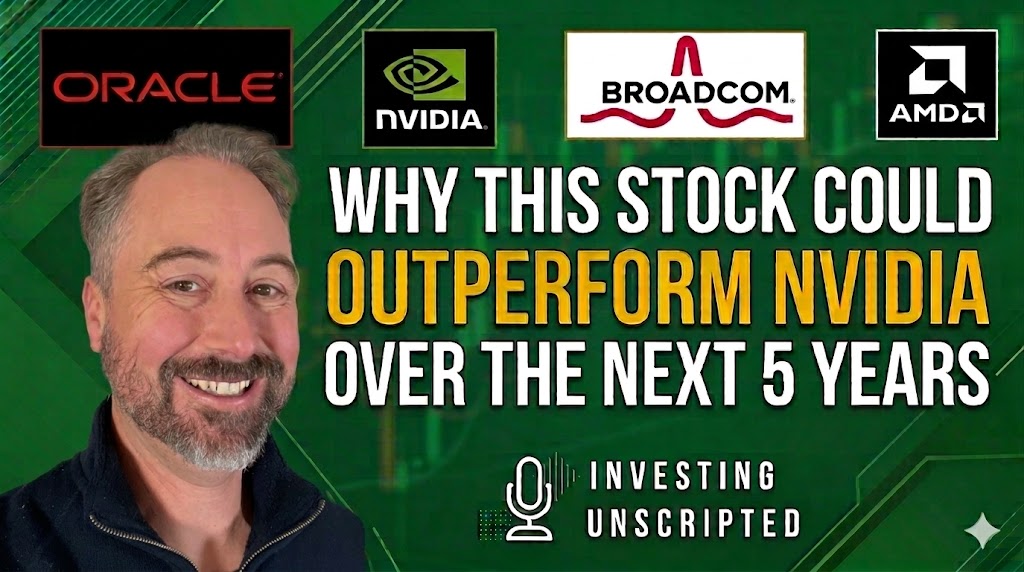
Why Oracle Could Outperform Nvidia Over Next Five Years

- Market Share Competition: Over the next five years, Oracle is expected to capture a larger share of the AI chip market, particularly as companies like Broadcom and AMD may dilute Nvidia's dominance, enhancing Oracle's competitive edge.
- Industry Trend Analysis: With the rising demand for AI, Oracle's technology and product offerings may align better with market needs, especially in enterprise solutions, which will help elevate its position in the industry.
- Investor Confidence Boost: Analysts are optimistic about Oracle's prospects, believing its performance will surpass Nvidia's over the next five years, potentially attracting more investor interest and driving stock price increases.
- Innovation Potential: Oracle's ongoing investments and R&D capabilities in the AI sector may allow it to lead in technological innovation over Nvidia, further solidifying its market position and driving long-term growth.
See More

Why Oracle Could Outperform Nvidia in Five Years
- Market Share Competition: Over the next five years, Oracle is expected to capture a larger share of the AI chip market, particularly as companies like Broadcom and AMD may increase their market participation, thereby posing competitive pressure on Nvidia.
- Investment Return Potential: The Motley Fool analyst team notes that despite Nvidia's past performance, it is not included in the current list of 10 recommended stocks, indicating a cautious market sentiment regarding its future growth, which could impact its stock price performance.
- Historical Performance Comparison: According to Motley Fool data, previously recommended stocks like Netflix and Nvidia yielded massive returns for investors, at 532,066% and 1,087,496% respectively, highlighting the strong investment potential in emerging technology companies.
- Power of Investment Community: The Motley Fool's Stock Advisor service fosters a community of individual investors, emphasizing the importance of collective wisdom in identifying potential high-return investments, which may influence investor focus on Oracle and other companies.
See More

Upstart: Disruptor in AI Credit Scoring

- Increased Approval Rates: Upstart's AI-driven algorithm analyzes over 2,500 data points, resulting in a 43% higher loan approval rate compared to traditional methods, which not only reduces default risks but also enhances customer satisfaction and market competitiveness.
- Significant Revenue Growth: In 2024, Upstart achieved a 64% revenue growth totaling $1 billion, swinging to a profit of $53.6 million, demonstrating the sustainability of its business model and the recovery of market demand.
- Rising Competition Risks: While Upstart leads in AI credit scoring, traditional competitors like Equifax and TransUnion are rapidly launching their own AI solutions, which could undermine Upstart's market share and growth potential.
- Increased Investor Interest: Although Upstart did not make it onto The Motley Fool's list of top stocks, its innovations in AI continue to attract investor attention, potentially yielding substantial returns in the short term.
See More
Semiconductor Stocks Lead AI Investment Surge

- Surging Market Demand: Taiwan Semiconductor expects the AI chip market to grow at a mid-to-high 50% CAGR from 2024 to 2029, planning to invest between $52 billion and $56 billion in capital expenditures in 2023 to meet rising demand, thereby solidifying its leadership in the AI sector.
- Memory Chip Outlook: Micron Technology anticipates the high-bandwidth memory market will expand from $35 billion to $100 billion between 2025 and 2028; despite price cooling due to Google's TurboQuant algorithm, the sustained demand for memory chips highlights its long-term investment value.
- Custom Chip Innovation: Broadcom focuses on designing custom AI chips, which are expected to generate over $100 billion in annual revenue by 2027, benefiting from the increasing demand for specific workloads in the AI industry, showcasing significant growth potential.
- GPU Market Leadership: Nvidia is projected to see a 71% revenue increase this year and 30% next year, with its stock trading at a forward P/E of only 20.2, close to the S&P 500's 20.4, indicating a rare investment opportunity that investors should not overlook.
See More

AI Global Summit at WMF 2026 to Feature Leading Companies
- Global Participation: The WMF 2026 event, scheduled for June 24-26 in Bologna, Italy, will feature the AI Global Summit, bringing together leading companies like NVIDIA, Anthropic, and OpenAI to discuss AI applications and governance, thereby advancing industry development.
- Policy and Investment Dialogue: According to founder Cosmano Lombardo, artificial intelligence has become a political and technological priority, and the summit aims to foster broad discussions among businesses, institutions, and the research community to drive targeted investments and clear regulations.
- Diverse Agenda Setting: The summit will include 13 thematic stages covering areas such as AI for Future, Robotics, and AI Commerce, with experts from Microsoft, LG Nova, and Google sharing insights to promote technological innovation.
- Exhibition Area Showcasing Cutting-edge Technologies: An expo area will complement the program, showcasing high-impact AI solutions from startups across over 90 countries, facilitating technology exchange and collaboration to address WMF's 14 Future Challenges.
See More
Nvidia's Future Outlook Remains Bullish
- Strong Earnings Report: Nvidia reported total revenue of $215.9 billion for fiscal year 2026, marking a 65% year-over-year increase, which underscores the company's robust growth potential in the AI chip market and solidifies its market leadership.
- Surging Order Forecast: CEO Jensen Huang indicated that Nvidia expects approximately $1 trillion in purchase orders for its Blackwell and Vera Rubin chips by 2027, doubling last year's forecast of $500 billion, signaling sustained strong demand for AI chips.
- Future Revenue Expectations: Nvidia anticipates first-quarter revenue of $78 billion for fiscal year 2027, representing an almost 77% increase compared to the same period last year, reflecting strong growth potential in the Agentic AI applications sector, which will further drive demand for AI chips.
- High Market Valuation: Despite Nvidia's forward P/E ratio of 30, significantly above the average of 20.9 for the tech sector, investors believe the premium is justified given the company's outstanding financial results and its position in a rapidly growing market.
See More
Why Oracle Could Outperform Nvidia Over Next Five Years
- Market Share Competition: Over the next five years, Oracle is expected to capture a larger share of the AI chip market, particularly as companies like Broadcom and AMD may dilute Nvidia's dominance, enhancing Oracle's competitive edge.
- Industry Trend Analysis: With the rising demand for AI, Oracle's technology and product offerings may align better with market needs, especially in enterprise solutions, which will help elevate its position in the industry.
- Investor Confidence Boost: Analysts are optimistic about Oracle's prospects, believing its performance will surpass Nvidia's over the next five years, potentially attracting more investor interest and driving stock price increases.
- Innovation Potential: Oracle's ongoing investments and R&D capabilities in the AI sector may allow it to lead in technological innovation over Nvidia, further solidifying its market position and driving long-term growth.
See More
Why Oracle Could Outperform Nvidia in Five Years
- Market Share Competition: Over the next five years, Oracle is expected to capture a larger share of the AI chip market, particularly as companies like Broadcom and AMD may increase their market participation, thereby posing competitive pressure on Nvidia.
- Investment Return Potential: The Motley Fool analyst team notes that despite Nvidia's past performance, it is not included in the current list of 10 recommended stocks, indicating a cautious market sentiment regarding its future growth, which could impact its stock price performance.
- Historical Performance Comparison: According to Motley Fool data, previously recommended stocks like Netflix and Nvidia yielded massive returns for investors, at 532,066% and 1,087,496% respectively, highlighting the strong investment potential in emerging technology companies.
- Power of Investment Community: The Motley Fool's Stock Advisor service fosters a community of individual investors, emphasizing the importance of collective wisdom in identifying potential high-return investments, which may influence investor focus on Oracle and other companies.
See More
Upstart: Disruptor in AI Credit Scoring
- Increased Approval Rates: Upstart's AI-driven algorithm analyzes over 2,500 data points, resulting in a 43% higher loan approval rate compared to traditional methods, which not only reduces default risks but also enhances customer satisfaction and market competitiveness.
- Significant Revenue Growth: In 2024, Upstart achieved a 64% revenue growth totaling $1 billion, swinging to a profit of $53.6 million, demonstrating the sustainability of its business model and the recovery of market demand.
- Rising Competition Risks: While Upstart leads in AI credit scoring, traditional competitors like Equifax and TransUnion are rapidly launching their own AI solutions, which could undermine Upstart's market share and growth potential.
- Increased Investor Interest: Although Upstart did not make it onto The Motley Fool's list of top stocks, its innovations in AI continue to attract investor attention, potentially yielding substantial returns in the short term.
See More
Semiconductor Stocks Lead AI Investment Surge
- Surging Market Demand: Taiwan Semiconductor expects the AI chip market to grow at a mid-to-high 50% CAGR from 2024 to 2029, planning to invest between $52 billion and $56 billion in capital expenditures in 2023 to meet rising demand, thereby solidifying its leadership in the AI sector.
- Memory Chip Outlook: Micron Technology anticipates the high-bandwidth memory market will expand from $35 billion to $100 billion between 2025 and 2028; despite price cooling due to Google's TurboQuant algorithm, the sustained demand for memory chips highlights its long-term investment value.
- Custom Chip Innovation: Broadcom focuses on designing custom AI chips, which are expected to generate over $100 billion in annual revenue by 2027, benefiting from the increasing demand for specific workloads in the AI industry, showcasing significant growth potential.
- GPU Market Leadership: Nvidia is projected to see a 71% revenue increase this year and 30% next year, with its stock trading at a forward P/E of only 20.2, close to the S&P 500's 20.4, indicating a rare investment opportunity that investors should not overlook.
See More
AI Global Summit at WMF 2026 to Feature Leading Companies
- Global Participation: The WMF 2026 event, scheduled for June 24-26 in Bologna, Italy, will feature the AI Global Summit, bringing together leading companies like NVIDIA, Anthropic, and OpenAI to discuss AI applications and governance, thereby advancing industry development.
- Policy and Investment Dialogue: According to founder Cosmano Lombardo, artificial intelligence has become a political and technological priority, and the summit aims to foster broad discussions among businesses, institutions, and the research community to drive targeted investments and clear regulations.
- Diverse Agenda Setting: The summit will include 13 thematic stages covering areas such as AI for Future, Robotics, and AI Commerce, with experts from Microsoft, LG Nova, and Google sharing insights to promote technological innovation.
- Exhibition Area Showcasing Cutting-edge Technologies: An expo area will complement the program, showcasing high-impact AI solutions from startups across over 90 countries, facilitating technology exchange and collaboration to address WMF's 14 Future Challenges.
See More