Nvidia Extends Winning Streak to Seven Days as Stock Surges
Written by Emily J. Thompson, Senior Investment Analyst
Updated: 40 minutes ago
0mins
Should l Buy NVDA?
Source: seekingalpha
- Stock Price Surge: Nvidia's stock rose 3.7% to $234.20 during Thursday afternoon trading, extending its winning streak to seven sessions, reflecting strong market optimism about its future performance.
- Sales Approval: The U.S. federal government approved Nvidia's sales of H200 GPUs to 10 Chinese tech firms, driving an 8.7% increase in stock price over the last six sessions and nearly 21% over the past month.
- Analyst Rating Upgrade: Cantor Fitzgerald raised Nvidia's price target from $300 to $350, citing CEO Jensen Huang's exceptional performance in the semiconductor industry, indicating strong confidence in the company's future growth.
- Strong Market Demand: Analysts noted that Nvidia benefits from robust demand for AI GPUs, particularly due to infrastructure investments from Microsoft, Google, Meta, and AWS, which are expected to continue driving the company's performance growth.
Trade with 70% Backtested Accuracy
Stop guessing "Should I Buy NVDA?" and start using high-conviction signals backed by rigorous historical data.
Sign up today to access powerful investing tools and make smarter, data-driven decisions.
Analyst Views on NVDA
Wall Street analysts forecast NVDA stock price to rise
41 Analyst Rating
39 Buy
1 Hold
1 Sell
Strong Buy
Current: 225.830

Low
200.00
Averages
264.97
High
352.00
Current: 225.830
Low
200.00
Averages
264.97
High
352.00
About NVDA
NVIDIA Corporation is an artificial intelligence (AI) infrastructure company. The Company is engaged in accelerated computing to help solve the challenging computational problems. Its segments include Compute & Networking and Graphics. The Compute & Networking segment includes its Data Center accelerated computing and networking platforms and AI solutions and software, and automotive platforms and autonomous and electric vehicle solutions, including software. The Graphics segment includes GeForce GPUs for gaming and personal computers (PCs), and Quadro/NVIDIA RTX GPUs for enterprise workstation graphics. Its technology stack includes the foundational NVIDIA CUDA development platform that runs on all NVIDIA GPUs, as well as hundreds of domain-specific software libraries, frameworks, algorithms, software development kits (SDKs), and application programming interfaces (APIs). Its platforms address four markets, which include Data Center, Gaming, Professional Visualization, and Automotive.
About the author

Emily J. Thompson
Emily J. Thompson, a Chartered Financial Analyst (CFA) with 12 years in investment research, graduated with honors from the Wharton School. Specializing in industrial and technology stocks, she provides in-depth analysis for Intellectia’s earnings and market brief reports.
Nvidia's Upcoming Earnings Report Sparks High Growth Expectations

- Earnings Anticipation: Nvidia is set to release its fiscal Q1 2027 earnings report on May 20, with Wall Street expecting an EPS of $1.77, reflecting a 78% year-over-year revenue increase, indicating strong growth momentum in the AI sector.
- Strategic Partnerships: Recently, Nvidia partnered with ServiceNow to develop AI agents, launched the Nemotron 3 Nano Omni model, and signed a deal with Corning to build optical solution factories, showcasing its comprehensive strategy in both AI hardware and software.
- Market Dominance: Nvidia's dominance in the AI market is increasingly evident, as cloud giants like Amazon, Alphabet, and Microsoft continue to rely on its powerful GPUs, despite their own chip development efforts, highlighting Nvidia's irreplaceable role in the data center market.
- Future Outlook: CEO Jensen Huang anticipates that Nvidia will generate $1 trillion from its Blackwell and Vera Rubin processors in 2026 and 2027, significantly surpassing the previous 12-month revenue of $216 billion, indicating substantial future growth potential.
See More

Cerebras IPO Marks Major Milestone for AI Chip Industry
- Record-Setting IPO: Cerebras lists on the Nasdaq Global Select Market with a share price of $185, raising approximately $5.6 billion, marking the largest IPO of the year and highlighting strong investor interest in AI hardware firms.
- Oversubscription Phenomenon: The IPO was oversubscribed by more than 20 times, reflecting market enthusiasm for next-gen AI hardware, despite its price-to-sales ratio exceeding 110x, far above traditional metrics.
- Significant Sales Growth: Cerebras reported $510 million in sales last year, a notable increase from $290.3 million in 2024, indicating rapid growth in the AI infrastructure market.
- Strategic Partnerships: The company has partnered with OpenAI to integrate its technology into OpenAI's computing systems, further solidifying its competitive position in the AI chip sector.
See More
Nvidia's Earnings Outlook Remains Positive Ahead of Report
- High Market Expectations: As Nvidia prepares to report quarterly earnings, investors are eager to see if the company can deliver another major earnings surprise, with its stock already reaching record highs, reflecting strong market confidence in its future growth.
- Stable Long-Term Growth Narrative: Despite a brief retreat into the high $160 range earlier this year, analysts believe Nvidia's fundamentals have not materially deteriorated, and its long-term growth potential remains robust, expected to last through 2026.
- Strong Revenue Growth Capability: Analysts highlight Nvidia's consistent ability to achieve significant sequential revenue growth, suggesting that another earnings beat is likely, which would further solidify its competitive position in AI infrastructure.
- Impact of U.S.-China Relations: Renewed access to the Chinese market, following ongoing diplomatic discussions involving the Trump administration, could provide Nvidia with an additional upside driver beyond the already strong AI demand trends, potentially boosting its stock further.
See More
Nvidia Extends Winning Streak to Seven Days as Stock Surges
- Stock Price Surge: Nvidia's stock rose 3.7% to $234.20 during Thursday afternoon trading, extending its winning streak to seven sessions, reflecting strong market optimism about its future performance.
- Sales Approval: The U.S. federal government approved Nvidia's sales of H200 GPUs to 10 Chinese tech firms, driving an 8.7% increase in stock price over the last six sessions and nearly 21% over the past month.
- Analyst Rating Upgrade: Cantor Fitzgerald raised Nvidia's price target from $300 to $350, citing CEO Jensen Huang's exceptional performance in the semiconductor industry, indicating strong confidence in the company's future growth.
- Strong Market Demand: Analysts noted that Nvidia benefits from robust demand for AI GPUs, particularly due to infrastructure investments from Microsoft, Google, Meta, and AWS, which are expected to continue driving the company's performance growth.
See More
Dow Jones Industrial Average Surpasses 50,000 for the First Time


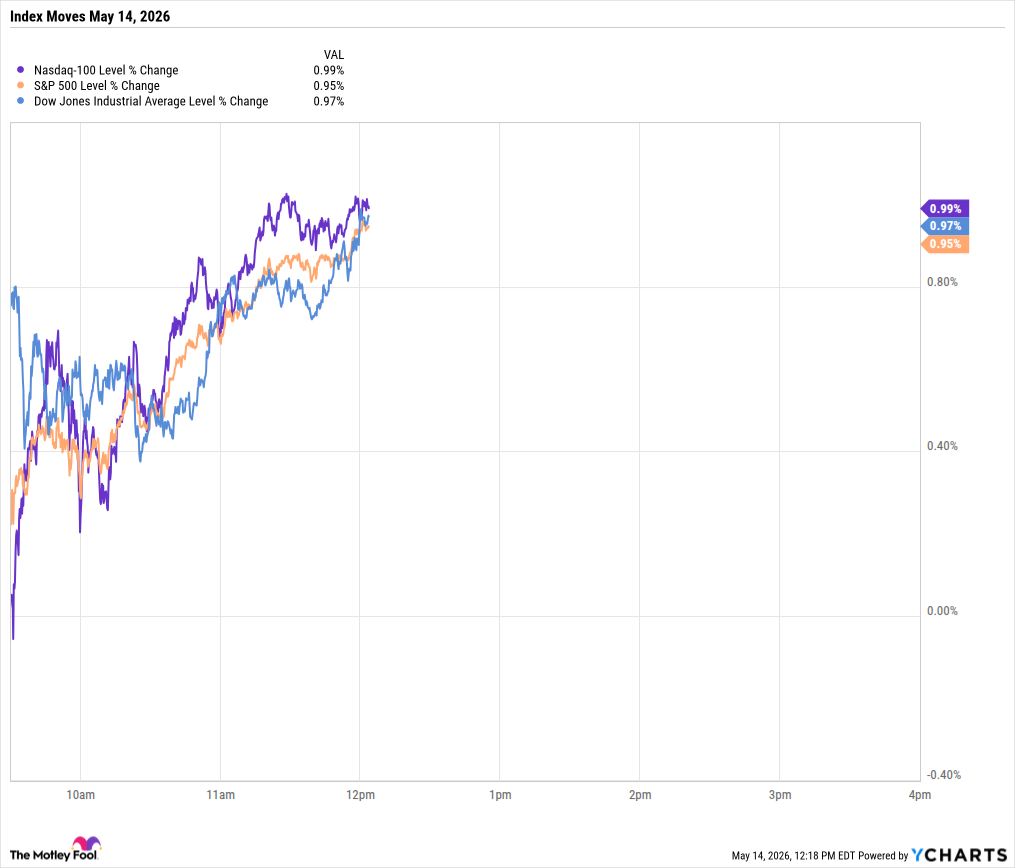
- Milestone for Dow: The Dow Jones Industrial Average has crossed the 50,000 mark for the first time, indicating a sustained market rally over the past week that reflects investor confidence in economic recovery and enthusiasm for tech stocks.
- Tech Stocks Lead: Nvidia's stock rose 4.3% to $235.63, adding $248 billion to its market cap, following U.S. regulators' approval for selling H200 AI accelerators in China, showcasing strong demand for AI chips.
- Broad Market Performance: The S&P 500 and Nasdaq-100 both increased by about 1%, driven by optimistic expectations of AI semiconductor revenue growth of 30% to 40%, further propelling the overall market upward.
- Boeing's Decline: Despite President Trump's announcement of a deal for China to purchase 200 Boeing jets, Boeing's stock fell 4.5%, indicating that the market had already priced in this news, reflecting investor caution towards short-term fluctuations.
See More
Comparative Analysis of IVV and IWM for Investors

- Cost and Yield Comparison: The iShares Core S&P 500 ETF (IVV) has an expense ratio of 0.03%, significantly lower than the iShares Russell 2000 ETF (IWM) at 0.19%, making IVV more cost-effective for long-term investors, while IVV also offers a higher dividend yield of 1.1% compared to IWM's 0.9%.
- Return Performance Discrepancy: Over the past year, IVV's return rate stands at 27.8%, while IWM boasts a higher 36.9%, indicating strong recent performance of small caps, although IVV has shown more stable returns over the last decade, with a $1,000 investment in IVV now worth about $4,300, significantly outperforming IWM's $2,933.
- Portfolio Composition: IVV's top holdings include Nvidia (8.6%), Apple (6.9%), and Microsoft (4.7%), with a technology sector weight of 37%, while IWM focuses on industrials (19%), technology (18%), and healthcare (16%), highlighting significant differences in sector allocation between the two.
- Market Volatility Analysis: IVV has a beta of 1.00, indicating price volatility in line with the market, whereas IWM's beta of 1.30 suggests higher volatility, prompting investors to consider the risk-reward balance associated with the price swings of small-cap stocks.
See More
Nvidia's Upcoming Earnings Report Sparks High Growth Expectations
- Earnings Anticipation: Nvidia is set to release its fiscal Q1 2027 earnings report on May 20, with Wall Street expecting an EPS of $1.77, reflecting a 78% year-over-year revenue increase, indicating strong growth momentum in the AI sector.
- Strategic Partnerships: Recently, Nvidia partnered with ServiceNow to develop AI agents, launched the Nemotron 3 Nano Omni model, and signed a deal with Corning to build optical solution factories, showcasing its comprehensive strategy in both AI hardware and software.
- Market Dominance: Nvidia's dominance in the AI market is increasingly evident, as cloud giants like Amazon, Alphabet, and Microsoft continue to rely on its powerful GPUs, despite their own chip development efforts, highlighting Nvidia's irreplaceable role in the data center market.
- Future Outlook: CEO Jensen Huang anticipates that Nvidia will generate $1 trillion from its Blackwell and Vera Rubin processors in 2026 and 2027, significantly surpassing the previous 12-month revenue of $216 billion, indicating substantial future growth potential.
See More
Cerebras IPO Marks Major Milestone for AI Chip Industry
- Record-Setting IPO: Cerebras lists on the Nasdaq Global Select Market with a share price of $185, raising approximately $5.6 billion, marking the largest IPO of the year and highlighting strong investor interest in AI hardware firms.
- Oversubscription Phenomenon: The IPO was oversubscribed by more than 20 times, reflecting market enthusiasm for next-gen AI hardware, despite its price-to-sales ratio exceeding 110x, far above traditional metrics.
- Significant Sales Growth: Cerebras reported $510 million in sales last year, a notable increase from $290.3 million in 2024, indicating rapid growth in the AI infrastructure market.
- Strategic Partnerships: The company has partnered with OpenAI to integrate its technology into OpenAI's computing systems, further solidifying its competitive position in the AI chip sector.
See More
Nvidia's Earnings Outlook Remains Positive Ahead of Report
- High Market Expectations: As Nvidia prepares to report quarterly earnings, investors are eager to see if the company can deliver another major earnings surprise, with its stock already reaching record highs, reflecting strong market confidence in its future growth.
- Stable Long-Term Growth Narrative: Despite a brief retreat into the high $160 range earlier this year, analysts believe Nvidia's fundamentals have not materially deteriorated, and its long-term growth potential remains robust, expected to last through 2026.
- Strong Revenue Growth Capability: Analysts highlight Nvidia's consistent ability to achieve significant sequential revenue growth, suggesting that another earnings beat is likely, which would further solidify its competitive position in AI infrastructure.
- Impact of U.S.-China Relations: Renewed access to the Chinese market, following ongoing diplomatic discussions involving the Trump administration, could provide Nvidia with an additional upside driver beyond the already strong AI demand trends, potentially boosting its stock further.
See More
Nvidia Extends Winning Streak to Seven Days as Stock Surges
- Stock Price Surge: Nvidia's stock rose 3.7% to $234.20 during Thursday afternoon trading, extending its winning streak to seven sessions, reflecting strong market optimism about its future performance.
- Sales Approval: The U.S. federal government approved Nvidia's sales of H200 GPUs to 10 Chinese tech firms, driving an 8.7% increase in stock price over the last six sessions and nearly 21% over the past month.
- Analyst Rating Upgrade: Cantor Fitzgerald raised Nvidia's price target from $300 to $350, citing CEO Jensen Huang's exceptional performance in the semiconductor industry, indicating strong confidence in the company's future growth.
- Strong Market Demand: Analysts noted that Nvidia benefits from robust demand for AI GPUs, particularly due to infrastructure investments from Microsoft, Google, Meta, and AWS, which are expected to continue driving the company's performance growth.
See More
Dow Jones Industrial Average Surpasses 50,000 for the First Time
- Milestone for Dow: The Dow Jones Industrial Average has crossed the 50,000 mark for the first time, indicating a sustained market rally over the past week that reflects investor confidence in economic recovery and enthusiasm for tech stocks.
- Tech Stocks Lead: Nvidia's stock rose 4.3% to $235.63, adding $248 billion to its market cap, following U.S. regulators' approval for selling H200 AI accelerators in China, showcasing strong demand for AI chips.
- Broad Market Performance: The S&P 500 and Nasdaq-100 both increased by about 1%, driven by optimistic expectations of AI semiconductor revenue growth of 30% to 40%, further propelling the overall market upward.
- Boeing's Decline: Despite President Trump's announcement of a deal for China to purchase 200 Boeing jets, Boeing's stock fell 4.5%, indicating that the market had already priced in this news, reflecting investor caution towards short-term fluctuations.
See More
Comparative Analysis of IVV and IWM for Investors
- Cost and Yield Comparison: The iShares Core S&P 500 ETF (IVV) has an expense ratio of 0.03%, significantly lower than the iShares Russell 2000 ETF (IWM) at 0.19%, making IVV more cost-effective for long-term investors, while IVV also offers a higher dividend yield of 1.1% compared to IWM's 0.9%.
- Return Performance Discrepancy: Over the past year, IVV's return rate stands at 27.8%, while IWM boasts a higher 36.9%, indicating strong recent performance of small caps, although IVV has shown more stable returns over the last decade, with a $1,000 investment in IVV now worth about $4,300, significantly outperforming IWM's $2,933.
- Portfolio Composition: IVV's top holdings include Nvidia (8.6%), Apple (6.9%), and Microsoft (4.7%), with a technology sector weight of 37%, while IWM focuses on industrials (19%), technology (18%), and healthcare (16%), highlighting significant differences in sector allocation between the two.
- Market Volatility Analysis: IVV has a beta of 1.00, indicating price volatility in line with the market, whereas IWM's beta of 1.30 suggests higher volatility, prompting investors to consider the risk-reward balance associated with the price swings of small-cap stocks.
See More