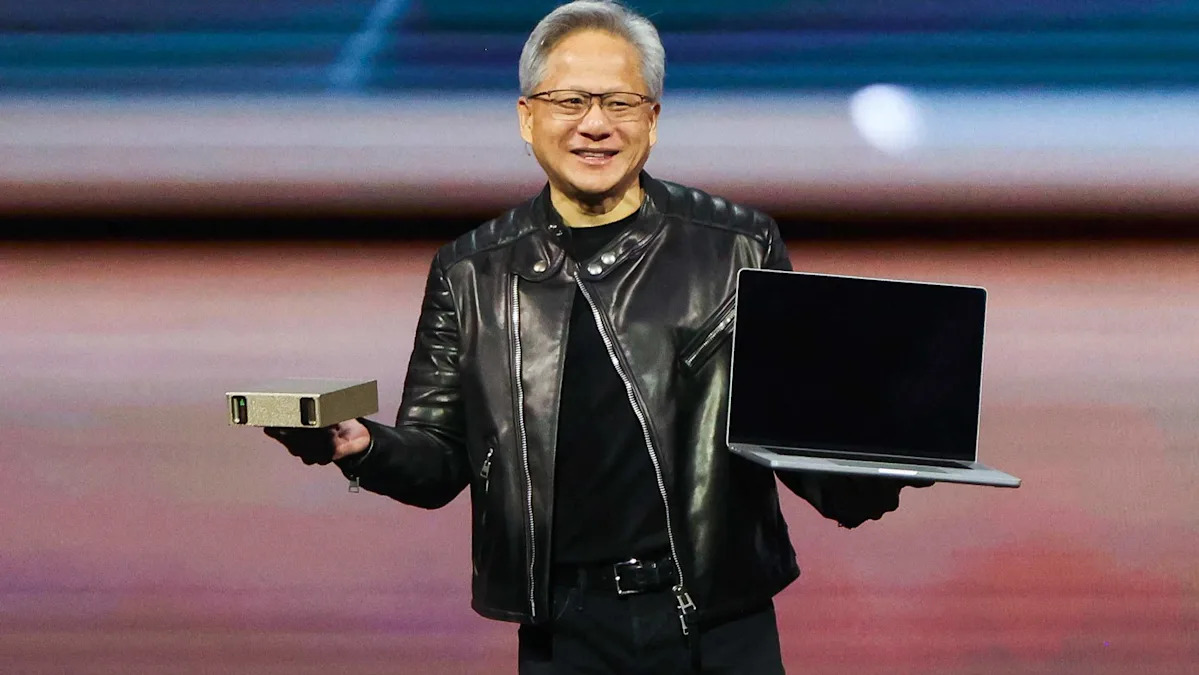
Nvidia Accelerates AI Infrastructure Investment
Written by Emily J. Thompson, Senior Investment Analyst
Updated: 1 hour ago
0mins
Should l Buy NVDA?
Source: Fool
- Surging Market Demand: Nvidia's data center revenue reached $62.3 billion in Q4 fiscal 2026, marking a 75% year-over-year increase, which highlights the strong demand for AI infrastructure that drives revenue growth and solidifies its market position.
- Leading Technology Investment: Nvidia's approximately $20 billion licensing deal with AI startup Groq aims to accelerate the development of next-generation AI chips, enhancing high-speed and low-latency performance, thereby strengthening its technological edge.
- Cost Efficiency Improvement: The new Rubin platform is expected to reduce the number of GPUs needed for training certain advanced AI models by four times while cutting operational costs to one-tenth of Blackwell systems, thus improving the efficiency and affordability of large-scale AI deployments.
- Full-Stack AI Platform Transformation: Nvidia has transformed from a chip vendor into a comprehensive AI infrastructure platform, offering complete solutions including networking technologies and software, which enhances its market share in AI infrastructure spending and supports potential future stock gains.
Trade with 70% Backtested Accuracy
Stop guessing "Should I Buy NVDA?" and start using high-conviction signals backed by rigorous historical data.
Sign up today to access powerful investing tools and make smarter, data-driven decisions.
Analyst Views on NVDA
Wall Street analysts forecast NVDA stock price to rise
41 Analyst Rating
39 Buy
1 Hold
1 Sell
Strong Buy
Current: 183.220

Low
200.00
Averages
264.97
High
352.00
Current: 183.220
Low
200.00
Averages
264.97
High
352.00
About NVDA
NVIDIA Corporation is a full-stack computing infrastructure company. The Company is engaged in accelerated computing to help solve the challenging computational problems. The Company’s segments include Compute & Networking and Graphics. The Compute & Networking segment includes its Data Center accelerated computing platforms and artificial intelligence (AI) solutions and software; networking; automotive platforms and autonomous and electric vehicle solutions; Jetson for robotics and other embedded platforms, and DGX Cloud computing services. The Graphics segment includes GeForce GPUs for gaming and PCs, the GeForce NOW game streaming service and related infrastructure, and solutions for gaming platforms; Quadro/NVIDIA RTX GPUs for enterprise workstation graphics; virtual GPU software for cloud-based visual and virtual computing; automotive platforms for infotainment systems, and Omniverse Enterprise software for building and operating industrial AI and digital twin applications.
About the author

Emily J. Thompson
Emily J. Thompson, a Chartered Financial Analyst (CFA) with 12 years in investment research, graduated with honors from the Wharton School. Specializing in industrial and technology stocks, she provides in-depth analysis for Intellectia’s earnings and market brief reports.

Nvidia Reports 73% Revenue Growth in Q4

- Quarterly Revenue Performance: Nvidia reported a fourth-quarter revenue of $68 billion, reflecting a 73% year-over-year growth, which alleviated market concerns regarding a slowdown in AI spending, indicating that the strong performance in AI infrastructure investment will continue.
- Positive Market Reaction: Nvidia's market capitalization crossed the $1 trillion mark in less than three years, with its stock price more than quadrupling since then, currently valued at $4.5 trillion, showcasing investor confidence in its future growth prospects.
- Optimistic Outlook: The company anticipates quarterly sales to reach $78 billion, representing a 77% year-over-year growth, reflecting a continued commitment from large tech firms towards AI spending, further solidifying Nvidia's leadership position in the market.
- Innovation and Ecosystem: Nvidia's recent launch of a new open-weight model designed for complex AI systems indicates that the company is not only relying on existing hardware and software sales but is also continuously innovating to transition from a component supplier to a comprehensive AI platform.
See More
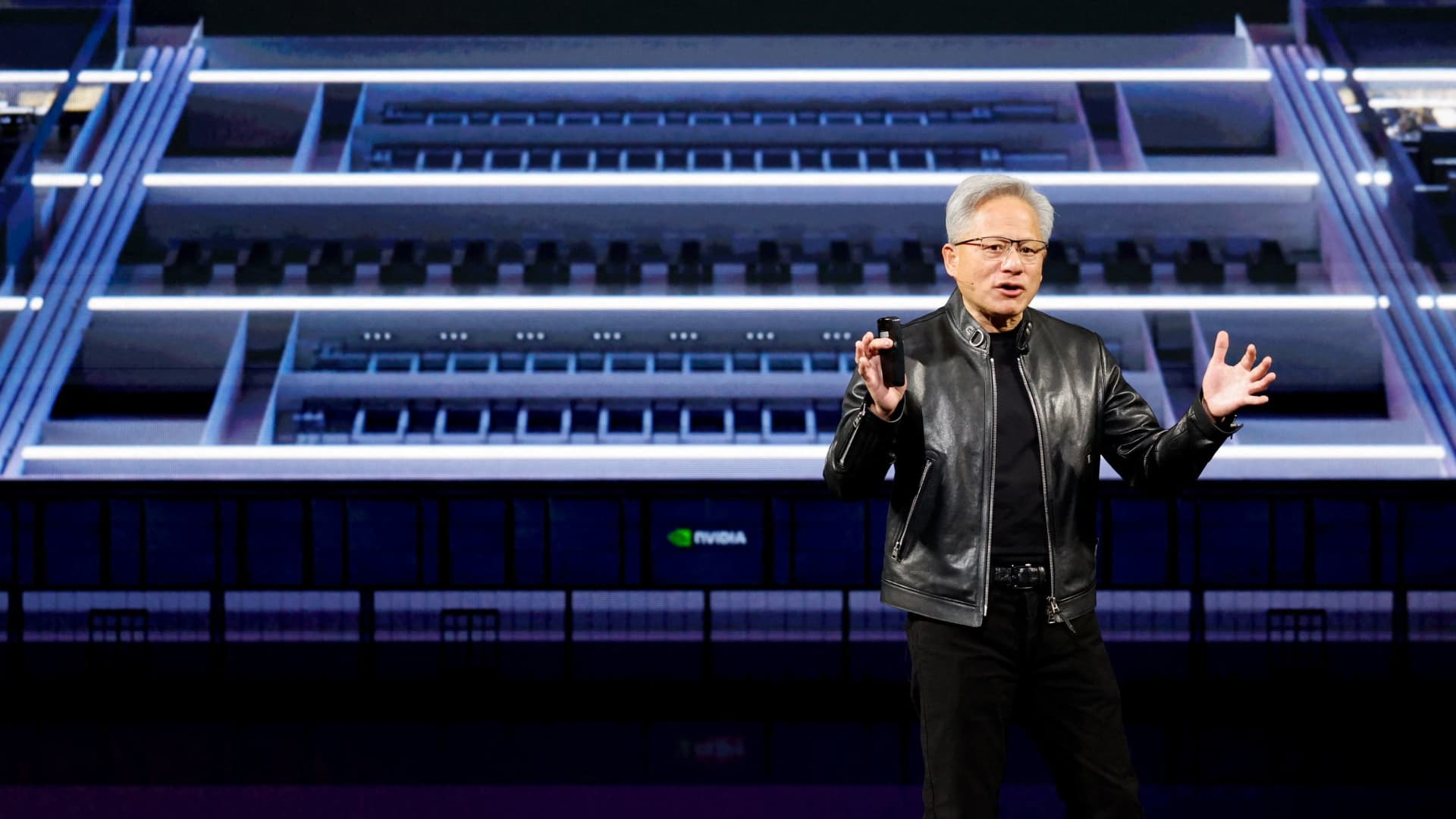
NVIDIA Resumes H200 Chip Sales to China After Delays
- China Market Resumption: NVIDIA CEO Jensen Huang announced that the company has received purchase orders for H200 processors from Chinese customers and is restarting production, marking a significant return to the Chinese market after prolonged export restrictions, which is expected to positively impact future revenues.
- Sales Restrictions Lifted: Huang stated that NVIDIA has obtained sales clearance from both the U.S. and China, despite previous export controls under the Trump administration that nearly halted sales in China, resulting in a $5.5 billion financial hit for the company.
- Strong Financial Performance: Despite the inability to enter the Chinese market, NVIDIA reported a 73% revenue growth in the latest quarter, marking the 11th consecutive quarter of growth exceeding 55%, demonstrating strong demand and resilience in its global operations.
- Optimistic Future Outlook: NVIDIA forecasts approximately 77% growth for the upcoming quarter, assuming zero data center revenue from China in its guidance, indicating that performance in other markets will continue to drive overall growth.
See More
Nvidia to Launch AI Chips for Chinese Market
- Market Expansion Plan: Nvidia is developing a version of Groq AI chips for the Chinese market, aiming to meet local customer demands and potentially enhancing its competitiveness in the global AI chip market.
- Technology Licensing Deal: Last year, Nvidia licensed technology from AI chip startup Groq in a $17 billion deal, showcasing a new product lineup based on these chips, indicating its ongoing investment in the AI sector.
- Production Resumption: Nvidia CEO Jensen Huang stated that the company has restarted production of its H200 chips after obtaining export licenses from the U.S. government, a move that will help fulfill purchase orders from Chinese customers.
- Product Portfolio Innovation: Nvidia plans to combine its upcoming Vera Rubin chips, which cannot be sold in China, with Groq chips, enhancing the inference capabilities of its AI systems despite the sales restrictions on Vera Rubin chips.
See More

Nvidia Accelerates AI Infrastructure Investment
- Surging Market Demand: Nvidia's data center revenue reached $62.3 billion in Q4 fiscal 2026, marking a 75% year-over-year increase, which highlights the strong demand for AI infrastructure that drives revenue growth and solidifies its market position.
- Leading Technology Investment: Nvidia's approximately $20 billion licensing deal with AI startup Groq aims to accelerate the development of next-generation AI chips, enhancing high-speed and low-latency performance, thereby strengthening its technological edge.
- Cost Efficiency Improvement: The new Rubin platform is expected to reduce the number of GPUs needed for training certain advanced AI models by four times while cutting operational costs to one-tenth of Blackwell systems, thus improving the efficiency and affordability of large-scale AI deployments.
- Full-Stack AI Platform Transformation: Nvidia has transformed from a chip vendor into a comprehensive AI infrastructure platform, offering complete solutions including networking technologies and software, which enhances its market share in AI infrastructure spending and supports potential future stock gains.
See More

Iran War Fuels Rise in Defense Tech Stocks

- Intelligence Technology Utilization: Palantir's data integration platforms, Foundry and Gotham, are utilized at the Pentagon, enabling the U.S. and its allies to create detailed maps of influential networks by aggregating satellite imagery and social media signals, thereby enhancing predictive capabilities regarding the Iranian situation and strengthening military defenses.
- Cybersecurity Leadership: CrowdStrike's Falcon platform safeguards critical infrastructure across the U.S., Israel, and Europe against cyberattacks from Iran, utilizing real-time detection and behavior analysis, which enhances international coalitions' capabilities to combat cyber espionage.
- Increased Defense Spending: As the Iran War continues, both Palantir and CrowdStrike are poised to benefit from rising defense expenditures, providing essential strategic assets to support military operations and further solidifying their positions in the defense sector.
- Long-term Investment Potential: Both companies not only excel in the current situation but also demonstrate resilience amid market volatility due to their diversified platforms and high-margin recurring revenue models, indicating their broad application potential within data-centric ecosystems.
See More
Nvidia's Earnings Exceed Expectations, Optimism for AI Spending
- Significant Revenue Growth: Nvidia reported a 73% year-over-year revenue increase to $68 billion in Q4, alleviating market concerns about cuts in AI product spending and demonstrating strong growth potential in AI infrastructure spending.
- Market Valuation Surge: Nvidia's market cap surpassed $1 trillion in less than three years and has now reached $4.5 trillion; despite rapid stock price increases, the $68 billion quarterly revenue indicates that its growth momentum remains robust.
- Future Sales Expectations: Nvidia anticipates quarterly sales will rise to $78 billion, representing a 77% year-over-year growth, suggesting that the ongoing increase in AI spending could drive the company's future performance.
- Innovation-Driven Development: Nvidia recently unveiled a new open-weight model designed to support complex AI systems, further solidifying its leadership in GPU hardware and transitioning the company from a component supplier to a comprehensive AI platform.
See More
Nvidia Reports 73% Revenue Growth in Q4
- Quarterly Revenue Performance: Nvidia reported a fourth-quarter revenue of $68 billion, reflecting a 73% year-over-year growth, which alleviated market concerns regarding a slowdown in AI spending, indicating that the strong performance in AI infrastructure investment will continue.
- Positive Market Reaction: Nvidia's market capitalization crossed the $1 trillion mark in less than three years, with its stock price more than quadrupling since then, currently valued at $4.5 trillion, showcasing investor confidence in its future growth prospects.
- Optimistic Outlook: The company anticipates quarterly sales to reach $78 billion, representing a 77% year-over-year growth, reflecting a continued commitment from large tech firms towards AI spending, further solidifying Nvidia's leadership position in the market.
- Innovation and Ecosystem: Nvidia's recent launch of a new open-weight model designed for complex AI systems indicates that the company is not only relying on existing hardware and software sales but is also continuously innovating to transition from a component supplier to a comprehensive AI platform.
See More
NVIDIA Resumes H200 Chip Sales to China After Delays
- China Market Resumption: NVIDIA CEO Jensen Huang announced that the company has received purchase orders for H200 processors from Chinese customers and is restarting production, marking a significant return to the Chinese market after prolonged export restrictions, which is expected to positively impact future revenues.
- Sales Restrictions Lifted: Huang stated that NVIDIA has obtained sales clearance from both the U.S. and China, despite previous export controls under the Trump administration that nearly halted sales in China, resulting in a $5.5 billion financial hit for the company.
- Strong Financial Performance: Despite the inability to enter the Chinese market, NVIDIA reported a 73% revenue growth in the latest quarter, marking the 11th consecutive quarter of growth exceeding 55%, demonstrating strong demand and resilience in its global operations.
- Optimistic Future Outlook: NVIDIA forecasts approximately 77% growth for the upcoming quarter, assuming zero data center revenue from China in its guidance, indicating that performance in other markets will continue to drive overall growth.
See More
Nvidia to Launch AI Chips for Chinese Market
- Market Expansion Plan: Nvidia is developing a version of Groq AI chips for the Chinese market, aiming to meet local customer demands and potentially enhancing its competitiveness in the global AI chip market.
- Technology Licensing Deal: Last year, Nvidia licensed technology from AI chip startup Groq in a $17 billion deal, showcasing a new product lineup based on these chips, indicating its ongoing investment in the AI sector.
- Production Resumption: Nvidia CEO Jensen Huang stated that the company has restarted production of its H200 chips after obtaining export licenses from the U.S. government, a move that will help fulfill purchase orders from Chinese customers.
- Product Portfolio Innovation: Nvidia plans to combine its upcoming Vera Rubin chips, which cannot be sold in China, with Groq chips, enhancing the inference capabilities of its AI systems despite the sales restrictions on Vera Rubin chips.
See More
Nvidia Accelerates AI Infrastructure Investment
- Surging Market Demand: Nvidia's data center revenue reached $62.3 billion in Q4 fiscal 2026, marking a 75% year-over-year increase, which highlights the strong demand for AI infrastructure that drives revenue growth and solidifies its market position.
- Leading Technology Investment: Nvidia's approximately $20 billion licensing deal with AI startup Groq aims to accelerate the development of next-generation AI chips, enhancing high-speed and low-latency performance, thereby strengthening its technological edge.
- Cost Efficiency Improvement: The new Rubin platform is expected to reduce the number of GPUs needed for training certain advanced AI models by four times while cutting operational costs to one-tenth of Blackwell systems, thus improving the efficiency and affordability of large-scale AI deployments.
- Full-Stack AI Platform Transformation: Nvidia has transformed from a chip vendor into a comprehensive AI infrastructure platform, offering complete solutions including networking technologies and software, which enhances its market share in AI infrastructure spending and supports potential future stock gains.
See More
Iran War Fuels Rise in Defense Tech Stocks
- Intelligence Technology Utilization: Palantir's data integration platforms, Foundry and Gotham, are utilized at the Pentagon, enabling the U.S. and its allies to create detailed maps of influential networks by aggregating satellite imagery and social media signals, thereby enhancing predictive capabilities regarding the Iranian situation and strengthening military defenses.
- Cybersecurity Leadership: CrowdStrike's Falcon platform safeguards critical infrastructure across the U.S., Israel, and Europe against cyberattacks from Iran, utilizing real-time detection and behavior analysis, which enhances international coalitions' capabilities to combat cyber espionage.
- Increased Defense Spending: As the Iran War continues, both Palantir and CrowdStrike are poised to benefit from rising defense expenditures, providing essential strategic assets to support military operations and further solidifying their positions in the defense sector.
- Long-term Investment Potential: Both companies not only excel in the current situation but also demonstrate resilience amid market volatility due to their diversified platforms and high-margin recurring revenue models, indicating their broad application potential within data-centric ecosystems.
See More
Nvidia's Earnings Exceed Expectations, Optimism for AI Spending
- Significant Revenue Growth: Nvidia reported a 73% year-over-year revenue increase to $68 billion in Q4, alleviating market concerns about cuts in AI product spending and demonstrating strong growth potential in AI infrastructure spending.
- Market Valuation Surge: Nvidia's market cap surpassed $1 trillion in less than three years and has now reached $4.5 trillion; despite rapid stock price increases, the $68 billion quarterly revenue indicates that its growth momentum remains robust.
- Future Sales Expectations: Nvidia anticipates quarterly sales will rise to $78 billion, representing a 77% year-over-year growth, suggesting that the ongoing increase in AI spending could drive the company's future performance.
- Innovation-Driven Development: Nvidia recently unveiled a new open-weight model designed to support complex AI systems, further solidifying its leadership in GPU hardware and transitioning the company from a component supplier to a comprehensive AI platform.
See More