Norfolk Southern to Report Q1 Earnings on April 24
Written by Emily J. Thompson, Senior Investment Analyst
Updated: 1 day ago
0mins
Should l Buy NSC?
Source: Newsfilter
- Earnings Release Date: Norfolk Southern Corporation is set to report its Q1 earnings on April 24, with market participants closely monitoring the results, which could significantly impact stock performance.
- EPS Expectations: Analysts forecast an earnings per share (EPS) of $2.49, down from $2.69 last year, indicating potential profitability challenges for the company amid changing market conditions.
- Stock Price Movement: Ahead of the earnings report, Norfolk Southern's stock price rose by 7.8% last Friday, reflecting a bullish sentiment among investors who may be optimistic about the upcoming financial results.
- Market Sentiment Analysis: Despite the anticipated decline in EPS, the stock's increase suggests investor confidence in the company's long-term outlook, particularly in the context of economic recovery, which may influence future investment strategies.
Trade with 70% Backtested Accuracy
Stop guessing "Should I Buy NSC?" and start using high-conviction signals backed by rigorous historical data.
Sign up today to access powerful investing tools and make smarter, data-driven decisions.
Analyst Views on NSC
Wall Street analysts forecast NSC stock price to fall
13 Analyst Rating
5 Buy
8 Hold
0 Sell
Moderate Buy
Current: 321.440

Low
297.00
Averages
316.56
High
340.00
Current: 321.440
Low
297.00
Averages
316.56
High
340.00
About NSC
Norfolk Southern Corporation is a holding company engaged in the rail transportation business. The Company is engaged in the rail transportation of raw materials, intermediate products, and finished goods in the Southeast, East, and Midwest and, via interchange with rail carriers, to and from the rest of the United States. It also transports overseas freight through several Atlantic and Gulf Coast ports. It offers an intermodal network in the eastern half of the United States. Its railroad operations system reaches various manufacturing plants, electric generating facilities, mines, distribution centers and transload facilities. It serves various industries such as agriculture, forest and consumer products, automotive, chemicals, and metals and construction. Its coal franchise supports the electric generation market, directly serving over 18 coal-fired power plants, as well as the export, domestic metallurgical, and industrial markets, through direct rail and river, lake, and coastal.
About the author

Emily J. Thompson
Emily J. Thompson, a Chartered Financial Analyst (CFA) with 12 years in investment research, graduated with honors from the Wharton School. Specializing in industrial and technology stocks, she provides in-depth analysis for Intellectia’s earnings and market brief reports.

Norfolk Southern Q1 2026 Earnings Call Insights

- Cost Control: Norfolk Southern managed to keep total adjusted expenses up just 1% year-over-year in Q1 2026 despite inflation and rising fuel prices, demonstrating effective cost management that is likely to support profitability going forward.
- Fuel Efficiency Innovation: The company achieved a record in fuel efficiency during the first quarter, resulting in over $30 million in savings, indicating ongoing efforts to enhance operational efficiency and reduce costs, which may strengthen its competitive position in the market.
- Revenue and Volume Changes: Overall volume declined by 1% in Q1, with revenue remaining flat year-over-year, although revenue per unit (RPU) increased by 2%, reflecting stable performance under market pressures that could influence future growth expectations.
- Merger-Related Expenses: The company incurred $52 million in merger-related expenses during the quarter, alongside $10 million in costs related to the Eastern Ohio incident; however, the adjusted operating ratio stood at 68.7% with EPS at $2.65, indicating maintained profitability amidst challenges.
See More

Avis Budget's Stock Volatility Captivates Market Attention

- Dramatic Stock Fluctuations: Avis Budget's shares plummeted 70% over Wednesday and Thursday, marking the largest two-day decline in the company's history, reflecting a decline in investor interest in mature companies amid speculative trading.
- Impact of Short Squeeze: The stock's heavy shorting led to a short squeeze that initially drove prices up before a sharp decline, indicating risks associated with excess market liquidity, as two hedge funds collectively own about 70% of Avis's shares, exacerbating volatility.
- Transportation Index Volatility: The Dow Jones Transportation Average surged 33% before experiencing its largest single-day decline since March 2020 due to Avis's drop, highlighting the limitations of price-weighted indexes in accurately reflecting market dynamics.
- Investor Confidence Shaken: Analysts question the Dow Transportation Index's ability to convey meaningful insights into the sector or the broader economy, particularly given the spike in oil prices from Middle East conflicts, leading to skepticism about price-based weighting schemes.
See More

Meta Strikes Major Chip Deal with AWS to Enhance AI Infrastructure


- Infrastructure Investment: Meta has signed a three-year deal with AWS to deploy hundreds of thousands of Graviton chips, aiming to enhance AI performance with an expected 60% better energy efficiency than traditional systems, showcasing Meta's strategic commitment to AI.
- Workforce Adjustment: Despite the massive infrastructure investment, Meta announced a 10% workforce reduction, indicating a shift in capital allocation from human resources to high-performance silicon, reflecting the company's focus on future technology demands.
- Intensifying Market Competition: This move by Meta comes as competitors like Alphabet and Microsoft accelerate their internal hardware development, highlighting the urgency for Meta to secure computing capacity, which could reshape the industry landscape.
- CPU Renaissance: Intel has noted that central processors are re-emerging as the foundation for AI, and Meta's choice of Graviton chips over specialized accelerators indicates confidence in general-purpose processors, potentially driving growth across the semiconductor sector.
See More
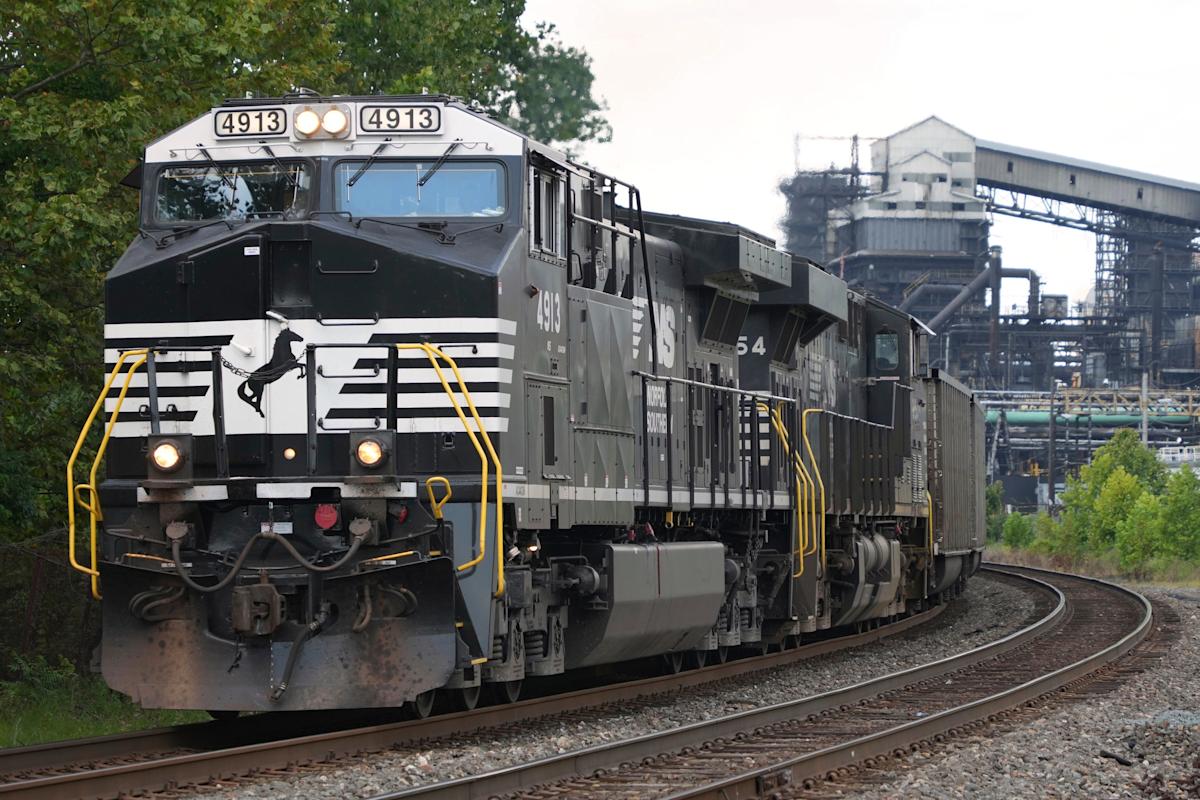
Norfolk Southern's Q1 Profit Falls 27% Amid Merger Costs and Derailment Impact
- Profit Decline Reasons: Norfolk Southern's Q1 profit fell 27% to $547 million, or $2.43 per share, primarily due to the absence of significant insurance payments related to the East Palestine derailment and increased costs associated with its merger plans with Union Pacific.
- Missing Insurance Payments: While the railroad previously benefited from $185 million in insurance payments from the derailment, this quarter saw no such payments, resulting in a 22-cent reduction in earnings per share; without these unusual costs, profits would have exceeded Wall Street's forecast of $2.51 per share.
- Economic Environment Challenges: CEO Mark George highlighted that economic uncertainty led to a 1% decline in shipments, compounded by severe weather and rapidly rising fuel costs; nevertheless, employees successfully delivered solid service and managed costs effectively.
- Merger Application Update: Norfolk Southern is collaborating with Union Pacific to update their merger application, which they plan to submit next Thursday, after the U.S. Surface Transportation Board rejected their initial request, seeking more information and yet to determine if the $85 billion deal will enhance competition.
See More

Norfolk Southern Reports Decline in Q1 Profit
- Profit Decline: Norfolk Southern reported a first-quarter net profit of $547 million, translating to earnings per share of $2.43, which marks a significant drop from last year's $750 million and $3.31 per share, indicating pressure on the company's profitability.
- Adjusted Earnings: Excluding special items, the company reported adjusted earnings of $597 million or $2.65 per share, showing some improvement in adjusted figures, yet failing to offset the overall decline in profit.
- Revenue Growth: The company's revenue increased slightly by 0.2% to $2.998 billion compared to $2.993 billion last year, reflecting stability in revenue growth but insufficient to counterbalance the profit drop.
- Market Reaction: The news of declining profits has led to cautious sentiment in the market regarding Norfolk Southern's outlook, which may impact its stock performance, prompting investors to closely monitor future operational strategies and market conditions.
See More
Norfolk Southern Reports Q1 2026 Financial Results with Strong Operational Discipline
- Strong Revenue Performance: Norfolk Southern reported $3.0 billion in revenue for Q1 2026, demonstrating resilience and adaptability in a challenging environment marked by severe winter weather and rising fuel prices, indicating robust market positioning.
- Operational Efficiency Improvement: Railway operating income was $877 million, with adjusted income reaching $939 million and operating ratio improving from 70.7% to 68.7%, showcasing effective cost management and service quality that enhances customer trust.
- Earnings Per Share Growth: Diluted earnings per share were $2.43, with an adjusted figure of $2.65, reflecting ongoing improvements in profitability despite merger-related expenses and the Eastern Ohio incident, which bolsters investor confidence in the company's financial health.
- Commitment to Sustainability: Norfolk Southern helps customers avoid approximately 15 million tons of carbon emissions annually through rail transport, highlighting its efforts in sustainability and reinforcing its leadership position in the environmentally-friendly transportation market.
See More
Norfolk Southern Q1 2026 Earnings Call Insights
- Cost Control: Norfolk Southern managed to keep total adjusted expenses up just 1% year-over-year in Q1 2026 despite inflation and rising fuel prices, demonstrating effective cost management that is likely to support profitability going forward.
- Fuel Efficiency Innovation: The company achieved a record in fuel efficiency during the first quarter, resulting in over $30 million in savings, indicating ongoing efforts to enhance operational efficiency and reduce costs, which may strengthen its competitive position in the market.
- Revenue and Volume Changes: Overall volume declined by 1% in Q1, with revenue remaining flat year-over-year, although revenue per unit (RPU) increased by 2%, reflecting stable performance under market pressures that could influence future growth expectations.
- Merger-Related Expenses: The company incurred $52 million in merger-related expenses during the quarter, alongside $10 million in costs related to the Eastern Ohio incident; however, the adjusted operating ratio stood at 68.7% with EPS at $2.65, indicating maintained profitability amidst challenges.
See More
Avis Budget's Stock Volatility Captivates Market Attention
- Dramatic Stock Fluctuations: Avis Budget's shares plummeted 70% over Wednesday and Thursday, marking the largest two-day decline in the company's history, reflecting a decline in investor interest in mature companies amid speculative trading.
- Impact of Short Squeeze: The stock's heavy shorting led to a short squeeze that initially drove prices up before a sharp decline, indicating risks associated with excess market liquidity, as two hedge funds collectively own about 70% of Avis's shares, exacerbating volatility.
- Transportation Index Volatility: The Dow Jones Transportation Average surged 33% before experiencing its largest single-day decline since March 2020 due to Avis's drop, highlighting the limitations of price-weighted indexes in accurately reflecting market dynamics.
- Investor Confidence Shaken: Analysts question the Dow Transportation Index's ability to convey meaningful insights into the sector or the broader economy, particularly given the spike in oil prices from Middle East conflicts, leading to skepticism about price-based weighting schemes.
See More
Meta Strikes Major Chip Deal with AWS to Enhance AI Infrastructure
- Infrastructure Investment: Meta has signed a three-year deal with AWS to deploy hundreds of thousands of Graviton chips, aiming to enhance AI performance with an expected 60% better energy efficiency than traditional systems, showcasing Meta's strategic commitment to AI.
- Workforce Adjustment: Despite the massive infrastructure investment, Meta announced a 10% workforce reduction, indicating a shift in capital allocation from human resources to high-performance silicon, reflecting the company's focus on future technology demands.
- Intensifying Market Competition: This move by Meta comes as competitors like Alphabet and Microsoft accelerate their internal hardware development, highlighting the urgency for Meta to secure computing capacity, which could reshape the industry landscape.
- CPU Renaissance: Intel has noted that central processors are re-emerging as the foundation for AI, and Meta's choice of Graviton chips over specialized accelerators indicates confidence in general-purpose processors, potentially driving growth across the semiconductor sector.
See More
Norfolk Southern's Q1 Profit Falls 27% Amid Merger Costs and Derailment Impact
- Profit Decline Reasons: Norfolk Southern's Q1 profit fell 27% to $547 million, or $2.43 per share, primarily due to the absence of significant insurance payments related to the East Palestine derailment and increased costs associated with its merger plans with Union Pacific.
- Missing Insurance Payments: While the railroad previously benefited from $185 million in insurance payments from the derailment, this quarter saw no such payments, resulting in a 22-cent reduction in earnings per share; without these unusual costs, profits would have exceeded Wall Street's forecast of $2.51 per share.
- Economic Environment Challenges: CEO Mark George highlighted that economic uncertainty led to a 1% decline in shipments, compounded by severe weather and rapidly rising fuel costs; nevertheless, employees successfully delivered solid service and managed costs effectively.
- Merger Application Update: Norfolk Southern is collaborating with Union Pacific to update their merger application, which they plan to submit next Thursday, after the U.S. Surface Transportation Board rejected their initial request, seeking more information and yet to determine if the $85 billion deal will enhance competition.
See More
Norfolk Southern Reports Decline in Q1 Profit
- Profit Decline: Norfolk Southern reported a first-quarter net profit of $547 million, translating to earnings per share of $2.43, which marks a significant drop from last year's $750 million and $3.31 per share, indicating pressure on the company's profitability.
- Adjusted Earnings: Excluding special items, the company reported adjusted earnings of $597 million or $2.65 per share, showing some improvement in adjusted figures, yet failing to offset the overall decline in profit.
- Revenue Growth: The company's revenue increased slightly by 0.2% to $2.998 billion compared to $2.993 billion last year, reflecting stability in revenue growth but insufficient to counterbalance the profit drop.
- Market Reaction: The news of declining profits has led to cautious sentiment in the market regarding Norfolk Southern's outlook, which may impact its stock performance, prompting investors to closely monitor future operational strategies and market conditions.
See More
Norfolk Southern Reports Q1 2026 Financial Results with Strong Operational Discipline
- Strong Revenue Performance: Norfolk Southern reported $3.0 billion in revenue for Q1 2026, demonstrating resilience and adaptability in a challenging environment marked by severe winter weather and rising fuel prices, indicating robust market positioning.
- Operational Efficiency Improvement: Railway operating income was $877 million, with adjusted income reaching $939 million and operating ratio improving from 70.7% to 68.7%, showcasing effective cost management and service quality that enhances customer trust.
- Earnings Per Share Growth: Diluted earnings per share were $2.43, with an adjusted figure of $2.65, reflecting ongoing improvements in profitability despite merger-related expenses and the Eastern Ohio incident, which bolsters investor confidence in the company's financial health.
- Commitment to Sustainability: Norfolk Southern helps customers avoid approximately 15 million tons of carbon emissions annually through rail transport, highlighting its efforts in sustainability and reinforcing its leadership position in the environmentally-friendly transportation market.
See More