NextEra Energy's Stable Growth and Clean Energy Outlook
Written by Emily J. Thompson, Senior Investment Analyst
Updated: Feb 19 2026
0mins
Should l Buy NEE?
Source: Fool
- Stable Earnings Growth: NextEra Energy combines regulated utility stability with one of the largest renewable energy pipelines in North America, which is expected to provide steady earnings growth for patient investors, reflecting the company's strong potential in the clean energy sector.
- Rising Dividend Trend: As the company's earnings grow steadily, NextEra Energy's dividends are also on the rise, enhancing investor return expectations and further solidifying its leadership position in the renewable energy market.
- Scale Advantage in Clean Energy: NextEra Energy's scale in the renewable energy sector allows it to maintain a competitive edge, particularly in the context of the increasing global demand for clean energy, making the company's strategic positioning crucial.
- Long-Term Investment Value: The video emphasizes NextEra Energy's long-term investment value, suggesting that investors should focus on its stable earnings and dividend growth, indicating the company's significant role in future sustainable development.
Trade with 70% Backtested Accuracy
Stop guessing "Should I Buy NEE?" and start using high-conviction signals backed by rigorous historical data.
Sign up today to access powerful investing tools and make smarter, data-driven decisions.
Analyst Views on NEE
Wall Street analysts forecast NEE stock price to fall
16 Analyst Rating
12 Buy
4 Hold
0 Sell
Strong Buy
Current: 92.850

Low
84.00
Averages
92.50
High
100.00
Current: 92.850
Low
84.00
Averages
92.50
High
100.00
About NEE
NextEra Energy, Inc. is an electric power and energy infrastructure company. It operates through its wholly owned subsidiaries, NextEra Energy Resources, LLC and NextEra Energy Transmission, LLC (collectively, NEER) and Florida Power & Light Company (FPL). Its segments include NEER and FPL. FPL segment is a rate-regulated electric utility engaged in the generation, transmission, distribution and sale of electric energy in Florida. FPL has approximately 35,052 megawatts of net generating capacity, over 91,000 circuit miles of transmission and distribution lines and 921 substations. The NEER segment owns, develops, constructs, manages and operates electric generation facilities in wholesale energy markets in the United States and Canada and includes assets and investments in other businesses with a clean energy focus, such as battery storage, natural gas pipelines, and renewable fuels. It owns, develops, constructs and operates rate-regulated transmission facilities in North America.
About the author

Emily J. Thompson
Emily J. Thompson, a Chartered Financial Analyst (CFA) with 12 years in investment research, graduated with honors from the Wharton School. Specializing in industrial and technology stocks, she provides in-depth analysis for Intellectia’s earnings and market brief reports.

JPMorgan ETFs Attract Significant Net Inflows


- Net Inflow Trend: Over the past year, derivative income ETFs have seen significant net inflows, particularly in single-stock ETFs, with the JPMorgan Equity Premium Income ETF and JPMorgan Nasdaq Equity Premium Income ETF collectively managing $78 billion in assets, indicating strong investor demand for high-yield covered call products.
- Investment Strategy Analysis: The JPMorgan Equity Premium Income ETF targets low-volatility stocks and writes out-of-the-money S&P 500 call options to generate monthly income, aiming to reduce downside risk and provide stable cash flow despite challenges like economic slowdown and negative non-farm payroll growth.
- Market Environment Impact: With the U.S. GDP growth rate slowing to just 0.7% in Q4 2025 and the OECD forecasting a 4% inflation rate, these economic conditions are not supportive of rising stock prices, prompting investors to shift towards more defensive investment strategies to mitigate market volatility.
- ETF Comparison: Given the current macroeconomic conditions, the JPMorgan Equity Premium Income ETF is viewed as the better choice due to its low-volatility stocks providing a layer of protection, while the JPMorgan Nasdaq Equity Premium Income ETF, despite an attractive 11.4% yield, carries higher risks due to the volatility of tech stocks.
See More

High Yield Strategies Outperform in Market Pullback
- High Yield Performance: In the current market pullback, high yield and defensive strategies have outperformed the broader market, particularly covered call strategies, which have attracted significant inflows, indicating strong investor demand for income.
- ETF Inflows: Over the past year, derivative income exchange-traded funds (ETFs) have seen substantial net inflows, notably the JPMorgan Equity Premium Income ETF (JEPI) and the JPMorgan Nasdaq Equity Premium Income ETF (JEPQ), which together manage $78 billion in assets, reflecting a market preference for high-yield products.
- Low Volatility Investment: The JPMorgan Equity Premium Income ETF focuses on low-volatility stocks, holding companies like Walmart and Johnson & Johnson, aiming to provide stable cash flow and reduced downside risk, which is crucial in the current environment of slowing economic growth.
- Market Outlook Analysis: Although JEPQ offers a yield of 11.4%, in the context of a slowing economy and labor market, low-volatility stocks may provide better defensive characteristics, making them more suitable for the current uncertain market conditions.
See More

Investors Heighten Concerns Over Economic Recession

- Recession Probability Fluctuations: According to Kalshi, the probability of a recession in 2025 exceeded 40% but dropped below 20% in February this year, only to rebound to 28% as of April 1, reflecting the impact of poor economic data and international tensions on market sentiment.
- GDP Revision Impact: The U.S. fourth-quarter GDP was revised down to 0.7% in March, increasing the risk of economic slowdown, and investors should be aware of the potential for two consecutive quarters of negative growth, which could be viewed as a shallow recession.
- Consumer Staples ETF Performance: The State Street Consumer Staples Select Sector SPDR ETF (XLP) has performed well amid market turmoil, rising 5% this year, with major holdings including Walmart (11.85%) and Coca-Cola (6.46%), demonstrating the resilience of consumer staples in uncertain economic conditions.
- Utilities ETF Stability: The Vanguard Utilities ETF (VPU) has also shown strong performance, up approximately 5% this year, with key holdings like NextEra Energy (11.95%) and Southern (6.38%), indicating that utility stocks' defensive characteristics are attracting investors amid recession fears.
See More

NextEra and Brookfield Lead the Green Energy Movement
- Growth Expectations: NextEra Energy anticipates an annual growth rate of at least 8% through the early 2030s, demonstrating its strong development potential in the green energy sector, particularly as electricity demand continues to rise, solidifying its market leadership.
- Financial Performance: In 2025, NextEra reported an 8.2% increase in earnings per share and added 13.5 gigawatts to its backlog last year, indicating its ongoing investment and expansion capabilities in renewable energy, which further enhances its long-term revenue visibility.
- Acquisition Plans: Brookfield Renewable announced its acquisition of Canadian independent renewable energy company Boralex and issued C$500 million in green bonds in 2026, which is expected to accelerate its growth and support sustainable development goals, showcasing its proactive positioning in green investments.
- Shareholder Returns: Brookfield's annual dividend stands at $1.57 per share, with both classes of stock rising over 40% in the past 12 months, which not only attracts investor interest but also reflects its strong total return potential, further solidifying its competitive advantage in the green energy market.
See More
Green Energy Demand Accelerates Globally
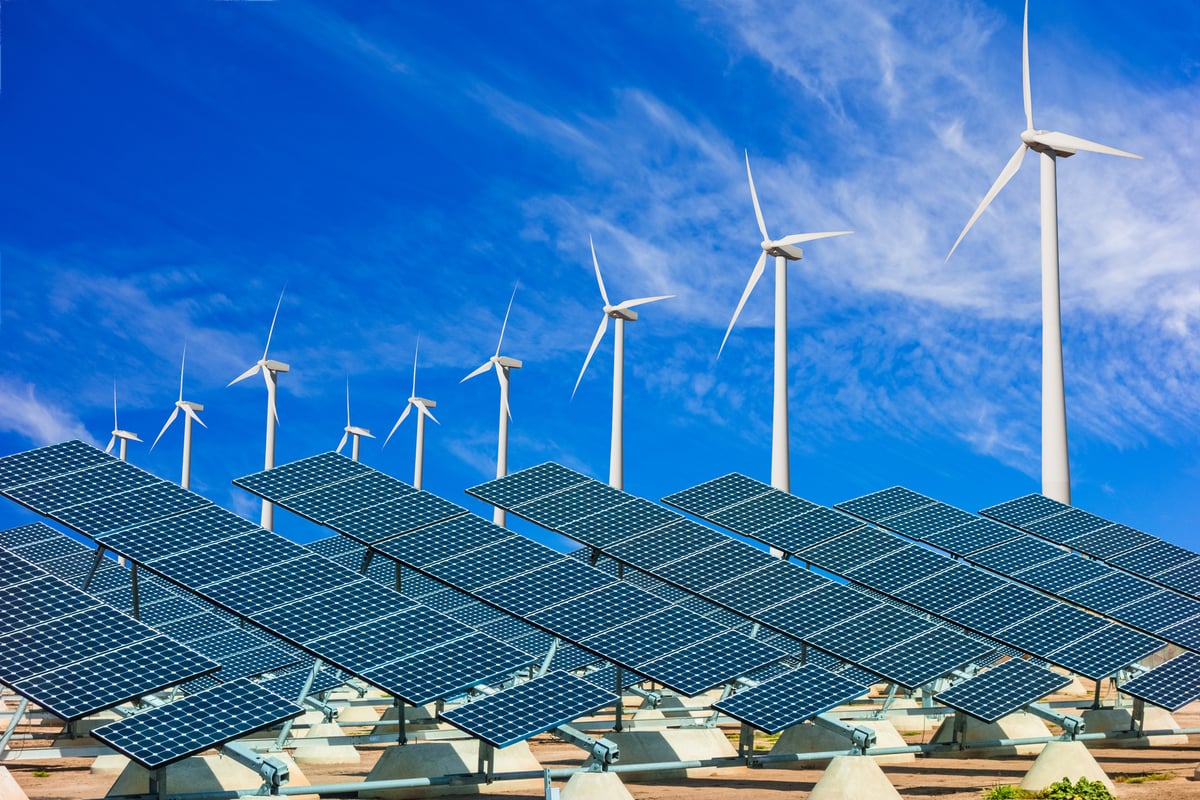
- NextEra Growth: As of March 30, NextEra Energy boasts a market capitalization of $191 billion, with an anticipated 8.2% earnings-per-share growth in 2025, aiming to maintain this rate through at least 2032, highlighting its robust potential in the renewable energy sector.
- Stable Stock Performance: NextEra's stock exhibits lower volatility than the overall market, with a beta of 0.75; despite a trailing P/E ratio exceeding 27, its long-term revenue visibility and attractive 2.73% dividend yield justify the premium valuation.
- Brookfield's Impressive Growth: Brookfield Renewable Partners reported $1.3 billion in funds from operations in 2025, reflecting a 10% year-over-year increase, alongside a 5% rise in distributions, underscoring its ongoing growth in the green energy space.
- Acquisitions and Financing: In January 2026, Brookfield issued C$500 million in green bonds and announced an agreement to acquire Boralex with investment group La Caisse, further enhancing its investment in renewable energy projects aligned with the United Nations' Sustainable Development Goals.
See More

Analysis of U.S. Energy Companies Amidst Volatility


- Enterprise Products Overview: Enterprise Products Partners operates over 50,000 miles of pipeline across 27 states, generating nearly $13.8 billion in revenue and close to $1.7 billion in net income in the latest quarter, showcasing its stable profitability and a dividend yield of 5.6%.
- Diverse Revenue Structure: As a vertically integrated operator, Enterprise ensures diversified income streams through various fee structures, effectively mitigating client sector volatility and providing consistent high-yield distributions to shareholders.
- NextEra Energy Overview: NextEra Energy combines traditional electricity with renewable sources, holding stakes in eight nuclear reactors, with the Duane Arnold reactor in Iowa set to restart in 2029 to supply power for Google's AI data centers.
- Stable Financial Performance: Over the past three years, NextEra has steadily increased revenue, achieving net margins between 26% and 32%, and raised its dividend by 10% to $0.62 per share in February 2023, currently yielding 2.7%.
See More
JPMorgan ETFs Attract Significant Net Inflows
- Net Inflow Trend: Over the past year, derivative income ETFs have seen significant net inflows, particularly in single-stock ETFs, with the JPMorgan Equity Premium Income ETF and JPMorgan Nasdaq Equity Premium Income ETF collectively managing $78 billion in assets, indicating strong investor demand for high-yield covered call products.
- Investment Strategy Analysis: The JPMorgan Equity Premium Income ETF targets low-volatility stocks and writes out-of-the-money S&P 500 call options to generate monthly income, aiming to reduce downside risk and provide stable cash flow despite challenges like economic slowdown and negative non-farm payroll growth.
- Market Environment Impact: With the U.S. GDP growth rate slowing to just 0.7% in Q4 2025 and the OECD forecasting a 4% inflation rate, these economic conditions are not supportive of rising stock prices, prompting investors to shift towards more defensive investment strategies to mitigate market volatility.
- ETF Comparison: Given the current macroeconomic conditions, the JPMorgan Equity Premium Income ETF is viewed as the better choice due to its low-volatility stocks providing a layer of protection, while the JPMorgan Nasdaq Equity Premium Income ETF, despite an attractive 11.4% yield, carries higher risks due to the volatility of tech stocks.
See More
High Yield Strategies Outperform in Market Pullback
- High Yield Performance: In the current market pullback, high yield and defensive strategies have outperformed the broader market, particularly covered call strategies, which have attracted significant inflows, indicating strong investor demand for income.
- ETF Inflows: Over the past year, derivative income exchange-traded funds (ETFs) have seen substantial net inflows, notably the JPMorgan Equity Premium Income ETF (JEPI) and the JPMorgan Nasdaq Equity Premium Income ETF (JEPQ), which together manage $78 billion in assets, reflecting a market preference for high-yield products.
- Low Volatility Investment: The JPMorgan Equity Premium Income ETF focuses on low-volatility stocks, holding companies like Walmart and Johnson & Johnson, aiming to provide stable cash flow and reduced downside risk, which is crucial in the current environment of slowing economic growth.
- Market Outlook Analysis: Although JEPQ offers a yield of 11.4%, in the context of a slowing economy and labor market, low-volatility stocks may provide better defensive characteristics, making them more suitable for the current uncertain market conditions.
See More
Investors Heighten Concerns Over Economic Recession
- Recession Probability Fluctuations: According to Kalshi, the probability of a recession in 2025 exceeded 40% but dropped below 20% in February this year, only to rebound to 28% as of April 1, reflecting the impact of poor economic data and international tensions on market sentiment.
- GDP Revision Impact: The U.S. fourth-quarter GDP was revised down to 0.7% in March, increasing the risk of economic slowdown, and investors should be aware of the potential for two consecutive quarters of negative growth, which could be viewed as a shallow recession.
- Consumer Staples ETF Performance: The State Street Consumer Staples Select Sector SPDR ETF (XLP) has performed well amid market turmoil, rising 5% this year, with major holdings including Walmart (11.85%) and Coca-Cola (6.46%), demonstrating the resilience of consumer staples in uncertain economic conditions.
- Utilities ETF Stability: The Vanguard Utilities ETF (VPU) has also shown strong performance, up approximately 5% this year, with key holdings like NextEra Energy (11.95%) and Southern (6.38%), indicating that utility stocks' defensive characteristics are attracting investors amid recession fears.
See More
NextEra and Brookfield Lead the Green Energy Movement
- Growth Expectations: NextEra Energy anticipates an annual growth rate of at least 8% through the early 2030s, demonstrating its strong development potential in the green energy sector, particularly as electricity demand continues to rise, solidifying its market leadership.
- Financial Performance: In 2025, NextEra reported an 8.2% increase in earnings per share and added 13.5 gigawatts to its backlog last year, indicating its ongoing investment and expansion capabilities in renewable energy, which further enhances its long-term revenue visibility.
- Acquisition Plans: Brookfield Renewable announced its acquisition of Canadian independent renewable energy company Boralex and issued C$500 million in green bonds in 2026, which is expected to accelerate its growth and support sustainable development goals, showcasing its proactive positioning in green investments.
- Shareholder Returns: Brookfield's annual dividend stands at $1.57 per share, with both classes of stock rising over 40% in the past 12 months, which not only attracts investor interest but also reflects its strong total return potential, further solidifying its competitive advantage in the green energy market.
See More
Green Energy Demand Accelerates Globally
- NextEra Growth: As of March 30, NextEra Energy boasts a market capitalization of $191 billion, with an anticipated 8.2% earnings-per-share growth in 2025, aiming to maintain this rate through at least 2032, highlighting its robust potential in the renewable energy sector.
- Stable Stock Performance: NextEra's stock exhibits lower volatility than the overall market, with a beta of 0.75; despite a trailing P/E ratio exceeding 27, its long-term revenue visibility and attractive 2.73% dividend yield justify the premium valuation.
- Brookfield's Impressive Growth: Brookfield Renewable Partners reported $1.3 billion in funds from operations in 2025, reflecting a 10% year-over-year increase, alongside a 5% rise in distributions, underscoring its ongoing growth in the green energy space.
- Acquisitions and Financing: In January 2026, Brookfield issued C$500 million in green bonds and announced an agreement to acquire Boralex with investment group La Caisse, further enhancing its investment in renewable energy projects aligned with the United Nations' Sustainable Development Goals.
See More
Analysis of U.S. Energy Companies Amidst Volatility
- Enterprise Products Overview: Enterprise Products Partners operates over 50,000 miles of pipeline across 27 states, generating nearly $13.8 billion in revenue and close to $1.7 billion in net income in the latest quarter, showcasing its stable profitability and a dividend yield of 5.6%.
- Diverse Revenue Structure: As a vertically integrated operator, Enterprise ensures diversified income streams through various fee structures, effectively mitigating client sector volatility and providing consistent high-yield distributions to shareholders.
- NextEra Energy Overview: NextEra Energy combines traditional electricity with renewable sources, holding stakes in eight nuclear reactors, with the Duane Arnold reactor in Iowa set to restart in 2029 to supply power for Google's AI data centers.
- Stable Financial Performance: Over the past three years, NextEra has steadily increased revenue, achieving net margins between 26% and 32%, and raised its dividend by 10% to $0.62 per share in February 2023, currently yielding 2.7%.
See More