New PAR Agent Reduces HR Cycle Times by 60%
Written by Emily J. Thompson, Senior Investment Analyst
Updated: 1 hour ago
0mins
Should l Buy WDAY?
Source: PRnewswire
- Efficiency Boost: The newly launched PAR Agent automates workflows, reducing Personnel Action Request processing times from 22-45 days to 9-18 days, achieving a 60% reduction that accelerates onboarding and pay adjustments for federal agencies.
- Error Reduction: By implementing real-time data validation and automation, the PAR Agent minimizes thousands of manual payroll corrections, ensuring compliance with U.S. Office of Personnel Management requirements, thereby enhancing audit readiness and data integrity while strengthening taxpayer stewardship.
- Cost Savings: In a high-volume agency with 10,000 employees processing around 5,000 PARs monthly, the PAR Agent could save over 64,000 internal labor hours and approximately $3.56 million annually, allowing resources to be better allocated for public service.
- Strategic Innovation: The PAR Agent represents Workday Government's latest innovation aimed at modernizing the public sector by leveraging AI to unify HR and finance management, providing real-time visibility that empowers agencies to manage their workforce more effectively and make informed decisions.
Trade with 70% Backtested Accuracy
Stop guessing "Should I Buy WDAY?" and start using high-conviction signals backed by rigorous historical data.
Sign up today to access powerful investing tools and make smarter, data-driven decisions.
Analyst Views on WDAY
Wall Street analysts forecast WDAY stock price to rise
31 Analyst Rating
22 Buy
9 Hold
0 Sell
Moderate Buy
Current: 119.760

Low
235.00
Averages
275.19
High
325.00
Current: 119.760
Low
235.00
Averages
275.19
High
325.00
About WDAY
Workday, Inc. is a provider of an artificial intelligence (AI) platform to help organizations manage their people, money, and agents. The Company provides over 11,000 organizations with cloud solutions powered by AI to help solve business challenges, including supporting and empowering their workforce, managing their finances and spending in an ever-changing environment, and planning for the unexpected. It offers Financial Management, Spend Management, Human Capital Management (HCM), Planning, and Analytics applications. The Company sells its solutions worldwide primarily through direct sales. It also offers professional services, both directly and through its Workday Services Partners, to help customers deploy its solutions. It offers businesses flexible solutions to help them adapt to their industry-specific needs and respond to change. It serves various industries, including professional and business services, financial services, healthcare, education, government, and others.
About the author

Emily J. Thompson
Emily J. Thompson, a Chartered Financial Analyst (CFA) with 12 years in investment research, graduated with honors from the Wharton School. Specializing in industrial and technology stocks, she provides in-depth analysis for Intellectia’s earnings and market brief reports.

New Agent Reduces PAR Cycle Times by 60% and Enhances Decision Accuracy

- Efficiency Boost in PAR Processing: The newly launched Personnel Action Request (PAR) Agent automates workflows, reducing processing times from 22-45 days to approximately 9-18 days, achieving up to a 60% reduction, which significantly accelerates the handling of new hires, promotions, and pay changes, thereby enhancing federal agency operational efficiency.
- Error Rate Reduction: By implementing real-time data validation and automated checks, the agent minimizes the need for thousands of manual payroll corrections, ensuring compliance with U.S. Office of Personnel Management requirements, which strengthens audit readiness and data integrity, ultimately increasing taxpayer value.
- Labor Cost Savings: In a high-volume agency with 10,000 employees processing around 5,000 PARs monthly, the agent could save over 64,000 internal labor hours and approximately $3.56 million annually, allowing resources to be better stewarded for public funds.
- Strategic Technological Investment: This innovation from Workday Government not only enhances accuracy and efficiency in HR management but also facilitates a transition from traditional paper-based processes to a modern, AI-enabled management model, positioning federal agencies for future success.
See More
New PAR Agent Reduces HR Cycle Times by 60%
- Efficiency Boost: The newly launched PAR Agent automates workflows, reducing Personnel Action Request processing times from 22-45 days to 9-18 days, achieving a 60% reduction that accelerates onboarding and pay adjustments for federal agencies.
- Error Reduction: By implementing real-time data validation and automation, the PAR Agent minimizes thousands of manual payroll corrections, ensuring compliance with U.S. Office of Personnel Management requirements, thereby enhancing audit readiness and data integrity while strengthening taxpayer stewardship.
- Cost Savings: In a high-volume agency with 10,000 employees processing around 5,000 PARs monthly, the PAR Agent could save over 64,000 internal labor hours and approximately $3.56 million annually, allowing resources to be better allocated for public service.
- Strategic Innovation: The PAR Agent represents Workday Government's latest innovation aimed at modernizing the public sector by leveraging AI to unify HR and finance management, providing real-time visibility that empowers agencies to manage their workforce more effectively and make informed decisions.
See More

Workday Launches AI-Powered Employee Recognition Solution
- AI Recognition Tool: Workday's collaboration with Achievers has led to the launch of Workday Recognition, an AI-powered employee recognition and rewards solution embedded within its HCM platform, allowing employees to recognize peers and redeem rewards seamlessly, thus streamlining HR management processes.
- Productivity Boost: Research indicates that employees who receive recognition weekly are 2.6 times more productive and six times more likely to remain with their company, underscoring the critical role of employee recognition in enhancing work efficiency and loyalty.
- Global Rewards System: The platform supports a rewards catalog in local currencies across 190 countries, ensuring that large multinational employers can effectively implement employee incentive measures in diverse markets, thereby enhancing global competitiveness.
- Real-Time Data Analysis: Workday Recognition leverages AI to analyze peer recognition patterns, assisting HR leaders in identifying top contributors and in-demand skills, thus providing real-time data support for performance management decisions and improving overall organizational effectiveness.
See More

US Stocks Close Higher: S&P 500 Hits All-Time High


- S&P 500 Hits Record High: The S&P 500 index rose by 0.80%, closing at an all-time high, reflecting market optimism about economic recovery, particularly driven by technology stocks, which further solidifies investor confidence.
- Intel's Strong Performance: Intel's stock surged over 23% after forecasting Q2 revenue between $13.8 billion and $14.8 billion, significantly exceeding the $13.04 billion expectation, indicating strong confidence in the semiconductor industry's potential driven by artificial intelligence, which may spark increased investment in the sector.
- Consumer Confidence Rebounds: The University of Michigan's consumer sentiment index was revised upward to 49.8, surpassing the expected 48.5, suggesting an increase in consumer confidence regarding economic prospects, which could drive consumer spending and economic growth.
- International Dynamics Affecting Markets: Progress in US-Iran negotiations has boosted market sentiment; despite tensions in the Strait of Hormuz, optimism about future talks may alleviate energy price pressures and promote stock market gains.
See More

US Stocks Close Lower Amid Iran Tensions and Mixed Economic Data


- Market Weakness: On Thursday, the S&P 500 index fell by 0.41%, the Dow Jones Industrial Average dropped by 0.36%, and the Nasdaq 100 declined by 0.57%, reflecting heightened investor concerns over the escalating tensions in Iran, which erased earlier gains.
- Mixed Economic Data: Weekly initial unemployment claims rose by 6,000 to 214,000, indicating a weaker labor market than the expected 210,000, while the Chicago Fed national activity index fell to -0.20, signaling a slowdown in economic growth.
- Rising Oil Prices: WTI crude oil prices surged over 3% due to tensions in the Strait of Hormuz, potentially exacerbating the global energy crisis and influencing market sentiment and inflation expectations.
- Earnings Reports Highlight: Despite the overall market weakness, 81% of S&P 500 companies reported better-than-expected earnings, with Q1 earnings projected to rise by 12% year-over-year, showcasing resilience in certain sectors, particularly chipmakers like Texas Instruments, which rose over 19%.
See More
Software Stocks Plummet as ServiceNow and IBM Report Disappointing Earnings

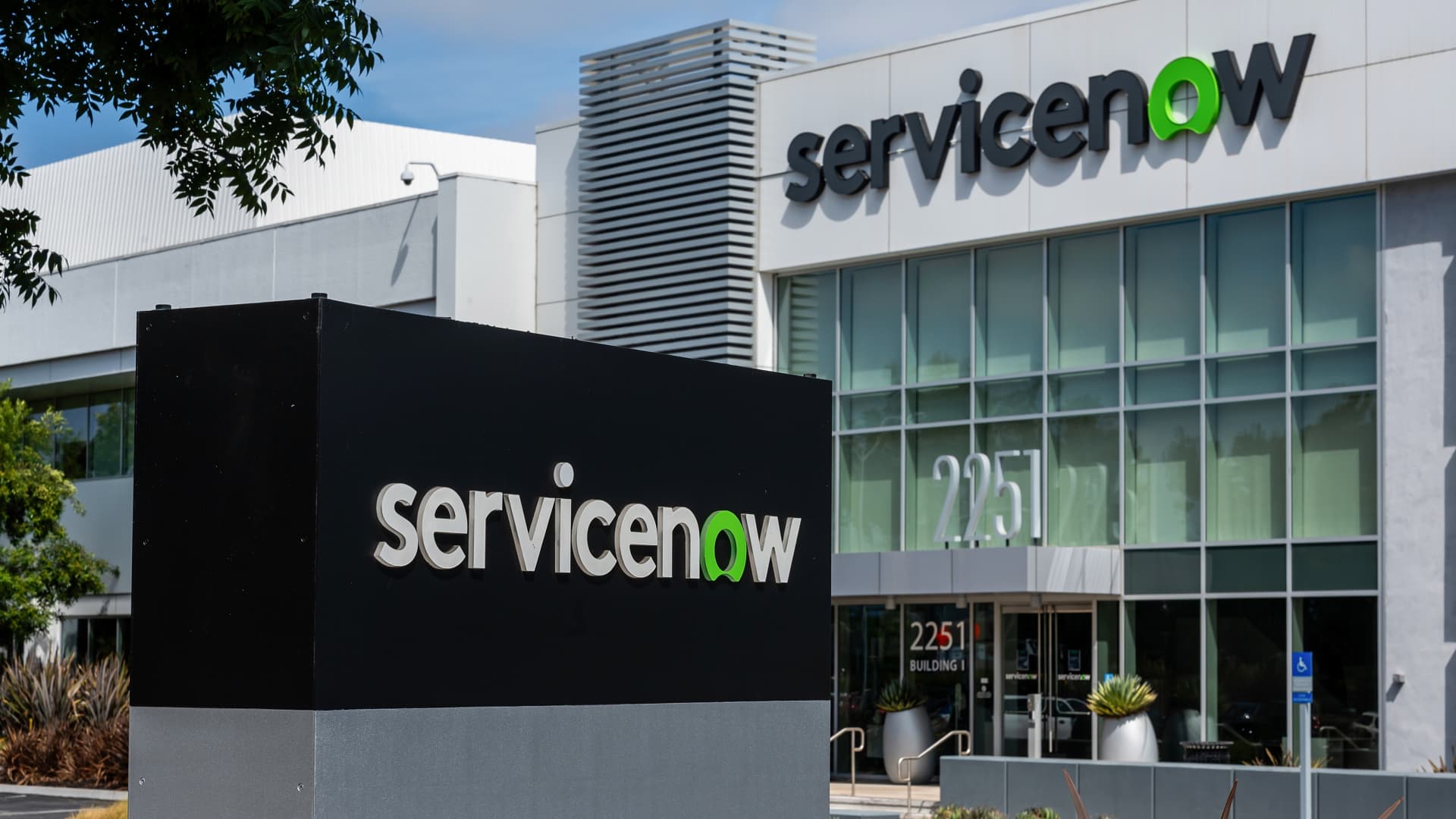
- ServiceNow Stock Crash: ServiceNow shares plummeted 17% on Thursday, marking its worst day ever, as the company narrowly beat Wall Street estimates but cited Middle East conflict as a headwind for quarterly subscription revenue, raising concerns about future growth.
- IBM's Earnings Fail to Boost Stock: Although IBM exceeded earnings and revenue expectations, its stock dropped 9% due to maintained guidance, indicating investor caution regarding its growth potential amidst a challenging market environment.
- Software Sector Under Pressure: Salesforce and HubSpot each fell about 9%, while Adobe and Intuit dropped roughly 7%, and Oracle declined about 5%, reflecting widespread market fears that AI tools could disrupt the traditional cloud subscription model, leading to significant sector-wide declines.
- ETF Performance Decline: The iShares Expanded Tech-Software ETF (IGV) fell about 5% on Thursday and is down approximately 18% this year, illustrating investor pessimism regarding the software industry's outlook, particularly in the context of rapid advancements in AI technology.
See More
New Agent Reduces PAR Cycle Times by 60% and Enhances Decision Accuracy
- Efficiency Boost in PAR Processing: The newly launched Personnel Action Request (PAR) Agent automates workflows, reducing processing times from 22-45 days to approximately 9-18 days, achieving up to a 60% reduction, which significantly accelerates the handling of new hires, promotions, and pay changes, thereby enhancing federal agency operational efficiency.
- Error Rate Reduction: By implementing real-time data validation and automated checks, the agent minimizes the need for thousands of manual payroll corrections, ensuring compliance with U.S. Office of Personnel Management requirements, which strengthens audit readiness and data integrity, ultimately increasing taxpayer value.
- Labor Cost Savings: In a high-volume agency with 10,000 employees processing around 5,000 PARs monthly, the agent could save over 64,000 internal labor hours and approximately $3.56 million annually, allowing resources to be better stewarded for public funds.
- Strategic Technological Investment: This innovation from Workday Government not only enhances accuracy and efficiency in HR management but also facilitates a transition from traditional paper-based processes to a modern, AI-enabled management model, positioning federal agencies for future success.
See More
New PAR Agent Reduces HR Cycle Times by 60%
- Efficiency Boost: The newly launched PAR Agent automates workflows, reducing Personnel Action Request processing times from 22-45 days to 9-18 days, achieving a 60% reduction that accelerates onboarding and pay adjustments for federal agencies.
- Error Reduction: By implementing real-time data validation and automation, the PAR Agent minimizes thousands of manual payroll corrections, ensuring compliance with U.S. Office of Personnel Management requirements, thereby enhancing audit readiness and data integrity while strengthening taxpayer stewardship.
- Cost Savings: In a high-volume agency with 10,000 employees processing around 5,000 PARs monthly, the PAR Agent could save over 64,000 internal labor hours and approximately $3.56 million annually, allowing resources to be better allocated for public service.
- Strategic Innovation: The PAR Agent represents Workday Government's latest innovation aimed at modernizing the public sector by leveraging AI to unify HR and finance management, providing real-time visibility that empowers agencies to manage their workforce more effectively and make informed decisions.
See More
Workday Launches AI-Powered Employee Recognition Solution
- AI Recognition Tool: Workday's collaboration with Achievers has led to the launch of Workday Recognition, an AI-powered employee recognition and rewards solution embedded within its HCM platform, allowing employees to recognize peers and redeem rewards seamlessly, thus streamlining HR management processes.
- Productivity Boost: Research indicates that employees who receive recognition weekly are 2.6 times more productive and six times more likely to remain with their company, underscoring the critical role of employee recognition in enhancing work efficiency and loyalty.
- Global Rewards System: The platform supports a rewards catalog in local currencies across 190 countries, ensuring that large multinational employers can effectively implement employee incentive measures in diverse markets, thereby enhancing global competitiveness.
- Real-Time Data Analysis: Workday Recognition leverages AI to analyze peer recognition patterns, assisting HR leaders in identifying top contributors and in-demand skills, thus providing real-time data support for performance management decisions and improving overall organizational effectiveness.
See More
US Stocks Close Higher: S&P 500 Hits All-Time High
- S&P 500 Hits Record High: The S&P 500 index rose by 0.80%, closing at an all-time high, reflecting market optimism about economic recovery, particularly driven by technology stocks, which further solidifies investor confidence.
- Intel's Strong Performance: Intel's stock surged over 23% after forecasting Q2 revenue between $13.8 billion and $14.8 billion, significantly exceeding the $13.04 billion expectation, indicating strong confidence in the semiconductor industry's potential driven by artificial intelligence, which may spark increased investment in the sector.
- Consumer Confidence Rebounds: The University of Michigan's consumer sentiment index was revised upward to 49.8, surpassing the expected 48.5, suggesting an increase in consumer confidence regarding economic prospects, which could drive consumer spending and economic growth.
- International Dynamics Affecting Markets: Progress in US-Iran negotiations has boosted market sentiment; despite tensions in the Strait of Hormuz, optimism about future talks may alleviate energy price pressures and promote stock market gains.
See More
US Stocks Close Lower Amid Iran Tensions and Mixed Economic Data
- Market Weakness: On Thursday, the S&P 500 index fell by 0.41%, the Dow Jones Industrial Average dropped by 0.36%, and the Nasdaq 100 declined by 0.57%, reflecting heightened investor concerns over the escalating tensions in Iran, which erased earlier gains.
- Mixed Economic Data: Weekly initial unemployment claims rose by 6,000 to 214,000, indicating a weaker labor market than the expected 210,000, while the Chicago Fed national activity index fell to -0.20, signaling a slowdown in economic growth.
- Rising Oil Prices: WTI crude oil prices surged over 3% due to tensions in the Strait of Hormuz, potentially exacerbating the global energy crisis and influencing market sentiment and inflation expectations.
- Earnings Reports Highlight: Despite the overall market weakness, 81% of S&P 500 companies reported better-than-expected earnings, with Q1 earnings projected to rise by 12% year-over-year, showcasing resilience in certain sectors, particularly chipmakers like Texas Instruments, which rose over 19%.
See More
Software Stocks Plummet as ServiceNow and IBM Report Disappointing Earnings
- ServiceNow Stock Crash: ServiceNow shares plummeted 17% on Thursday, marking its worst day ever, as the company narrowly beat Wall Street estimates but cited Middle East conflict as a headwind for quarterly subscription revenue, raising concerns about future growth.
- IBM's Earnings Fail to Boost Stock: Although IBM exceeded earnings and revenue expectations, its stock dropped 9% due to maintained guidance, indicating investor caution regarding its growth potential amidst a challenging market environment.
- Software Sector Under Pressure: Salesforce and HubSpot each fell about 9%, while Adobe and Intuit dropped roughly 7%, and Oracle declined about 5%, reflecting widespread market fears that AI tools could disrupt the traditional cloud subscription model, leading to significant sector-wide declines.
- ETF Performance Decline: The iShares Expanded Tech-Software ETF (IGV) fell about 5% on Thursday and is down approximately 18% this year, illustrating investor pessimism regarding the software industry's outlook, particularly in the context of rapid advancements in AI technology.
See More