NATO summit highlights defense deals for RTX, Boeing and others
Written by Emily J. Thompson, Senior Investment Analyst
Updated: Jul 11 2024
0mins

Source: reuters
NATO Summit Deals:
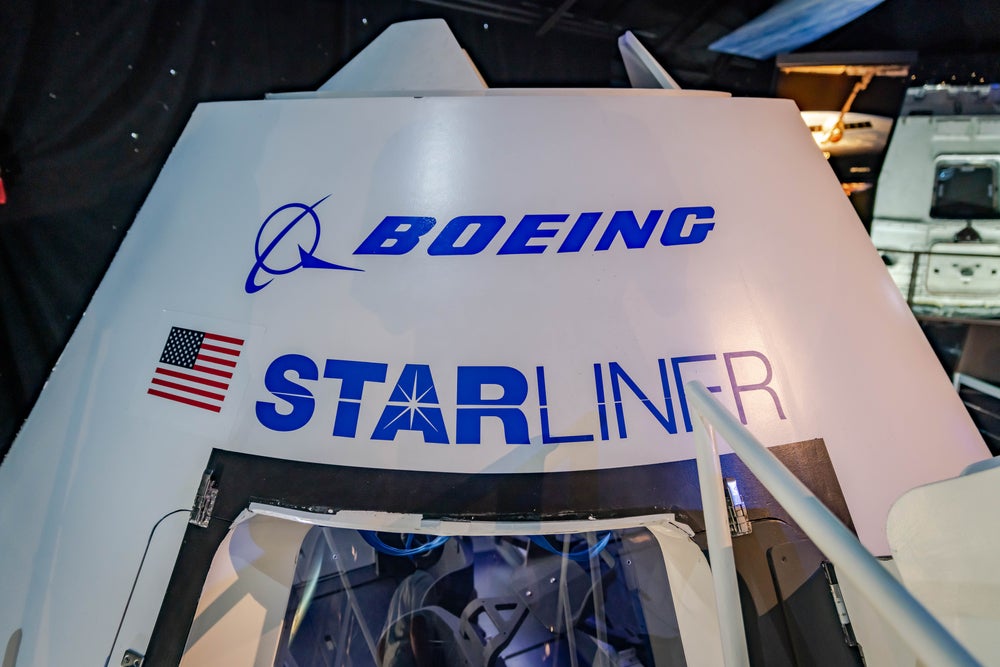
- Significant deals were showcased at the NATO summit in Washington for top U.S. defense companies like RTX, Lockheed Martin, Boeing, Kongsberg Defense, and SAAB.
Weapons Procurements Highlights:
- Contracts included Stinger missiles, Patriot GEM-T missiles, artillery shell components, AWACS airborne radar extension program, rocket motors partnership, GLSDB production, interceptors for Patriot missile defense system, and improvements to the National Advanced Surface-to-Air Missile System (NASAMs).
Trade with 70% Backtested Accuracy
Stop guessing "Should I Buy LMT?" and start using high-conviction signals backed by rigorous historical data.
Sign up today to access powerful investing tools and make smarter, data-driven decisions.
Analyst Views on LMT
Wall Street analysts forecast LMT stock price to rise
12 Analyst Rating
4 Buy
7 Hold
1 Sell
Hold
Current: 517.970

Low
430.00
Averages
535.50
High
605.00
Current: 517.970
Low
430.00
Averages
535.50
High
605.00
About LMT
Lockheed Martin Corporation is a global aerospace and defense company. The Company is engaged in the research, design, development, manufacture, integration and sustainment of advanced technology systems, products and services. Its segments include Aeronautics, Missiles and Fire Control (MFC), Rotary and Mission Systems (RMS) and Space. Aeronautics segment is engaged in the research, design, development, manufacture, integration, sustainment, support and upgrade of advanced military aircraft. MFC segment provides air and missile defense systems, manned and unmanned ground vehicles, energy management solutions, and others. RMS segment designs, manufactures, services and supports various military and commercial helicopters, surface ships, sea and land-based missile defense systems, and others. Its Space segment is engaged in the research and design, development, engineering and production of satellites, space transportation systems, and strategic, advanced strike, and defensive systems.
About the author

Emily J. Thompson
Emily J. Thompson, a Chartered Financial Analyst (CFA) with 12 years in investment research, graduated with honors from the Wharton School. Specializing in industrial and technology stocks, she provides in-depth analysis for Intellectia’s earnings and market brief reports.
US Plans $71 Billion Investment to Upgrade Nuclear Arsenal


- Massive Budget Commitment: The U.S. Department of Defense's fiscal year 2027 budget proposal includes a substantial $71 billion investment aimed at modernizing the nuclear triad, with $6.1 billion allocated for the B-21 stealth bomber and $4.6 billion for the Sentinel system to replace older missiles, underscoring the focus on nuclear deterrence capabilities.
- Submarine and Missile System Upgrades: The budget also earmarks $16.2 billion for the construction of Columbia-class submarines and $1.5 billion for the development of a new long-range cruise missile, aiming to fully replace outdated weaponry rather than making incremental upgrades, thereby enhancing sea-based nuclear defense.
- Beneficiaries Among Major Contractors: General Dynamics (GD), as the primary contractor for the Columbia-class submarines, is expected to reap the most benefits from the Navy's upgrade program, while BWX Technologies (BWXT) plays a crucial role by supplying the unique nuclear reactor technology essential for the sea-based nuclear force.
- Positive Stock Market Reaction: BWXT and Curtiss-Wright (CW) stocks have surged over 25% and 30% year-to-date, respectively, while GD's stock has gained 2%, reflecting market optimism regarding defense investments, despite RTX's stock declining by 4%.
See More

U.S. Demand for Hypersonic Test Platforms Surges


- Infrastructure Shortage: The U.S. Department of Defense's procurement patterns indicate that the development of hypersonic weapons and propulsion systems is outpacing the construction of necessary testing infrastructure, creating a pressing demand that Starfighters Space's F-104 aircraft can fulfill.
- Market Opportunity: Starfighters Space announced the immediate availability of its F-104 Starfighter as an aerodynamic test platform for the U.S. defense and aerospace community, filling a current gap in testing capacity and expected to attract more clients.
- Expanding Customer Base: Starfighters Space's clientele includes prominent companies such as Lockheed Martin, GE, and the U.S. Air Force Research Laboratory, with the company's operational footprint expanding to Midland International Air & Space Port in Texas, enhancing its market competitiveness.
- Technical Advantage: The F-104 platform can replicate the aerodynamic conditions of the first 30 seconds of a rocket launch, providing a testing environment that closely resembles actual flight, thereby improving the accuracy and reliability of tests by narrowing the gap between laboratory simulations and real-world conditions.
See More

U.S. Accelerates Development of Hypersonic Test Platforms


- Surging Hypersonic Demand: The U.S. Department of Defense's procurement patterns indicate that the development of hypersonic weapons and propulsion systems is outpacing the construction of necessary testing infrastructure, prompting Starfighters Space to swiftly respond by offering its F-104 aircraft as a testing platform.
- Infrastructure Lag: NASA's recent completion of its first new wind tunnel in over 40 years highlights the emphasis on wind tunnel construction in defense budgets, while Starfighters' F-104 platform can provide immediate testing capabilities to bridge this infrastructure gap.
- Solid Customer Base: Starfighters Space boasts a client list that includes major players like Lockheed Martin and the U.S. Air Force Research Laboratory, underscoring its strong market position in the defense and aerospace sectors, and it is expected to benefit from the upcoming demand for hypersonic testing.
- Operational Footprint Expansion: With operational bases established at Kennedy Space Center in Florida and Midland International Air & Space Port in Texas, Starfighters enhances its competitive edge in the hypersonic testing market, ensuring it can meet the growing customer demand.
See More

VisionWave Files Patent to Enhance AI Vision Technology

- Patent Application Overview: VisionWave Holdings filed a provisional patent application for its xCalibre™ visual intelligence platform on April 24, 2026, aiming to transform conventional camera streams into structured sensor intelligence, enhancing real-time operational capabilities in security and defense sectors.
- Market Potential Analysis: The military AI video surveillance market is projected to grow from approximately $655 million in 2024 to roughly $3 billion by 2030, indicating an increasing strategic demand for owning the architecture that processes data, which may impact follow-on procurement valuations.
- Technological Innovation Significance: xCalibre™ treats cameras as intelligent sensors capable of detection, classification, and event analysis, significantly reducing latency and improving edge deployment efficiency, thereby providing higher operational value in security and infrastructure monitoring.
- Intellectual Property Strategy: VisionWave believes this patent application may strengthen its intellectual property position in AI-driven computer vision and edge intelligence, supporting multiple use cases and enhancing its competitive advantage in a rapidly evolving market.
See More
VisionWave Files Patent to Enhance Competitive Edge in AI Vision
- Patent Application Overview: VisionWave Holdings filed a provisional patent application for its xCalibre™ visual intelligence platform on April 24, 2026, aiming to convert conventional camera streams into structured sensor intelligence, thereby enhancing data processing capabilities and gaining an edge in the competitive defense market.
- Market Potential Analysis: The military AI video surveillance market is projected to grow from approximately $655 million in 2024 to around $3 billion by 2030, indicating a rising strategic demand for advanced computer vision architectures, which further enhances the company's competitiveness in defense procurement.
- Technological Innovation Value: The xCalibre™ platform intelligently processes data from various camera types to enable real-time detection, classification, and event analysis, significantly reducing latency and improving edge deployment efficiency, thus creating higher commercial value in security and defense applications.
- Importance of IP Strategy: VisionWave believes that patent-protected architecture will provide a competitive advantage in AI-driven computer vision and edge intelligence, with the value of intellectual property increasing as the number of supported camera types and use cases grows, strengthening the company's position in the market.
See More
Strategic Shift in Rare Earth Alloy Market


- Supply Chain Restructuring: REalloys (ALOY) focuses on bringing the rare earth alloy supply chain back to the U.S., aiming to meet the Pentagon's ban on Chinese-origin materials by 2027, thereby ensuring the security and independence of the defense supply chain.
- Market Price Fluctuations: Rare earth metal prices rebounded to $130-150/kg by mid-2024, reflecting strong demand for rare earth materials, particularly in the production of high-performance permanent magnets, which directly impacts the production capabilities of defense and EV industries.
- Heavy Rare Earth Production Capacity: REalloys partners with the Saskatchewan Research Council to achieve an initial production of 525 tonnes of NdPr metal by early 2027, scaling up to 3,500 tonnes, positioning itself as one of North America's largest heavy rare earth producers and significantly enhancing U.S. competitiveness in the global rare earth market.
- High Demand Drives Profit Growth: With rare earth metals priced at $1,200-1,500/kg in the U.S. market, REalloys' business model shifts from mere production to delivering high-value non-China materials, expected to substantially increase the company's profitability and market share.
See More
US Plans $71 Billion Investment to Upgrade Nuclear Arsenal
- Massive Budget Commitment: The U.S. Department of Defense's fiscal year 2027 budget proposal includes a substantial $71 billion investment aimed at modernizing the nuclear triad, with $6.1 billion allocated for the B-21 stealth bomber and $4.6 billion for the Sentinel system to replace older missiles, underscoring the focus on nuclear deterrence capabilities.
- Submarine and Missile System Upgrades: The budget also earmarks $16.2 billion for the construction of Columbia-class submarines and $1.5 billion for the development of a new long-range cruise missile, aiming to fully replace outdated weaponry rather than making incremental upgrades, thereby enhancing sea-based nuclear defense.
- Beneficiaries Among Major Contractors: General Dynamics (GD), as the primary contractor for the Columbia-class submarines, is expected to reap the most benefits from the Navy's upgrade program, while BWX Technologies (BWXT) plays a crucial role by supplying the unique nuclear reactor technology essential for the sea-based nuclear force.
- Positive Stock Market Reaction: BWXT and Curtiss-Wright (CW) stocks have surged over 25% and 30% year-to-date, respectively, while GD's stock has gained 2%, reflecting market optimism regarding defense investments, despite RTX's stock declining by 4%.
See More
U.S. Demand for Hypersonic Test Platforms Surges
- Infrastructure Shortage: The U.S. Department of Defense's procurement patterns indicate that the development of hypersonic weapons and propulsion systems is outpacing the construction of necessary testing infrastructure, creating a pressing demand that Starfighters Space's F-104 aircraft can fulfill.
- Market Opportunity: Starfighters Space announced the immediate availability of its F-104 Starfighter as an aerodynamic test platform for the U.S. defense and aerospace community, filling a current gap in testing capacity and expected to attract more clients.
- Expanding Customer Base: Starfighters Space's clientele includes prominent companies such as Lockheed Martin, GE, and the U.S. Air Force Research Laboratory, with the company's operational footprint expanding to Midland International Air & Space Port in Texas, enhancing its market competitiveness.
- Technical Advantage: The F-104 platform can replicate the aerodynamic conditions of the first 30 seconds of a rocket launch, providing a testing environment that closely resembles actual flight, thereby improving the accuracy and reliability of tests by narrowing the gap between laboratory simulations and real-world conditions.
See More
U.S. Accelerates Development of Hypersonic Test Platforms
- Surging Hypersonic Demand: The U.S. Department of Defense's procurement patterns indicate that the development of hypersonic weapons and propulsion systems is outpacing the construction of necessary testing infrastructure, prompting Starfighters Space to swiftly respond by offering its F-104 aircraft as a testing platform.
- Infrastructure Lag: NASA's recent completion of its first new wind tunnel in over 40 years highlights the emphasis on wind tunnel construction in defense budgets, while Starfighters' F-104 platform can provide immediate testing capabilities to bridge this infrastructure gap.
- Solid Customer Base: Starfighters Space boasts a client list that includes major players like Lockheed Martin and the U.S. Air Force Research Laboratory, underscoring its strong market position in the defense and aerospace sectors, and it is expected to benefit from the upcoming demand for hypersonic testing.
- Operational Footprint Expansion: With operational bases established at Kennedy Space Center in Florida and Midland International Air & Space Port in Texas, Starfighters enhances its competitive edge in the hypersonic testing market, ensuring it can meet the growing customer demand.
See More
VisionWave Files Patent to Enhance AI Vision Technology
- Patent Application Overview: VisionWave Holdings filed a provisional patent application for its xCalibre™ visual intelligence platform on April 24, 2026, aiming to transform conventional camera streams into structured sensor intelligence, enhancing real-time operational capabilities in security and defense sectors.
- Market Potential Analysis: The military AI video surveillance market is projected to grow from approximately $655 million in 2024 to roughly $3 billion by 2030, indicating an increasing strategic demand for owning the architecture that processes data, which may impact follow-on procurement valuations.
- Technological Innovation Significance: xCalibre™ treats cameras as intelligent sensors capable of detection, classification, and event analysis, significantly reducing latency and improving edge deployment efficiency, thereby providing higher operational value in security and infrastructure monitoring.
- Intellectual Property Strategy: VisionWave believes this patent application may strengthen its intellectual property position in AI-driven computer vision and edge intelligence, supporting multiple use cases and enhancing its competitive advantage in a rapidly evolving market.
See More
VisionWave Files Patent to Enhance Competitive Edge in AI Vision
- Patent Application Overview: VisionWave Holdings filed a provisional patent application for its xCalibre™ visual intelligence platform on April 24, 2026, aiming to convert conventional camera streams into structured sensor intelligence, thereby enhancing data processing capabilities and gaining an edge in the competitive defense market.
- Market Potential Analysis: The military AI video surveillance market is projected to grow from approximately $655 million in 2024 to around $3 billion by 2030, indicating a rising strategic demand for advanced computer vision architectures, which further enhances the company's competitiveness in defense procurement.
- Technological Innovation Value: The xCalibre™ platform intelligently processes data from various camera types to enable real-time detection, classification, and event analysis, significantly reducing latency and improving edge deployment efficiency, thus creating higher commercial value in security and defense applications.
- Importance of IP Strategy: VisionWave believes that patent-protected architecture will provide a competitive advantage in AI-driven computer vision and edge intelligence, with the value of intellectual property increasing as the number of supported camera types and use cases grows, strengthening the company's position in the market.
See More
Strategic Shift in Rare Earth Alloy Market
- Supply Chain Restructuring: REalloys (ALOY) focuses on bringing the rare earth alloy supply chain back to the U.S., aiming to meet the Pentagon's ban on Chinese-origin materials by 2027, thereby ensuring the security and independence of the defense supply chain.
- Market Price Fluctuations: Rare earth metal prices rebounded to $130-150/kg by mid-2024, reflecting strong demand for rare earth materials, particularly in the production of high-performance permanent magnets, which directly impacts the production capabilities of defense and EV industries.
- Heavy Rare Earth Production Capacity: REalloys partners with the Saskatchewan Research Council to achieve an initial production of 525 tonnes of NdPr metal by early 2027, scaling up to 3,500 tonnes, positioning itself as one of North America's largest heavy rare earth producers and significantly enhancing U.S. competitiveness in the global rare earth market.
- High Demand Drives Profit Growth: With rare earth metals priced at $1,200-1,500/kg in the U.S. market, REalloys' business model shifts from mere production to delivering high-value non-China materials, expected to substantially increase the company's profitability and market share.
See More