Nasdaq-100 Index and Tech Stock Performance
Written by Emily J. Thompson, Senior Investment Analyst
Updated: Apr 12 2026
0mins

Source: Fool
- Tech Stock Dominance: The Nasdaq-100 index holds around 60% of its portfolio in high-growth tech stocks, and despite a recent 12% drop due to market sell-offs, the historical rebound potential of tech stocks keeps them in investors' sights.
- ETF Performance: The Vanguard Information Technology ETF's top four tech stocks (Nvidia, Apple, Microsoft, Broadcom) account for 48.6% of its portfolio, with these stocks delivering a median return of over 1,500% over the past decade, significantly impacting the ETF's performance.
- Future Growth Potential: With the rapid growth of the AI industry, companies like Nvidia, Apple, Microsoft, and Broadcom are expected to continue delivering strong returns, while other tech stocks like Micron and Palantir also have significant upside potential for the ETF.
- Long-Term Investment Value: Since its inception in 2004, the Vanguard Information Technology ETF has achieved a compound annual return of 13.5%, demonstrating robust performance and attractiveness as a long-term investment despite multiple market corrections.
Trade with 70% Backtested Accuracy
Stop guessing "Should I Buy AAPL?" and start using high-conviction signals backed by rigorous historical data.
Sign up today to access powerful investing tools and make smarter, data-driven decisions.
Analyst Views on AAPL
Wall Street analysts forecast AAPL stock price to fall
27 Analyst Rating
17 Buy
9 Hold
1 Sell
Moderate Buy
Current: 312.060

Low
239.00
Averages
306.89
High
350.00
Current: 312.060
Low
239.00
Averages
306.89
High
350.00
About AAPL
Apple Inc. designs, manufactures and markets smartphones, personal computers, tablets, wearables and accessories, and sells a variety of related services. Its product categories include iPhone, Mac, iPad, Wearables, Home and Accessories. Its services include advertising, AppleCare, cloud services, digital content, and payment services. The Company operates various platforms, including the App Store, that allow customers to discover and download applications and digital content, such as books, music, video, games and podcasts. It also offers digital content through subscription-based services, including Apple Arcade, Apple Fitness+, Apple Music, Apple News+, and Apple TV+. Its wearables include smartwatches, wireless headphones, and spatial computers. Its products include iPhone 16 Pro, iPhone 16, iPhone 15, iPhone 14, iPhone SE, MacBook Air, MacBook Pro, iMac, Mac mini, Mac Studio, Mac Pro, iPad Pro, iPad Air, AirPods, AirPods Pro, AirPods Max, Apple TV, Apple Vision Pro and others.
About the author

Emily J. Thompson
Emily J. Thompson, a Chartered Financial Analyst (CFA) with 12 years in investment research, graduated with honors from the Wharton School. Specializing in industrial and technology stocks, she provides in-depth analysis for Intellectia’s earnings and market brief reports.

Oura's IPO Potential Surpasses SpaceX

- IPO Filing Announcement: Oura submitted a confidential IPO filing to the SEC on May 21, 2026, and while its market cap is only a fraction of SpaceX's, its potential for growth in the health tech sector is significant, highlighting its competitive strength.
- Sales Growth Expectations: CEO Tom Hale revealed that Oura is on track to generate around $1 billion in sales for 2025, doubling the previous year's total, with projections nearing $2 billion in 2026, indicating successful international market expansion strategies.
- Profitability Model Advantage: Oura's hardware-plus-subscription revenue model, with smart rings priced between $349 and $499 and subscription fees at $5.99 per month or $69.99 annually, provides a stronger profitability framework compared to capital-intensive competitors.
- Market Competition Challenges: Despite Oura's strong performance in health monitoring, it faces fierce competition from companies like Samsung and Apple, especially as Apple has filed patents for smart ring technology, which could threaten Oura's market share.
See More

Greg Abel's Strategic Moves in Berkshire's Portfolio

- New CEO Appointment: Greg Abel took over as CEO of Berkshire Hathaway in January 2026, marking a significant leadership change that is expected to influence the company's investment strategy and market performance.
- Portfolio Adjustments: Abel quickly made adjustments to the stock portfolio after taking office, demonstrating his keen insight into market dynamics, which could impact Berkshire's long-term returns.
- Positive Market Reaction: Based on morning stock prices from May 29, 2026, Abel's investment decisions have elicited a positive market response, potentially boosting investor confidence in Berkshire's future performance.
- Clear Strategic Direction: Abel's investment choices reflect a clear strategy for the company's future development, which may attract more investor attention to Berkshire's long-term growth potential.
See More

AAPL Stock Declines 1.7% Amid Sector Performance
- Stock Performance: AAPL is currently trading down approximately 1.7%, indicating a cautious market sentiment regarding its future performance, particularly against the backdrop of stronger competitors like SanDisk and Arista Networks.
- Competitive Comparison: On the same trading day, SanDisk is up about 3% and Arista Networks is up about 6%, highlighting AAPL's relative weakness in the computer sector, which may impact investor confidence.
- Market Sentiment: Analysts maintain a conservative view on AAPL, suggesting its performance within the S&P 500 is less favorable compared to other companies, potentially prompting investors to reassess their portfolios.
- Industry Dynamics: Despite the downward pressure on AAPL, the overall computer sector still shows some growth potential, and investors should monitor industry trends to make informed decisions.
See More

Broadcom's Earnings Report to Impact AI Chip Market

- Earnings Significance: Broadcom's earnings report is deemed more critical than any of the Magnificent Seven companies as it serves as a barometer for the rapidly changing custom AI chip market, particularly in training and inference, showcasing its influence in the semiconductor and infrastructure software sectors.
- AI Revenue Growth: Broadcom anticipates that 40% of its upcoming AI revenue will stem from networking rather than traditional chips, indicating the company's rapid growth in the AI networking space and the shifting market demands.
- Collaboration and Innovation: Partnering with Alphabet to design Google's Tensor Processing Units (TPUs), Broadcom emphasized the need for custom chips for AI inference and training during its earnings call, suggesting that XPUs will surpass GPU designs, driving the evolution of data centers.
- Long-term Investment Opportunity: With growth potential in AI chips and networking, alongside its legacy semiconductor and infrastructure software segments, Broadcom presents an excellent opportunity for long-term investors, and stakeholders should pay close attention to its June 3 earnings call for deep insights into industry trends.
See More
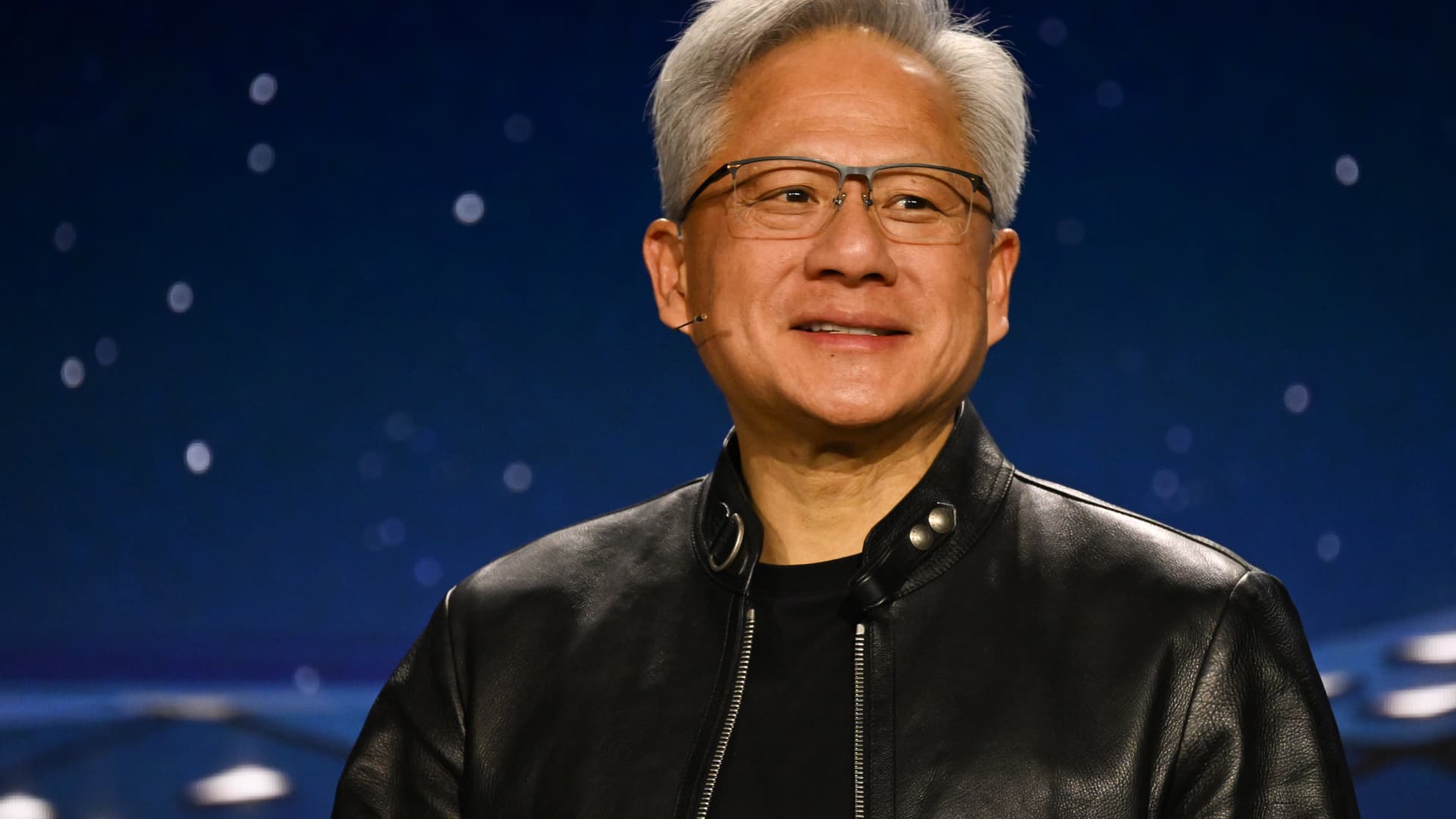
Nvidia Launches First PC Processor, Challenging Intel and AMD Dominance


- Nvidia Processor Launch: Nvidia unveiled its first-ever PC processor at Computex, utilizing the power-efficient Arm instruction set to challenge the dominance of Intel and AMD, indicating a strategic shift towards AI PCs and resulting in a 2% increase in its stock price.
- Arm Benefits: Nvidia's pursuit of PC technology benefits Arm, which licenses its intellectual property for Nvidia's CPUs, collecting royalties per chip; Arm's stock surged 11% in premarket trading and has tripled this year, reflecting strong market optimism about its future.
- Dell Rating Upgrade: Goldman Sachs raised its price target on Dell from $230 to $500 while maintaining a buy rating, highlighting Dell's superior supply chain management, particularly in collaboration with Nvidia on AI servers and new PCs, boosting market confidence in its outlook.
- Berkshire Acquisition Moves: Berkshire Hathaway agreed to acquire Taylor Morrison for $6.8 billion, a relatively small deal that indicates interest in undervalued homebuilders, potentially providing new growth opportunities for Berkshire in real estate investments.
See More
Latest Rating Changes on Wall Street

- Executive Rating Updates: Goldman Sachs initiates coverage on HawkEye 360 with a Buy rating, emphasizing its status as a profitable RF signals intelligence satellite operator, which is expected to achieve substantial revenue and earnings growth, reflecting strong confidence in its market potential.
- Dell Rating Upgrade: Morgan Stanley upgrades Dell from Underweight to Equal Weight, admitting prior market expectations were incorrect, highlighting Dell's superior supply chain management and execution compared to peers, enabling effective capture of critical demand and market share gains.
- MedTech Company Upgrade: Wells Fargo upgrades Tandem Diabetes Care to Overweight, citing an attractive risk/reward profile in the medical technology sector, indicating optimism about its future growth potential.
- Microsoft Market Performance Initiation: Citizens initiates Microsoft with a Market Outperform rating and a $550 price target, reflecting strong market performance potential despite a 7% decline year-to-date, indicating resilience in its business model.
See More
Oura's IPO Potential Surpasses SpaceX
- IPO Filing Announcement: Oura submitted a confidential IPO filing to the SEC on May 21, 2026, and while its market cap is only a fraction of SpaceX's, its potential for growth in the health tech sector is significant, highlighting its competitive strength.
- Sales Growth Expectations: CEO Tom Hale revealed that Oura is on track to generate around $1 billion in sales for 2025, doubling the previous year's total, with projections nearing $2 billion in 2026, indicating successful international market expansion strategies.
- Profitability Model Advantage: Oura's hardware-plus-subscription revenue model, with smart rings priced between $349 and $499 and subscription fees at $5.99 per month or $69.99 annually, provides a stronger profitability framework compared to capital-intensive competitors.
- Market Competition Challenges: Despite Oura's strong performance in health monitoring, it faces fierce competition from companies like Samsung and Apple, especially as Apple has filed patents for smart ring technology, which could threaten Oura's market share.
See More
Greg Abel's Strategic Moves in Berkshire's Portfolio
- New CEO Appointment: Greg Abel took over as CEO of Berkshire Hathaway in January 2026, marking a significant leadership change that is expected to influence the company's investment strategy and market performance.
- Portfolio Adjustments: Abel quickly made adjustments to the stock portfolio after taking office, demonstrating his keen insight into market dynamics, which could impact Berkshire's long-term returns.
- Positive Market Reaction: Based on morning stock prices from May 29, 2026, Abel's investment decisions have elicited a positive market response, potentially boosting investor confidence in Berkshire's future performance.
- Clear Strategic Direction: Abel's investment choices reflect a clear strategy for the company's future development, which may attract more investor attention to Berkshire's long-term growth potential.
See More
AAPL Stock Declines 1.7% Amid Sector Performance
- Stock Performance: AAPL is currently trading down approximately 1.7%, indicating a cautious market sentiment regarding its future performance, particularly against the backdrop of stronger competitors like SanDisk and Arista Networks.
- Competitive Comparison: On the same trading day, SanDisk is up about 3% and Arista Networks is up about 6%, highlighting AAPL's relative weakness in the computer sector, which may impact investor confidence.
- Market Sentiment: Analysts maintain a conservative view on AAPL, suggesting its performance within the S&P 500 is less favorable compared to other companies, potentially prompting investors to reassess their portfolios.
- Industry Dynamics: Despite the downward pressure on AAPL, the overall computer sector still shows some growth potential, and investors should monitor industry trends to make informed decisions.
See More
Broadcom's Earnings Report to Impact AI Chip Market
- Earnings Significance: Broadcom's earnings report is deemed more critical than any of the Magnificent Seven companies as it serves as a barometer for the rapidly changing custom AI chip market, particularly in training and inference, showcasing its influence in the semiconductor and infrastructure software sectors.
- AI Revenue Growth: Broadcom anticipates that 40% of its upcoming AI revenue will stem from networking rather than traditional chips, indicating the company's rapid growth in the AI networking space and the shifting market demands.
- Collaboration and Innovation: Partnering with Alphabet to design Google's Tensor Processing Units (TPUs), Broadcom emphasized the need for custom chips for AI inference and training during its earnings call, suggesting that XPUs will surpass GPU designs, driving the evolution of data centers.
- Long-term Investment Opportunity: With growth potential in AI chips and networking, alongside its legacy semiconductor and infrastructure software segments, Broadcom presents an excellent opportunity for long-term investors, and stakeholders should pay close attention to its June 3 earnings call for deep insights into industry trends.
See More
Nvidia Launches First PC Processor, Challenging Intel and AMD Dominance
- Nvidia Processor Launch: Nvidia unveiled its first-ever PC processor at Computex, utilizing the power-efficient Arm instruction set to challenge the dominance of Intel and AMD, indicating a strategic shift towards AI PCs and resulting in a 2% increase in its stock price.
- Arm Benefits: Nvidia's pursuit of PC technology benefits Arm, which licenses its intellectual property for Nvidia's CPUs, collecting royalties per chip; Arm's stock surged 11% in premarket trading and has tripled this year, reflecting strong market optimism about its future.
- Dell Rating Upgrade: Goldman Sachs raised its price target on Dell from $230 to $500 while maintaining a buy rating, highlighting Dell's superior supply chain management, particularly in collaboration with Nvidia on AI servers and new PCs, boosting market confidence in its outlook.
- Berkshire Acquisition Moves: Berkshire Hathaway agreed to acquire Taylor Morrison for $6.8 billion, a relatively small deal that indicates interest in undervalued homebuilders, potentially providing new growth opportunities for Berkshire in real estate investments.
See More
Latest Rating Changes on Wall Street
- Executive Rating Updates: Goldman Sachs initiates coverage on HawkEye 360 with a Buy rating, emphasizing its status as a profitable RF signals intelligence satellite operator, which is expected to achieve substantial revenue and earnings growth, reflecting strong confidence in its market potential.
- Dell Rating Upgrade: Morgan Stanley upgrades Dell from Underweight to Equal Weight, admitting prior market expectations were incorrect, highlighting Dell's superior supply chain management and execution compared to peers, enabling effective capture of critical demand and market share gains.
- MedTech Company Upgrade: Wells Fargo upgrades Tandem Diabetes Care to Overweight, citing an attractive risk/reward profile in the medical technology sector, indicating optimism about its future growth potential.
- Microsoft Market Performance Initiation: Citizens initiates Microsoft with a Market Outperform rating and a $550 price target, reflecting strong market performance potential despite a 7% decline year-to-date, indicating resilience in its business model.
See More