Movers: Strategy, Sandisk, Ventyx Biosciences, Mobileye, Cal-Maine Foods, and Others
Written by Emily J. Thompson, Senior Investment Analyst
Updated: Jan 07 2026
0mins


Should l Buy MSTR?
Source: Barron's
- Market Overview: Stock futures were mostly lower on Wednesday, indicating a potential stall in the recent risk-on rally.
- Investor Sentiment: The shift in stock futures suggests a change in investor sentiment, moving away from the optimism seen in previous trading sessions.
- Economic Indicators: The decline in futures may reflect concerns over economic indicators that could impact market performance.
- Future Outlook: Analysts are watching closely to see if this trend continues or if the market can regain momentum in the coming days.
Trade with 70% Backtested Accuracy
Stop guessing "Should I Buy MSTR?" and start using high-conviction signals backed by rigorous historical data.
Sign up today to access powerful investing tools and make smarter, data-driven decisions.
Analyst Views on MSTR
Wall Street analysts forecast MSTR stock price to rise
14 Analyst Rating
12 Buy
2 Hold
0 Sell
Strong Buy
Current: 124.800

Low
229.00
Averages
453.17
High
705.00
Current: 124.800
Low
229.00
Averages
453.17
High
705.00
About MSTR
Strategy Inc., formerly MicroStrategy Incorporated, is a bitcoin treasury and business intelligence company. The Company provides cloud-native, artificial intelligence (AI)-powered enterprise analytics software to thousands of global customers. The Company’s Strategy ONE platform provides access to AI-powered workflows, unlimited data sources, cloud-native technologies, and performance to speed up time from data to action. Strategy One delivers visualization, reporting, and embedded analytics capabilities across retail, banking, technology, manufacturing, insurance, consulting, healthcare, telecommunications, and the public sector. Its Strategy Mosaic is a universal intelligence layer that provides enterprises with consistent definitions and governance across data sources, regardless of where that data resides or which tools access it. The Strategy Mosaic offers data clarity and connection by eliminating trade-offs between flexibility, control, and speed.
About the author

Emily J. Thompson
Emily J. Thompson, a Chartered Financial Analyst (CFA) with 12 years in investment research, graduated with honors from the Wharton School. Specializing in industrial and technology stocks, she provides in-depth analysis for Intellectia’s earnings and market brief reports.

Bitcoin Price Recovery Expected as Analysts Predict Surge

- Price Bottom Confirmed: Bernstein analyst Gautam Chhugani believes Bitcoin has bottomed out, predicting a price surge to over $150,000 by year-end, implying more than 100% upside, indicating improving market sentiment.
- Enhanced Policy Support: Following Trump's election, Congress has passed several key crypto legislations and established a Strategic Bitcoin Reserve, lowering barriers for institutions and retirement accounts to purchase Bitcoin, further boosting market confidence.
- Market Challenges and Opportunities: Despite pressures from the Middle East conflict and high interest rates leading to whale sell-offs to lock in gains, analysts view the recent sell-off as temporary, with Bitcoin outperforming gold during geopolitical tensions, showcasing its potential as digital gold.
- Institutional Interest Rebounds: The Bernstein team notes increased ETF inflows and traditional banks offering crypto services, indicating strong institutional interest in Bitcoin, which may lay the groundwork for future price increases.
See More
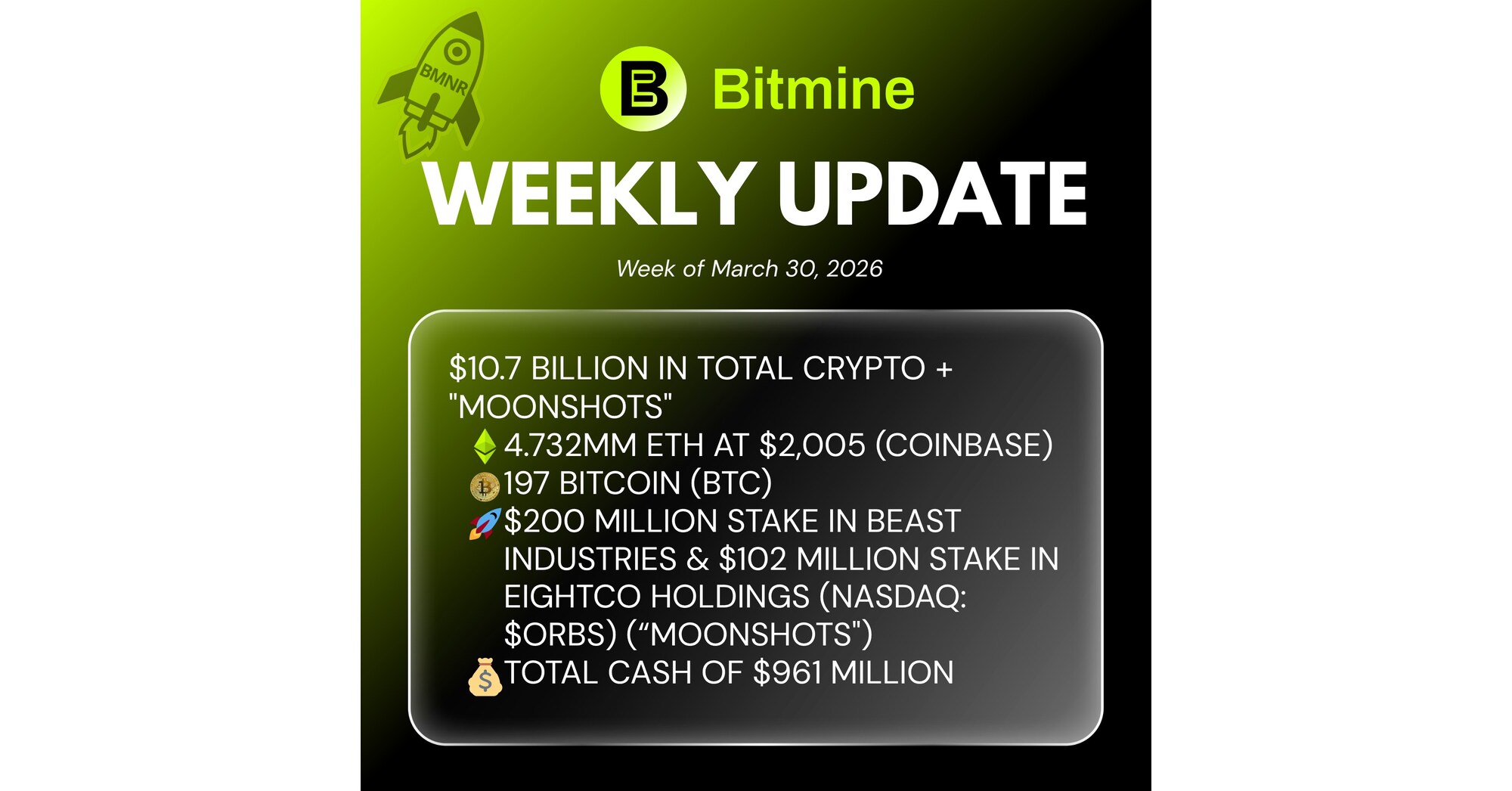
Bitmine Holds $6.3 Billion in Staked ETH


- Staking Scale: Bitmine currently holds 3,142,643 ETH in staking, valued at $6.3 billion based on a price of $2,005 per ETH, demonstrating its significant influence in the Ethereum market.
- Launch of MAVAN: Bitmine launched MAVAN (Made in America Validator Network) on March 25, 2026, aimed at providing secure and reliable staking solutions for institutional investors, further solidifying its leadership in the Ethereum staking space.
- Investor Backing: Bitmine is supported by top institutional investors including Cathie Wood of ARK and Pantera, indicating strong market confidence in its long-term growth potential and aiding its goal of acquiring 5% of ETH.
- Trading Volume Performance: Bitmine's stock is actively traded in the U.S. market, with an average daily trading volume of $920 million, ranking it as the 100th most traded stock in the U.S., reflecting high investor interest in its business model.
See More
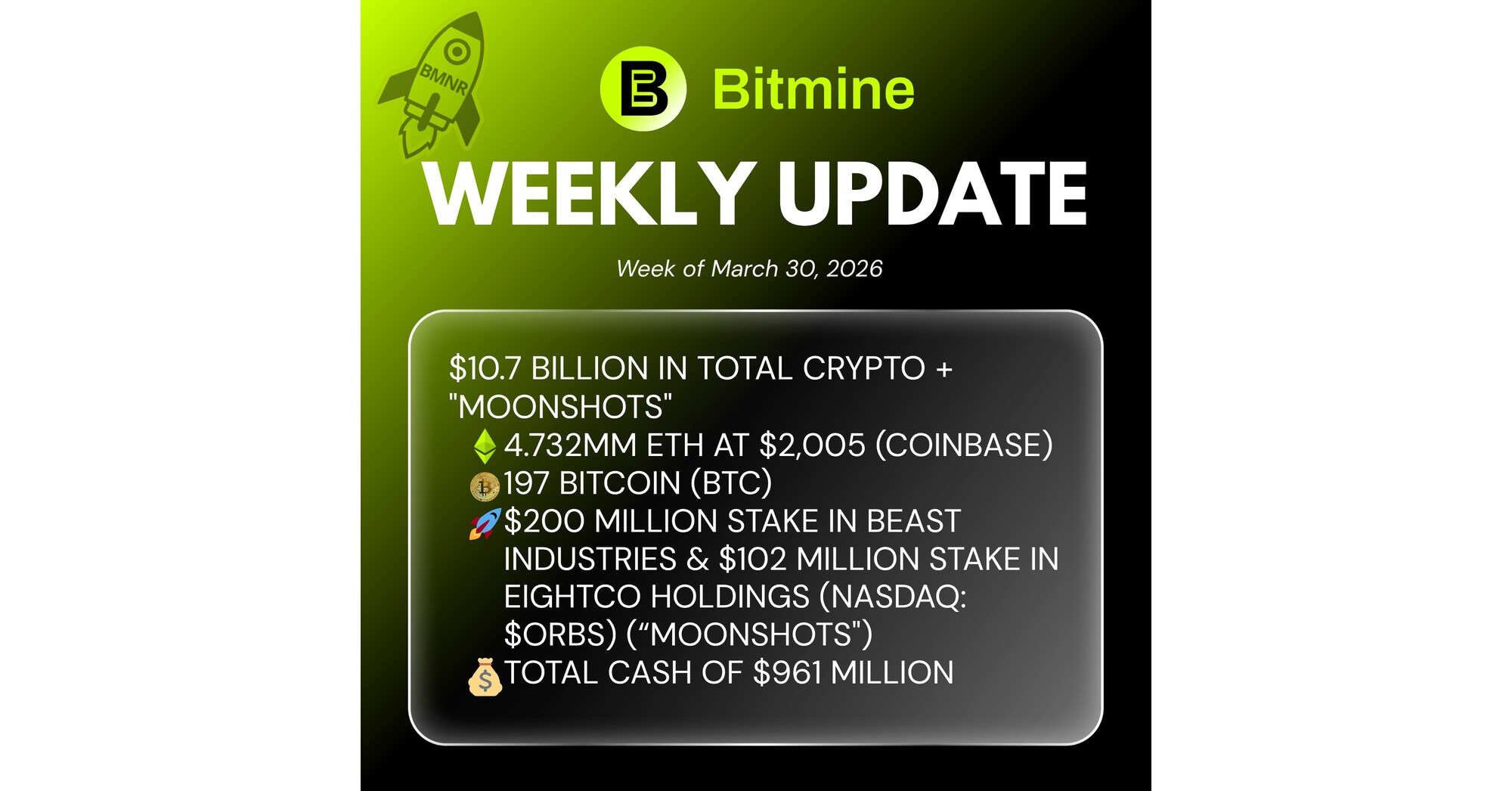
Bitmine Announces New Developments in ETH Staking
- ETH Staking Scale: Bitmine currently has 3,142,643 ETH staked, valued at $6.3 billion at $2,005 per ETH, demonstrating the company's significant influence and confidence in the Ethereum market.
- Launch of MAVAN Platform: On March 25, 2026, Bitmine launched the MAVAN (Made in America Validator Network) staking solution, aimed at providing high-quality staking infrastructure for institutional investors, further solidifying its leadership position in the Ethereum ecosystem.
- Strong Market Performance: Bitmine's stock has an average daily trading volume of $920 million in the U.S. market, ranking 100th, indicating high liquidity and investor interest in the cryptocurrency sector, enhancing the company's future capital operations.
- Strategic Investment Returns: Bitmine's ETH staking is projected to yield an annual return of 2.80%, generating $177 million in annual revenue, reflecting the company's successful strategy in crypto asset management and ongoing growth potential.
See More

CGGR Stock Price Analysis and ETF Dynamics


- Price Fluctuation Analysis: CGGR's 52-week low is $29.23 and high is $45.835, with the latest trade at $39.55, indicating price volatility within this range that may influence investor buying decisions.
- Technical Analysis Tool: Comparing the latest stock price to the 200-day moving average can provide investors with valuable insights for technical analysis, helping to assess market trends and potential buying opportunities.
- ETF Trading Mechanism: Exchange-traded funds (ETFs) trade similarly to stocks, where investors are buying and selling 'units' that can be created or destroyed based on investor demand, impacting liquidity and market performance.
- Inflows and Outflows Monitoring: Weekly monitoring of changes in shares outstanding for ETFs focuses on those experiencing notable inflows (new units created) or outflows (old units destroyed), assessing their impact on underlying assets and market sentiment.
See More
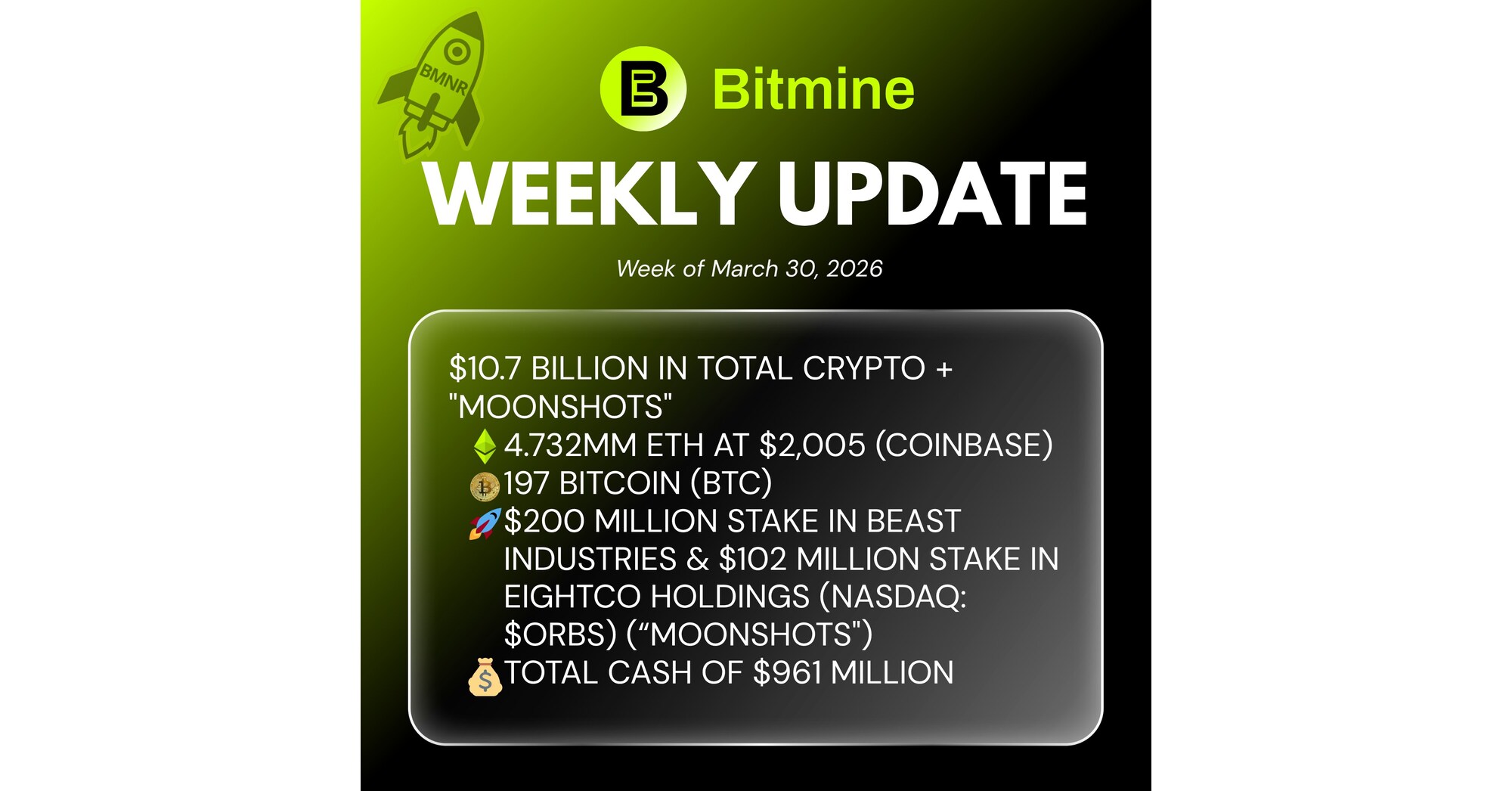
Bitmine Reaches 3.14 Million ETH Staked
- ETH Staking Milestone: Bitmine has staked 3,142,643 ETH, valued at $6.3 billion based on a price of $2,005 per ETH, demonstrating its significant influence and confidence in the Ethereum market.
- Launch of MAVAN: On March 25, 2026, Bitmine introduced MAVAN (Made in America Validator Network), a staking solution aimed at providing institutional investors with a secure and reliable staking infrastructure, further solidifying its leadership in the Ethereum staking sector.
- Strong Market Performance: Bitmine's stock trades with an average daily volume of $920 million in the U.S., ranking 100th, indicating high liquidity and market interest among cryptocurrency investors, enhancing its appeal in capital markets.
- Robust Investor Support: Bitmine is backed by prominent institutional investors including Cathie Wood of ARK and Pantera, highlighting its strategic positioning and growth potential in the cryptocurrency space, especially in the current market environment.
See More
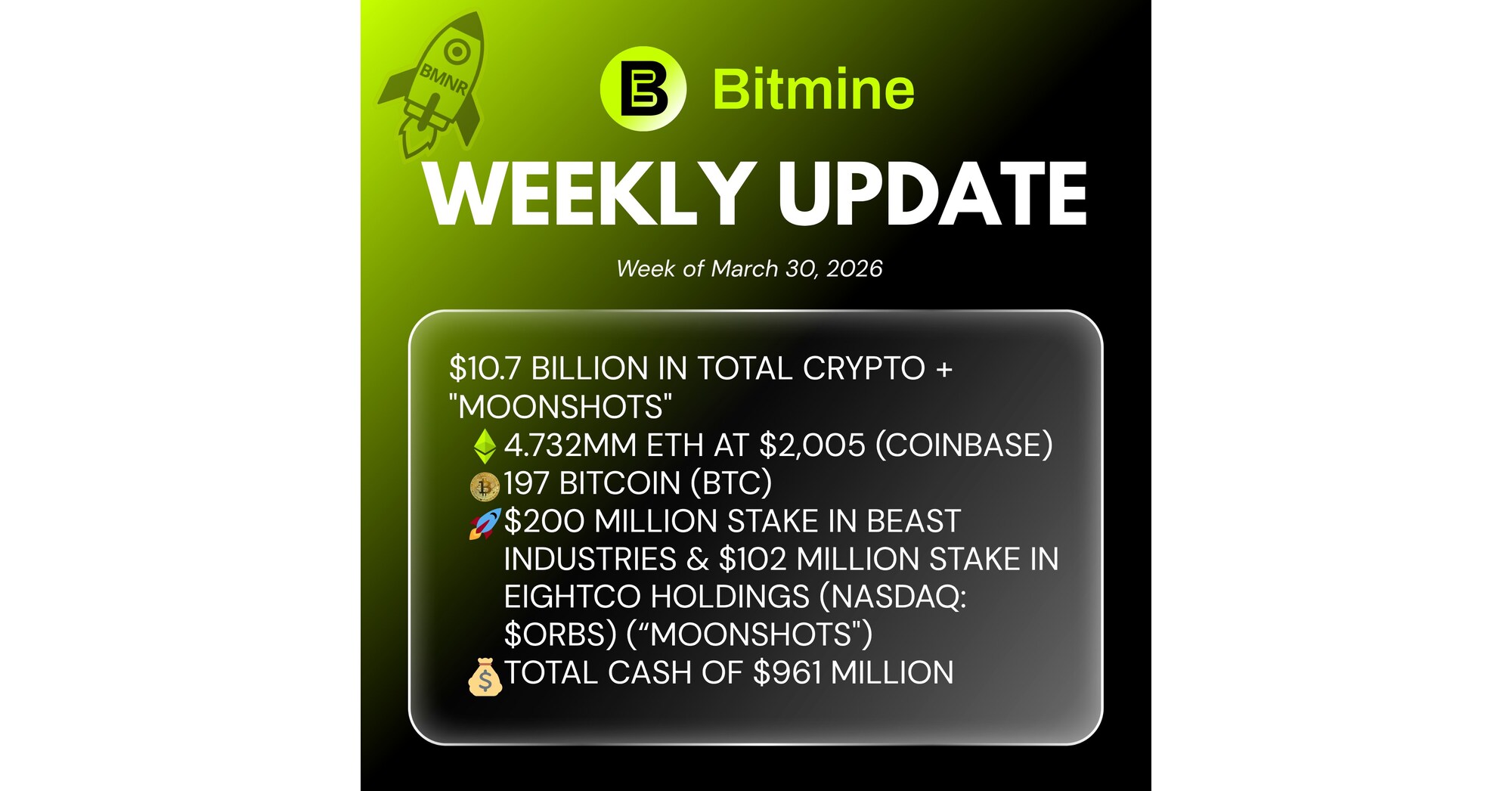
Bitmine Stakes 3.14 Million ETH Worth $6.3 Billion
- ETH Staking Scale: Bitmine currently stakes 3.14 million ETH valued at $6.3 billion, demonstrating its significant influence in the Ethereum market and laying a foundation for future revenue growth.
- Launch of MAVAN Platform: On March 25, 2026, Bitmine launched the MAVAN (Made in America Validator Network) staking solution aimed at providing institutional investors with a secure and high-performance staking infrastructure, further enhancing its competitive edge in the market.
- Liquidity and Investment Support: Bitmine's total crypto assets and liquid funds amount to $10.7 billion, including 4.73 million ETH and $961 million in cash, showcasing its strong liquidity and investment capabilities in the crypto market.
- Outstanding Market Performance: Bitmine's stock is actively traded in the U.S. market with an average daily trading volume of $920 million, ranking 100th, and attracting support from prominent institutional investors like Cathie Wood of ARK, further enhancing its market position.
See More
Bitcoin Price Recovery Expected as Analysts Predict Surge
- Price Bottom Confirmed: Bernstein analyst Gautam Chhugani believes Bitcoin has bottomed out, predicting a price surge to over $150,000 by year-end, implying more than 100% upside, indicating improving market sentiment.
- Enhanced Policy Support: Following Trump's election, Congress has passed several key crypto legislations and established a Strategic Bitcoin Reserve, lowering barriers for institutions and retirement accounts to purchase Bitcoin, further boosting market confidence.
- Market Challenges and Opportunities: Despite pressures from the Middle East conflict and high interest rates leading to whale sell-offs to lock in gains, analysts view the recent sell-off as temporary, with Bitcoin outperforming gold during geopolitical tensions, showcasing its potential as digital gold.
- Institutional Interest Rebounds: The Bernstein team notes increased ETF inflows and traditional banks offering crypto services, indicating strong institutional interest in Bitcoin, which may lay the groundwork for future price increases.
See More
Bitmine Holds $6.3 Billion in Staked ETH
- Staking Scale: Bitmine currently holds 3,142,643 ETH in staking, valued at $6.3 billion based on a price of $2,005 per ETH, demonstrating its significant influence in the Ethereum market.
- Launch of MAVAN: Bitmine launched MAVAN (Made in America Validator Network) on March 25, 2026, aimed at providing secure and reliable staking solutions for institutional investors, further solidifying its leadership in the Ethereum staking space.
- Investor Backing: Bitmine is supported by top institutional investors including Cathie Wood of ARK and Pantera, indicating strong market confidence in its long-term growth potential and aiding its goal of acquiring 5% of ETH.
- Trading Volume Performance: Bitmine's stock is actively traded in the U.S. market, with an average daily trading volume of $920 million, ranking it as the 100th most traded stock in the U.S., reflecting high investor interest in its business model.
See More
Bitmine Announces New Developments in ETH Staking
- ETH Staking Scale: Bitmine currently has 3,142,643 ETH staked, valued at $6.3 billion at $2,005 per ETH, demonstrating the company's significant influence and confidence in the Ethereum market.
- Launch of MAVAN Platform: On March 25, 2026, Bitmine launched the MAVAN (Made in America Validator Network) staking solution, aimed at providing high-quality staking infrastructure for institutional investors, further solidifying its leadership position in the Ethereum ecosystem.
- Strong Market Performance: Bitmine's stock has an average daily trading volume of $920 million in the U.S. market, ranking 100th, indicating high liquidity and investor interest in the cryptocurrency sector, enhancing the company's future capital operations.
- Strategic Investment Returns: Bitmine's ETH staking is projected to yield an annual return of 2.80%, generating $177 million in annual revenue, reflecting the company's successful strategy in crypto asset management and ongoing growth potential.
See More
CGGR Stock Price Analysis and ETF Dynamics
- Price Fluctuation Analysis: CGGR's 52-week low is $29.23 and high is $45.835, with the latest trade at $39.55, indicating price volatility within this range that may influence investor buying decisions.
- Technical Analysis Tool: Comparing the latest stock price to the 200-day moving average can provide investors with valuable insights for technical analysis, helping to assess market trends and potential buying opportunities.
- ETF Trading Mechanism: Exchange-traded funds (ETFs) trade similarly to stocks, where investors are buying and selling 'units' that can be created or destroyed based on investor demand, impacting liquidity and market performance.
- Inflows and Outflows Monitoring: Weekly monitoring of changes in shares outstanding for ETFs focuses on those experiencing notable inflows (new units created) or outflows (old units destroyed), assessing their impact on underlying assets and market sentiment.
See More
Bitmine Reaches 3.14 Million ETH Staked
- ETH Staking Milestone: Bitmine has staked 3,142,643 ETH, valued at $6.3 billion based on a price of $2,005 per ETH, demonstrating its significant influence and confidence in the Ethereum market.
- Launch of MAVAN: On March 25, 2026, Bitmine introduced MAVAN (Made in America Validator Network), a staking solution aimed at providing institutional investors with a secure and reliable staking infrastructure, further solidifying its leadership in the Ethereum staking sector.
- Strong Market Performance: Bitmine's stock trades with an average daily volume of $920 million in the U.S., ranking 100th, indicating high liquidity and market interest among cryptocurrency investors, enhancing its appeal in capital markets.
- Robust Investor Support: Bitmine is backed by prominent institutional investors including Cathie Wood of ARK and Pantera, highlighting its strategic positioning and growth potential in the cryptocurrency space, especially in the current market environment.
See More
Bitmine Stakes 3.14 Million ETH Worth $6.3 Billion
- ETH Staking Scale: Bitmine currently stakes 3.14 million ETH valued at $6.3 billion, demonstrating its significant influence in the Ethereum market and laying a foundation for future revenue growth.
- Launch of MAVAN Platform: On March 25, 2026, Bitmine launched the MAVAN (Made in America Validator Network) staking solution aimed at providing institutional investors with a secure and high-performance staking infrastructure, further enhancing its competitive edge in the market.
- Liquidity and Investment Support: Bitmine's total crypto assets and liquid funds amount to $10.7 billion, including 4.73 million ETH and $961 million in cash, showcasing its strong liquidity and investment capabilities in the crypto market.
- Outstanding Market Performance: Bitmine's stock is actively traded in the U.S. market with an average daily trading volume of $920 million, ranking 100th, and attracting support from prominent institutional investors like Cathie Wood of ARK, further enhancing its market position.
See More