Microsoft's AI Strategy Shift and Market Response
Written by Emily J. Thompson, Senior Investment Analyst
Updated: Apr 04 2026
0mins
Should l Buy MSFT?
Source: Fool
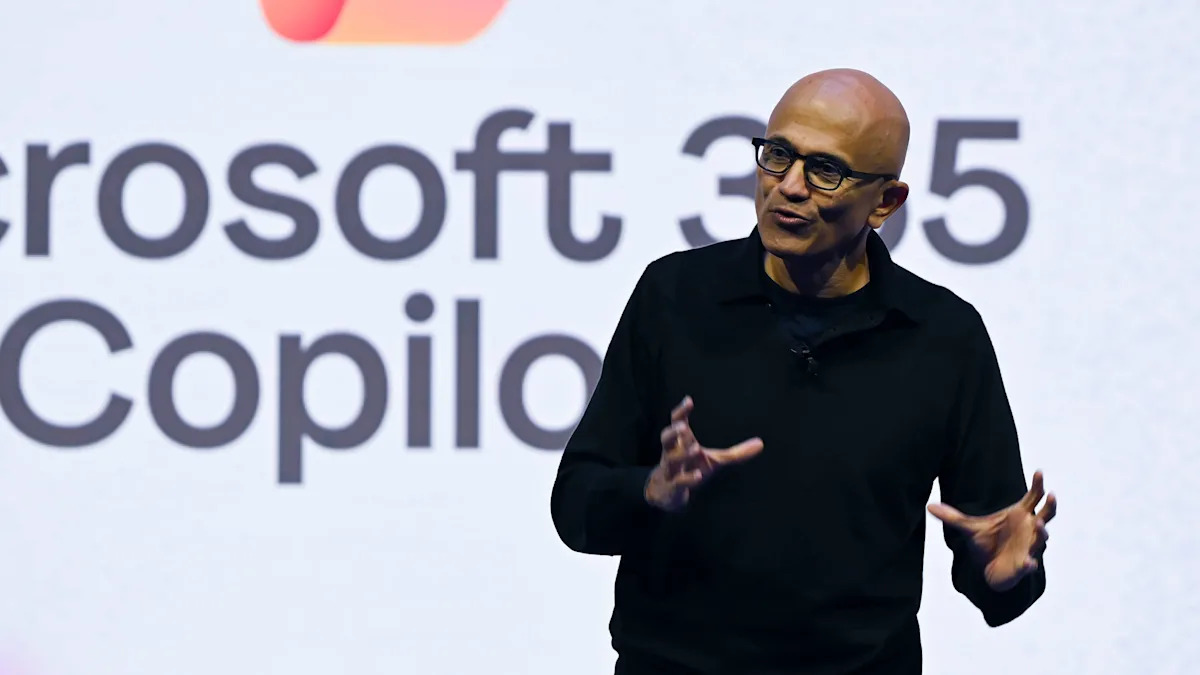
- Copilot User Growth Struggles: Microsoft's AI assistant Copilot has only achieved 15 million subscriptions among 450 million commercial users, indicating a lack of consumer acceptance and leading to investor concerns, with the stock down 31% from its peak, reflecting pessimism about its future performance.
- Shift to Multi-Model Strategy: Recognizing the ineffectiveness of Copilot's reliance on OpenAI models, Microsoft has pivoted to a multi-model agentic approach, introducing new features like Council and Critique aimed at enhancing user experience and strengthening Copilot's competitiveness in the enterprise AI tool market.
- Attractive Stock Valuation: With a current stock price of $373.10 and a P/E ratio of 23, approximately 30% below its 10-year average, despite the risks associated with Copilot's performance, analysts project a long-term earnings growth of 13% to 14%, providing a reasonable basis for investment at this valuation.
- Market Confidence Eroded: Although Microsoft's profitability is expected to continue rising, the market remains skeptical about its future performance, perceiving the company as no longer the world-class entity it once was, leading investors to potentially regret not buying shares at these low prices.
Trade with 70% Backtested Accuracy
Stop guessing "Should I Buy MSFT?" and start using high-conviction signals backed by rigorous historical data.
Sign up today to access powerful investing tools and make smarter, data-driven decisions.
Analyst Views on MSFT
Wall Street analysts forecast MSFT stock price to rise
34 Analyst Rating
32 Buy
2 Hold
0 Sell
Strong Buy
Current: 424.460

Low
500.00
Averages
631.36
High
678.00
Current: 424.460
Low
500.00
Averages
631.36
High
678.00
About MSFT
Microsoft Corporation is a technology company. The Company develops and supports software, services, devices, and solutions. The Company’s segments include Productivity and Business Processes, Intelligent Cloud, and More Personal Computing. The Productivity and Business Processes segment consists of products and services in its portfolio of productivity, communication, and information services. This segment primarily comprises: Office Commercial, Office Consumer, LinkedIn, and Dynamics business solutions. The Intelligent Cloud segment consists of server products and cloud services, including Azure and other cloud services, SQL Server, Windows Server, Visual Studio, System Center, and related Client Access Licenses (CALs), and Nuance and GitHub; and Enterprise Services, including enterprise support services, industry solutions and Nuance professional services. The More Personal Computing segment primarily comprises Windows, Devices, Gaming, and search and news advertising.
About the author

Emily J. Thompson
Emily J. Thompson, a Chartered Financial Analyst (CFA) with 12 years in investment research, graduated with honors from the Wharton School. Specializing in industrial and technology stocks, she provides in-depth analysis for Intellectia’s earnings and market brief reports.
Microsoft Exceeds Q1 Earnings Estimates Amid AI Growth

- Significant AI Growth: Microsoft's AI business reported a remarkable year-over-year growth of 123%, indicating a strong return on investment in artificial intelligence, which could lay the groundwork for future revenue increases.
- Increased Capex Forecast: The company raised its capital expenditure forecast for 2026 to $190 billion, up from $150 billion, reflecting a 25% increase that underscores confidence in future growth opportunities while also highlighting rising input costs.
- Cloud Growth Constraints: Despite Azure's impressive 40% growth rate, the actual growth may be limited due to insufficient computing capacity, suggesting that the company needs to enhance its infrastructure investments to meet market demand effectively.
- Decline in Traditional Revenue: Revenue from Xbox, Windows licenses, and devices declined during the quarter, indicating challenges in Microsoft's traditional business segments, which could impact overall financial performance and market confidence.
See More

Microsoft Earnings Preview: Challenges and Opportunities in AI and Cloud Services
- Earnings Expectations: Analysts anticipate Microsoft will report earnings per share of $4.06 and revenue nearing $81.4 billion for Q3 FY2026, reflecting cautious optimism despite a 10% decline in stock price this year, indicating investor wariness about financial performance.
- Cloud Service Growth: Microsoft's Azure cloud services have shown robust performance in recent quarters, with management projecting annual growth rates of 37% to 38% for the third quarter, suggesting that continued investments in AI could yield significant financial returns for the company.
- OpenAI Partnership Revision: Microsoft has revised its partnership agreement with OpenAI, maintaining its status as the primary cloud partner and revenue-sharing arrangements, yet allowing OpenAI to serve customers on any cloud provider, which may impact Azure revenue in the future.
- Copilot User Growth: The paid user base for Microsoft's digital AI assistant Copilot has grown to 15 million, although this remains a small fraction of its 450 million paid Microsoft 365 customers, yet CEO Nadella's involvement may drive future growth and market performance.
See More

Alphabet and Meta Stocks Diverge Amid AI Spending Plans


- Diverging Stock Performance: Alphabet's stock surged over 6% on Thursday while Meta's shares plunged 9%, reflecting differing investor reactions to their AI spending plans, indicating that the market's perception of tech companies' AI investments is not uniform.
- Increased Capital Expenditure Forecast: Alphabet raised its capital expenditure forecast for the year to between $180 billion and $190 billion, up from $175 billion to $185 billion, primarily driven by a 63% revenue increase in its Google Cloud business, showcasing strong demand for its enterprise AI solutions.
- Meta's AI Investment Challenges: Although Meta surpassed Wall Street's earnings and revenue expectations, it raised its capital expenditure plans to a range of $125 billion to $145 billion, reflecting expectations of higher component pricing, with analysts noting that its lack of a cloud business complicates proving returns on investments.
- Uncertain Market Outlook: Analysts highlighted that Meta faces a
See More

Intel's Data Center Surge Rewrites Business Narrative


- Earnings Beat: Intel reported an adjusted EPS of $0.29, significantly surpassing Wall Street's expectation of $0.01, with revenue reaching $13.6 billion, a 7% year-over-year increase that exceeded expectations by over $1 billion, indicating a remarkable financial turnaround amidst challenges.
- Data Center Growth: The Data Center and AI segment saw a 22% revenue surge to $5.1 billion, reflecting strong demand from hyperscalers for server CPUs, which positions Intel favorably in the rapidly growing AI market.
- Margin Improvement: Non-GAAP gross margin expanded to 41%, driven by better pricing strategies and improvements in manufacturing processes, showcasing the company's success in cost control and product pricing.
- Restored Market Confidence: Intel's robust performance not only enhances investor confidence in its future prospects but may also enable the company to capture more market share in the highly competitive semiconductor industry, particularly against the backdrop of ongoing investments in AI and data centers.
See More

Investors' Optimism Amid Market Highs
- Market Optimism: In 2026, despite facing multiple market headwinds, the S&P 500 has reached a new all-time high, reflecting investor optimism driven by strong earnings expectations and hopes for a quick resolution to the Iran conflict, which has led to rapid market recoveries.
- Investor Strategy Warning: Billionaire investor Howard Marks cautions that mindlessly buying stocks during price dips may lead to long-term overpayment, emphasizing that the current market is not on sale and that true investment opportunities often arise during panic.
- Valuation Analysis: The S&P 500's price-to-earnings (P/E) ratio is significantly above historical averages, particularly for AI-driven tech stocks; however, Marks argues that high P/E ratios do not necessarily indicate overvaluation and should be assessed in the context of competitive advantages.
- Structural Advantages: Hedge fund manager Bill Ackman notes that the concentration of performance among a few high-quality mega-cap companies reflects durable structural advantages, asserting that the market's P/E multiple is justified and may remain sustainably higher than historical averages.
See More

Howard Marks: The Market Is Not on Sale
- Market Psychology Analysis: Howard Marks emphasizes that the current market is not on sale, warning that investors mindlessly buying during dips may lead to overpaying for stocks in the long run, reflecting irrational market sentiment.
- Historical Valuation Comparison: The S&P 500's price-to-earnings (P/E) ratio is significantly above its historical average, particularly among tech stocks, although companies like Meta and Nvidia may have relatively reasonable valuations, the overall market appears overheated.
- Identifying Investment Opportunities: While the overall market may not be cheap, Marks highlights that pockets of pessimism in certain sectors could present great investment opportunities, especially in companies with high growth potential.
- Long-term Investment Strategy: Marks' views resonate with Warren Buffett's investment philosophy, emphasizing the importance of seeking genuine investment opportunities during market panic rather than blindly chasing highs during periods of optimism.
See More
Microsoft Exceeds Q1 Earnings Estimates Amid AI Growth
- Significant AI Growth: Microsoft's AI business reported a remarkable year-over-year growth of 123%, indicating a strong return on investment in artificial intelligence, which could lay the groundwork for future revenue increases.
- Increased Capex Forecast: The company raised its capital expenditure forecast for 2026 to $190 billion, up from $150 billion, reflecting a 25% increase that underscores confidence in future growth opportunities while also highlighting rising input costs.
- Cloud Growth Constraints: Despite Azure's impressive 40% growth rate, the actual growth may be limited due to insufficient computing capacity, suggesting that the company needs to enhance its infrastructure investments to meet market demand effectively.
- Decline in Traditional Revenue: Revenue from Xbox, Windows licenses, and devices declined during the quarter, indicating challenges in Microsoft's traditional business segments, which could impact overall financial performance and market confidence.
See More
Microsoft Earnings Preview: Challenges and Opportunities in AI and Cloud Services
- Earnings Expectations: Analysts anticipate Microsoft will report earnings per share of $4.06 and revenue nearing $81.4 billion for Q3 FY2026, reflecting cautious optimism despite a 10% decline in stock price this year, indicating investor wariness about financial performance.
- Cloud Service Growth: Microsoft's Azure cloud services have shown robust performance in recent quarters, with management projecting annual growth rates of 37% to 38% for the third quarter, suggesting that continued investments in AI could yield significant financial returns for the company.
- OpenAI Partnership Revision: Microsoft has revised its partnership agreement with OpenAI, maintaining its status as the primary cloud partner and revenue-sharing arrangements, yet allowing OpenAI to serve customers on any cloud provider, which may impact Azure revenue in the future.
- Copilot User Growth: The paid user base for Microsoft's digital AI assistant Copilot has grown to 15 million, although this remains a small fraction of its 450 million paid Microsoft 365 customers, yet CEO Nadella's involvement may drive future growth and market performance.
See More
Alphabet and Meta Stocks Diverge Amid AI Spending Plans
- Diverging Stock Performance: Alphabet's stock surged over 6% on Thursday while Meta's shares plunged 9%, reflecting differing investor reactions to their AI spending plans, indicating that the market's perception of tech companies' AI investments is not uniform.
- Increased Capital Expenditure Forecast: Alphabet raised its capital expenditure forecast for the year to between $180 billion and $190 billion, up from $175 billion to $185 billion, primarily driven by a 63% revenue increase in its Google Cloud business, showcasing strong demand for its enterprise AI solutions.
- Meta's AI Investment Challenges: Although Meta surpassed Wall Street's earnings and revenue expectations, it raised its capital expenditure plans to a range of $125 billion to $145 billion, reflecting expectations of higher component pricing, with analysts noting that its lack of a cloud business complicates proving returns on investments.
- Uncertain Market Outlook: Analysts highlighted that Meta faces a
See More
Intel's Data Center Surge Rewrites Business Narrative
- Earnings Beat: Intel reported an adjusted EPS of $0.29, significantly surpassing Wall Street's expectation of $0.01, with revenue reaching $13.6 billion, a 7% year-over-year increase that exceeded expectations by over $1 billion, indicating a remarkable financial turnaround amidst challenges.
- Data Center Growth: The Data Center and AI segment saw a 22% revenue surge to $5.1 billion, reflecting strong demand from hyperscalers for server CPUs, which positions Intel favorably in the rapidly growing AI market.
- Margin Improvement: Non-GAAP gross margin expanded to 41%, driven by better pricing strategies and improvements in manufacturing processes, showcasing the company's success in cost control and product pricing.
- Restored Market Confidence: Intel's robust performance not only enhances investor confidence in its future prospects but may also enable the company to capture more market share in the highly competitive semiconductor industry, particularly against the backdrop of ongoing investments in AI and data centers.
See More
Investors' Optimism Amid Market Highs
- Market Optimism: In 2026, despite facing multiple market headwinds, the S&P 500 has reached a new all-time high, reflecting investor optimism driven by strong earnings expectations and hopes for a quick resolution to the Iran conflict, which has led to rapid market recoveries.
- Investor Strategy Warning: Billionaire investor Howard Marks cautions that mindlessly buying stocks during price dips may lead to long-term overpayment, emphasizing that the current market is not on sale and that true investment opportunities often arise during panic.
- Valuation Analysis: The S&P 500's price-to-earnings (P/E) ratio is significantly above historical averages, particularly for AI-driven tech stocks; however, Marks argues that high P/E ratios do not necessarily indicate overvaluation and should be assessed in the context of competitive advantages.
- Structural Advantages: Hedge fund manager Bill Ackman notes that the concentration of performance among a few high-quality mega-cap companies reflects durable structural advantages, asserting that the market's P/E multiple is justified and may remain sustainably higher than historical averages.
See More
Howard Marks: The Market Is Not on Sale
- Market Psychology Analysis: Howard Marks emphasizes that the current market is not on sale, warning that investors mindlessly buying during dips may lead to overpaying for stocks in the long run, reflecting irrational market sentiment.
- Historical Valuation Comparison: The S&P 500's price-to-earnings (P/E) ratio is significantly above its historical average, particularly among tech stocks, although companies like Meta and Nvidia may have relatively reasonable valuations, the overall market appears overheated.
- Identifying Investment Opportunities: While the overall market may not be cheap, Marks highlights that pockets of pessimism in certain sectors could present great investment opportunities, especially in companies with high growth potential.
- Long-term Investment Strategy: Marks' views resonate with Warren Buffett's investment philosophy, emphasizing the importance of seeking genuine investment opportunities during market panic rather than blindly chasing highs during periods of optimism.
See More