Microsoft Raises Prices on Surface Products Amid AI Costs
Written by Emily J. Thompson, Senior Investment Analyst
Updated: Apr 14 2026
0mins


Source: Yahoo Finance
- Price Increase Rationale: Microsoft is raising prices on all Surface products due to rising costs of key components like memory, resulting in entry-level devices now priced above $1,000, highlighting the impact of AI applications on the hardware market.
- Product Price Changes: For instance, the 12-inch Surface Pro now costs more than its initial launch price, with significant increases in premium configurations, indicating a sustained demand for high-performance devices in the market.
- Industry Trend: As supply tightens, other PC manufacturers such as Dell, Lenovo, and HP are also adjusting prices or limiting configurations, reflecting the broader industry's response to rising costs.
- Market Reaction Expectations: While Microsoft may maintain profits through price hikes, shifts in consumer demand in an increasingly expensive PC market will be a focal point for investors, particularly during new product launches and earnings reports.
Trade with 70% Backtested Accuracy
Stop guessing "Should I Buy MSFT?" and start using high-conviction signals backed by rigorous historical data.
Sign up today to access powerful investing tools and make smarter, data-driven decisions.
Analyst Views on MSFT
Wall Street analysts forecast MSFT stock price to rise
34 Analyst Rating
32 Buy
2 Hold
0 Sell
Strong Buy
Current: 411.740

Low
500.00
Averages
631.36
High
678.00
Current: 411.740
Low
500.00
Averages
631.36
High
678.00
About MSFT
Microsoft Corporation is a technology company. The Company develops and supports software, services, devices, and solutions. The Company’s segments include Productivity and Business Processes, Intelligent Cloud, and More Personal Computing. The Productivity and Business Processes segment consists of products and services in its portfolio of productivity, communication, and information services. This segment primarily comprises: Office Commercial, Office Consumer, LinkedIn, and Dynamics business solutions. The Intelligent Cloud segment consists of server products and cloud services, including Azure and other cloud services, SQL Server, Windows Server, Visual Studio, System Center, and related Client Access Licenses (CALs), and Nuance and GitHub; and Enterprise Services, including enterprise support services, industry solutions and Nuance professional services. The More Personal Computing segment primarily comprises Windows, Devices, Gaming, and search and news advertising.
About the author

Emily J. Thompson
Emily J. Thompson, a Chartered Financial Analyst (CFA) with 12 years in investment research, graduated with honors from the Wharton School. Specializing in industrial and technology stocks, she provides in-depth analysis for Intellectia’s earnings and market brief reports.
Microsoft Stock Rises 10.4% in May Amid AI Boom

- Stock Performance: Microsoft saw a 10.4% increase in May, significantly outperforming the S&P 500's 5.2% and the Nasdaq Composite's 8.4%, indicating strong market confidence in tech stocks, despite a 14% decline in 2026.
- Earnings Report Highlights: In its late April earnings report, Microsoft reported adjusted earnings per share of $4.27 on revenue of $82.89 billion, surpassing analyst expectations of $4.06 and $81.39 billion, reflecting strong performance in the AI sector.
- Market Reaction: Although the stock initially faced sell-offs post-earnings, it rebounded in May as investors returned, demonstrating confidence in Microsoft's future growth, particularly driven by advancements in AI technology.
- Macroeconomic Impact: As June began, Microsoft’s stock fell approximately 7.5%, primarily due to macroeconomic concerns and a strong jobs report, leading investors to worry about potential Federal Reserve interest rate hikes negatively impacting growth stocks.
See More

Tech Stocks Losing Leadership Traits Amid Supply Surge


- Changing Traits: CNBC's Jim Cramer stated that tech stocks are losing key traits that have driven their leadership over the past three years, particularly in profitability and aggressive share buybacks, which are now diminishing.
- Surge in IPOs: With a wave of AI-related fundraising, Cramer highlighted upcoming offerings from companies like SpaceX and OpenAI that could flood the market with new supply, absorbing capital that previously flowed into tech stocks, exacerbating supply-demand imbalances.
- Deteriorating Financials: Many tech giants, once known for their strong balance sheets and buyback programs, like Alphabet, are now under financial strain after raising $80 billion, which Cramer believes will impact future shareholder returns.
- Cautious Market Outlook: Cramer expressed concerns about the outlook for tech stocks, suggesting that excessive stock supply will lead to price declines; although the market hasn't reached this critical point yet, he warns that it is entering a period of oversupply.
See More

US Stocks Close: Nasdaq Hits 5-Week Low Amid Market Rotations


- Market Volatility: The S&P 500 index fell by 0.26% and the Nasdaq 100 dropped by 1.12% on Tuesday, indicating a shift to a downward trend after an early advance, reflecting investor concerns over tech stocks.
- Energy Price Impact: WTI crude oil prices plunged by 3% to a seven-week low, leading to widespread declines in energy producers' stocks, which exacerbated the overall market weakness and highlighted the direct impact of oil price fluctuations on related sectors.
- Real Estate Market Recovery: US existing home sales rose to 4.17 million in April, a five-month high, boosting the stocks of builders and suppliers, indicating that a recovery in the real estate market could provide positive signals for the economy.
- International Trade Data Improvement: China's May exports increased by 19.4% year-on-year, surpassing expectations, showcasing potential for global economic growth, which may positively influence the US market, despite ongoing uncertainties.
See More

Tech Stocks' Leadership Position Under Threat
- Leadership Shift: Jim Cramer highlights that technology stocks are losing their leadership status over the past three years due to the diminishing scarcity of tech stocks, which may lead to declining investor confidence and impact stock performance.
- Increased Liquidity: With a surge in AI-related fundraising, Cramer anticipates that upcoming IPOs from companies like SpaceX and OpenAI will flood the market with new shares, potentially leading to oversupply and downward pressure on stock prices.
- Deteriorating Financials: Many tech giants, once known for their strong financials and buyback programs, such as Alphabet, are now heavily investing in AI infrastructure, which could weaken their balance sheets and affect investor sentiment.
- Cautious Investment Outlook: Cramer has adopted a more cautious stance on tech stocks, warning that oversupply will lead to price declines, and the market will only stabilize when prices drop to levels that discourage companies from issuing more stock.
See More

Tech Stocks Retreat Amid Market Volatility


- Tech Stock Retreat: The Nasdaq Composite fell 0.97% to 25,678.82, primarily influenced by semiconductor giants like Broadcom and Micron, as investors reduced exposure amid profit-taking, indicating growing concerns over tech stocks.
- Increased Market Volatility: The Dow Jones Industrial Average edged up 0.17% to 50,872.11 after a late-session rebound from lows, yet overall market sentiment remains affected by rising tensions between the U.S. and Iran, prompting a reassessment of risk by investors.
- Divergent Stock Performance: Apple shares dropped nearly 4% as investors questioned its AI capabilities, while J.M. Smucker surged over 10% on positive earnings, highlighting the varied market reactions across different sectors.
- Investor Strategy Adjustment: Ahead of the upcoming CPI data, investors adopted a de-risking strategy; despite the market's volatility, maintaining a diversified portfolio may help mitigate risks associated with tech concentration, reflecting a cautious approach to future uncertainties.
See More

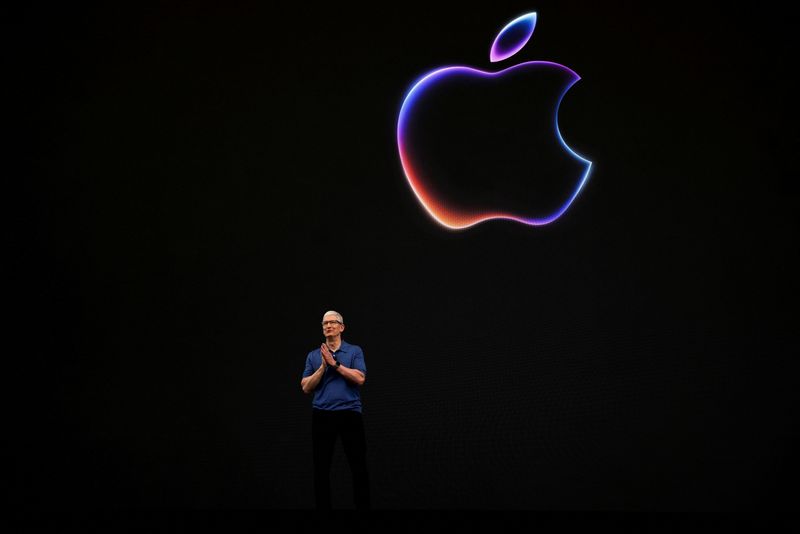
Apple Shares Decline Following Underwhelming AI Updates

- Stock Price Decline: Apple Inc. (AAPL) closed at $290.55 on Tuesday, down 3.64%, reflecting investor disappointment with the WWDC 2026 updates on Siri AI and Apple Intelligence, as the market remains cautious about whether these features will drive device upgrades and monetization.
- Surge in Trading Volume: The trading volume reached 69.2 million shares, approximately 51% above the three-month average of 45.8 million shares, indicating heightened market interest in Apple's latest developments despite the stock price decline.
- Hardware Limitations Impact: Morgan Stanley estimates that over 850 million iPhones cannot run basic Apple Intelligence queries, and more than 1.3 billion cannot access advanced Siri features, which may slow early adoption of these new functionalities and impact sales growth.
- Compliance Issues Delay: Apple's rollout in the EU is delayed due to disputes over compliance with the Digital Markets Act, prompting investors to closely monitor future product updates and regional rollout plans to assess whether Siri AI can become a strong incentive for customer upgrades.
See More
Microsoft Stock Rises 10.4% in May Amid AI Boom
- Stock Performance: Microsoft saw a 10.4% increase in May, significantly outperforming the S&P 500's 5.2% and the Nasdaq Composite's 8.4%, indicating strong market confidence in tech stocks, despite a 14% decline in 2026.
- Earnings Report Highlights: In its late April earnings report, Microsoft reported adjusted earnings per share of $4.27 on revenue of $82.89 billion, surpassing analyst expectations of $4.06 and $81.39 billion, reflecting strong performance in the AI sector.
- Market Reaction: Although the stock initially faced sell-offs post-earnings, it rebounded in May as investors returned, demonstrating confidence in Microsoft's future growth, particularly driven by advancements in AI technology.
- Macroeconomic Impact: As June began, Microsoft’s stock fell approximately 7.5%, primarily due to macroeconomic concerns and a strong jobs report, leading investors to worry about potential Federal Reserve interest rate hikes negatively impacting growth stocks.
See More
Tech Stocks Losing Leadership Traits Amid Supply Surge
- Changing Traits: CNBC's Jim Cramer stated that tech stocks are losing key traits that have driven their leadership over the past three years, particularly in profitability and aggressive share buybacks, which are now diminishing.
- Surge in IPOs: With a wave of AI-related fundraising, Cramer highlighted upcoming offerings from companies like SpaceX and OpenAI that could flood the market with new supply, absorbing capital that previously flowed into tech stocks, exacerbating supply-demand imbalances.
- Deteriorating Financials: Many tech giants, once known for their strong balance sheets and buyback programs, like Alphabet, are now under financial strain after raising $80 billion, which Cramer believes will impact future shareholder returns.
- Cautious Market Outlook: Cramer expressed concerns about the outlook for tech stocks, suggesting that excessive stock supply will lead to price declines; although the market hasn't reached this critical point yet, he warns that it is entering a period of oversupply.
See More
US Stocks Close: Nasdaq Hits 5-Week Low Amid Market Rotations
- Market Volatility: The S&P 500 index fell by 0.26% and the Nasdaq 100 dropped by 1.12% on Tuesday, indicating a shift to a downward trend after an early advance, reflecting investor concerns over tech stocks.
- Energy Price Impact: WTI crude oil prices plunged by 3% to a seven-week low, leading to widespread declines in energy producers' stocks, which exacerbated the overall market weakness and highlighted the direct impact of oil price fluctuations on related sectors.
- Real Estate Market Recovery: US existing home sales rose to 4.17 million in April, a five-month high, boosting the stocks of builders and suppliers, indicating that a recovery in the real estate market could provide positive signals for the economy.
- International Trade Data Improvement: China's May exports increased by 19.4% year-on-year, surpassing expectations, showcasing potential for global economic growth, which may positively influence the US market, despite ongoing uncertainties.
See More
Tech Stocks' Leadership Position Under Threat
- Leadership Shift: Jim Cramer highlights that technology stocks are losing their leadership status over the past three years due to the diminishing scarcity of tech stocks, which may lead to declining investor confidence and impact stock performance.
- Increased Liquidity: With a surge in AI-related fundraising, Cramer anticipates that upcoming IPOs from companies like SpaceX and OpenAI will flood the market with new shares, potentially leading to oversupply and downward pressure on stock prices.
- Deteriorating Financials: Many tech giants, once known for their strong financials and buyback programs, such as Alphabet, are now heavily investing in AI infrastructure, which could weaken their balance sheets and affect investor sentiment.
- Cautious Investment Outlook: Cramer has adopted a more cautious stance on tech stocks, warning that oversupply will lead to price declines, and the market will only stabilize when prices drop to levels that discourage companies from issuing more stock.
See More
Tech Stocks Retreat Amid Market Volatility
- Tech Stock Retreat: The Nasdaq Composite fell 0.97% to 25,678.82, primarily influenced by semiconductor giants like Broadcom and Micron, as investors reduced exposure amid profit-taking, indicating growing concerns over tech stocks.
- Increased Market Volatility: The Dow Jones Industrial Average edged up 0.17% to 50,872.11 after a late-session rebound from lows, yet overall market sentiment remains affected by rising tensions between the U.S. and Iran, prompting a reassessment of risk by investors.
- Divergent Stock Performance: Apple shares dropped nearly 4% as investors questioned its AI capabilities, while J.M. Smucker surged over 10% on positive earnings, highlighting the varied market reactions across different sectors.
- Investor Strategy Adjustment: Ahead of the upcoming CPI data, investors adopted a de-risking strategy; despite the market's volatility, maintaining a diversified portfolio may help mitigate risks associated with tech concentration, reflecting a cautious approach to future uncertainties.
See More
Apple Shares Decline Following Underwhelming AI Updates
- Stock Price Decline: Apple Inc. (AAPL) closed at $290.55 on Tuesday, down 3.64%, reflecting investor disappointment with the WWDC 2026 updates on Siri AI and Apple Intelligence, as the market remains cautious about whether these features will drive device upgrades and monetization.
- Surge in Trading Volume: The trading volume reached 69.2 million shares, approximately 51% above the three-month average of 45.8 million shares, indicating heightened market interest in Apple's latest developments despite the stock price decline.
- Hardware Limitations Impact: Morgan Stanley estimates that over 850 million iPhones cannot run basic Apple Intelligence queries, and more than 1.3 billion cannot access advanced Siri features, which may slow early adoption of these new functionalities and impact sales growth.
- Compliance Issues Delay: Apple's rollout in the EU is delayed due to disputes over compliance with the Digital Markets Act, prompting investors to closely monitor future product updates and regional rollout plans to assess whether Siri AI can become a strong incentive for customer upgrades.
See More