McDonald's and Coca-Cola Partnership Evolution
Written by Emily J. Thompson, Senior Investment Analyst
Updated: 1 hour ago
0mins
Source: seekingalpha
- Beverage Innovation Strategy: McDonald's is expanding its beverage offerings with custom sodas, refreshers, and upcoming energy drinks featuring Red Bull, aiming to capture a larger share of the rapidly growing beverage market as traditional burger sales mature.
- Young Consumer Preferences: As younger consumers increasingly favor customizable drinks and social media-friendly concoctions, Coca-Cola faces challenges; despite innovations like Freestyle soda machines, many initiatives have failed to gain traction in McDonald's restaurants.
- Strategic Priority Shift: Under CEO Chris Kempczinski, beverage innovation has become a strategic priority for McDonald's, which has incorporated lessons from its short-lived CosMc's beverage concept into a broader menu strategy to enhance growth potential.
- Partnership Restructuring: The partnership between McDonald's and Coca-Cola, established in 1955, remains strong, yet McDonald's seeks to introduce a broader range of beverage suppliers to drive growth, indicating a renegotiation of their long-standing alliance in response to changing consumer tastes.
Trade with 70% Backtested Accuracy
Stop guessing "Should I Buy MCD?" and start using high-conviction signals backed by rigorous historical data.
Sign up today to access powerful investing tools and make smarter, data-driven decisions.
Analyst Views on MCD
Wall Street analysts forecast MCD stock price to rise
23 Analyst Rating
12 Buy
11 Hold
0 Sell
Moderate Buy
Current: 284.770

Low
300.00
Averages
337.63
High
375.00
Current: 284.770
Low
300.00
Averages
337.63
High
375.00
About MCD
McDonald's Corporation is a global foodservice retailer. Its segment includes U.S., International Operated Markets, and International Developmental Licensed Markets & Corporate. The U.S. segment is its largest market and is 95% franchised. The International Operated Markets segment comprises markets or countries in which it operates and franchises restaurants, including Australia, Canada, France, Germany, Italy, Poland, Spain, and the United Kingdom. This segment is 89% franchised. The International Developmental Licensed Markets & Corporate segment comprises development licensee and affiliate markets, including equity method investments in China and Japan. This segment is 99% franchised. Its menu features hamburgers and cheeseburgers, the Big Mac, the Quarter Pounder with Cheese, the Filet-O-Fish, and several chicken sandwiches, such as the McChicken and McCrispy as well as Chicken McNuggets, Fries, shakes, sundaes, cookies, soft drinks, coffee, and other beverages.
About the author

Emily J. Thompson
Emily J. Thompson, a Chartered Financial Analyst (CFA) with 12 years in investment research, graduated with honors from the Wharton School. Specializing in industrial and technology stocks, she provides in-depth analysis for Intellectia’s earnings and market brief reports.
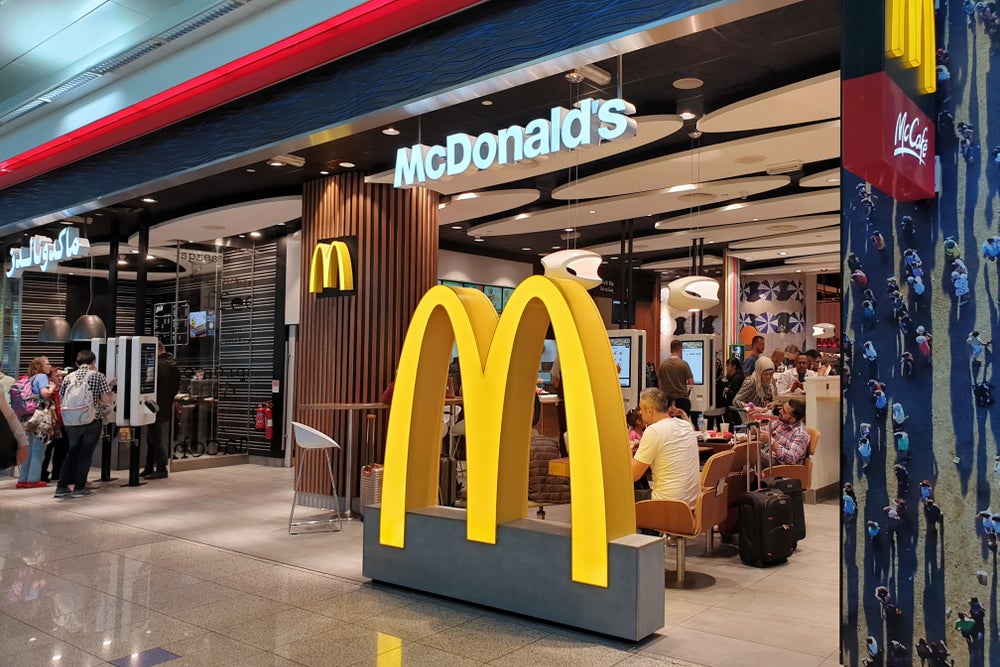
McDonald's and Coca-Cola Partnership Evolution


- Beverage Innovation Strategy: McDonald's is expanding its beverage offerings with custom sodas, refreshers, and upcoming energy drinks featuring Red Bull, aiming to capture a larger share of the rapidly growing beverage market as traditional burger sales mature.
- Young Consumer Preferences: As younger consumers increasingly favor customizable drinks and social media-friendly concoctions, Coca-Cola faces challenges; despite innovations like Freestyle soda machines, many initiatives have failed to gain traction in McDonald's restaurants.
- Strategic Priority Shift: Under CEO Chris Kempczinski, beverage innovation has become a strategic priority for McDonald's, which has incorporated lessons from its short-lived CosMc's beverage concept into a broader menu strategy to enhance growth potential.
- Partnership Restructuring: The partnership between McDonald's and Coca-Cola, established in 1955, remains strong, yet McDonald's seeks to introduce a broader range of beverage suppliers to drive growth, indicating a renegotiation of their long-standing alliance in response to changing consumer tastes.
See More

Investment Opportunities Arising from the 2026 World Cup


- Event Scale and Economic Impact: The 2026 World Cup, hosted in North America, is expected to attract over 6.5 million fans, generating approximately $14 billion in event-related spending and contributing $17.2 billion to the U.S. GDP, highlighting its significant economic impact.
- Investment Return Potential: Historical data indicates that host-country equities have delivered median returns of about 10% during World Cup years, driven by increased tourism spending and consumer sentiment, making related stocks attractive for investors.
- Surge in Advertising Spending: Digital advertising is projected to be a major beneficiary, with an estimated $5 billion increase in global advertising spending, 73% of which is expected to flow through digital channels, showcasing the World Cup's strong influence on the advertising market.
- Recommended Investment Basket: JPMorgan advises investors to consider the 2026 World Cup Beneficiaries Basket, which includes companies like Alphabet, Booking Holdings, and Coca-Cola, anticipating strong performance during the tournament.
See More
Analysis of S&P 500 Index Fund Investments

- Investment Recommendation: Most financial advisors recommend low-fee S&P 500 index funds like the Vanguard S&P 500 ETF (VOO) and SPDR S&P 500 ETF (SPY) for their convenience, although they are not perfect, they remain a top choice for many investors.
- Concentration Risk: The top 10 components of the S&P 500 account for 39% of its total market value, with weights of 7.43% for Nvidia, 6.59% for Alphabet, and 6.48% for Apple, indicating a high concentration of investor funds in a few companies, which increases market volatility risk.
- Alternative Investment Options: The Invesco S&P 500 Equal Weight ETF (RSP) offers a more balanced investment approach compared to standard market-cap-weighted funds, with a 15-year average annual return of 12%, lower than Vanguard's 14.4%, but may hold its value better during market downturns.
- Long-Term Return Potential: While the Vanguard S&P 500 ETF has higher long-term returns, the Motley Fool analyst team suggests that there are currently 10 other stocks that could provide higher returns, prompting investors to consider these potential high-yield opportunities when making investment decisions.
See More
Analysis of S&P 500 ETF Investments
- Concentration Risk: Standard S&P 500 ETFs like Vanguard and SPDR have their top 10 components accounting for 39% of total market value, despite representing only 2% of the index, indicating a high concentration of funds in a few companies, which may pose greater risks during market volatility.
- Alternative Investment Options: The Invesco S&P 500 Equal Weight ETF offers a balanced investment approach, with quarterly rebalancing that equalizes stock weights; although it has averaged annual gains of 12%, lower than Vanguard's 14.4%, it may provide better resilience during market downturns.
- Market Performance Comparison: The Vanguard S&P 500 ETF is currently priced at $681.95, with a 52-week range of $545.75 to $699.15, while the Invesco ETF is priced at $211.65, highlighting performance differences that investors should consider based on their risk tolerance.
- Long-term Investment Strategy: While S&P 500 ETFs have shown strong performance in recent years, investors should be mindful of concentration risks, especially during market corrections, and consider balanced ETFs as part of a long-term investment strategy for more stable returns.
See More
Dividend Stocks Hit 52-Week Lows: Buy Opportunities
- McDonald's Steady Growth: McDonald's reported a comparable sales growth of 3.8% for the quarter ending March 31, demonstrating strong consumer demand despite inflationary pressures, with a market capitalization of $201 billion and a dividend yield of 2.6%, which is more than double the S&P 500 average, making it a solid long-term investment.
- AT&T Overreaction: AT&T's stock has fallen about 9% due to concerns over SpaceX's Starlink business, yet its revenue last year was $125.6 billion, 11 times that of Starlink, with a current dividend yield of 4.89% and a low P/E ratio of 7, highlighting its appeal as a low-volatility stock for dividend investors.
- Unilever's Transformation Opportunity: Unilever's shares have dropped 12% this year amid uncertainty over its plan to spin off its food business; however, the company views this as a chance to focus on home and personal care, enhancing efficiency and growth potential, with a dividend yield of 3.86% and a P/E ratio just over 19, making it a good buy-and-hold option.
- Attractive Dividend Investment: As dividend stocks fall in price, investors can acquire higher yields at lower costs, with McDonald's, AT&T, and Unilever recently hitting 52-week lows, presenting excellent buying opportunities, especially in the current market where dividend yields are increasingly significant.
See More

Investment Opportunities in Blue-Chip Stocks Amid AI Boom

- REIT Investment Trust: Realty Income (O), a leading real estate investment trust with a market cap of $57 billion, focuses on retail properties and pays a monthly dividend of 5.28%, having increased its payout for over 30 consecutive years, showcasing resilience and appeal amid economic fluctuations.
- Stability of Fast Food Giant: McDonald's (MCD), with over 45,000 locations worldwide, boasts 49 years of annual dividend growth and is on the verge of becoming a Dividend King, with its brand value allowing it to maintain steady revenue during economic downturns, making it attractive for long-term investors.
- Durable Demand for Home Products: Clorox (CLX) holds a significant position in the home products market with its trusted brands, and despite facing high costs and cybersecurity issues, its 48-year dividend growth streak positions it as a potential Dividend King, with the recent acquisition of Purell expected to enhance profitability.
- Long-Term Growth in Healthcare: Medtronic (MDT), a leading global healthcare company with a market cap of $105 billion, is poised for its 50th consecutive annual dividend increase next year, and its expansion into robotic-assisted surgery, along with a projected 6%-7% annual earnings growth, makes it highly attractive in the current market.
See More
McDonald's and Coca-Cola Partnership Evolution
- Beverage Innovation Strategy: McDonald's is expanding its beverage offerings with custom sodas, refreshers, and upcoming energy drinks featuring Red Bull, aiming to capture a larger share of the rapidly growing beverage market as traditional burger sales mature.
- Young Consumer Preferences: As younger consumers increasingly favor customizable drinks and social media-friendly concoctions, Coca-Cola faces challenges; despite innovations like Freestyle soda machines, many initiatives have failed to gain traction in McDonald's restaurants.
- Strategic Priority Shift: Under CEO Chris Kempczinski, beverage innovation has become a strategic priority for McDonald's, which has incorporated lessons from its short-lived CosMc's beverage concept into a broader menu strategy to enhance growth potential.
- Partnership Restructuring: The partnership between McDonald's and Coca-Cola, established in 1955, remains strong, yet McDonald's seeks to introduce a broader range of beverage suppliers to drive growth, indicating a renegotiation of their long-standing alliance in response to changing consumer tastes.
See More
Investment Opportunities Arising from the 2026 World Cup
- Event Scale and Economic Impact: The 2026 World Cup, hosted in North America, is expected to attract over 6.5 million fans, generating approximately $14 billion in event-related spending and contributing $17.2 billion to the U.S. GDP, highlighting its significant economic impact.
- Investment Return Potential: Historical data indicates that host-country equities have delivered median returns of about 10% during World Cup years, driven by increased tourism spending and consumer sentiment, making related stocks attractive for investors.
- Surge in Advertising Spending: Digital advertising is projected to be a major beneficiary, with an estimated $5 billion increase in global advertising spending, 73% of which is expected to flow through digital channels, showcasing the World Cup's strong influence on the advertising market.
- Recommended Investment Basket: JPMorgan advises investors to consider the 2026 World Cup Beneficiaries Basket, which includes companies like Alphabet, Booking Holdings, and Coca-Cola, anticipating strong performance during the tournament.
See More
Analysis of S&P 500 Index Fund Investments
- Investment Recommendation: Most financial advisors recommend low-fee S&P 500 index funds like the Vanguard S&P 500 ETF (VOO) and SPDR S&P 500 ETF (SPY) for their convenience, although they are not perfect, they remain a top choice for many investors.
- Concentration Risk: The top 10 components of the S&P 500 account for 39% of its total market value, with weights of 7.43% for Nvidia, 6.59% for Alphabet, and 6.48% for Apple, indicating a high concentration of investor funds in a few companies, which increases market volatility risk.
- Alternative Investment Options: The Invesco S&P 500 Equal Weight ETF (RSP) offers a more balanced investment approach compared to standard market-cap-weighted funds, with a 15-year average annual return of 12%, lower than Vanguard's 14.4%, but may hold its value better during market downturns.
- Long-Term Return Potential: While the Vanguard S&P 500 ETF has higher long-term returns, the Motley Fool analyst team suggests that there are currently 10 other stocks that could provide higher returns, prompting investors to consider these potential high-yield opportunities when making investment decisions.
See More
Analysis of S&P 500 ETF Investments
- Concentration Risk: Standard S&P 500 ETFs like Vanguard and SPDR have their top 10 components accounting for 39% of total market value, despite representing only 2% of the index, indicating a high concentration of funds in a few companies, which may pose greater risks during market volatility.
- Alternative Investment Options: The Invesco S&P 500 Equal Weight ETF offers a balanced investment approach, with quarterly rebalancing that equalizes stock weights; although it has averaged annual gains of 12%, lower than Vanguard's 14.4%, it may provide better resilience during market downturns.
- Market Performance Comparison: The Vanguard S&P 500 ETF is currently priced at $681.95, with a 52-week range of $545.75 to $699.15, while the Invesco ETF is priced at $211.65, highlighting performance differences that investors should consider based on their risk tolerance.
- Long-term Investment Strategy: While S&P 500 ETFs have shown strong performance in recent years, investors should be mindful of concentration risks, especially during market corrections, and consider balanced ETFs as part of a long-term investment strategy for more stable returns.
See More
Dividend Stocks Hit 52-Week Lows: Buy Opportunities
- McDonald's Steady Growth: McDonald's reported a comparable sales growth of 3.8% for the quarter ending March 31, demonstrating strong consumer demand despite inflationary pressures, with a market capitalization of $201 billion and a dividend yield of 2.6%, which is more than double the S&P 500 average, making it a solid long-term investment.
- AT&T Overreaction: AT&T's stock has fallen about 9% due to concerns over SpaceX's Starlink business, yet its revenue last year was $125.6 billion, 11 times that of Starlink, with a current dividend yield of 4.89% and a low P/E ratio of 7, highlighting its appeal as a low-volatility stock for dividend investors.
- Unilever's Transformation Opportunity: Unilever's shares have dropped 12% this year amid uncertainty over its plan to spin off its food business; however, the company views this as a chance to focus on home and personal care, enhancing efficiency and growth potential, with a dividend yield of 3.86% and a P/E ratio just over 19, making it a good buy-and-hold option.
- Attractive Dividend Investment: As dividend stocks fall in price, investors can acquire higher yields at lower costs, with McDonald's, AT&T, and Unilever recently hitting 52-week lows, presenting excellent buying opportunities, especially in the current market where dividend yields are increasingly significant.
See More
Investment Opportunities in Blue-Chip Stocks Amid AI Boom
- REIT Investment Trust: Realty Income (O), a leading real estate investment trust with a market cap of $57 billion, focuses on retail properties and pays a monthly dividend of 5.28%, having increased its payout for over 30 consecutive years, showcasing resilience and appeal amid economic fluctuations.
- Stability of Fast Food Giant: McDonald's (MCD), with over 45,000 locations worldwide, boasts 49 years of annual dividend growth and is on the verge of becoming a Dividend King, with its brand value allowing it to maintain steady revenue during economic downturns, making it attractive for long-term investors.
- Durable Demand for Home Products: Clorox (CLX) holds a significant position in the home products market with its trusted brands, and despite facing high costs and cybersecurity issues, its 48-year dividend growth streak positions it as a potential Dividend King, with the recent acquisition of Purell expected to enhance profitability.
- Long-Term Growth in Healthcare: Medtronic (MDT), a leading global healthcare company with a market cap of $105 billion, is poised for its 50th consecutive annual dividend increase next year, and its expansion into robotic-assisted surgery, along with a projected 6%-7% annual earnings growth, makes it highly attractive in the current market.
See More