Market Update: Stocks and Dollar Decline Following Trump's Greenland Tariff Warnings.
Written by Emily J. Thompson, Senior Investment Analyst
Updated: Jan 19 2026
0mins

Source: Barron's
- Market Reaction: European stocks experienced a decline amid rising tensions due to President Trump's tariff threats against eight NATO nations.
- Commodity Surge: Gold and silver prices surged to new highs as investors reacted to the geopolitical uncertainty surrounding the U.S. administration's actions.
- U.S. Foreign Policy: The White House is actively pursuing the acquisition of Greenland, which has contributed to the current market volatility.
- Investor Sentiment: The combination of tariff threats and foreign policy maneuvers has led to increased caution among investors, impacting stock markets and driving them towards safer assets like gold and silver.
Trade with 70% Backtested Accuracy
Stop guessing "Should I Buy MU?" and start using high-conviction signals backed by rigorous historical data.
Sign up today to access powerful investing tools and make smarter, data-driven decisions.
Analyst Views on MU
Wall Street analysts forecast MU stock price to fall
26 Analyst Rating
24 Buy
2 Hold
0 Sell
Strong Buy
Current: 1032.280

Low
235.00
Averages
336.12
High
500.00
Current: 1032.280
Low
235.00
Averages
336.12
High
500.00
About MU
Micron Technology, Inc. provides memory and storage solutions. The Company delivers a portfolio of high-performance dynamic random-access memory (DRAM), NAND, and NOR memory and storage products through its Micron and Crucial brands. The Company's products enable advancing in artificial intelligence (AI) and compute-intensive applications. Its segments include Cloud Memory Business Unit (CMBU), Core Data Center Business Unit (CDBU), Mobile and Client Business Unit (MCBU) and Automotive and Embedded Business Unit (AEBU). CMBU is focused on memory solutions for large hyperscale cloud customers, and high bandwidth memory (HBM) for all data center customers. CDBU is focused on memory solutions for mid-tier cloud, enterprise, and OEM data center customers and storage solutions for all data center customers. MCBU is focused on memory and storage solutions for mobile and client segments. AEBU is focused on memory and storage solutions for the automotive, industrial, and consumer segments.
About the author

Emily J. Thompson
Emily J. Thompson, a Chartered Financial Analyst (CFA) with 12 years in investment research, graduated with honors from the Wharton School. Specializing in industrial and technology stocks, she provides in-depth analysis for Intellectia’s earnings and market brief reports.

Micron Technology Reports Record Q3 Earnings Amid AI Demand Surge

- Record Earnings: Micron Technology reported a remarkable earnings per share of $24.67 for Q3 2026, with revenue soaring 346% year-over-year to $41.46 billion and net income reaching $28.24 billion, driven by robust demand for high-bandwidth memory used in AI accelerators.
- Strong Cash Flow: The company generated $25.4 billion in operating cash flow and $18.3 billion in adjusted free cash flow during the quarter, ending with approximately $30.2 billion in cash and investments, underscoring its strategic value in the AI era.
- Optimistic Outlook: Management guided for Q4 revenue of about $50 billion, representing a further 20% increase, reflecting strong demand for high-bandwidth memory and confidence in market conditions.
- Capital Allocation Strategy: Micron plans to return 100% of its excess cash to shareholders, with potential increases in dividends and stock buybacks, as management adopts a cautious approach to avoid over-investing during the peak of the memory cycle.
See More
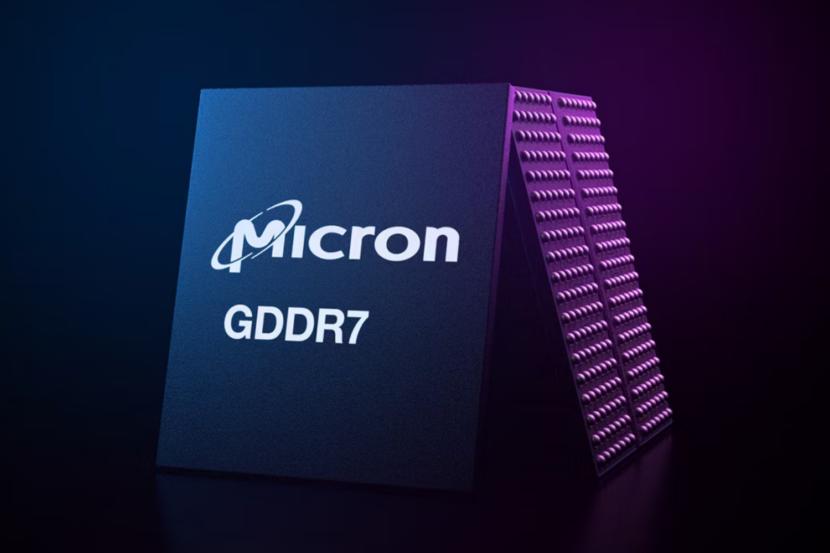
Micron Technology Expands Factory in Japan
- Massive Investment: Micron Technology has announced a $9.3 billion investment for the expansion of its factory in Higashihiroshima, Japan, aimed at boosting large-scale production of advanced memory chips, reflecting its ambitions in the global semiconductor market.
- Government Support: Japan's Ministry of Economy, Trade, and Industry will provide up to $3.3 billion in subsidies, enhancing Micron's investment appeal in Japan and ensuring its competitive edge in the rapidly growing AI market.
- Construction Timeline: The expansion will proceed in phases, with semiconductor manufacturing equipment installation expected to begin in the second half of 2028, providing Micron with flexibility to adapt to future technological innovations and market demands.
- Strategic Implications: This expansion will not only enable Micron to produce next-generation high-bandwidth memory chips required for AI processors but also promote the localization of Japan's semiconductor industry, ensuring a stable supply chain that aligns with the government's strategic goal of semiconductor self-sufficiency.
See More

Investment Opportunities in Micron and Meta Platforms

- Strategic Partnership: Micron's partnership with Anthropic is expected to significantly boost revenue growth, particularly as demand for memory and storage surges, with projected fourth-quarter revenue for fiscal 2027 reaching $50 billion, a substantial increase from $41.86 billion this quarter.
- Strong Financial Performance: Micron's sales quadrupled year-over-year in the third quarter of fiscal 2026, boasting a gross margin of 72.6%, which has contributed to its stock price tripling year-to-date; despite a recent 20% correction, its forward P/E ratio remains attractive.
- Meta's Advertising Growth: Meta Platforms achieved a 33% year-over-year revenue growth in Q1, indicating robust performance in its online advertising business, with future expansion opportunities through new revenue streams like AI glasses, projected to grow at a 24.2% CAGR through 2033.
- Diversification Strategy: Meta is not solely reliant on online advertising revenue; it is also developing a predictions app and new cloud services, leveraging its 3.56 billion daily active users to potentially attract users quickly and drive revenue growth.
See More

Micron Technology Shares Surge 240% Year-to-Date Amid Strong Demand

- Strong Financial Growth: Micron Technology reported a staggering 345% year-over-year revenue increase in Q3 fiscal 2026, reaching $41.4 billion, primarily driven by robust sales in cloud and data center segments, underscoring its critical role in AI infrastructure development.
- Multi-Year Contracts Signed: The company has secured 16 multi-year agreements with customers that include binding commitments for specific chip volumes, an unprecedented move in the memory chip industry that enhances visibility into future cash flows.
- Analysts Raise Estimates: Several Wall Street analysts have dramatically increased their earnings forecasts for fiscal 2027, raising the estimate from $98 to $155 per share, indicating a projected annual growth rate of 168% over the next five quarters, reflecting strong market confidence in Micron's future performance.
- Persistent Supply-Demand Imbalance: Nvidia CEO Jensen Huang stated that the memory chip supply shortage will last for several years, suggesting that while cyclical fluctuations remain, the strong demand will provide ongoing financial growth opportunities for Micron and other memory chip manufacturers.
See More
Bitcoin Expected to Lead Next Phase of Crypto Recovery
- Bitcoin Recovery Signal: If Bitcoin reclaims its 200-day moving average, it is expected to trigger the next phase of crypto, potentially in the second half of the year, indicating a restoration of market confidence in Bitcoin.
- Best Asset Performer: Bitcoin is anticipated to outperform stocks, bonds, and commodities, as its volatility is significantly lower than that of the tech momentum index, which has reached a 25-year high over the past 60 days.
- Market Sentiment Shift: Despite Bitcoin's 0.5% price increase in the last 24 hours, 60-70% of past holders are questioning their involvement, reflecting a drastic shift in market sentiment.
- Monetary Policy Expectations: The market has overreacted to recent comments from the Fed, with expectations that rates will remain unchanged despite hawkish pricing, and a negative June CPI is anticipated due to falling energy prices.
See More

Market Warning Signals Resurface


- Market Warning Signals: Citi's Bear Market Checklist indicates the most severe warning signs since 2008, with 10 global and 11.5 U.S. flags, although below the 17.5 flags seen before the 2000 dot-com bubble, suggesting increasing market risks.
- Valuation Concerns: The S&P 500 Shiller CAPE Ratio has reached its highest level since 2000, while the Buffett indicator shows a record high of 233.8% for U.S. stock market capitalization to GDP ratio, nearing the critical 200% threshold that Buffett warns about, indicating caution for investors.
- AI Stock Performance Divergence: JPMorgan analysts highlight a growing divergence between AI hardware stocks and those heavily investing in AI infrastructure, with Micron's stock soaring nearly 250% year-to-date, while Amazon and Microsoft's shares have delivered negative returns, reflecting potential market instability.
- Investor Caution Advised: Despite JPMorgan and Citi analysts maintaining an optimistic outlook for the market, driven by themes of fragmentation, inflation, and AI in 2026, investors should remain selective in stock purchases and keep cash reserves ready for potential market pullbacks.
See More
Micron Technology Reports Record Q3 Earnings Amid AI Demand Surge
- Record Earnings: Micron Technology reported a remarkable earnings per share of $24.67 for Q3 2026, with revenue soaring 346% year-over-year to $41.46 billion and net income reaching $28.24 billion, driven by robust demand for high-bandwidth memory used in AI accelerators.
- Strong Cash Flow: The company generated $25.4 billion in operating cash flow and $18.3 billion in adjusted free cash flow during the quarter, ending with approximately $30.2 billion in cash and investments, underscoring its strategic value in the AI era.
- Optimistic Outlook: Management guided for Q4 revenue of about $50 billion, representing a further 20% increase, reflecting strong demand for high-bandwidth memory and confidence in market conditions.
- Capital Allocation Strategy: Micron plans to return 100% of its excess cash to shareholders, with potential increases in dividends and stock buybacks, as management adopts a cautious approach to avoid over-investing during the peak of the memory cycle.
See More
Micron Technology Expands Factory in Japan
- Massive Investment: Micron Technology has announced a $9.3 billion investment for the expansion of its factory in Higashihiroshima, Japan, aimed at boosting large-scale production of advanced memory chips, reflecting its ambitions in the global semiconductor market.
- Government Support: Japan's Ministry of Economy, Trade, and Industry will provide up to $3.3 billion in subsidies, enhancing Micron's investment appeal in Japan and ensuring its competitive edge in the rapidly growing AI market.
- Construction Timeline: The expansion will proceed in phases, with semiconductor manufacturing equipment installation expected to begin in the second half of 2028, providing Micron with flexibility to adapt to future technological innovations and market demands.
- Strategic Implications: This expansion will not only enable Micron to produce next-generation high-bandwidth memory chips required for AI processors but also promote the localization of Japan's semiconductor industry, ensuring a stable supply chain that aligns with the government's strategic goal of semiconductor self-sufficiency.
See More
Investment Opportunities in Micron and Meta Platforms
- Strategic Partnership: Micron's partnership with Anthropic is expected to significantly boost revenue growth, particularly as demand for memory and storage surges, with projected fourth-quarter revenue for fiscal 2027 reaching $50 billion, a substantial increase from $41.86 billion this quarter.
- Strong Financial Performance: Micron's sales quadrupled year-over-year in the third quarter of fiscal 2026, boasting a gross margin of 72.6%, which has contributed to its stock price tripling year-to-date; despite a recent 20% correction, its forward P/E ratio remains attractive.
- Meta's Advertising Growth: Meta Platforms achieved a 33% year-over-year revenue growth in Q1, indicating robust performance in its online advertising business, with future expansion opportunities through new revenue streams like AI glasses, projected to grow at a 24.2% CAGR through 2033.
- Diversification Strategy: Meta is not solely reliant on online advertising revenue; it is also developing a predictions app and new cloud services, leveraging its 3.56 billion daily active users to potentially attract users quickly and drive revenue growth.
See More
Micron Technology Shares Surge 240% Year-to-Date Amid Strong Demand
- Strong Financial Growth: Micron Technology reported a staggering 345% year-over-year revenue increase in Q3 fiscal 2026, reaching $41.4 billion, primarily driven by robust sales in cloud and data center segments, underscoring its critical role in AI infrastructure development.
- Multi-Year Contracts Signed: The company has secured 16 multi-year agreements with customers that include binding commitments for specific chip volumes, an unprecedented move in the memory chip industry that enhances visibility into future cash flows.
- Analysts Raise Estimates: Several Wall Street analysts have dramatically increased their earnings forecasts for fiscal 2027, raising the estimate from $98 to $155 per share, indicating a projected annual growth rate of 168% over the next five quarters, reflecting strong market confidence in Micron's future performance.
- Persistent Supply-Demand Imbalance: Nvidia CEO Jensen Huang stated that the memory chip supply shortage will last for several years, suggesting that while cyclical fluctuations remain, the strong demand will provide ongoing financial growth opportunities for Micron and other memory chip manufacturers.
See More
Bitcoin Expected to Lead Next Phase of Crypto Recovery
- Bitcoin Recovery Signal: If Bitcoin reclaims its 200-day moving average, it is expected to trigger the next phase of crypto, potentially in the second half of the year, indicating a restoration of market confidence in Bitcoin.
- Best Asset Performer: Bitcoin is anticipated to outperform stocks, bonds, and commodities, as its volatility is significantly lower than that of the tech momentum index, which has reached a 25-year high over the past 60 days.
- Market Sentiment Shift: Despite Bitcoin's 0.5% price increase in the last 24 hours, 60-70% of past holders are questioning their involvement, reflecting a drastic shift in market sentiment.
- Monetary Policy Expectations: The market has overreacted to recent comments from the Fed, with expectations that rates will remain unchanged despite hawkish pricing, and a negative June CPI is anticipated due to falling energy prices.
See More
Market Warning Signals Resurface
- Market Warning Signals: Citi's Bear Market Checklist indicates the most severe warning signs since 2008, with 10 global and 11.5 U.S. flags, although below the 17.5 flags seen before the 2000 dot-com bubble, suggesting increasing market risks.
- Valuation Concerns: The S&P 500 Shiller CAPE Ratio has reached its highest level since 2000, while the Buffett indicator shows a record high of 233.8% for U.S. stock market capitalization to GDP ratio, nearing the critical 200% threshold that Buffett warns about, indicating caution for investors.
- AI Stock Performance Divergence: JPMorgan analysts highlight a growing divergence between AI hardware stocks and those heavily investing in AI infrastructure, with Micron's stock soaring nearly 250% year-to-date, while Amazon and Microsoft's shares have delivered negative returns, reflecting potential market instability.
- Investor Caution Advised: Despite JPMorgan and Citi analysts maintaining an optimistic outlook for the market, driven by themes of fragmentation, inflation, and AI in 2026, investors should remain selective in stock purchases and keep cash reserves ready for potential market pullbacks.
See More