Lululemon May Go Private as Founder Pushes for Board Changes
According to Lex, the flagship investment column of the Financial Times, "ailing" Lululemon going private might not be a stretch. The column traces how founder Chip Wilson -- who left the company in 2013 but still owns about 7% -- has spent months pushing for board changes and criticizing what he sees as a dilution of the brand. Lex notes that his complaints aren't baseless as Lululemon shares have plunged 75% from their 2023 peak, like for like sales in the Americas fell 3% last year with analysts expecting a deeper decline in 2026, and inventories have ballooned 18%, signaling weak sell through and cash pressure. With two of Wilson's preferred directors joining the board and the company carrying essentially no net debt while still generating $1B in free cash flow, Lex argues that a buyout is not out of the question as Lululemon's ex U.S. ambitions and brand reset come under scrutiny.
Trade with 70% Backtested Accuracy
Analyst Views on LULU

About LULU
About the author


Lululemon Stock Down 59% Faces Challenges Ahead

- Declining Performance: Lululemon's same-store sales grew only 2% in the fiscal year ending February 1, with a 3% drop in its core Americas market, indicating weak consumer demand that severely impacts the company's performance.
- Lackluster Revenue Growth: Although revenue increased by 6% last year, the actual growth appears minimal after excluding foreign currency effects, with management projecting total revenue growth of only 2% to 4% this year, reflecting a pessimistic outlook from the market.
- New CEO Appointment: Lululemon announced the hiring of new CEO Heidi O'Neill, who will not start until September, leaving the company without a clear strategic direction in the short term, which may further undermine investor confidence.
- Shareholder Conflict: The ongoing proxy fight between founder Chip Wilson and management, along with the involvement of activist investors like Elliott Management, poses governance challenges for the company, potentially affecting its long-term strategic development.
Lululemon Nears Settlement with Founder Chip Wilson
- Board Expansion: Lululemon is in discussions to settle with founder Chip Wilson by expanding the board to include two of Wilson's nominees and adding another mutually agreed director later, thereby enhancing corporate governance.
- CEO Engagement: The settlement will allow Wilson regular access to Lululemon's incoming CEO, Heidi O'Neill, which not only helps improve relations but may also provide strategic support for the company's direction.
- Shareholding Cap: Wilson's stake will be capped at 10%, and he has agreed not to disparage the company publicly or privately for two years, which will help stabilize the shareholder structure and reduce potential market uncertainties.
- Annual Meeting Context: The potential settlement comes ahead of the June 25 annual meeting where the proxy battle was to be decided, demonstrating Lululemon's adaptability in facing internal challenges.

Dell Technologies Earnings Beat Expectations, Shares Surge 39%


- Strong Earnings from Dell: Dell Technologies reported its fastest revenue growth since returning to the public market in 2018, with an impressive 88% annual increase driven by surging AI demand, and now expects $60 billion in AI revenue for the year, up from a previous forecast of $50 billion, highlighting its robust position in the rapidly evolving AI sector.
- Positive Market Reaction: Following the earnings report, Dell's shares soared 39% in after-hours trading, reflecting strong investor confidence in the company's growth potential and underscoring the market's keen interest in AI-related technologies.
- Defense Contract Boost: This week, Dell secured a $9.7 billion deal with the Pentagon, which not only provides substantial revenue but also strengthens its market position in the government and defense sectors, indicating potential for sustained growth in the future.
- Economic Environment Impact: Despite facing inflationary pressures and a drop in consumer savings rates to the lowest level since 2022, Dell's strong performance suggests resilience in the tech sector, potentially attracting more investor interest in opportunities within this field.

Lululemon Stock Faces Critical Test Ahead of Earnings

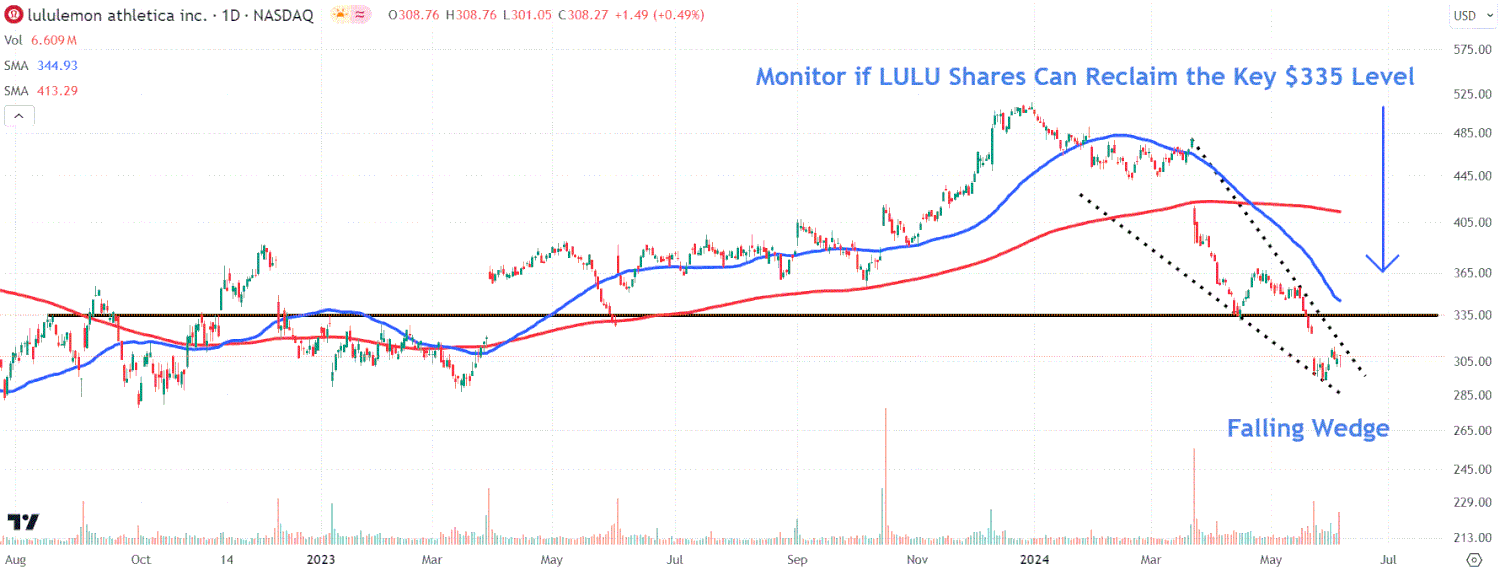
- Downward Price Trend: Lululemon's stock has plummeted over 75% since its peak in December 2023, dropping from an all-time high of $500 to a critical support level of $120, reflecting severe market challenges amid rising competition and slowing sales.
- Technical Chart Analysis: The stock has formed a textbook downtrend over the past year, and while a recent rally suggests a short-term buying opportunity, resistance at the 50-day moving average of $145 limits upside potential, with a breakout possibly leading to $170.
- Leadership Change Impact: Incoming CEO Heidi O'Neill will officially take over in September, raising market expectations for a turnaround; however, if the stock breaks below the $120 support level, it could lead to a further decline to $80.
- Risk and Reward Assessment: The stock is at a major technical inflection point with three trading scenarios, two of which favor going long ahead of earnings; if it holds the support level, a rally coinciding with the new CEO's tenure could occur, otherwise, a stop-loss may be necessary.
Lululemon Reaches Settlement with Founder Chip Wilson
- End of Shareholder Battle: Lululemon has reached a settlement with founder Chip Wilson, preventing him from publicly criticizing the company for 18 months, marking a significant governance shift aimed at restoring shareholder confidence and stabilizing stock prices.
- Board Restructuring: The agreement allows for the addition of two of Wilson's nominees to the board, former On co-CEO Marc Maurer and former ESPN CMO Laura Gentile, which is expected to bring fresh perspectives and expertise to support future strategic initiatives.
- Weak Financial Outlook: Despite projected revenue of $11.1 billion for 2025, a 4.5% increase, net income has fallen 13% to $1.57 billion, highlighting the company's vulnerability amid competitive pressures and cost challenges, potentially impacting future investor confidence.
- Lackluster Market Reaction: Lululemon's stock rose 3% following the settlement announcement, yet remains down 36% year-to-date, with analysts generally maintaining “Hold” ratings and projecting only 1% sales growth for Q1, reflecting a cautious market outlook on the company's future.
Lululemon Ends Proxy Fight with Founder, Focuses on Cash Reserves

- Proxy Fight Resolution: Lululemon has ended its months-long proxy battle with founder Chip Wilson, which had pressured its shares that fell nearly 60% over the past year, allowing incoming CEO Heidi O’Neill to focus on the company's strengths.
- Cash Reserves Advantage: With a net cash treasure of $1.8 billion, Lululemon is positioned to invest in new products, revamp retail outlets, and expand into under-tapped markets, showcasing strong financial flexibility according to analysts.
- Competitive Market Pressure: The emergence of new competitors like Alo Yoga and Vuori has intensified the challenge of attracting back loyal North American shoppers, with analysts suggesting that introducing more basic products could stimulate spending.
- Future Growth Potential: While North America accounts for about 75% of Lululemon's revenue, there is significant potential for growth in overseas markets such as China and Europe, indicating the company's capability to globalize its brand through strategic investments.
Lululemon Stock Down 59% Faces Challenges Ahead
- Declining Performance: Lululemon's same-store sales grew only 2% in the fiscal year ending February 1, with a 3% drop in its core Americas market, indicating weak consumer demand that severely impacts the company's performance.
- Lackluster Revenue Growth: Although revenue increased by 6% last year, the actual growth appears minimal after excluding foreign currency effects, with management projecting total revenue growth of only 2% to 4% this year, reflecting a pessimistic outlook from the market.
- New CEO Appointment: Lululemon announced the hiring of new CEO Heidi O'Neill, who will not start until September, leaving the company without a clear strategic direction in the short term, which may further undermine investor confidence.
- Shareholder Conflict: The ongoing proxy fight between founder Chip Wilson and management, along with the involvement of activist investors like Elliott Management, poses governance challenges for the company, potentially affecting its long-term strategic development.
Lululemon Nears Settlement with Founder Chip Wilson
- Board Expansion: Lululemon is in discussions to settle with founder Chip Wilson by expanding the board to include two of Wilson's nominees and adding another mutually agreed director later, thereby enhancing corporate governance.
- CEO Engagement: The settlement will allow Wilson regular access to Lululemon's incoming CEO, Heidi O'Neill, which not only helps improve relations but may also provide strategic support for the company's direction.
- Shareholding Cap: Wilson's stake will be capped at 10%, and he has agreed not to disparage the company publicly or privately for two years, which will help stabilize the shareholder structure and reduce potential market uncertainties.
- Annual Meeting Context: The potential settlement comes ahead of the June 25 annual meeting where the proxy battle was to be decided, demonstrating Lululemon's adaptability in facing internal challenges.
Dell Technologies Earnings Beat Expectations, Shares Surge 39%
- Strong Earnings from Dell: Dell Technologies reported its fastest revenue growth since returning to the public market in 2018, with an impressive 88% annual increase driven by surging AI demand, and now expects $60 billion in AI revenue for the year, up from a previous forecast of $50 billion, highlighting its robust position in the rapidly evolving AI sector.
- Positive Market Reaction: Following the earnings report, Dell's shares soared 39% in after-hours trading, reflecting strong investor confidence in the company's growth potential and underscoring the market's keen interest in AI-related technologies.
- Defense Contract Boost: This week, Dell secured a $9.7 billion deal with the Pentagon, which not only provides substantial revenue but also strengthens its market position in the government and defense sectors, indicating potential for sustained growth in the future.
- Economic Environment Impact: Despite facing inflationary pressures and a drop in consumer savings rates to the lowest level since 2022, Dell's strong performance suggests resilience in the tech sector, potentially attracting more investor interest in opportunities within this field.
Lululemon Stock Faces Critical Test Ahead of Earnings
- Downward Price Trend: Lululemon's stock has plummeted over 75% since its peak in December 2023, dropping from an all-time high of $500 to a critical support level of $120, reflecting severe market challenges amid rising competition and slowing sales.
- Technical Chart Analysis: The stock has formed a textbook downtrend over the past year, and while a recent rally suggests a short-term buying opportunity, resistance at the 50-day moving average of $145 limits upside potential, with a breakout possibly leading to $170.
- Leadership Change Impact: Incoming CEO Heidi O'Neill will officially take over in September, raising market expectations for a turnaround; however, if the stock breaks below the $120 support level, it could lead to a further decline to $80.
- Risk and Reward Assessment: The stock is at a major technical inflection point with three trading scenarios, two of which favor going long ahead of earnings; if it holds the support level, a rally coinciding with the new CEO's tenure could occur, otherwise, a stop-loss may be necessary.
Lululemon Reaches Settlement with Founder Chip Wilson
- End of Shareholder Battle: Lululemon has reached a settlement with founder Chip Wilson, preventing him from publicly criticizing the company for 18 months, marking a significant governance shift aimed at restoring shareholder confidence and stabilizing stock prices.
- Board Restructuring: The agreement allows for the addition of two of Wilson's nominees to the board, former On co-CEO Marc Maurer and former ESPN CMO Laura Gentile, which is expected to bring fresh perspectives and expertise to support future strategic initiatives.
- Weak Financial Outlook: Despite projected revenue of $11.1 billion for 2025, a 4.5% increase, net income has fallen 13% to $1.57 billion, highlighting the company's vulnerability amid competitive pressures and cost challenges, potentially impacting future investor confidence.
- Lackluster Market Reaction: Lululemon's stock rose 3% following the settlement announcement, yet remains down 36% year-to-date, with analysts generally maintaining “Hold” ratings and projecting only 1% sales growth for Q1, reflecting a cautious market outlook on the company's future.
Lululemon Ends Proxy Fight with Founder, Focuses on Cash Reserves
- Proxy Fight Resolution: Lululemon has ended its months-long proxy battle with founder Chip Wilson, which had pressured its shares that fell nearly 60% over the past year, allowing incoming CEO Heidi O’Neill to focus on the company's strengths.
- Cash Reserves Advantage: With a net cash treasure of $1.8 billion, Lululemon is positioned to invest in new products, revamp retail outlets, and expand into under-tapped markets, showcasing strong financial flexibility according to analysts.
- Competitive Market Pressure: The emergence of new competitors like Alo Yoga and Vuori has intensified the challenge of attracting back loyal North American shoppers, with analysts suggesting that introducing more basic products could stimulate spending.
- Future Growth Potential: While North America accounts for about 75% of Lululemon's revenue, there is significant potential for growth in overseas markets such as China and Europe, indicating the company's capability to globalize its brand through strategic investments.