GE Shows Promise: Will Its 4.0% Surge Lead to Further Gains?
GE Aerospace Stock Performance: GE shares rose 3.9% to $299.81, driven by strong demand in its Commercial Engines & Services business, despite a 5.2% loss over the past month.
Earnings Expectations: GE is projected to report quarterly earnings of $1.40 per share, reflecting a 6.1% year-over-year increase, with revenues expected to reach $11.18 billion, up 13.1% from the previous year.
Earnings Estimate Revisions: The consensus EPS estimate for GE has been slightly revised upward, indicating a potential for price appreciation, as positive trends in earnings revisions often correlate with stock price increases.
Boeing's Market Position: Boeing's stock closed 1.8% higher at $204.38, with a consensus EPS estimate of -$0.43, reflecting a significant year-over-year change, while it currently holds a Zacks Rank of #4 (Sell).
Trade with 70% Backtested Accuracy
Analyst Views on BA

About BA
About the author


Boeing Company Shows Strong Recovery Momentum

- Backlog Surge: Boeing's backlog has surged to $682 billion, indicating strong market demand; while the acquisition of Spirit Aerosystems may impact margins in the short term, the long-term value outlook remains optimistic.
- Delivery Milestone: Boeing delivered 600 aircraft in the past year, the highest since 2018, demonstrating significant progress in restoring production capacity and boosting market confidence.
- Certification Progress: The certification of the 737 Max 7 and 737 Max 10 is nearing completion, with flight testing almost finished, which will lay the groundwork for future deliveries and sales, further driving company performance.
- Margin Expectations: Boeing anticipates flat or slightly positive margins in the commercial airplanes division, with high single-digit margins expected for Defense, Space, and Security, while Global Services maintains high-teens margins, showcasing the stability of its diversified business.
UBS Identifies High-Conviction U.S. Industrial Stocks with Double-Digit Upside

- Aerospace Outlook: Analysts highlight Boeing (BA) as a standout due to improving production and easing cash headwinds, which are expected to unlock stronger free cash flow over time, driving stock price appreciation.
- Logistics and Autos Drivers: C.H. Robinson (CHRW) is anticipated to benefit from margin expansion and a gradual recovery in freight volumes, while Aptiv's (APTV) upcoming spin-off is seen as a catalyst to unlock value, with long-term growth tied to electrification and diversification.
- Services and Chemicals Growth: Cintas (CTAS) stands out for its steady organic growth and additional upside from acquisition synergies, while Element Solutions (ESI) is positioned to benefit from rising demand linked to AI infrastructure and semiconductor packaging, supporting stronger earnings growth.
- Industrial and Construction Momentum: Johnson Controls (JCI) is noted for margin improvement and earnings acceleration under new leadership, while United Rentals (URI) offers exposure to a rebound in non-residential construction, particularly in data centers and manufacturing projects.
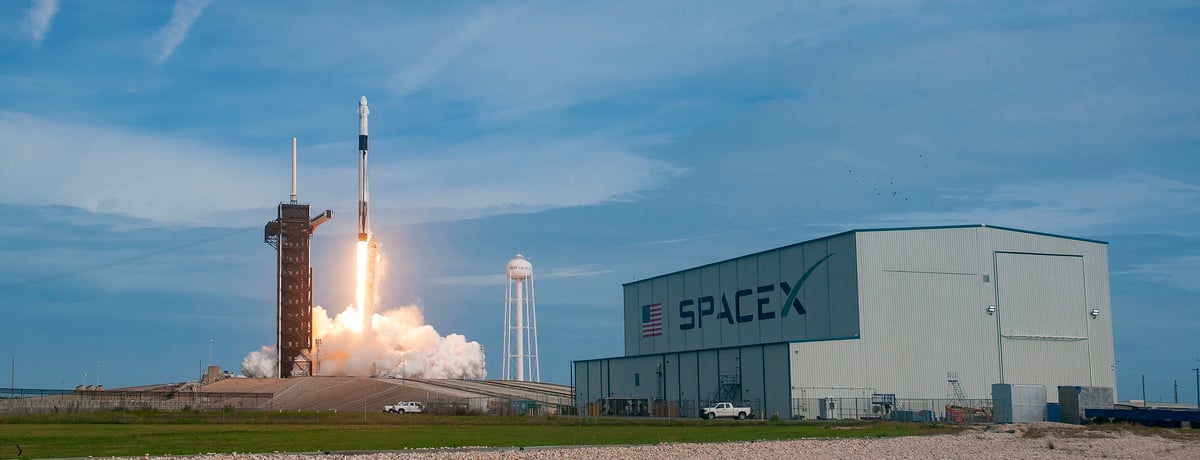
SpaceX Raises Prices Amid Competitor Crisis

- Price Increase Strategy: SpaceX has raised the launch price of its Falcon 9 from $69.75 million to $74 million during the competitor Vulcan's launch halt, aiming to expand profit margins and enhance its IPO valuation.
- Market Competitive Advantage: Even if Vulcan resumes launches, its projected price of $110 million ensures SpaceX maintains a price advantage, safeguarding its market share from potential losses.
- Small Satellite Launch Market: SpaceX has also increased its pricing for small satellite launches from $5,000 per kilogram to $7,000, yet remains competitively priced below small rocket rivals, further solidifying its market position.
- IPO Valuation Boost: Analysts have revised SpaceX's IPO valuation from $1.5 trillion to $1.75 trillion, reflecting the company's robust performance and growth potential in the current market landscape.

SpaceX Quietly Raises Rocket Launch Prices Ahead of IPO
- Price Increase: SpaceX has raised the Falcon 9 launch price from $69.75 million to $74 million, leveraging the suspension of competitor Vulcan's launches to significantly enhance profit margins ahead of its anticipated $1.75 trillion IPO.
- Market Competitive Advantage: Even after the price hike, SpaceX's launch costs remain lower than Vulcan and Arianespace's $110 million, ensuring its dominance in the high-end market without concerns over market share loss.
- Small Satellite Launch Price Adjustment: SpaceX's 'Transporter' ride-share service price has increased from $5,000 to $7,000 per kilogram, yet remains below that of small rocket competitors, further solidifying its market position.
- IPO Valuation Boost: Analysts have revised SpaceX's IPO valuation from $1.5 trillion to $1.75 trillion, reflecting the company's strong performance in the launch market and potential for profit growth.

ASML Sees Surge in New Orders Amid Strong Semiconductor Demand
- Significant Order Growth: ASML's new machine orders surged from 5,399 in Q3 2025 to 13,158 in Q4 2025, more than doubling and indicating robust demand for its EUV lithography machines in the semiconductor industry, thereby reinforcing its market dominance.
- Strong Financial Performance: In 2025, ASML reported net sales of €32.6 billion, a 15% increase year-over-year, with basic earnings per share rising to €24.73, up 28.4% from 2024, reflecting the company's sustained profitability in the global semiconductor market.
- Massive Market Potential: According to Deloitte, the global semiconductor industry is projected to exceed €975 billion in sales in 2023 and reach €2 trillion by 2036, positioning ASML to benefit significantly as the sole supplier of EUV lithography machines and expand its market share.
- High Technological Barriers: ASML's EUV lithography technology, developed over 20 years, remains unmatched, with only China having developed a prototype that is still two years away from production, ensuring ASML's competitive advantage and market moat remain strong.

ASML's Monopoly Position in the Semiconductor Market
- Surging Market Demand: The global semiconductor industry is projected to exceed $975 billion in sales for 2023 and reach $2 trillion by 2036, with ASML, as the sole supplier of extreme ultraviolet (EUV) lithography machines, benefiting from every advanced semiconductor sold, highlighting its immense market potential.
- Technological Monopoly Advantage: Each ASML EUV lithography machine costs over $400 million, and no one has been able to replicate its technology in the past 20 years, ensuring its unique position in semiconductor manufacturing and further solidifying its market moat.
- Strong Financial Performance: ASML reported net sales of €32.6 billion for 2025, a 15% increase year-over-year, with basic earnings per share at €24.73, up 28.4%, demonstrating the company's profitability and financial health in a high-demand environment.
- Order Volume Surge: ASML's net bookings for new machines skyrocketed from 5,399 in Q3 2025 to 13,158 in Q4 2025, indicating a rapid increase in market demand for its lithography machines, further validating its critical role in the semiconductor industry.
Boeing Company Shows Strong Recovery Momentum
- Backlog Surge: Boeing's backlog has surged to $682 billion, indicating strong market demand; while the acquisition of Spirit Aerosystems may impact margins in the short term, the long-term value outlook remains optimistic.
- Delivery Milestone: Boeing delivered 600 aircraft in the past year, the highest since 2018, demonstrating significant progress in restoring production capacity and boosting market confidence.
- Certification Progress: The certification of the 737 Max 7 and 737 Max 10 is nearing completion, with flight testing almost finished, which will lay the groundwork for future deliveries and sales, further driving company performance.
- Margin Expectations: Boeing anticipates flat or slightly positive margins in the commercial airplanes division, with high single-digit margins expected for Defense, Space, and Security, while Global Services maintains high-teens margins, showcasing the stability of its diversified business.
UBS Identifies High-Conviction U.S. Industrial Stocks with Double-Digit Upside
- Aerospace Outlook: Analysts highlight Boeing (BA) as a standout due to improving production and easing cash headwinds, which are expected to unlock stronger free cash flow over time, driving stock price appreciation.
- Logistics and Autos Drivers: C.H. Robinson (CHRW) is anticipated to benefit from margin expansion and a gradual recovery in freight volumes, while Aptiv's (APTV) upcoming spin-off is seen as a catalyst to unlock value, with long-term growth tied to electrification and diversification.
- Services and Chemicals Growth: Cintas (CTAS) stands out for its steady organic growth and additional upside from acquisition synergies, while Element Solutions (ESI) is positioned to benefit from rising demand linked to AI infrastructure and semiconductor packaging, supporting stronger earnings growth.
- Industrial and Construction Momentum: Johnson Controls (JCI) is noted for margin improvement and earnings acceleration under new leadership, while United Rentals (URI) offers exposure to a rebound in non-residential construction, particularly in data centers and manufacturing projects.
SpaceX Raises Prices Amid Competitor Crisis
- Price Increase Strategy: SpaceX has raised the launch price of its Falcon 9 from $69.75 million to $74 million during the competitor Vulcan's launch halt, aiming to expand profit margins and enhance its IPO valuation.
- Market Competitive Advantage: Even if Vulcan resumes launches, its projected price of $110 million ensures SpaceX maintains a price advantage, safeguarding its market share from potential losses.
- Small Satellite Launch Market: SpaceX has also increased its pricing for small satellite launches from $5,000 per kilogram to $7,000, yet remains competitively priced below small rocket rivals, further solidifying its market position.
- IPO Valuation Boost: Analysts have revised SpaceX's IPO valuation from $1.5 trillion to $1.75 trillion, reflecting the company's robust performance and growth potential in the current market landscape.
SpaceX Quietly Raises Rocket Launch Prices Ahead of IPO
- Price Increase: SpaceX has raised the Falcon 9 launch price from $69.75 million to $74 million, leveraging the suspension of competitor Vulcan's launches to significantly enhance profit margins ahead of its anticipated $1.75 trillion IPO.
- Market Competitive Advantage: Even after the price hike, SpaceX's launch costs remain lower than Vulcan and Arianespace's $110 million, ensuring its dominance in the high-end market without concerns over market share loss.
- Small Satellite Launch Price Adjustment: SpaceX's 'Transporter' ride-share service price has increased from $5,000 to $7,000 per kilogram, yet remains below that of small rocket competitors, further solidifying its market position.
- IPO Valuation Boost: Analysts have revised SpaceX's IPO valuation from $1.5 trillion to $1.75 trillion, reflecting the company's strong performance in the launch market and potential for profit growth.
ASML Sees Surge in New Orders Amid Strong Semiconductor Demand
- Significant Order Growth: ASML's new machine orders surged from 5,399 in Q3 2025 to 13,158 in Q4 2025, more than doubling and indicating robust demand for its EUV lithography machines in the semiconductor industry, thereby reinforcing its market dominance.
- Strong Financial Performance: In 2025, ASML reported net sales of €32.6 billion, a 15% increase year-over-year, with basic earnings per share rising to €24.73, up 28.4% from 2024, reflecting the company's sustained profitability in the global semiconductor market.
- Massive Market Potential: According to Deloitte, the global semiconductor industry is projected to exceed €975 billion in sales in 2023 and reach €2 trillion by 2036, positioning ASML to benefit significantly as the sole supplier of EUV lithography machines and expand its market share.
- High Technological Barriers: ASML's EUV lithography technology, developed over 20 years, remains unmatched, with only China having developed a prototype that is still two years away from production, ensuring ASML's competitive advantage and market moat remain strong.
ASML's Monopoly Position in the Semiconductor Market
- Surging Market Demand: The global semiconductor industry is projected to exceed $975 billion in sales for 2023 and reach $2 trillion by 2036, with ASML, as the sole supplier of extreme ultraviolet (EUV) lithography machines, benefiting from every advanced semiconductor sold, highlighting its immense market potential.
- Technological Monopoly Advantage: Each ASML EUV lithography machine costs over $400 million, and no one has been able to replicate its technology in the past 20 years, ensuring its unique position in semiconductor manufacturing and further solidifying its market moat.
- Strong Financial Performance: ASML reported net sales of €32.6 billion for 2025, a 15% increase year-over-year, with basic earnings per share at €24.73, up 28.4%, demonstrating the company's profitability and financial health in a high-demand environment.
- Order Volume Surge: ASML's net bookings for new machines skyrocketed from 5,399 in Q3 2025 to 13,158 in Q4 2025, indicating a rapid increase in market demand for its lithography machines, further validating its critical role in the semiconductor industry.