Jim Cramer Suggests 4 AI Stocks to Consider, Claims 'Smart Investing' Can Transform Your Future


Cramer's Investment Advice: Jim Cramer encourages young investors to consider individual stocks for potential high returns, advocating for "wise" speculation while advising caution and a focus on companies with clear profitability paths.
Top Stock Recommendations: Cramer has consistently recommended stocks like Apple, Nvidia, Broadcom, and Dell, highlighting their strong market positions and potential for growth, while advising against stocks with inflated prices lacking solid fundamentals.
Apple's Resilience: Despite concerns over iPhone demand, Cramer remains bullish on Apple, praising its product quality and market presence, urging investors to hold rather than trade the stock.
Nvidia's Impact: Cramer emphasizes Nvidia's transformative role in the market, calling it an exceptional investment and a life-changer for many, reinforcing its status as a top holding in his investment club.
Trade with 70% Backtested Accuracy
Analyst Views on DELL

About DELL
About the author


Dell Technologies Sees Significant Growth in AI Infrastructure Business
- AI Infrastructure Growth: Dell Technologies' Infrastructure Solutions Group (ISG) generated $19.6 billion in revenue for the latest quarter, marking a 73% year-over-year increase, with AI-optimized server revenue skyrocketing by 352%, highlighting the company's robust growth potential in the AI sector.
- Steady PC Business Performance: Despite challenges in the PC market, Dell's Client Solutions Group achieved $11.6 billion in revenue in fiscal Q4, up 16% year-over-year, with operating income rising 14% to $13.5 billion, demonstrating success in diversifying its product lines.
- Future Growth Expectations: Dell anticipates a 51% revenue increase and an 87% jump in earnings for the upcoming fiscal year, particularly with AI-optimized server revenue projected to rise by 103%, further solidifying its market position.
- Attractive Valuation: Despite an 85% stock price increase over the past year, Dell's P/E ratio remains at just 18, with a forward P/E ratio as low as 12, indicating significant investment value given its strong growth outlook in the tech sector.

AI Infrastructure Investment Continues to Grow Amid Market Uncertainty

- Market Outlook Optimistic: According to Statista, global spending on AI infrastructure is projected to nearly triple to $902 billion by 2029, indicating that the current dip in tech stocks may just be a temporary pullback before another rise in the coming years.
- Dell Technologies Strong Performance: Despite a sluggish PC sales environment, Dell's infrastructure solutions business drove annual revenue to a record $113 billion, up 19%, with AI orders reaching $64 billion, showcasing robust market demand and future growth potential.
- Nebius Group Rapid Expansion: Nebius's AI cloud revenue surged 830% year-over-year last quarter, and its active power capacity has expanded tenfold in 18 months, although it still struggles to meet demand, leading to longer contracts and higher selling prices.
- Vertiv's Growth Potential: Vertiv's organic sales grew 26% last year to over $10 billion, with orders surging 81% and backlog hitting $15 billion, indicating a trend of customers locking in capacity early, with an expected organic sales growth of approximately 28% in 2026.
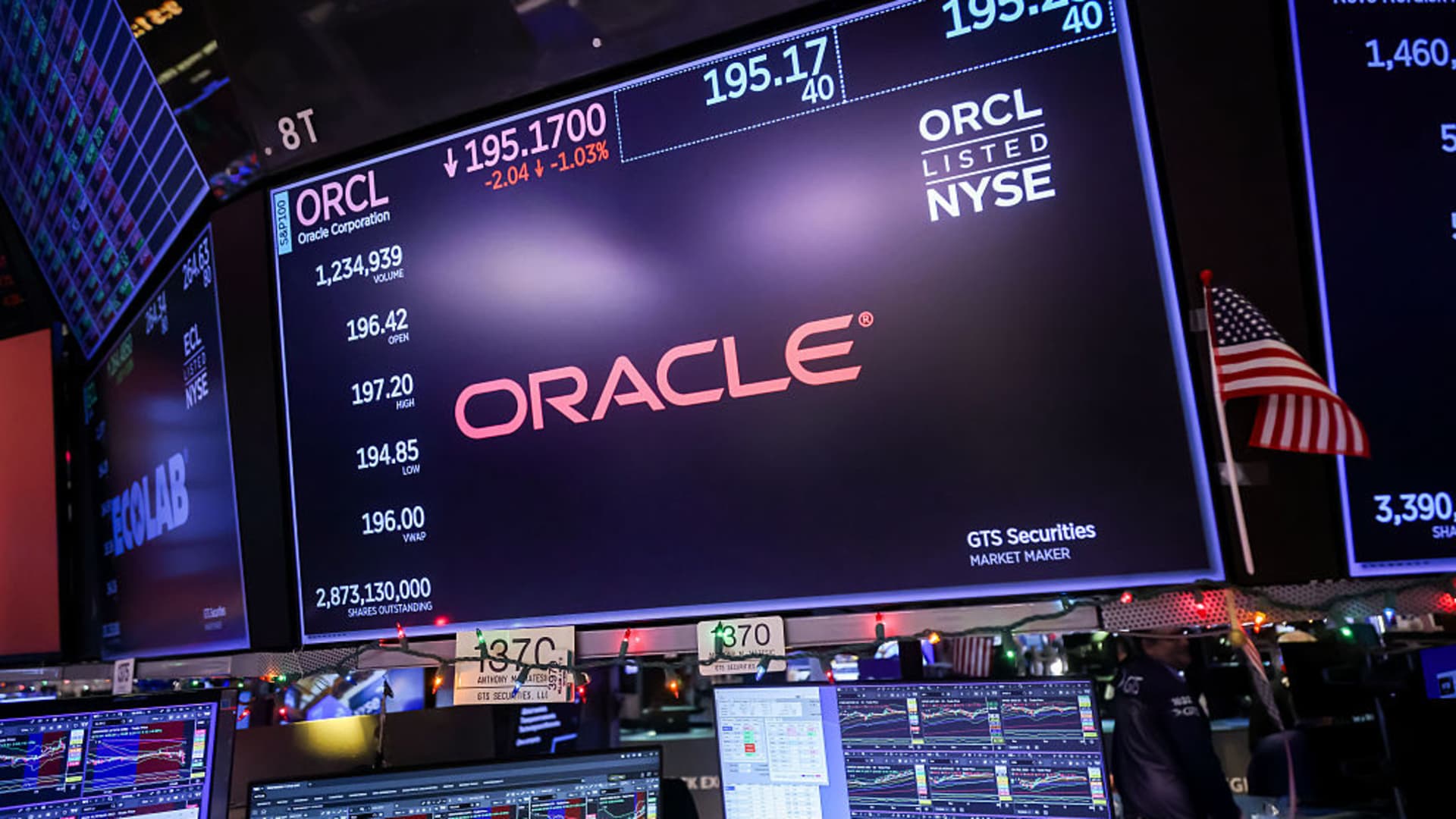
Oracle Cuts Thousands of Jobs to Support AI Infrastructure Development


- Layoff Announcement: Oracle has begun notifying its 162,000 employees about plans to cut thousands of jobs to free up cash flow for AI data center infrastructure development, which is expected to significantly reduce operating costs and enhance financial flexibility.
- Stock Price Reaction: Following the layoff news, Oracle's shares rose 2.6% in early trading, despite being down approximately 25% year-to-date, indicating a cautiously optimistic market response to the company's future strategy.
- Capital Expenditure Pressure: Oracle plans to raise up to $50 billion in 2025 through a mix of debt and equity to meet cloud service demand from clients, particularly from companies like Nvidia and Meta, reflecting strong market demand for AI infrastructure.
- Analyst Perspective: Barclays analysts noted that the layoffs will help free up cash flow and viewed this move as unsurprising, projecting that Oracle could triple its revenue over the next few years, despite lower employee productivity compared to competitors.

Big Tech Continues Billions in AI Data Center Investments


- AI Infrastructure Investment Surge: Statista projects that AI infrastructure investment will reach $902 billion by 2029, a significant increase from $334 billion in 2025, indicating sustained demand and enthusiasm for AI technologies in the market.
- Nvidia's Market Dominance: Nvidia's data center business accounted for over 90% of its revenue last quarter, growing 75% year-over-year, with an impressive $120 billion net income on $215 billion total revenue, solidifying its core position in AI infrastructure.
- Iren's Power Assurance: Iren has secured over 4.5 gigawatts of power supply and focuses on designing, building, and operating data centers, expecting to achieve an annualized revenue run rate of $3.4 billion by 2026, showcasing its strong capability to meet tech giants' demands.
- Long-Term Investment Potential: Despite significant stock price increases for both Nvidia and Iren, analysts expect Nvidia's earnings to grow by 38% annually over the next five years, while Iren's market valuation still has room for upside, indicating both companies remain attractive in the AI boom.

AI Infrastructure Spending to Reach $902 Billion by 2029
- Market Growth Forecast: Statista projects that AI infrastructure spending will reach $902 billion by 2029, a significant increase from $334 billion in 2025, indicating strong demand and investment potential in AI technologies.
- Nvidia's Market Dominance: Nvidia's data center business accounted for over 90% of its revenue last quarter, growing 75% year-over-year, highlighting its critical role and high margins in the AI infrastructure landscape.
- Iren's Strategic Advantage: Iren has secured over 4.5 gigawatts of power and signed a $9.7 billion contract with Microsoft, expecting to generate $3.4 billion in annualized revenue by 2026, showcasing its strong execution capabilities and market opportunities in data center construction.
- Long-Term Investment Outlook: While Nvidia's valuation reflects strong growth, its projected earnings growth of 38% over the next five years, combined with Iren's untapped market potential, suggests both companies remain compelling investment opportunities amid the AI boom.

Iran Threatens Attacks on U.S. Tech Firms


- Escalating Threats: The Islamic Revolutionary Guard Corps (IRGC) has declared intentions to attack 18 U.S. tech companies, including Nvidia, Apple, Microsoft, and Google, in retaliation for U.S. and Israeli strikes on Iran, indicating a significant escalation in regional tensions.
- Specific Attack Timeline: The IRGC warned that attacks would commence at 8 PM Tehran time on April 1, urging employees at these companies to evacuate immediately to safeguard their lives, highlighting the urgency and potential danger of the situation.
- Vulnerability of Tech Infrastructure: This threat follows Iranian strikes on AWS data centers in the Middle East, which caused outages in several apps and digital services in the UAE, underscoring the vulnerability of U.S. tech firms' infrastructure in the region and its impact on business operations.
- Corporate Response Strategies: Companies like Intel have stated that employee safety is their top priority and are implementing measures to protect their facilities in the Middle East, reflecting their adaptability to geopolitical risks and commitment to employee welfare.
Dell Technologies Sees Significant Growth in AI Infrastructure Business
- AI Infrastructure Growth: Dell Technologies' Infrastructure Solutions Group (ISG) generated $19.6 billion in revenue for the latest quarter, marking a 73% year-over-year increase, with AI-optimized server revenue skyrocketing by 352%, highlighting the company's robust growth potential in the AI sector.
- Steady PC Business Performance: Despite challenges in the PC market, Dell's Client Solutions Group achieved $11.6 billion in revenue in fiscal Q4, up 16% year-over-year, with operating income rising 14% to $13.5 billion, demonstrating success in diversifying its product lines.
- Future Growth Expectations: Dell anticipates a 51% revenue increase and an 87% jump in earnings for the upcoming fiscal year, particularly with AI-optimized server revenue projected to rise by 103%, further solidifying its market position.
- Attractive Valuation: Despite an 85% stock price increase over the past year, Dell's P/E ratio remains at just 18, with a forward P/E ratio as low as 12, indicating significant investment value given its strong growth outlook in the tech sector.
AI Infrastructure Investment Continues to Grow Amid Market Uncertainty
- Market Outlook Optimistic: According to Statista, global spending on AI infrastructure is projected to nearly triple to $902 billion by 2029, indicating that the current dip in tech stocks may just be a temporary pullback before another rise in the coming years.
- Dell Technologies Strong Performance: Despite a sluggish PC sales environment, Dell's infrastructure solutions business drove annual revenue to a record $113 billion, up 19%, with AI orders reaching $64 billion, showcasing robust market demand and future growth potential.
- Nebius Group Rapid Expansion: Nebius's AI cloud revenue surged 830% year-over-year last quarter, and its active power capacity has expanded tenfold in 18 months, although it still struggles to meet demand, leading to longer contracts and higher selling prices.
- Vertiv's Growth Potential: Vertiv's organic sales grew 26% last year to over $10 billion, with orders surging 81% and backlog hitting $15 billion, indicating a trend of customers locking in capacity early, with an expected organic sales growth of approximately 28% in 2026.
Oracle Cuts Thousands of Jobs to Support AI Infrastructure Development
- Layoff Announcement: Oracle has begun notifying its 162,000 employees about plans to cut thousands of jobs to free up cash flow for AI data center infrastructure development, which is expected to significantly reduce operating costs and enhance financial flexibility.
- Stock Price Reaction: Following the layoff news, Oracle's shares rose 2.6% in early trading, despite being down approximately 25% year-to-date, indicating a cautiously optimistic market response to the company's future strategy.
- Capital Expenditure Pressure: Oracle plans to raise up to $50 billion in 2025 through a mix of debt and equity to meet cloud service demand from clients, particularly from companies like Nvidia and Meta, reflecting strong market demand for AI infrastructure.
- Analyst Perspective: Barclays analysts noted that the layoffs will help free up cash flow and viewed this move as unsurprising, projecting that Oracle could triple its revenue over the next few years, despite lower employee productivity compared to competitors.
Big Tech Continues Billions in AI Data Center Investments
- AI Infrastructure Investment Surge: Statista projects that AI infrastructure investment will reach $902 billion by 2029, a significant increase from $334 billion in 2025, indicating sustained demand and enthusiasm for AI technologies in the market.
- Nvidia's Market Dominance: Nvidia's data center business accounted for over 90% of its revenue last quarter, growing 75% year-over-year, with an impressive $120 billion net income on $215 billion total revenue, solidifying its core position in AI infrastructure.
- Iren's Power Assurance: Iren has secured over 4.5 gigawatts of power supply and focuses on designing, building, and operating data centers, expecting to achieve an annualized revenue run rate of $3.4 billion by 2026, showcasing its strong capability to meet tech giants' demands.
- Long-Term Investment Potential: Despite significant stock price increases for both Nvidia and Iren, analysts expect Nvidia's earnings to grow by 38% annually over the next five years, while Iren's market valuation still has room for upside, indicating both companies remain attractive in the AI boom.
AI Infrastructure Spending to Reach $902 Billion by 2029
- Market Growth Forecast: Statista projects that AI infrastructure spending will reach $902 billion by 2029, a significant increase from $334 billion in 2025, indicating strong demand and investment potential in AI technologies.
- Nvidia's Market Dominance: Nvidia's data center business accounted for over 90% of its revenue last quarter, growing 75% year-over-year, highlighting its critical role and high margins in the AI infrastructure landscape.
- Iren's Strategic Advantage: Iren has secured over 4.5 gigawatts of power and signed a $9.7 billion contract with Microsoft, expecting to generate $3.4 billion in annualized revenue by 2026, showcasing its strong execution capabilities and market opportunities in data center construction.
- Long-Term Investment Outlook: While Nvidia's valuation reflects strong growth, its projected earnings growth of 38% over the next five years, combined with Iren's untapped market potential, suggests both companies remain compelling investment opportunities amid the AI boom.
Iran Threatens Attacks on U.S. Tech Firms
- Escalating Threats: The Islamic Revolutionary Guard Corps (IRGC) has declared intentions to attack 18 U.S. tech companies, including Nvidia, Apple, Microsoft, and Google, in retaliation for U.S. and Israeli strikes on Iran, indicating a significant escalation in regional tensions.
- Specific Attack Timeline: The IRGC warned that attacks would commence at 8 PM Tehran time on April 1, urging employees at these companies to evacuate immediately to safeguard their lives, highlighting the urgency and potential danger of the situation.
- Vulnerability of Tech Infrastructure: This threat follows Iranian strikes on AWS data centers in the Middle East, which caused outages in several apps and digital services in the UAE, underscoring the vulnerability of U.S. tech firms' infrastructure in the region and its impact on business operations.
- Corporate Response Strategies: Companies like Intel have stated that employee safety is their top priority and are implementing measures to protect their facilities in the Middle East, reflecting their adaptability to geopolitical risks and commitment to employee welfare.