Jeff Bezos' New AI Venture Prometheus Secures $12B Funding

Jeff Bezos' newest AI venture, Prometheus, has secured a massive $12B funding round. Prometheus launched in November with $6.2B in initial backing and is now valued at roughly $41B. Bezos, who stepped down as Amazon's (AMZN) CEO in 2021, serves as co-CEO alongside Vik Bajaj, a Stanford School of Medicine professor and co-founder of Alphabet's (GOOGL) life-sciences unit Verily. In an interview with CNBC discussing the new venture, Bezos pushed back on fears that AI will eliminate jobs, arguing instead that the technology will create a "labor shortage in the economy." Prometheus aims to build what it calls an "artificial general engineer," an AI system capable of designing and manufacturing highly complex products, from industrial components to something as intricate as a jet engine. The latest funding round includes investments from JPMorgan Chase (JPM), Goldman Sachs (GS) and BlackRock (BLK).
Trade with 70% Backtested Accuracy
Analyst Views on AMZN

About AMZN
About the author

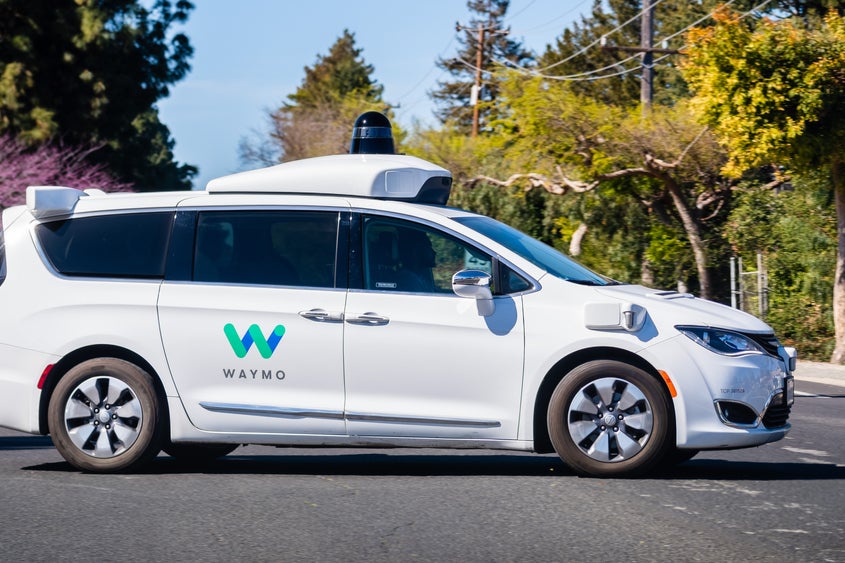
Waymo Recalls 3,900 Robotaxis to Address Software Issues


- Recall Announcement: Waymo is recalling nearly 3,900 robotaxis to address software issues, marking the company's second recall in just over a month, following 13 incidents where robotaxis entered freeway construction zones, highlighting deficiencies in its autonomous driving systems under complex conditions.
- Safety Risks: According to notices from the National Highway Traffic Safety Administration, Waymo's fifth-generation automated driving systems exhibit performance issues in construction zones, increasing the likelihood of accidents, which has compelled the company to restrict freeway operations to ensure passenger safety.
- Expansion Constraints: Waymo currently operates commercial robotaxi services in 11 U.S. markets, but the ongoing freeway issues are limiting the company's expansion velocity, particularly against the backdrop of plans to enter international markets like London and Tokyo.
- New Subscription Model: Waymo recently introduced a $29.99 monthly subscription service aimed at high-demand cities, but until the freeway issues are resolved, user experience and market confidence may be adversely affected.

Amazon Investigates Employees Over AI Testimony

- Employee Testimony Investigation: Amazon is investigating three employees for their testimony at Seattle City Council meetings advocating for stricter regulation of AI data centers, which could lead to disciplinary actions, including termination, highlighting the company's sensitivity to employee political expression.
- Council Construction Moratorium: The Seattle City Council unanimously passed a one-year moratorium on data center construction on June 9, aimed at allowing time for government regulation, reflecting public concerns about the environmental impact of AI data centers.
- Employee Rights Complaint: Employees filed a complaint alleging that Amazon monitored their political activities, potentially violating Seattle ordinances, which raises legal risks for the company and questions about its internal culture and employees' rights to free expression.
- AI Investment vs. Layoffs: Despite Amazon's commitment to invest up to $200 billion in AI infrastructure, the company has laid off 30,000 corporate employees since October, indicating a conflict between pursuing technological innovation and addressing employee welfare.
Electric Vehicle Market Outlook and Investment Opportunities

- Market Growth Outlook: Grand View Research forecasts a 26.7% CAGR for the global EV market from 2026 to 2033, indicating strong growth potential despite challenges such as reduced government subsidies and supply chain disruptions.
- Rivian's Production Issues: Rivian's stock has plummeted from $78 in 2021 to around $16 today, yet it anticipates delivering 62,000-67,000 vehicles in 2023; however, production challenges and high starting prices have limited its market appeal, resulting in a market cap of only $20 billion.
- Nio's Market Share Growth: Nio's annual deliveries surged from 43,728 in 2020 to 326,028 by 2025, with its current stock price at $5, while its share in China's premium EV market continues to expand, projecting revenues nearing $25.8 billion by 2028.
- Improving Profitability: Nio has recently spun off its unprofitable chip-making segment, reducing operating costs, and has maintained profitability over the past two quarters, with analysts expecting it to achieve its first full-year profit in 2027, suggesting significant undervaluation of its stock.

German AI Researcher Launches Hedge Fund with 1,000% Returns


- Outstanding Fund Performance: Leopold Aschenbrenner's Situational Awareness hedge fund, launched in September 2024, has delivered over 1,000% returns since inception and currently manages more than $20 billion in assets, highlighting its strong performance and market appeal in AI investments.
- Clear Investment Focus: Aschenbrenner believes that the growth bottleneck for the AI market lies in the physical constraints of data centers, chips, and power grids, which is why his fund heavily invests in 'neocloud' companies that provide infrastructure services specifically for AI firms, offering greater flexibility and cost efficiency.
- Massive Market Potential: According to Synergy Research Group, the neocloud market is expected to grow at an explosive 58% CAGR from 2025 to 2031, indicating significant investment opportunities as the AI market expands.
- Key Investment Companies: The fund's investments in Nebius, CoreWeave, and IREN are attracting attention, with projected explosive revenue growth of 550%, 147%, and 46% respectively over the next few years, underscoring their strategic importance in the AI infrastructure sector.

Investment Potential Analysis of Emerging Neocloud Companies
- Market Growth Potential: According to Synergy Research Group, the neocloud market is projected to grow at a 58% CAGR from 2025 to 2031, indicating that the rapid expansion of the AI market will drive demand for cloud infrastructure services.
- Significant Investment Returns: Leopold Aschenbrenner's Situational Awareness hedge fund has achieved over 1,000% returns since inception by investing in three neocloud companies—Nebius, CoreWeave, and IREN—managing over $20 billion in assets, showcasing the success of its investment strategy.
- Company Financial Performance: Nebius, CoreWeave, and IREN are expected to achieve revenue growth of 550%, 147%, and 46% respectively in 2026, and although their current price-to-sales ratios are six, three, and seven times, economies of scale could reduce costs and stabilize profit growth in the long term.
- Competitive Advantage in Industry: Neocloud companies accelerate AI task processing by installing specialized hardware like data center GPUs, offering more flexible contracts compared to traditional hyperscale cloud providers, thereby enhancing their competitive edge in the AI sector.

Rivian and Nio: Analyzing EV Market Prospects
- Rivian R2 Launch: Rivian plans to launch its R2 SUV in 2023, with expected annual deliveries reaching 62,000 to 67,000 units, indicating significant growth potential and transformation opportunities in the EV market compared to 2022.
- Production and Sales Challenges: Despite producing 57,232 vehicles in 2023, Rivian anticipates a decline in production for 2024 and 2025 due to supply chain issues and increased competition, reflecting uncertainty in its market position.
- Nio's Market Expansion: Nio aims to nearly double its annual revenue to 174.4 billion yuan ($25.8 billion) from 2025 to 2028 by launching its ONVO and Firefly sub-brands, showcasing growth potential in China's premium EV market.
- Improving Profitability: Nio has remained profitable for the past two quarters and is expected to achieve its first full-year profit in 2027, indicating success in cost control and market share enhancement, which may attract more investor interest.
Waymo Recalls 3,900 Robotaxis to Address Software Issues
- Recall Announcement: Waymo is recalling nearly 3,900 robotaxis to address software issues, marking the company's second recall in just over a month, following 13 incidents where robotaxis entered freeway construction zones, highlighting deficiencies in its autonomous driving systems under complex conditions.
- Safety Risks: According to notices from the National Highway Traffic Safety Administration, Waymo's fifth-generation automated driving systems exhibit performance issues in construction zones, increasing the likelihood of accidents, which has compelled the company to restrict freeway operations to ensure passenger safety.
- Expansion Constraints: Waymo currently operates commercial robotaxi services in 11 U.S. markets, but the ongoing freeway issues are limiting the company's expansion velocity, particularly against the backdrop of plans to enter international markets like London and Tokyo.
- New Subscription Model: Waymo recently introduced a $29.99 monthly subscription service aimed at high-demand cities, but until the freeway issues are resolved, user experience and market confidence may be adversely affected.
Amazon Investigates Employees Over AI Testimony
- Employee Testimony Investigation: Amazon is investigating three employees for their testimony at Seattle City Council meetings advocating for stricter regulation of AI data centers, which could lead to disciplinary actions, including termination, highlighting the company's sensitivity to employee political expression.
- Council Construction Moratorium: The Seattle City Council unanimously passed a one-year moratorium on data center construction on June 9, aimed at allowing time for government regulation, reflecting public concerns about the environmental impact of AI data centers.
- Employee Rights Complaint: Employees filed a complaint alleging that Amazon monitored their political activities, potentially violating Seattle ordinances, which raises legal risks for the company and questions about its internal culture and employees' rights to free expression.
- AI Investment vs. Layoffs: Despite Amazon's commitment to invest up to $200 billion in AI infrastructure, the company has laid off 30,000 corporate employees since October, indicating a conflict between pursuing technological innovation and addressing employee welfare.
Electric Vehicle Market Outlook and Investment Opportunities
- Market Growth Outlook: Grand View Research forecasts a 26.7% CAGR for the global EV market from 2026 to 2033, indicating strong growth potential despite challenges such as reduced government subsidies and supply chain disruptions.
- Rivian's Production Issues: Rivian's stock has plummeted from $78 in 2021 to around $16 today, yet it anticipates delivering 62,000-67,000 vehicles in 2023; however, production challenges and high starting prices have limited its market appeal, resulting in a market cap of only $20 billion.
- Nio's Market Share Growth: Nio's annual deliveries surged from 43,728 in 2020 to 326,028 by 2025, with its current stock price at $5, while its share in China's premium EV market continues to expand, projecting revenues nearing $25.8 billion by 2028.
- Improving Profitability: Nio has recently spun off its unprofitable chip-making segment, reducing operating costs, and has maintained profitability over the past two quarters, with analysts expecting it to achieve its first full-year profit in 2027, suggesting significant undervaluation of its stock.
German AI Researcher Launches Hedge Fund with 1,000% Returns
- Outstanding Fund Performance: Leopold Aschenbrenner's Situational Awareness hedge fund, launched in September 2024, has delivered over 1,000% returns since inception and currently manages more than $20 billion in assets, highlighting its strong performance and market appeal in AI investments.
- Clear Investment Focus: Aschenbrenner believes that the growth bottleneck for the AI market lies in the physical constraints of data centers, chips, and power grids, which is why his fund heavily invests in 'neocloud' companies that provide infrastructure services specifically for AI firms, offering greater flexibility and cost efficiency.
- Massive Market Potential: According to Synergy Research Group, the neocloud market is expected to grow at an explosive 58% CAGR from 2025 to 2031, indicating significant investment opportunities as the AI market expands.
- Key Investment Companies: The fund's investments in Nebius, CoreWeave, and IREN are attracting attention, with projected explosive revenue growth of 550%, 147%, and 46% respectively over the next few years, underscoring their strategic importance in the AI infrastructure sector.
Investment Potential Analysis of Emerging Neocloud Companies
- Market Growth Potential: According to Synergy Research Group, the neocloud market is projected to grow at a 58% CAGR from 2025 to 2031, indicating that the rapid expansion of the AI market will drive demand for cloud infrastructure services.
- Significant Investment Returns: Leopold Aschenbrenner's Situational Awareness hedge fund has achieved over 1,000% returns since inception by investing in three neocloud companies—Nebius, CoreWeave, and IREN—managing over $20 billion in assets, showcasing the success of its investment strategy.
- Company Financial Performance: Nebius, CoreWeave, and IREN are expected to achieve revenue growth of 550%, 147%, and 46% respectively in 2026, and although their current price-to-sales ratios are six, three, and seven times, economies of scale could reduce costs and stabilize profit growth in the long term.
- Competitive Advantage in Industry: Neocloud companies accelerate AI task processing by installing specialized hardware like data center GPUs, offering more flexible contracts compared to traditional hyperscale cloud providers, thereby enhancing their competitive edge in the AI sector.
Rivian and Nio: Analyzing EV Market Prospects
- Rivian R2 Launch: Rivian plans to launch its R2 SUV in 2023, with expected annual deliveries reaching 62,000 to 67,000 units, indicating significant growth potential and transformation opportunities in the EV market compared to 2022.
- Production and Sales Challenges: Despite producing 57,232 vehicles in 2023, Rivian anticipates a decline in production for 2024 and 2025 due to supply chain issues and increased competition, reflecting uncertainty in its market position.
- Nio's Market Expansion: Nio aims to nearly double its annual revenue to 174.4 billion yuan ($25.8 billion) from 2025 to 2028 by launching its ONVO and Firefly sub-brands, showcasing growth potential in China's premium EV market.
- Improving Profitability: Nio has remained profitable for the past two quarters and is expected to achieve its first full-year profit in 2027, indicating success in cost control and market share enhancement, which may attract more investor interest.