Intel's Stock Soars Nearly 500% Amid AI Boom
Written by Emily J. Thompson, Senior Investment Analyst
Updated: 2 hours ago
0mins

Should l Buy INTC?
Source: Fool
- Earnings Beat: Intel's Q1 revenue rose 7% year-over-year to $13.6 billion, exceeding management's midpoint guidance by over $1 billion, demonstrating the company's ability to consistently outperform expectations and boosting market confidence.
- Data Center Growth: The data center and AI segment saw a 22% year-over-year revenue increase to $5.1 billion, sharply accelerating growth, indicating Intel's strengthening role in the AI boom.
- Strategic Partnerships: Intel reached a preliminary agreement with Apple to manufacture some chips, enhancing its credibility in the high-end market, while a $5 billion investment from Nvidia further solidifies its position in custom data center CPUs.
- Valuation Challenges: Despite the stock rising to around $125 with a market cap exceeding $600 billion, Intel's forward P/E ratio stands at 140, necessitating exceptional growth over the next decade to justify this valuation, reflecting high market expectations for its future performance.
Trade with 70% Backtested Accuracy
Stop guessing "Should I Buy INTC?" and start using high-conviction signals backed by rigorous historical data.
Sign up today to access powerful investing tools and make smarter, data-driven decisions.
Analyst Views on INTC
Wall Street analysts forecast INTC stock price to fall
29 Analyst Rating
5 Buy
19 Hold
5 Sell
Hold
Current: 109.620

Low
20.00
Averages
39.30
High
52.00
Current: 109.620
Low
20.00
Averages
39.30
High
52.00
About INTC
Intel Corporation is a global designer and manufacturer of semiconductor products. The Company's segments include Intel Products, Intel Foundry, and All Other. Its Intel Products comprise Client Computing Group (CCG) and Data Center and AI (DCAI). CCG delivers platforms and processors that power PCs and edge devices, enabling enhanced performance, connectivity and user experience for consumer and commercial markets with capabilities that also support retail, industrial robotics and AI ecosystems at the edge. DCAI delivers workload-optimized solutions based upon its x86 architecture for data centers, including CPUs, AI accelerators, NICs, IPUs and custom ASICs, enabling performance and scalability for cloud, enterprise, telecommunication and HPC environments. The Intel Foundry segment comprises technology development, manufacturing and foundry services, developing new semiconductor process technologies and advanced packaging technologies. All Other segments include Mobileye and Other.
About the author

Emily J. Thompson
Emily J. Thompson, a Chartered Financial Analyst (CFA) with 12 years in investment research, graduated with honors from the Wharton School. Specializing in industrial and technology stocks, she provides in-depth analysis for Intellectia’s earnings and market brief reports.
SpaceX Plans $55B Investment for Terafab Project

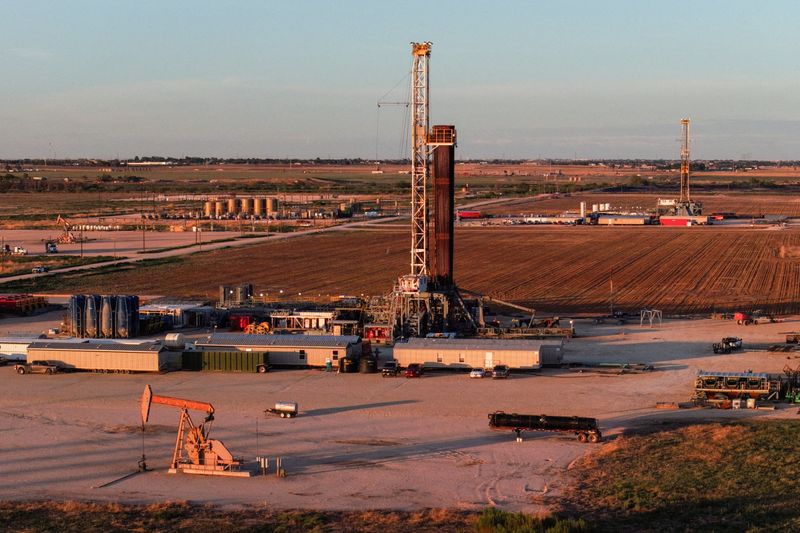
- Massive Investment: SpaceX plans an initial investment of $55 billion for the Terafab project in Texas, which, if successful, is expected to yield significant benefits for Intel and several semiconductor equipment vendors.
- Estimated Total Cost: Government filings indicate that if additional phases of the semiconductor production facility are completed, the total cost could reach approximately $119 billion, which would have profound implications for the semiconductor industry.
- Potential Gains for Intel: Wedbush analysts noted that if the project proves successful, it would positively impact Intel's 14A process, although the exact relationship between Intel and Tesla/SpaceX remains somewhat unclear.
- Risks and Challenges: Despite the promising outlook, analysts caution that building and owning a fab to support internal requirements is an expensive proposition that has become increasingly difficult to justify, especially when many products are not yet finalized.
See More
Sandisk Leads New Trends in AI Storage


- Market Shift: As AI technology evolves, memory and storage have become the new frontier in AI chip investing, with Sandisk's NAND flash solutions playing a critical role in this transition, pushing the company from a traditional market to a strategic growth area.
- Stock Surge: Sandisk's stock has skyrocketed by 557% this year, surpassing $1,500 per share, primarily driven by record revenues from AI-driven storage contracts, indicating strong business momentum in the AI storage market.
- Diversified Investment Opportunity: For investors looking to engage in the AI storage theme while avoiding concentration risk, the Roundhill Memory ETF offers a low-cost alternative, encompassing multiple companies involved in dynamic random-access memory and NAND flash, thereby reducing volatility associated with individual stocks.
- Future Outlook: As AI's demand for data storage continues to grow, Sandisk's success not only reflects market potential but also signals that the memory and storage sector is transitioning from a supporting role to a leading one, attracting more investor attention in this area.
See More
IonQ Revenue Soars but Stock Declines

- Revenue Surge: IonQ's Q1 revenue skyrocketed 755% year-over-year to $64.7 million, exceeding the midpoint of its guidance by 30%, indicating a shift of its quantum computing solutions from lab to real-world applications, which is expected to drive further sales growth.
- Future Growth Indicators: Remaining performance obligations (RPOs) soared 554% to $470 million, suggesting a strong future demand as the company sees $2.50 in new RPOs for every $1 in revenue, despite current losses.
- Financial Health: IonQ reported an adjusted EBITDA loss of $96.8 million, worsening from a $34.1 million loss a year ago, although it maintains a robust cash position of $3.1 billion with no debt, reflecting financial stability.
- Outlook: IonQ raised its full-year revenue guidance to $260 million to $270 million, with Q2 revenue expected between $65 million and $68 million, while maintaining its EBITDA loss guidance, indicating that the company's long-term potential in quantum computing will take time to materialize.
See More

Analysis of Robinhood's 32% Stock Drop

- Earnings Report Shortfall: Robinhood's Q1 2026 earnings report fell short of investor expectations, contributing to a stock price drop of over 32%, reflecting market concerns about its future growth, particularly amid volatile cryptocurrency revenue.
- Cryptocurrency Revenue Fluctuations: While cryptocurrency revenue reached $358 million in Q4 2024, surpassing the total of the previous three quarters, it plummeted to $134 million in Q1 2026, a 47% decline from the prior quarter, highlighting the cyclical and unstable nature of this segment.
- Diversification Strategy: Robinhood's transaction-based revenue rose 7% year-over-year to $623 million, with 'other transaction revenue' soaring 320% to $147 million, indicating potential in prediction markets, with April trading volumes expected to hit $3 billion, marking its second-best month ever.
- Market Sentiment Impact: Despite progress in diversifying revenue, the market remains fixated on cryptocurrency income, suggesting that Robinhood's stock price may continue to be influenced by fluctuations in crypto market sentiment, prompting investors to carefully consider their holding strategies.
See More

Wolfspeed Shares Surge Post Earnings but Face Serious Challenges

- Poor Financial Performance: Wolfspeed reported a gross margin of -27% and an adjusted gross margin of -21% for fiscal Q3, indicating that the selling price of its silicon carbide components is below production costs, leading to ongoing financial strain.
- Cash Flow Crisis: The company recorded a negative operating cash flow of $84 million in Q3, and although it has $1.2 billion in cash and short-term investments, its $1.7 billion debt, including nearly $800 million in convertible debt, puts its financial health in jeopardy.
- Weak Market Demand: Despite rising demand in the electric vehicle sector, Wolfspeed's revenue fell 19% to $150.2 million, reflecting its inadequate competitiveness in the silicon carbide chip market, prompting a shift towards other markets like AI data centers.
- Technical Challenges: Wolfspeed has yet to fully resolve yield issues with its 200mm wafers, and while management claims progress, the attempt to transition to 300mm wafers presents even greater technological challenges, potentially undermining future market confidence.
See More

Intel's Stock Soars Nearly 500% Amid AI Boom
- Earnings Beat: Intel's Q1 revenue rose 7% year-over-year to $13.6 billion, exceeding management's midpoint guidance by over $1 billion, demonstrating the company's ability to consistently outperform expectations and boosting market confidence.
- Data Center Growth: The data center and AI segment saw a 22% year-over-year revenue increase to $5.1 billion, sharply accelerating growth, indicating Intel's strengthening role in the AI boom.
- Strategic Partnerships: Intel reached a preliminary agreement with Apple to manufacture some chips, enhancing its credibility in the high-end market, while a $5 billion investment from Nvidia further solidifies its position in custom data center CPUs.
- Valuation Challenges: Despite the stock rising to around $125 with a market cap exceeding $600 billion, Intel's forward P/E ratio stands at 140, necessitating exceptional growth over the next decade to justify this valuation, reflecting high market expectations for its future performance.
See More
SpaceX Plans $55B Investment for Terafab Project
- Massive Investment: SpaceX plans an initial investment of $55 billion for the Terafab project in Texas, which, if successful, is expected to yield significant benefits for Intel and several semiconductor equipment vendors.
- Estimated Total Cost: Government filings indicate that if additional phases of the semiconductor production facility are completed, the total cost could reach approximately $119 billion, which would have profound implications for the semiconductor industry.
- Potential Gains for Intel: Wedbush analysts noted that if the project proves successful, it would positively impact Intel's 14A process, although the exact relationship between Intel and Tesla/SpaceX remains somewhat unclear.
- Risks and Challenges: Despite the promising outlook, analysts caution that building and owning a fab to support internal requirements is an expensive proposition that has become increasingly difficult to justify, especially when many products are not yet finalized.
See More
Sandisk Leads New Trends in AI Storage
- Market Shift: As AI technology evolves, memory and storage have become the new frontier in AI chip investing, with Sandisk's NAND flash solutions playing a critical role in this transition, pushing the company from a traditional market to a strategic growth area.
- Stock Surge: Sandisk's stock has skyrocketed by 557% this year, surpassing $1,500 per share, primarily driven by record revenues from AI-driven storage contracts, indicating strong business momentum in the AI storage market.
- Diversified Investment Opportunity: For investors looking to engage in the AI storage theme while avoiding concentration risk, the Roundhill Memory ETF offers a low-cost alternative, encompassing multiple companies involved in dynamic random-access memory and NAND flash, thereby reducing volatility associated with individual stocks.
- Future Outlook: As AI's demand for data storage continues to grow, Sandisk's success not only reflects market potential but also signals that the memory and storage sector is transitioning from a supporting role to a leading one, attracting more investor attention in this area.
See More
IonQ Revenue Soars but Stock Declines
- Revenue Surge: IonQ's Q1 revenue skyrocketed 755% year-over-year to $64.7 million, exceeding the midpoint of its guidance by 30%, indicating a shift of its quantum computing solutions from lab to real-world applications, which is expected to drive further sales growth.
- Future Growth Indicators: Remaining performance obligations (RPOs) soared 554% to $470 million, suggesting a strong future demand as the company sees $2.50 in new RPOs for every $1 in revenue, despite current losses.
- Financial Health: IonQ reported an adjusted EBITDA loss of $96.8 million, worsening from a $34.1 million loss a year ago, although it maintains a robust cash position of $3.1 billion with no debt, reflecting financial stability.
- Outlook: IonQ raised its full-year revenue guidance to $260 million to $270 million, with Q2 revenue expected between $65 million and $68 million, while maintaining its EBITDA loss guidance, indicating that the company's long-term potential in quantum computing will take time to materialize.
See More
Analysis of Robinhood's 32% Stock Drop
- Earnings Report Shortfall: Robinhood's Q1 2026 earnings report fell short of investor expectations, contributing to a stock price drop of over 32%, reflecting market concerns about its future growth, particularly amid volatile cryptocurrency revenue.
- Cryptocurrency Revenue Fluctuations: While cryptocurrency revenue reached $358 million in Q4 2024, surpassing the total of the previous three quarters, it plummeted to $134 million in Q1 2026, a 47% decline from the prior quarter, highlighting the cyclical and unstable nature of this segment.
- Diversification Strategy: Robinhood's transaction-based revenue rose 7% year-over-year to $623 million, with 'other transaction revenue' soaring 320% to $147 million, indicating potential in prediction markets, with April trading volumes expected to hit $3 billion, marking its second-best month ever.
- Market Sentiment Impact: Despite progress in diversifying revenue, the market remains fixated on cryptocurrency income, suggesting that Robinhood's stock price may continue to be influenced by fluctuations in crypto market sentiment, prompting investors to carefully consider their holding strategies.
See More
Wolfspeed Shares Surge Post Earnings but Face Serious Challenges
- Poor Financial Performance: Wolfspeed reported a gross margin of -27% and an adjusted gross margin of -21% for fiscal Q3, indicating that the selling price of its silicon carbide components is below production costs, leading to ongoing financial strain.
- Cash Flow Crisis: The company recorded a negative operating cash flow of $84 million in Q3, and although it has $1.2 billion in cash and short-term investments, its $1.7 billion debt, including nearly $800 million in convertible debt, puts its financial health in jeopardy.
- Weak Market Demand: Despite rising demand in the electric vehicle sector, Wolfspeed's revenue fell 19% to $150.2 million, reflecting its inadequate competitiveness in the silicon carbide chip market, prompting a shift towards other markets like AI data centers.
- Technical Challenges: Wolfspeed has yet to fully resolve yield issues with its 200mm wafers, and while management claims progress, the attempt to transition to 300mm wafers presents even greater technological challenges, potentially undermining future market confidence.
See More
Intel's Stock Soars Nearly 500% Amid AI Boom
- Earnings Beat: Intel's Q1 revenue rose 7% year-over-year to $13.6 billion, exceeding management's midpoint guidance by over $1 billion, demonstrating the company's ability to consistently outperform expectations and boosting market confidence.
- Data Center Growth: The data center and AI segment saw a 22% year-over-year revenue increase to $5.1 billion, sharply accelerating growth, indicating Intel's strengthening role in the AI boom.
- Strategic Partnerships: Intel reached a preliminary agreement with Apple to manufacture some chips, enhancing its credibility in the high-end market, while a $5 billion investment from Nvidia further solidifies its position in custom data center CPUs.
- Valuation Challenges: Despite the stock rising to around $125 with a market cap exceeding $600 billion, Intel's forward P/E ratio stands at 140, necessitating exceptional growth over the next decade to justify this valuation, reflecting high market expectations for its future performance.
See More