Intel Shares Rebound Amid Analyst Neutral Rating and AI Optimism
Written by Emily J. Thompson, Senior Investment Analyst
Updated: Feb 13 2026
0mins


Should l Buy INTC?
Source: Benzinga
- Analyst Rating: DA Davidson analyst Gil Luria initiated coverage of Intel with a Neutral rating and a $45 price target, indicating that while there has been meaningful operational progress, investors are still seeking more evidence of sustainable execution and turnaround momentum.
- AI Spending Boost: Intel has benefited from renewed optimism in the semiconductor sector due to strong earnings and aggressive AI spending plans from Big Tech, with Wedbush analyst Dan Ives projecting capital expenditures to reach $550-$600 billion in 2026, a significant increase from $380 billion in 2025.
- Technical Analysis: Intel is currently in a strong technical setup, trading above its 50-day and 100-day SMAs, yet 2.6% below its 20-day SMA, suggesting a potential short-term pullback; the RSI at 50.20 indicates neutral momentum, warranting caution from traders.
- Stock Performance: Intel's stock has surged 94.90% over the past year and is currently at 79.5% of its 52-week range, indicating strength but also raising the risk of a pullback if selling pressure occurs near resistance levels.
Trade with 70% Backtested Accuracy
Stop guessing "Should I Buy INTC?" and start using high-conviction signals backed by rigorous historical data.
Sign up today to access powerful investing tools and make smarter, data-driven decisions.
Analyst Views on INTC
Wall Street analysts forecast INTC stock price to fall
29 Analyst Rating
5 Buy
19 Hold
5 Sell
Hold
Current: 48.030

Low
20.00
Averages
39.30
High
52.00
Current: 48.030
Low
20.00
Averages
39.30
High
52.00
About INTC
Intel Corporation is a global designer and manufacturer of semiconductor products. The Company operates through three segments: Intel Products, Intel Foundry, and All Other. Its Intel Products segment includes Client Computing Group (CCG), Data Center and AI (DCAI), Network and Edge (NEX). The CCG is bringing together the operating system, system architecture, hardware, and software application integration to enable PC experiences. DCAI delivers workload-optimized solutions to cloud service providers and enterprises, along with silicon devices for communications service providers, network and edge, and HPC customers. NEX helps networks and edge compute systems from fixed-function hardware to general-purpose compute, acceleration, and networking devices running cloud native software on programmable hardware. The Intel Foundry segment comprises technology development, manufacturing and foundry services. All Other segments include Altera, Mobileye, Other.
About the author

Emily J. Thompson
Emily J. Thompson, a Chartered Financial Analyst (CFA) with 12 years in investment research, graduated with honors from the Wharton School. Specializing in industrial and technology stocks, she provides in-depth analysis for Intellectia’s earnings and market brief reports.

Intel to Repurchase 49% Stake in Ireland Facility for $14.2 Billion

- Share Buyback Agreement: Intel has reached a deal to repurchase Apollo's 49% equity interest in the Fab 34 joint venture for $14.2 billion, which will provide the company with stronger capital support during its manufacturing expansion and is expected to enhance future profitability.
- Funding Strategy: Intel plans to finance the buyback with cash on hand and approximately $6.5 billion in new debt, a strategy that not only optimizes its capital structure but could also strengthen the company's credit rating in 2027 and beyond.
- Technological Production Capacity: The Fab 34 facility produces chips using Intel 4 and Intel 3 process technologies, including processors for AI-enabled systems, indicating the company's ongoing investment and innovation in high-growth sectors.
- Improved Financial Position: CFO David Zinsner noted that the company's balance sheet and business strategy have significantly improved since the original partnership was formed, indicating Intel's gradual recovery of its leadership position in the competitive semiconductor market.
See More

XRP Price Prediction Amid Market Dynamics

- Legal Clarity Achieved: On March 17, the SEC and CFTC issued new guidance clarifying XRP's status as a digital commodity, effectively removing the legal uncertainty that has persisted since 2020, which will allow financial institutions to onboard operations to the XRP Ledger without incurring legal liabilities, thereby enhancing its market appeal.
- Mainstream Partnership Opportunities: Mastercard launched a new Crypto Partner Program on March 11, including Ripple, the issuer of XRP, linking it to Mastercard's $9 trillion in annual payment flows, which supports the legitimacy and scalability of XRP transactions, although its price has not significantly increased.
- Price Prediction Volatility: Currently priced at $1.32, XRP is expected to end April between $1.15 and $1.60, with the most likely range being $1.30 to $1.45, indicating a lack of significant price movement in the short term, while investors should monitor the potential impact of the upcoming Clarity Act on the market.
- Geopolitical Risks: Ongoing conflicts in the Middle East could significantly impact XRP's price; if energy facilities are destroyed or the Strait of Hormuz remains closed, XRP could drop below $1.15, whereas a ceasefire in April might help prices approach the upper end of the predicted range.
See More

Planet Fitness Stock Plummets; Should Investors Take Notice?

- Slowing Growth: Planet Fitness reported a 10.5% year-over-year revenue increase in Q4 2025, reaching $376.3 million, but comparable club sales growth slowed to 5.7%, down from 6.7% for the full year, indicating a potential decline in growth momentum that could affect future investment appeal.
- Membership Growth and Pricing Power: Despite competitive pressures, Planet Fitness added approximately 1.1 million net new members in 2025, reflecting strong brand demand, and plans to raise prices for its Black Card tier, with a 66.5% penetration rate likely to significantly boost revenue and enhance market competitiveness.
- International Expansion Opportunities: The company recently surpassed 200 international clubs and aims to scale its presence in existing markets like Mexico, Australia, and Spain while strategically entering one to two new markets annually, showcasing the potential of its globalization strategy.
- Intensifying Market Competition: While the company performs well in the low-cost gym sector, the rapid expansion of competitors may impact its market share; analysts suggest the current stock price is close to fair valuation, advising investors to wait for a better entry point.
See More

Redwire Stock Soars 19% Amid Major Space Projects

- Stock Surge: Redwire's shares surged 19% over the past week, driven by its involvement in high-profile space exploration projects and new work with a major European client, reflecting strong market confidence in its future potential.
- Space Mission Involvement: The company is part of the Artemis II mission in 2026, a ten-day NASA project expected to mark a high point for the space industry, with Redwire's optical imaging system and navigation equipment playing crucial roles in the mission.
- New Contract Secured: Recently, Redwire signed a contract with the European Space Agency to develop a quantum-secure satellite, mandating the construction and delivery of its Hammerhead spacecraft equipped with advanced satellite and avionics technology, further solidifying its position in the space sector.
- Reputation Boost: Collaborating with top-tier clients like NASA and ESA significantly enhances Redwire's reputation, and if its products perform as expected, the company is likely to secure more contracts from these agencies in the future, boosting investor confidence.
See More
Investment Opportunities in the AI Supercycle
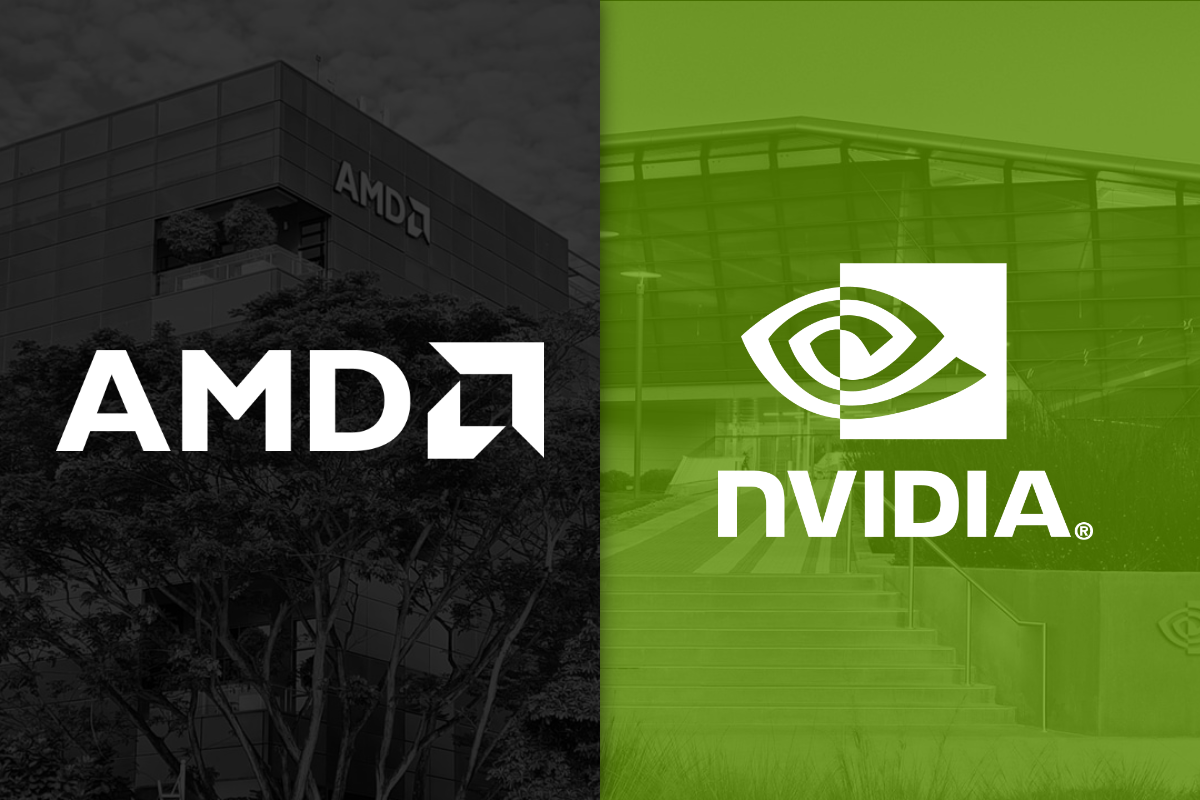
- Nvidia's Market Dominance: Nvidia has excelled in the AI infrastructure build-out, with revenue projected to soar from $17 billion in fiscal 2021 to $216 billion by fiscal 2026, achieving a market cap exceeding $4 trillion, which solidifies its 90% market share in large language model training and reinforces its industry leadership.
- AMD's Growth Potential: While AMD trails Nvidia in the data center GPU market, its two significant GPU deals with OpenAI and Meta are expected to generate hundreds of millions in new revenue, enhancing its competitive edge in inference, which is predicted to be a major growth area in AI infrastructure.
- Surge in Data Center CPU Demand: With the rise of AI agents, AMD's leadership in the data center CPU market positions it to benefit from a substantial increase in demand for these chips, providing a new revenue stream and further solidifying its market position.
- Investor Choice: Although Nvidia's leadership in AI is undeniable, AMD, as a smaller company, presents a more attractive investment opportunity due to its potential in data center CPUs and GPU markets, likely yielding higher long-term returns for investors looking to capitalize on the AI boom.
See More

Two Utility Stocks Worth Buying This Month


- Brookfield Renewable Growth: As of the end of 2025, Brookfield Renewable operates 47 GW of renewable capacity and has over 200 GW of projects in development, with expected revenue CAGR of 22% from 2025 to 2028, indicating strong growth potential in the green energy market.
- Long-Term Contract Benefits: Brookfield has secured long-term renewable power agreements with hyperscalers like Microsoft and Google, incorporating inflation escalators in contracts to maintain profitability amid inflation, thereby reinforcing its market position.
- Rapid Growth of GE Vernova: Since its spin-off in 2024, GE Vernova's stock has surged nearly eightfold, with projected revenue CAGR of 15% and adjusted EBITDA CAGR of 55% from 2025 to 2028, reflecting strong demand in the power and electrification sectors.
- Demand-Driven Market Expansion: GE Vernova's Power and Electrification orders have seen double-digit growth over the past two years, driven by the expansion of cloud computing and AI markets, although its wind segment grows slower, the overall business will benefit from surging electricity demand.
See More
Intel to Repurchase 49% Stake in Ireland Facility for $14.2 Billion
- Share Buyback Agreement: Intel has reached a deal to repurchase Apollo's 49% equity interest in the Fab 34 joint venture for $14.2 billion, which will provide the company with stronger capital support during its manufacturing expansion and is expected to enhance future profitability.
- Funding Strategy: Intel plans to finance the buyback with cash on hand and approximately $6.5 billion in new debt, a strategy that not only optimizes its capital structure but could also strengthen the company's credit rating in 2027 and beyond.
- Technological Production Capacity: The Fab 34 facility produces chips using Intel 4 and Intel 3 process technologies, including processors for AI-enabled systems, indicating the company's ongoing investment and innovation in high-growth sectors.
- Improved Financial Position: CFO David Zinsner noted that the company's balance sheet and business strategy have significantly improved since the original partnership was formed, indicating Intel's gradual recovery of its leadership position in the competitive semiconductor market.
See More
XRP Price Prediction Amid Market Dynamics
- Legal Clarity Achieved: On March 17, the SEC and CFTC issued new guidance clarifying XRP's status as a digital commodity, effectively removing the legal uncertainty that has persisted since 2020, which will allow financial institutions to onboard operations to the XRP Ledger without incurring legal liabilities, thereby enhancing its market appeal.
- Mainstream Partnership Opportunities: Mastercard launched a new Crypto Partner Program on March 11, including Ripple, the issuer of XRP, linking it to Mastercard's $9 trillion in annual payment flows, which supports the legitimacy and scalability of XRP transactions, although its price has not significantly increased.
- Price Prediction Volatility: Currently priced at $1.32, XRP is expected to end April between $1.15 and $1.60, with the most likely range being $1.30 to $1.45, indicating a lack of significant price movement in the short term, while investors should monitor the potential impact of the upcoming Clarity Act on the market.
- Geopolitical Risks: Ongoing conflicts in the Middle East could significantly impact XRP's price; if energy facilities are destroyed or the Strait of Hormuz remains closed, XRP could drop below $1.15, whereas a ceasefire in April might help prices approach the upper end of the predicted range.
See More
Planet Fitness Stock Plummets; Should Investors Take Notice?
- Slowing Growth: Planet Fitness reported a 10.5% year-over-year revenue increase in Q4 2025, reaching $376.3 million, but comparable club sales growth slowed to 5.7%, down from 6.7% for the full year, indicating a potential decline in growth momentum that could affect future investment appeal.
- Membership Growth and Pricing Power: Despite competitive pressures, Planet Fitness added approximately 1.1 million net new members in 2025, reflecting strong brand demand, and plans to raise prices for its Black Card tier, with a 66.5% penetration rate likely to significantly boost revenue and enhance market competitiveness.
- International Expansion Opportunities: The company recently surpassed 200 international clubs and aims to scale its presence in existing markets like Mexico, Australia, and Spain while strategically entering one to two new markets annually, showcasing the potential of its globalization strategy.
- Intensifying Market Competition: While the company performs well in the low-cost gym sector, the rapid expansion of competitors may impact its market share; analysts suggest the current stock price is close to fair valuation, advising investors to wait for a better entry point.
See More
Redwire Stock Soars 19% Amid Major Space Projects
- Stock Surge: Redwire's shares surged 19% over the past week, driven by its involvement in high-profile space exploration projects and new work with a major European client, reflecting strong market confidence in its future potential.
- Space Mission Involvement: The company is part of the Artemis II mission in 2026, a ten-day NASA project expected to mark a high point for the space industry, with Redwire's optical imaging system and navigation equipment playing crucial roles in the mission.
- New Contract Secured: Recently, Redwire signed a contract with the European Space Agency to develop a quantum-secure satellite, mandating the construction and delivery of its Hammerhead spacecraft equipped with advanced satellite and avionics technology, further solidifying its position in the space sector.
- Reputation Boost: Collaborating with top-tier clients like NASA and ESA significantly enhances Redwire's reputation, and if its products perform as expected, the company is likely to secure more contracts from these agencies in the future, boosting investor confidence.
See More
Investment Opportunities in the AI Supercycle
- Nvidia's Market Dominance: Nvidia has excelled in the AI infrastructure build-out, with revenue projected to soar from $17 billion in fiscal 2021 to $216 billion by fiscal 2026, achieving a market cap exceeding $4 trillion, which solidifies its 90% market share in large language model training and reinforces its industry leadership.
- AMD's Growth Potential: While AMD trails Nvidia in the data center GPU market, its two significant GPU deals with OpenAI and Meta are expected to generate hundreds of millions in new revenue, enhancing its competitive edge in inference, which is predicted to be a major growth area in AI infrastructure.
- Surge in Data Center CPU Demand: With the rise of AI agents, AMD's leadership in the data center CPU market positions it to benefit from a substantial increase in demand for these chips, providing a new revenue stream and further solidifying its market position.
- Investor Choice: Although Nvidia's leadership in AI is undeniable, AMD, as a smaller company, presents a more attractive investment opportunity due to its potential in data center CPUs and GPU markets, likely yielding higher long-term returns for investors looking to capitalize on the AI boom.
See More
Two Utility Stocks Worth Buying This Month
- Brookfield Renewable Growth: As of the end of 2025, Brookfield Renewable operates 47 GW of renewable capacity and has over 200 GW of projects in development, with expected revenue CAGR of 22% from 2025 to 2028, indicating strong growth potential in the green energy market.
- Long-Term Contract Benefits: Brookfield has secured long-term renewable power agreements with hyperscalers like Microsoft and Google, incorporating inflation escalators in contracts to maintain profitability amid inflation, thereby reinforcing its market position.
- Rapid Growth of GE Vernova: Since its spin-off in 2024, GE Vernova's stock has surged nearly eightfold, with projected revenue CAGR of 15% and adjusted EBITDA CAGR of 55% from 2025 to 2028, reflecting strong demand in the power and electrification sectors.
- Demand-Driven Market Expansion: GE Vernova's Power and Electrification orders have seen double-digit growth over the past two years, driven by the expansion of cloud computing and AI markets, although its wind segment grows slower, the overall business will benefit from surging electricity demand.
See More