Intel Shareholder Sues Over Government Equity Deal
Written by Emily J. Thompson, Senior Investment Analyst
Updated: Mar 12 2026
0mins
Should l Buy INTC?
Source: seekingalpha
- Shareholder Lawsuit: Intel shareholder Richard Paisner has filed a lawsuit in Delaware, alleging that the company unlawfully granted a 10% equity stake to the U.S. government, valued at approximately $11 billion, under duress from threats by the Trump administration, which he claims breaches fiduciary duties.
- Transaction Context: The equity stake was funded by converting $2.2 billion in CHIPS Act grants and $8.9 billion in federal grants, indicating the company's compromise under political pressure, which could impact its long-term strategy and market trust.
- Board Accountability: The lawsuit asserts that Intel's board capitulated to Trump's attacks to protect CEO Tan's position, highlighting vulnerabilities in corporate governance that may lead to diminished investor confidence in management.
- Political Ramifications: The case involves not only Intel but also the U.S. Department of Commerce and Secretary Howard Lutnick, illustrating the complex interplay between government and corporations, which could have far-reaching implications for future policies and the investment landscape.
Trade with 70% Backtested Accuracy
Stop guessing "Should I Buy INTC?" and start using high-conviction signals backed by rigorous historical data.
Sign up today to access powerful investing tools and make smarter, data-driven decisions.
Analyst Views on INTC
Wall Street analysts forecast INTC stock price to fall
29 Analyst Rating
5 Buy
19 Hold
5 Sell
Hold
Current: 48.030

Low
20.00
Averages
39.30
High
52.00
Current: 48.030
Low
20.00
Averages
39.30
High
52.00
About INTC
Intel Corporation is a global designer and manufacturer of semiconductor products. The Company operates through three segments: Intel Products, Intel Foundry, and All Other. Its Intel Products segment includes Client Computing Group (CCG), Data Center and AI (DCAI), Network and Edge (NEX). The CCG is bringing together the operating system, system architecture, hardware, and software application integration to enable PC experiences. DCAI delivers workload-optimized solutions to cloud service providers and enterprises, along with silicon devices for communications service providers, network and edge, and HPC customers. NEX helps networks and edge compute systems from fixed-function hardware to general-purpose compute, acceleration, and networking devices running cloud native software on programmable hardware. The Intel Foundry segment comprises technology development, manufacturing and foundry services. All Other segments include Altera, Mobileye, Other.
About the author

Emily J. Thompson
Emily J. Thompson, a Chartered Financial Analyst (CFA) with 12 years in investment research, graduated with honors from the Wharton School. Specializing in industrial and technology stocks, she provides in-depth analysis for Intellectia’s earnings and market brief reports.
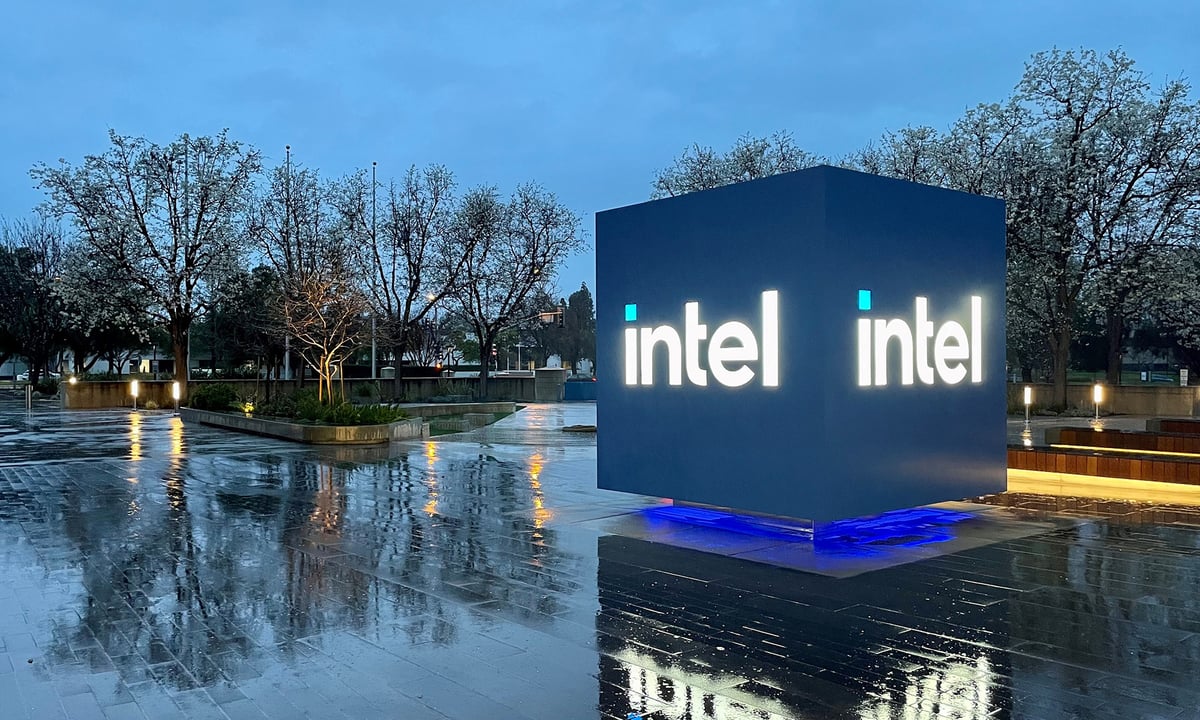
Intel Shows Significant Financial Improvement

- Financial Improvement: Intel's financial position has significantly improved compared to two years ago, reflecting the company's recovery and growth potential in the competitive market, which enhances investor confidence.
- Stock Performance: As of the afternoon of April 1, 2026, Intel's stock price rose by 4.89%, indicating a positive market reaction and optimistic expectations from investors regarding the company's future.
- Strategic Adjustments: This stock price increase is seen as a sign of successful strategic adjustments by Intel, indicating substantial progress in technology innovation and market expansion.
- Restored Market Confidence: The signs of improvement at Intel not only boost shareholder confidence but may also attract more investor attention, further driving the company's stock price upward.
See More

Poet Technologies Reports Strong Q4 2025 Results, Stock Surges

- Significant Financial Improvement: Poet Technologies reported Q4 2025 revenue of $341,202, a substantial increase from $29,032 in the same quarter last year, demonstrating a successful transition from development to execution that boosts investor confidence.
- Reduced Loss Per Share: The company reported a loss per share of $0.32 in Q4 2025, an improvement from $0.50 in Q4 2024, indicating positive progress in cost control and revenue enhancement.
- Confirmed Production Order: Management confirmed a $5 million production order for optical engines in the last quarter, reflecting market validation of its technology and laying a foundation for future revenue growth.
- Stock Price Surge: Poet Technologies' stock rose 17.7% last week, although it remains down over 3% since the beginning of the year, indicating market optimism about its growth potential despite the recent volatility.
See More

Vanguard Utilities ETF: A Smart Investment for Passive Income

- Stable Income: The Vanguard Utilities ETF currently offers a 2.5% dividend yield, significantly higher than the S&P 500's 1.2%, meaning a $10,000 investment could generate $250 in annual dividend income, making it ideal for investors seeking steady cash flow.
- Strong Total Returns: Since its inception in 2004, the ETF has achieved a 10% annualized total return, with an initial $10,000 investment growing to over $83,000, demonstrating its robust potential for long-term investors.
- Future Growth Outlook: U.S. power demand is expected to surge by 58% over the next 20 years, which will drive earnings growth for utility companies like NextEra Energy and Constellation Energy, providing ongoing returns for ETF investors.
- Quality Holdings: NextEra Energy and Constellation Energy are key holdings in the ETF, with the former expected to grow earnings at over 8% annually over the next decade, while the latter aims for a 20% compound annual earnings growth rate through acquisitions and expansion plans, further enhancing the ETF's investment value.
See More

Billionaire Ackman Invests Heavily in Three Major AI Stocks
- Portfolio Concentration: As of December 31, 2025, Ackman's Pershing Square Capital Management held $5.9 billion in Amazon, Alphabet, and Meta Platforms, representing nearly 40% of its portfolio, highlighting a preference for high-quality companies and a concentrated investment strategy.
- Attractive Valuation Entry: Ackman initiated his position in Alphabet at a forward P/E ratio of 16 in Q1 2023, followed by Amazon at 25 in April 2025, and Meta at 20 in Q4 2025, demonstrating his decisive entry during periods of weak market sentiment to capitalize on value opportunities.
- AI Investment Outlook: Alphabet, Amazon, and Meta are projected to spend $175 billion to $185 billion, $200 billion, and $115 billion to $135 billion respectively on AI-related investments by 2026, showcasing their ambition in technological innovation and confidence in future returns.
- Financial Strength Support: As of December 31, these three companies collectively held $331 billion in cash and cash equivalents, significantly exceeding their long-term debt, indicating robust financial capacity to support future AI investments and business expansion.
See More

Boeing Stock Outlook: Key Challenges Ahead

- Critical Role in Artemis: Boeing's responsibility for the 212-foot rocket in the Artemis moon mission is crucial, as any failure could reignite concerns about its design and manufacturing capabilities, thereby impacting investor confidence significantly.
- Growing Order Backlog: Despite a slump in orders following the 737 MAX incidents in 2019, Boeing's order backlog has reached a new record since 2022, indicating a recovery in market confidence about future revenues, although orders are not guaranteed.
- Profit Margin Improvement Needed: Boeing must continue to widen its profit margins to restore operational efficiency, with long-term debt of $52.6 billion necessitating careful management of interest expenses; improving production costs is essential for profitability.
- Certification Approvals Required: The 737 MAX 10 and 777X aircraft need certification in the near future, with the former expected by year-end and the latter by 2027; delays in these approvals could hinder Boeing's competitive position and profit growth.
See More

Oracle's Dubai Office Damaged Amid Rising Tensions in the Middle East


- Incident Overview: Oracle's office in Dubai was damaged by debris from an aerial interception, although no injuries were reported, highlighting the escalating tensions in the Middle East.
- Escalating Security Threats: Iran's Revolutionary Guard has designated 18 tech companies, including Oracle, as 'legitimate targets' in retaliation for U.S. and Israeli strikes, indicating the increasing significance of tech assets in conflicts.
- Industry Impact: James Henderson, CEO of risk management firm Healix, noted that the threats against tech companies are part of a sustained pattern, suggesting that future crises may target data centers and cloud platforms as much as traditional strategic sites.
- Historical Context: In March, Iran attacked Amazon Web Services data centers, causing outages in several apps and digital services in the UAE, underscoring the serious cybersecurity landscape in the region.
See More
Intel Shows Significant Financial Improvement
- Financial Improvement: Intel's financial position has significantly improved compared to two years ago, reflecting the company's recovery and growth potential in the competitive market, which enhances investor confidence.
- Stock Performance: As of the afternoon of April 1, 2026, Intel's stock price rose by 4.89%, indicating a positive market reaction and optimistic expectations from investors regarding the company's future.
- Strategic Adjustments: This stock price increase is seen as a sign of successful strategic adjustments by Intel, indicating substantial progress in technology innovation and market expansion.
- Restored Market Confidence: The signs of improvement at Intel not only boost shareholder confidence but may also attract more investor attention, further driving the company's stock price upward.
See More
Poet Technologies Reports Strong Q4 2025 Results, Stock Surges
- Significant Financial Improvement: Poet Technologies reported Q4 2025 revenue of $341,202, a substantial increase from $29,032 in the same quarter last year, demonstrating a successful transition from development to execution that boosts investor confidence.
- Reduced Loss Per Share: The company reported a loss per share of $0.32 in Q4 2025, an improvement from $0.50 in Q4 2024, indicating positive progress in cost control and revenue enhancement.
- Confirmed Production Order: Management confirmed a $5 million production order for optical engines in the last quarter, reflecting market validation of its technology and laying a foundation for future revenue growth.
- Stock Price Surge: Poet Technologies' stock rose 17.7% last week, although it remains down over 3% since the beginning of the year, indicating market optimism about its growth potential despite the recent volatility.
See More
Vanguard Utilities ETF: A Smart Investment for Passive Income
- Stable Income: The Vanguard Utilities ETF currently offers a 2.5% dividend yield, significantly higher than the S&P 500's 1.2%, meaning a $10,000 investment could generate $250 in annual dividend income, making it ideal for investors seeking steady cash flow.
- Strong Total Returns: Since its inception in 2004, the ETF has achieved a 10% annualized total return, with an initial $10,000 investment growing to over $83,000, demonstrating its robust potential for long-term investors.
- Future Growth Outlook: U.S. power demand is expected to surge by 58% over the next 20 years, which will drive earnings growth for utility companies like NextEra Energy and Constellation Energy, providing ongoing returns for ETF investors.
- Quality Holdings: NextEra Energy and Constellation Energy are key holdings in the ETF, with the former expected to grow earnings at over 8% annually over the next decade, while the latter aims for a 20% compound annual earnings growth rate through acquisitions and expansion plans, further enhancing the ETF's investment value.
See More
Billionaire Ackman Invests Heavily in Three Major AI Stocks
- Portfolio Concentration: As of December 31, 2025, Ackman's Pershing Square Capital Management held $5.9 billion in Amazon, Alphabet, and Meta Platforms, representing nearly 40% of its portfolio, highlighting a preference for high-quality companies and a concentrated investment strategy.
- Attractive Valuation Entry: Ackman initiated his position in Alphabet at a forward P/E ratio of 16 in Q1 2023, followed by Amazon at 25 in April 2025, and Meta at 20 in Q4 2025, demonstrating his decisive entry during periods of weak market sentiment to capitalize on value opportunities.
- AI Investment Outlook: Alphabet, Amazon, and Meta are projected to spend $175 billion to $185 billion, $200 billion, and $115 billion to $135 billion respectively on AI-related investments by 2026, showcasing their ambition in technological innovation and confidence in future returns.
- Financial Strength Support: As of December 31, these three companies collectively held $331 billion in cash and cash equivalents, significantly exceeding their long-term debt, indicating robust financial capacity to support future AI investments and business expansion.
See More
Boeing Stock Outlook: Key Challenges Ahead
- Critical Role in Artemis: Boeing's responsibility for the 212-foot rocket in the Artemis moon mission is crucial, as any failure could reignite concerns about its design and manufacturing capabilities, thereby impacting investor confidence significantly.
- Growing Order Backlog: Despite a slump in orders following the 737 MAX incidents in 2019, Boeing's order backlog has reached a new record since 2022, indicating a recovery in market confidence about future revenues, although orders are not guaranteed.
- Profit Margin Improvement Needed: Boeing must continue to widen its profit margins to restore operational efficiency, with long-term debt of $52.6 billion necessitating careful management of interest expenses; improving production costs is essential for profitability.
- Certification Approvals Required: The 737 MAX 10 and 777X aircraft need certification in the near future, with the former expected by year-end and the latter by 2027; delays in these approvals could hinder Boeing's competitive position and profit growth.
See More
Oracle's Dubai Office Damaged Amid Rising Tensions in the Middle East
- Incident Overview: Oracle's office in Dubai was damaged by debris from an aerial interception, although no injuries were reported, highlighting the escalating tensions in the Middle East.
- Escalating Security Threats: Iran's Revolutionary Guard has designated 18 tech companies, including Oracle, as 'legitimate targets' in retaliation for U.S. and Israeli strikes, indicating the increasing significance of tech assets in conflicts.
- Industry Impact: James Henderson, CEO of risk management firm Healix, noted that the threats against tech companies are part of a sustained pattern, suggesting that future crises may target data centers and cloud platforms as much as traditional strategic sites.
- Historical Context: In March, Iran attacked Amazon Web Services data centers, causing outages in several apps and digital services in the UAE, underscoring the serious cybersecurity landscape in the region.
See More