Hyperscalers Ramp Up AI Capex Spending Amid Debt Market Shift
Written by Emily J. Thompson, Senior Investment Analyst
Updated: Feb 23 2026
0mins

Should l Buy MCO?
Source: CNBC
- Capex Surge: UBS data indicates that AI hyperscalers' capital expenditures could exceed $770 billion by 2026, a 23% increase from previous estimates, leading to an additional $40 billion to $50 billion in borrowing, which will push public market debt issuance to between $230 billion and $240 billion.
- Debt Market Dynamics Shift: As hyperscalers begin to finance AI capex through debt markets, investor concerns about their creditworthiness have emerged; Mirabaud's Al Cattermole noted that the previous belief that AI spending would primarily rely on cash flow is changing, potentially impacting credit ratings.
- Increased Debt Burden: Recent significant debt issuances by companies like Oracle and Alphabet have raised scrutiny over their debt loads, with Oracle issuing $18 billion and Alphabet $20 billion, including a rare 100-year bond, leading investors to question their financial health.
- Emerging Risks: Investors are worried that as AI hyperscalers take on more leverage, hidden risks may arise, particularly as rapid technological advancements could render data centers obsolete, impacting debtholders; Vanguard's Shaan Raithatha emphasized the need for vigilance despite these companies' current strong financial positions.
Trade with 70% Backtested Accuracy
Stop guessing "Should I Buy MCO?" and start using high-conviction signals backed by rigorous historical data.
Sign up today to access powerful investing tools and make smarter, data-driven decisions.
Analyst Views on MCO
Wall Street analysts forecast MCO stock price to rise
10 Analyst Rating
8 Buy
2 Hold
0 Sell
Strong Buy
Current: 438.780

Low
526.00
Averages
586.50
High
660.00
Current: 438.780
Low
526.00
Averages
586.50
High
660.00
About MCO
Moody's Corporation is a global integrated risk assessment company. It is a global provider of research and insights; data and information, and decision solutions, which help companies make decisions. Its MA segment provides data, intelligence and analytical tools to help business and financial leaders make decisions. MA consists of a premier fixed income and economic research business (Research & Insights); a data business powered by databases on companies and credit (Data & Information), and three cloud-based subscription businesses serving banking, insurance and KYC workflows (Decision Solutions). Its MIS segment is a global provider of credit ratings, research, and risk analysis. It publishes credit ratings and provides assessment services on a wide range of debt obligations, programs and facilities, and the entities that issue such obligations in markets worldwide, including various corporate, financial institution and governmental obligations, and structured finance securities.
About the author

Emily J. Thompson
Emily J. Thompson, a Chartered Financial Analyst (CFA) with 12 years in investment research, graduated with honors from the Wharton School. Specializing in industrial and technology stocks, she provides in-depth analysis for Intellectia’s earnings and market brief reports.

Moody's Corporation Q1 2026 Earnings Release Schedule

- Earnings Release Schedule: Moody's Corporation will release its Q1 2026 earnings before NYSE trading on April 22, 2026, providing essential financial data and supplemental presentation materials to keep investors informed.
- Teleconference Invitation: The company invites investors to join a teleconference led by CEO Rob Fauber and CFO Noémie Heuland to discuss the Q1 results, enhancing transparency and investor confidence.
- Meeting Time and Duration: The teleconference is scheduled for April 22, 2026, at 9:00 a.m. ET, lasting one hour, offering in-depth financial analysis and future outlook.
- Replay Service: A replay of the call will be available immediately after the meeting on April 22, 2026, and will last until April 29, ensuring that investors who cannot attend live can access critical information.
See More

Liquidity Tightens in Private Credit Markets

- Liquidity Pressure Intensifies: Oaktree Capital's co-CEO Armen Panossian highlights a widening gap between public and non-traded vehicles in private credit as liquidity tightens, particularly in software lending, which may lead to changes in investor behavior.
- Surge in Redemption Requests: Blue Owl Capital recently capped redemptions at 5% for two of its private credit funds after facing an unusually large wave of withdrawal requests, indicating that retail capital is reacting more swiftly than the typically stable institutional base.
- Investor Behavior Shift: In the $36 billion Blue Owl Credit Income Corp., investors sought to redeem nearly 22% of shares in Q1, while Blue Owl Technology Income Corp. saw requests exceeding 40%, suggesting an increasing liquidity demand from retail investors.
- Market Risk Assessment: Moody's estimates that lending to non-depository financial institutions, including BDCs, will reach about $1.4 trillion by 2025; while BDC performance may not trigger significant selling pressure, increased caution from banks and other leverage providers could further pressure credit markets.
See More
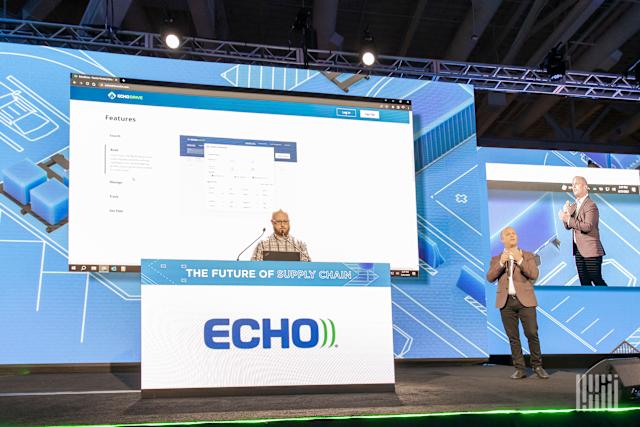
Moody's and S&P Show Confidence in Echo's Acquisition

- Rating Outlook Upgrade: Both Moody's and S&P have upgraded Echo Global's rating outlook from stable to positive, indicating confidence in its acquisition of ITS Logistics, which may signal a future rating increase and bolster investor confidence.
- Financial Metrics Improvement: S&P expects Echo's debt-to-EBITDA ratio to drop to below 6x in the next 12 months, with a projected 6.8x for 2025, demonstrating enhanced financial health post-acquisition, which could lead to an improved credit rating.
- Significant EBITDA Growth: S&P forecasts Echo's EBITDA to rise by $114 million to $247 million, reflecting ITS's contribution that will significantly enhance the company's profitability and strengthen its market competitiveness.
- Free Cash Flow Increase: Post-acquisition, Echo's free cash flow is expected to rise from $10 million in 2026 to $30 million, reaching $50 million in 2027, indicating improved liquidity and enhanced financial stability resulting from the acquisition.
See More

Flagstar Bank Credit Ratings Upgraded to Investment Grade

- Credit Rating Upgrade: Moody's has upgraded Flagstar Bank's Long-Term Deposit rating from Ba1 to Baa3 and Short-Term Deposit rating from Not Prime to Prime-3, marking the bank's first attainment of investment-grade status, reflecting significant improvements in its financial performance.
- Financial Performance Improvement: The rating upgrade is attributed to Flagstar's successful remediation of previously identified material weaknesses in internal controls over financial reporting, and its progress towards sustainable profitability, with expectations of a stable Return on Average Assets above 0.5%, enhancing market confidence.
- Expanded Market Impact: The attainment of investment-grade deposit ratings is expected to enhance Flagstar's funding profile, expanding access to corporate, institutional, and municipal deposit relationships, thereby further supporting its business growth and market share increase.
- Strategic Significance: This rating upgrade follows a similar action by Fitch in March, indicating Flagstar's ongoing efforts to strengthen its balance sheet and improve credit quality, showcasing its robust growth potential in a competitive banking landscape.
See More
Moody's Assigns Ba2 Rating to New Hampshire Bitcoin Bond

- Bond Issuance Overview: The New Hampshire Business Finance Authority has issued a $100 million Bitcoin-backed bond, receiving a Ba2 provisional rating from Moody's, indicating Bitcoin's deeper penetration into traditional finance.
- Structure and Safeguards: The bond is divided into Series A-1 and A-2, both featuring a 1.60x collateral buffer and a 1.40x liquidation trigger to mitigate Bitcoin's price volatility, ensuring investor capital protection.
- Investor Return Mechanism: The Series A-2 bonds allow investors to receive 15% of any Bitcoin price increase after all principal and interest are repaid, despite Bitcoin's year-to-date decline of over 21%, highlighting market uncertainty.
- Market Reaction and Trends: This bond issuance reflects the growing acceptance of cryptocurrencies in mainstream finance, especially as Fannie Mae partners with Coinbase to offer mortgage programs using crypto as collateral, with Moody's stock slightly rising in pre-market trading and market sentiment shifting to neutral.
See More

Moody's AI Model Indicates 49% Recession Probability

- Rising Recession Probability: Moody's AI model indicates a 49% probability of a U.S. recession, with historical data showing that once it crosses 50%, a recession typically follows within a year, highlighting a concerning economic outlook given that this data was collected before the Iran war.
- Weak Labor Market: The latest jobs report reveals a loss of 92,000 jobs, significantly below economists' expectations of a gain of 59,000, with the unemployment rate ticking up to 4.4%, indicating a downward trend that reflects economic slowdown.
- GDP Revision: U.S. GDP growth has been revised down from 1.4% to 0.7%, showcasing a lack of economic momentum, and coupled with inflation remaining above the Federal Reserve's 2% target, this adds to market uncertainty.
- Impact of Energy Prices: The Iran war has disrupted 20% of the world's crude oil supply, pushing prices to nearly $120 per barrel, and historically, every U.S. recession has been preceded by spikes in energy prices, suggesting that unless the situation resolves quickly, recession probabilities may rise further.
See More
Moody's Corporation Q1 2026 Earnings Release Schedule
- Earnings Release Schedule: Moody's Corporation will release its Q1 2026 earnings before NYSE trading on April 22, 2026, providing essential financial data and supplemental presentation materials to keep investors informed.
- Teleconference Invitation: The company invites investors to join a teleconference led by CEO Rob Fauber and CFO Noémie Heuland to discuss the Q1 results, enhancing transparency and investor confidence.
- Meeting Time and Duration: The teleconference is scheduled for April 22, 2026, at 9:00 a.m. ET, lasting one hour, offering in-depth financial analysis and future outlook.
- Replay Service: A replay of the call will be available immediately after the meeting on April 22, 2026, and will last until April 29, ensuring that investors who cannot attend live can access critical information.
See More
Liquidity Tightens in Private Credit Markets
- Liquidity Pressure Intensifies: Oaktree Capital's co-CEO Armen Panossian highlights a widening gap between public and non-traded vehicles in private credit as liquidity tightens, particularly in software lending, which may lead to changes in investor behavior.
- Surge in Redemption Requests: Blue Owl Capital recently capped redemptions at 5% for two of its private credit funds after facing an unusually large wave of withdrawal requests, indicating that retail capital is reacting more swiftly than the typically stable institutional base.
- Investor Behavior Shift: In the $36 billion Blue Owl Credit Income Corp., investors sought to redeem nearly 22% of shares in Q1, while Blue Owl Technology Income Corp. saw requests exceeding 40%, suggesting an increasing liquidity demand from retail investors.
- Market Risk Assessment: Moody's estimates that lending to non-depository financial institutions, including BDCs, will reach about $1.4 trillion by 2025; while BDC performance may not trigger significant selling pressure, increased caution from banks and other leverage providers could further pressure credit markets.
See More
Moody's and S&P Show Confidence in Echo's Acquisition
- Rating Outlook Upgrade: Both Moody's and S&P have upgraded Echo Global's rating outlook from stable to positive, indicating confidence in its acquisition of ITS Logistics, which may signal a future rating increase and bolster investor confidence.
- Financial Metrics Improvement: S&P expects Echo's debt-to-EBITDA ratio to drop to below 6x in the next 12 months, with a projected 6.8x for 2025, demonstrating enhanced financial health post-acquisition, which could lead to an improved credit rating.
- Significant EBITDA Growth: S&P forecasts Echo's EBITDA to rise by $114 million to $247 million, reflecting ITS's contribution that will significantly enhance the company's profitability and strengthen its market competitiveness.
- Free Cash Flow Increase: Post-acquisition, Echo's free cash flow is expected to rise from $10 million in 2026 to $30 million, reaching $50 million in 2027, indicating improved liquidity and enhanced financial stability resulting from the acquisition.
See More
Flagstar Bank Credit Ratings Upgraded to Investment Grade
- Credit Rating Upgrade: Moody's has upgraded Flagstar Bank's Long-Term Deposit rating from Ba1 to Baa3 and Short-Term Deposit rating from Not Prime to Prime-3, marking the bank's first attainment of investment-grade status, reflecting significant improvements in its financial performance.
- Financial Performance Improvement: The rating upgrade is attributed to Flagstar's successful remediation of previously identified material weaknesses in internal controls over financial reporting, and its progress towards sustainable profitability, with expectations of a stable Return on Average Assets above 0.5%, enhancing market confidence.
- Expanded Market Impact: The attainment of investment-grade deposit ratings is expected to enhance Flagstar's funding profile, expanding access to corporate, institutional, and municipal deposit relationships, thereby further supporting its business growth and market share increase.
- Strategic Significance: This rating upgrade follows a similar action by Fitch in March, indicating Flagstar's ongoing efforts to strengthen its balance sheet and improve credit quality, showcasing its robust growth potential in a competitive banking landscape.
See More
Moody's Assigns Ba2 Rating to New Hampshire Bitcoin Bond
- Bond Issuance Overview: The New Hampshire Business Finance Authority has issued a $100 million Bitcoin-backed bond, receiving a Ba2 provisional rating from Moody's, indicating Bitcoin's deeper penetration into traditional finance.
- Structure and Safeguards: The bond is divided into Series A-1 and A-2, both featuring a 1.60x collateral buffer and a 1.40x liquidation trigger to mitigate Bitcoin's price volatility, ensuring investor capital protection.
- Investor Return Mechanism: The Series A-2 bonds allow investors to receive 15% of any Bitcoin price increase after all principal and interest are repaid, despite Bitcoin's year-to-date decline of over 21%, highlighting market uncertainty.
- Market Reaction and Trends: This bond issuance reflects the growing acceptance of cryptocurrencies in mainstream finance, especially as Fannie Mae partners with Coinbase to offer mortgage programs using crypto as collateral, with Moody's stock slightly rising in pre-market trading and market sentiment shifting to neutral.
See More
Moody's AI Model Indicates 49% Recession Probability
- Rising Recession Probability: Moody's AI model indicates a 49% probability of a U.S. recession, with historical data showing that once it crosses 50%, a recession typically follows within a year, highlighting a concerning economic outlook given that this data was collected before the Iran war.
- Weak Labor Market: The latest jobs report reveals a loss of 92,000 jobs, significantly below economists' expectations of a gain of 59,000, with the unemployment rate ticking up to 4.4%, indicating a downward trend that reflects economic slowdown.
- GDP Revision: U.S. GDP growth has been revised down from 1.4% to 0.7%, showcasing a lack of economic momentum, and coupled with inflation remaining above the Federal Reserve's 2% target, this adds to market uncertainty.
- Impact of Energy Prices: The Iran war has disrupted 20% of the world's crude oil supply, pushing prices to nearly $120 per barrel, and historically, every U.S. recession has been preceded by spikes in energy prices, suggesting that unless the situation resolves quickly, recession probabilities may rise further.
See More