Google Updates Gemini API Pricing Tiers for Optimization
Written by Emily J. Thompson, Senior Investment Analyst
Updated: 1 hour ago
0mins
Should l Buy GOOG?
Source: seekingalpha
- Pricing Structure Update: Google has revised its Gemini API pricing, introducing multiple inference tiers including Standard, Flex, Priority, Batch, and Caching to meet diverse usage needs, thereby helping users find the optimal balance between speed, cost, and reliability.
- Flex Inference Tier: The Flex inference tier offers a 50% discount off the standard price by utilizing opportunistic off-peak compute capacity, targeting a latency period of 1 to 15 minutes, although this is not guaranteed, aiming to reduce costs for real-time conversational bots and data processing pipelines.
- Batch API Discount: The Batch API also provides a 50% discount off the standard rate, with a latency period of up to 24 hours, making it suitable for applications that require processing large volumes of data, further lowering user costs.
- Priority Tier Pricing: The Priority tier runs 75% to 100% more than the standard price, with latency ranging from milliseconds to seconds, and Google recommends this tier for live customer chatbots and critical business applications to ensure efficient response capabilities.
Trade with 70% Backtested Accuracy
Stop guessing "Should I Buy GOOG?" and start using high-conviction signals backed by rigorous historical data.
Sign up today to access powerful investing tools and make smarter, data-driven decisions.
Analyst Views on GOOG
Wall Street analysts forecast GOOG stock price to rise
15 Analyst Rating
14 Buy
1 Hold
0 Sell
Strong Buy
Current: 294.900

Low
255.00
Averages
336.08
High
400.00
Current: 294.900
Low
255.00
Averages
336.08
High
400.00
About GOOG
Alphabet Inc. is a holding company. The Company's segments include Google Services, Google Cloud, and Other Bets. The Google Services segment includes products and services such as ads, Android, Chrome, devices, Google Maps, Google Play, Search, and YouTube. The Google Cloud segment includes infrastructure and platform services, collaboration tools, and other services for enterprise customers. Its Other Bets segment is engaged in the sale of healthcare-related services and Internet services. Its Google Cloud provides enterprise-ready cloud services, including Google Cloud Platform and Google Workspace. Google Cloud Platform provides access to solutions such as artificial intelligence (AI) offerings, including its AI infrastructure, Vertex AI platform, and Gemini for Google Cloud; cybersecurity, and data and analytics. Google Workspace includes cloud-based communication and collaboration tools for enterprises, such as Calendar, Gmail, Docs, Drive, and Meet.
About the author

Emily J. Thompson
Emily J. Thompson, a Chartered Financial Analyst (CFA) with 12 years in investment research, graduated with honors from the Wharton School. Specializing in industrial and technology stocks, she provides in-depth analysis for Intellectia’s earnings and market brief reports.
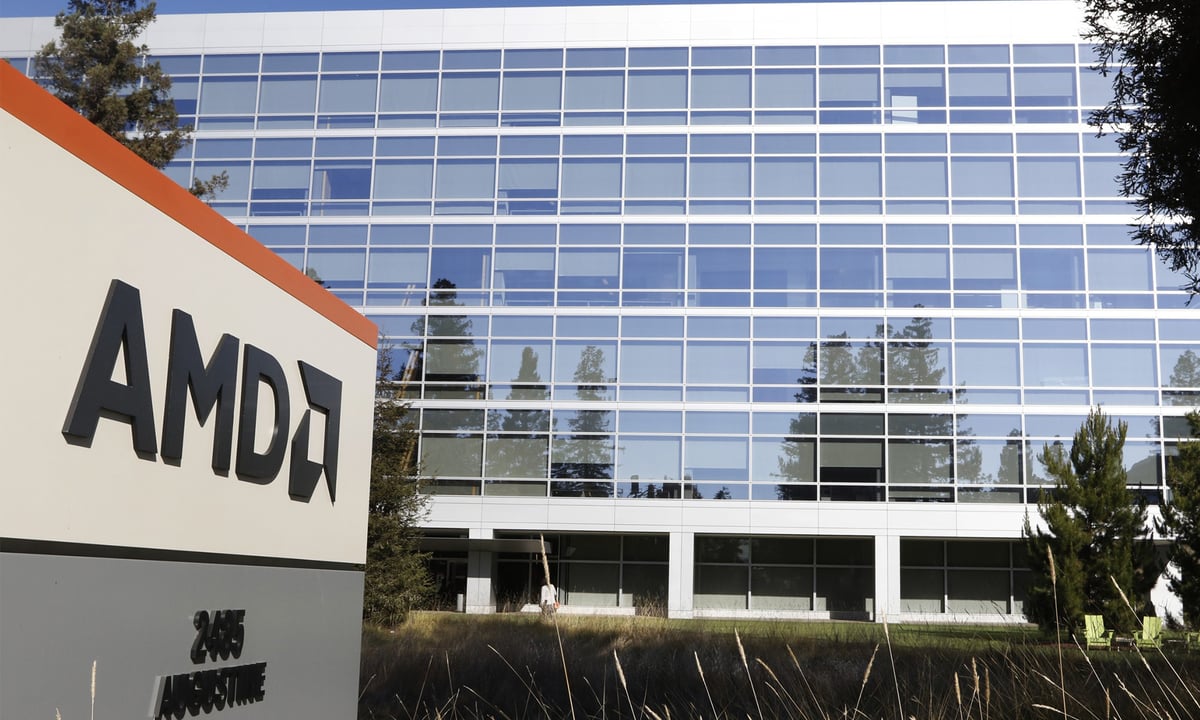
Analysis of AI Stock Investment Prospects


- AMD Growth Potential: In 2025, AMD's revenue surged by 34% to $34.6 billion, driven by strong performances in its data center, client, and gaming sectors, indicating robust investor confidence as the company continues to benefit from widespread AI adoption.
- Data Center Business Performance: AMD's data center segment generated $16.6 billion in revenue last year, a 32% increase, and partnerships with top hyperscalers are expected to further drive healthy growth in this area, showcasing the company's competitive edge in the AI market.
- Apple Market Share: Despite lagging behind competitors in AI, Apple became the largest smartphone vendor in Q4 2025 with a 24.2% market share, shipping 81.3 million iPhones, reflecting its strong performance in the overall market.
- AI Software Opportunities: Apple's growth potential in AI lies primarily in software, as management noted enterprises are using its AI-enabled devices to enhance productivity, with future monetization likely through paid subscription models, further solidifying its market position.
See More

AMD and Apple's Growth Potential in AI
- AMD Revenue Growth: AMD's revenue reached $34.6 billion in 2025, marking a 34% increase driven by strong performance in data center, client, and gaming segments, with expectations of achieving at least $20 per share in earnings over the next three to five years, highlighting its growth potential in the AI chip market.
- Strong Data Center Business: AMD's data center segment generated $16.6 billion in revenue last year, a 32% increase, with 80% usage of its Instinct processors among the top ten AI companies, indicating the company's growing competitiveness in the hyperscale data center market.
- Apple's Market Leadership: Apple held a 24.2% market share in the smartphone sector in Q4 2025, shipping 81.3 million iPhones, with annual shipments totaling 247.8 million, a 6.3% increase, demonstrating its strong market position despite perceived lag in AI capabilities compared to rivals.
- AI Software Monetization Opportunities: With over 2.5 billion active devices, Apple management noted that enterprises are leveraging its AI-enabled devices for productivity improvements, suggesting potential monetization through paid subscriptions for advanced AI features, which could further drive company growth.
See More

Google Updates Gemini API Pricing Tiers for Optimization


- Pricing Structure Update: Google has revised its Gemini API pricing, introducing multiple inference tiers including Standard, Flex, Priority, Batch, and Caching to meet diverse usage needs, thereby helping users find the optimal balance between speed, cost, and reliability.
- Flex Inference Tier: The Flex inference tier offers a 50% discount off the standard price by utilizing opportunistic off-peak compute capacity, targeting a latency period of 1 to 15 minutes, although this is not guaranteed, aiming to reduce costs for real-time conversational bots and data processing pipelines.
- Batch API Discount: The Batch API also provides a 50% discount off the standard rate, with a latency period of up to 24 hours, making it suitable for applications that require processing large volumes of data, further lowering user costs.
- Priority Tier Pricing: The Priority tier runs 75% to 100% more than the standard price, with latency ranging from milliseconds to seconds, and Google recommends this tier for live customer chatbots and critical business applications to ensure efficient response capabilities.
See More

Google Launches Gemma 4 AI Models for Advanced Workflows
- Model Family Launch: Google unveiled its Gemma 4 family of open-source AI models on Thursday, specifically designed for advanced reasoning and agentic workflows, marking an unprecedented breakthrough in intelligence-per-parameter that is expected to drive widespread AI adoption.
- Surge in Downloads: Since the launch of the first generation, developers have downloaded Gemma over 400 million times, creating a vibrant ecosystem of over 100,000 variants, demonstrating strong community support and development potential.
- Performance and Efficiency: The Gemma 4 series includes Effective 2B, 4B, 26B, and 31B models, with the 31B model currently ranking third among open models globally, and its efficiency surpasses models 20 times its size, showcasing significant market competitiveness.
- Device Compatibility: The 26B and 31B models can run on PCs, while the E2B and E4B models have been optimized for mobile devices, further broadening their application scenarios and enhancing user experience.
See More

Micron Stock Declines Amid Geopolitical Turbulence

- Stock Volatility: Micron's share price fell 1.8% during Thursday's trading, having dropped as much as 7.5% at the market's opening, reflecting the market's sensitivity to geopolitical risks, particularly following President Trump's comments on the war with Iran.
- Market Reaction: Trump's televised address indicated imminent major strikes on Iran, leading to bearish sentiment across the market; however, some tech stocks rebounded later due to news of Iran negotiating with Oman to allow shipping through the Strait of Hormuz, though Micron remained under pressure.
- Demand Outlook: Despite geopolitical and macroeconomic pressures, demand for Micron's high-bandwidth memory chips remains robust, with the stock up 307% over the past year, highlighting its strong position in the AI processor market.
- Technological Competition: Micron has also faced sell-offs linked to Alphabet's announcement of new data compiling technologies that could potentially reduce demand for memory chips, and the market's reaction to this potential impact will likely continue to shape Micron's near-term stock movements.
See More

Tech Stocks Decline Amid Trump's Iran Comments
- Stock Fluctuations: Micron Technology (NASDAQ: MU) shares fell 1.8% during Thursday's trading, having dropped as much as 7.5% at market open, reflecting investor concerns over geopolitical risks following Trump's comments on the Iran war.
- Market Sentiment: Trump's televised address indicated imminent military strikes on Iran while suggesting the war could soon end, creating a conflicting narrative that dampened market sentiment and exacerbated selling pressure on tech stocks.
- Demand Outlook: Despite the recent sell-off, Micron's stock has surged 307% over the past year, driven by robust demand for its high-bandwidth memory chips, particularly in the AI processor sector, highlighting the company's competitive edge in technological innovation.
- Industry Impact: Furthermore, Alphabet's announcement of new data compiling technologies that could potentially reduce memory chip demand has raised concerns about Micron's future stock performance, likely influencing its near-term market dynamics.
See More
Analysis of AI Stock Investment Prospects
- AMD Growth Potential: In 2025, AMD's revenue surged by 34% to $34.6 billion, driven by strong performances in its data center, client, and gaming sectors, indicating robust investor confidence as the company continues to benefit from widespread AI adoption.
- Data Center Business Performance: AMD's data center segment generated $16.6 billion in revenue last year, a 32% increase, and partnerships with top hyperscalers are expected to further drive healthy growth in this area, showcasing the company's competitive edge in the AI market.
- Apple Market Share: Despite lagging behind competitors in AI, Apple became the largest smartphone vendor in Q4 2025 with a 24.2% market share, shipping 81.3 million iPhones, reflecting its strong performance in the overall market.
- AI Software Opportunities: Apple's growth potential in AI lies primarily in software, as management noted enterprises are using its AI-enabled devices to enhance productivity, with future monetization likely through paid subscription models, further solidifying its market position.
See More
AMD and Apple's Growth Potential in AI
- AMD Revenue Growth: AMD's revenue reached $34.6 billion in 2025, marking a 34% increase driven by strong performance in data center, client, and gaming segments, with expectations of achieving at least $20 per share in earnings over the next three to five years, highlighting its growth potential in the AI chip market.
- Strong Data Center Business: AMD's data center segment generated $16.6 billion in revenue last year, a 32% increase, with 80% usage of its Instinct processors among the top ten AI companies, indicating the company's growing competitiveness in the hyperscale data center market.
- Apple's Market Leadership: Apple held a 24.2% market share in the smartphone sector in Q4 2025, shipping 81.3 million iPhones, with annual shipments totaling 247.8 million, a 6.3% increase, demonstrating its strong market position despite perceived lag in AI capabilities compared to rivals.
- AI Software Monetization Opportunities: With over 2.5 billion active devices, Apple management noted that enterprises are leveraging its AI-enabled devices for productivity improvements, suggesting potential monetization through paid subscriptions for advanced AI features, which could further drive company growth.
See More
Google Updates Gemini API Pricing Tiers for Optimization
- Pricing Structure Update: Google has revised its Gemini API pricing, introducing multiple inference tiers including Standard, Flex, Priority, Batch, and Caching to meet diverse usage needs, thereby helping users find the optimal balance between speed, cost, and reliability.
- Flex Inference Tier: The Flex inference tier offers a 50% discount off the standard price by utilizing opportunistic off-peak compute capacity, targeting a latency period of 1 to 15 minutes, although this is not guaranteed, aiming to reduce costs for real-time conversational bots and data processing pipelines.
- Batch API Discount: The Batch API also provides a 50% discount off the standard rate, with a latency period of up to 24 hours, making it suitable for applications that require processing large volumes of data, further lowering user costs.
- Priority Tier Pricing: The Priority tier runs 75% to 100% more than the standard price, with latency ranging from milliseconds to seconds, and Google recommends this tier for live customer chatbots and critical business applications to ensure efficient response capabilities.
See More
Google Launches Gemma 4 AI Models for Advanced Workflows
- Model Family Launch: Google unveiled its Gemma 4 family of open-source AI models on Thursday, specifically designed for advanced reasoning and agentic workflows, marking an unprecedented breakthrough in intelligence-per-parameter that is expected to drive widespread AI adoption.
- Surge in Downloads: Since the launch of the first generation, developers have downloaded Gemma over 400 million times, creating a vibrant ecosystem of over 100,000 variants, demonstrating strong community support and development potential.
- Performance and Efficiency: The Gemma 4 series includes Effective 2B, 4B, 26B, and 31B models, with the 31B model currently ranking third among open models globally, and its efficiency surpasses models 20 times its size, showcasing significant market competitiveness.
- Device Compatibility: The 26B and 31B models can run on PCs, while the E2B and E4B models have been optimized for mobile devices, further broadening their application scenarios and enhancing user experience.
See More
Micron Stock Declines Amid Geopolitical Turbulence
- Stock Volatility: Micron's share price fell 1.8% during Thursday's trading, having dropped as much as 7.5% at the market's opening, reflecting the market's sensitivity to geopolitical risks, particularly following President Trump's comments on the war with Iran.
- Market Reaction: Trump's televised address indicated imminent major strikes on Iran, leading to bearish sentiment across the market; however, some tech stocks rebounded later due to news of Iran negotiating with Oman to allow shipping through the Strait of Hormuz, though Micron remained under pressure.
- Demand Outlook: Despite geopolitical and macroeconomic pressures, demand for Micron's high-bandwidth memory chips remains robust, with the stock up 307% over the past year, highlighting its strong position in the AI processor market.
- Technological Competition: Micron has also faced sell-offs linked to Alphabet's announcement of new data compiling technologies that could potentially reduce demand for memory chips, and the market's reaction to this potential impact will likely continue to shape Micron's near-term stock movements.
See More
Tech Stocks Decline Amid Trump's Iran Comments
- Stock Fluctuations: Micron Technology (NASDAQ: MU) shares fell 1.8% during Thursday's trading, having dropped as much as 7.5% at market open, reflecting investor concerns over geopolitical risks following Trump's comments on the Iran war.
- Market Sentiment: Trump's televised address indicated imminent military strikes on Iran while suggesting the war could soon end, creating a conflicting narrative that dampened market sentiment and exacerbated selling pressure on tech stocks.
- Demand Outlook: Despite the recent sell-off, Micron's stock has surged 307% over the past year, driven by robust demand for its high-bandwidth memory chips, particularly in the AI processor sector, highlighting the company's competitive edge in technological innovation.
- Industry Impact: Furthermore, Alphabet's announcement of new data compiling technologies that could potentially reduce memory chip demand has raised concerns about Micron's future stock performance, likely influencing its near-term market dynamics.
See More