Gold ETFs Face Challenges and Opportunities Amid Market Turbulence
Written by Emily J. Thompson, Senior Investment Analyst
Updated: 1 hour ago
0mins
Should l Buy JPM?
Source: Fool
- Gold ETF Underperformance: Despite geopolitical tensions typically boosting gold demand, the SPDR Gold ETF has declined by 5.3% over the past three months, reflecting market concerns about the Federal Reserve's interest rate hikes, which diminish the appeal of non-yielding assets.
- Bullish Outlook from Major Banks: JPMorgan forecasts that gold prices could rise to $6,150 per ounce in 2023, representing significant upside from the current $4,740 level, suggesting that the SPDR Gold ETF could benefit, although short-term price fluctuations may be considerable.
- Strong Central Bank Demand: In 2022, global central bank gold purchases hit record levels, with an estimated 43% of major central banks expected to increase their gold buying over the next year, providing support for gold and related ETFs, even if prices do not rise in a straight line.
- Diversification Investment Strategy: The SPDR Gold ETF serves as a crucial diversification tool due to its negligible correlation with the S&P 500 and Bloomberg U.S. Aggregate Bond Index, making it appealing for investors looking to mitigate risk and enhance their investment portfolios.
Trade with 70% Backtested Accuracy
Stop guessing "Should I Buy JPM?" and start using high-conviction signals backed by rigorous historical data.
Sign up today to access powerful investing tools and make smarter, data-driven decisions.
Analyst Views on JPM
Wall Street analysts forecast JPM stock price to rise
19 Analyst Rating
11 Buy
7 Hold
1 Sell
Moderate Buy
Current: 311.630

Low
260.00
Averages
341.38
High
400.00
Current: 311.630
Low
260.00
Averages
341.38
High
400.00
About JPM
JPMorgan Chase & Co. is a financial holding company. The Company is engaged in investment banking, financial services for consumers and small businesses, commercial banking, financial transaction processing and asset management. The Company operates through three segments: Consumer & Community Banking (CCB), Commercial & Investment Bank (CIB), and Asset & Wealth Management (AWM). Its CCB segment offers products and services to consumers and small businesses through bank branches, ATMs, digital and telephone banking. Its CIB segment consists of banking and payments and markets and securities services, and offers a suite of investment banking, lending, payments, market-making, financing, custody and securities products and services to a global base of corporate and institutional clients. AWM segment offers investment and wealth management solutions. It offers multi-asset investment management solutions, retirement products and services, brokerage, custody, estate planning, and others.
About the author

Emily J. Thompson
Emily J. Thompson, a Chartered Financial Analyst (CFA) with 12 years in investment research, graduated with honors from the Wharton School. Specializing in industrial and technology stocks, she provides in-depth analysis for Intellectia’s earnings and market brief reports.
Campbell Global Acquires High-Quality Timberland Asset in Louisiana
- Acquisition Completed: Campbell Global has successfully acquired Sandpiper Forest in Louisiana, adding approximately 30,000 productive acres of commercial timberland, which expands its footprint in the U.S. South and underscores its commitment to sustainable forest management.
- Strong Market Positioning: The asset is situated in a robust market area, expected to deliver long-term value for investors, with Campbell Global's management team leveraging extensive experience in Louisiana to ensure the highest operational and sustainability standards.
- Asset Management Scale: As of December 31, 2025, Campbell Global manages over $10.9 billion in assets across 1.5 million acres of forestland, demonstrating its leadership in the global forest investment sector.
- Successful Fundraising: In March 2025, Campbell Global closed its Forest & Climate Solutions Fund II, raising $1.5 billion, marking the largest private timberland investment fundraise to date, which further enhances its capital strength and market influence.
See More

Gold ETFs Face Challenges and Opportunities Amid Market Turbulence
- Gold ETF Underperformance: Despite geopolitical tensions typically boosting gold demand, the SPDR Gold ETF has declined by 5.3% over the past three months, reflecting market concerns about the Federal Reserve's interest rate hikes, which diminish the appeal of non-yielding assets.
- Bullish Outlook from Major Banks: JPMorgan forecasts that gold prices could rise to $6,150 per ounce in 2023, representing significant upside from the current $4,740 level, suggesting that the SPDR Gold ETF could benefit, although short-term price fluctuations may be considerable.
- Strong Central Bank Demand: In 2022, global central bank gold purchases hit record levels, with an estimated 43% of major central banks expected to increase their gold buying over the next year, providing support for gold and related ETFs, even if prices do not rise in a straight line.
- Diversification Investment Strategy: The SPDR Gold ETF serves as a crucial diversification tool due to its negligible correlation with the S&P 500 and Bloomberg U.S. Aggregate Bond Index, making it appealing for investors looking to mitigate risk and enhance their investment portfolios.
See More

SQMX ETF Sees 39.5% Surge in Inflows
- Significant Inflow Increase: The SQMX ETF added 375,000 units this week, resulting in a 39.5% increase in outstanding units, indicating strong investor interest that may reflect optimistic market expectations for the underlying assets.
- Positive Market Reaction: This inflow growth not only enhances the market position of the SQMX ETF but may also attract more investor attention, further driving the expansion of its assets under management.
- Increased Investor Confidence: With the rise in inflows, the SQMX ETF could become more appealing in investment portfolios, especially as investors increasingly seek diversification and risk management in the current market environment.
- Industry Trend Indicator: The inflow growth of the SQMX ETF may signal broader market trends, suggesting a shift in investor preferences towards specific industries or asset classes, which could influence future investment strategies and market dynamics.
See More

Campbell Global Acquires High-Quality Timberland Asset in Louisiana
- Acquisition Scale: Campbell Global has completed the acquisition of Sandpiper Forest in Louisiana, encompassing approximately 29,760 acres (about 12,043 hectares) of commercial timberland, which expands its footprint in the U.S. South and underscores its commitment to sustainable forest management.
- Ecological Protection Measures: The property is 100% certified to Sustainable Forestry Initiative (SFI) standards and includes about 5,703 acres (approximately 2,308 hectares) of streamside management zones and 202 miles of protected streams, supporting diverse wildlife habitats and ensuring ecological balance and biodiversity.
- Economic Impact: Future operations are expected to provide living-wage employment opportunities for local residents in rural communities and support local mill operations, promoting regional economic development while exploring alternative revenue sources to enhance community economic resilience.
- Long-Term Value Creation: Campbell Global's operational experience in Louisiana positions it to manage Sandpiper Forest to the highest operational and sustainability standards, optimizing timber yield, habitat protection, and long-term asset value, thereby ensuring long-term benefits for investors.
See More
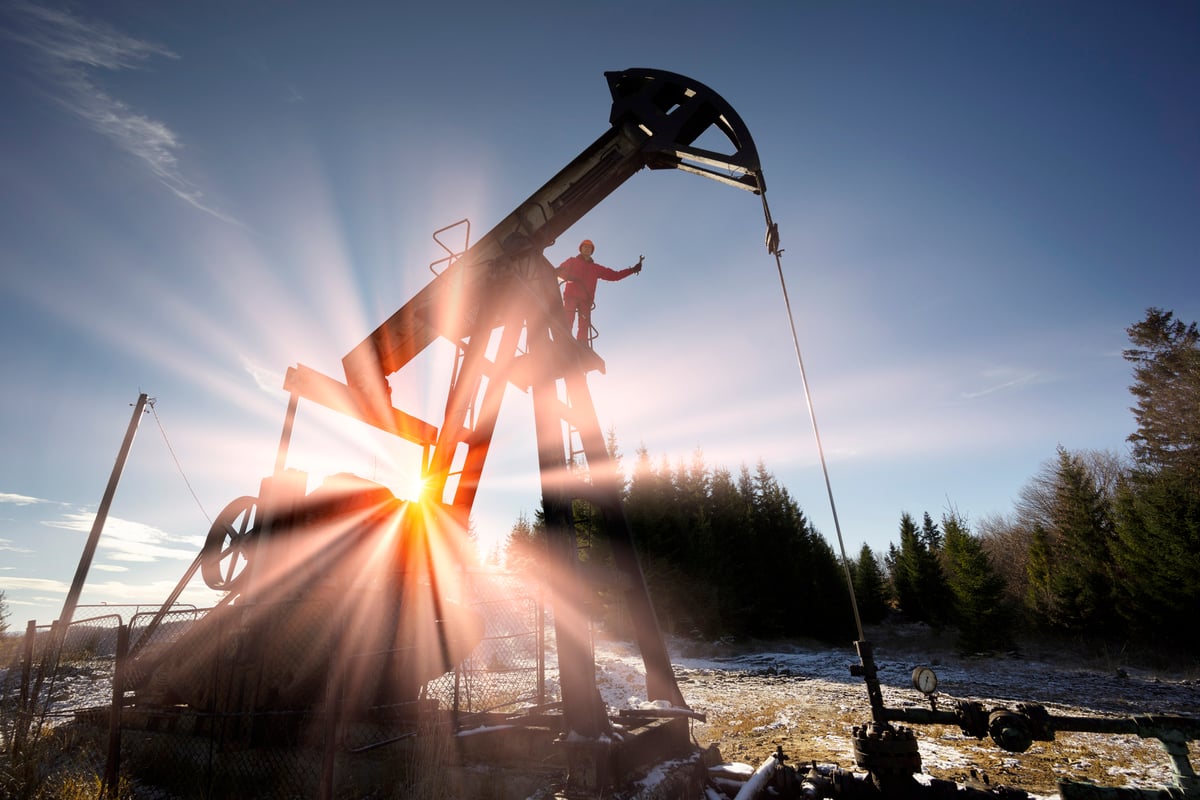
Surging Oil Prices Signal Major Market Impacts

- Supply Disruption Impact: The closure of the Strait of Hormuz by Iran has severely affected 20% of global oil and LNG supplies, leading to a 57% drop in oil production in the Persian Gulf, approximately 14.5 million barrels per day, with recovery expected to take months, exacerbating market tensions.
- Price Forecast Adjustment: Goldman Sachs predicts Brent crude will reach $100 by year-end, reflecting the risks of oil flows not normalizing, which will significantly boost oil companies' earnings beyond market expectations.
- Cash Flow Growth: ConocoPhillips anticipates generating over $1 billion in additional free cash flow due to rising oil prices, while Occidental Petroleum will see a $265 million increase in annual cash flows for every $1 rise in crude prices, highlighting the positive financial impact of high oil prices on companies.
- Increased Investor Returns: As oil prices remain elevated, oil companies are likely to return more profits to investors through share buybacks, which could drive stock prices higher and attract more investor interest in oil stocks.
See More

Oil Prices Surge 60% and May Remain High
- Surge in Oil Prices: Brent crude has surged over 60% to around $100 per barrel, while WTI has also increased over 60% to about $95 per barrel, significantly boosting oil companies' cash flows this year.
- Production Constraints: The closure of the Strait of Hormuz by Iran has led to a 57% drop in oil production in the Persian Gulf, approximately 14.5 million barrels per day, with recovery expected to take months, further supporting high oil prices.
- Company Earnings Outlook: ConocoPhillips anticipates that every $1 increase in WTI prices will boost its free cash flow by $140 million to $150 million, while Occidental Petroleum expects a $265 million increase per $1 rise in crude prices, indicating substantial financial gains from elevated oil prices.
- Investor Returns: As oil prices remain high, oil companies are likely to return more cash to investors through share buybacks, which could drive their stock prices higher, making oil stocks an attractive investment opportunity.
See More
Campbell Global Acquires High-Quality Timberland Asset in Louisiana
- Acquisition Completed: Campbell Global has successfully acquired Sandpiper Forest in Louisiana, adding approximately 30,000 productive acres of commercial timberland, which expands its footprint in the U.S. South and underscores its commitment to sustainable forest management.
- Strong Market Positioning: The asset is situated in a robust market area, expected to deliver long-term value for investors, with Campbell Global's management team leveraging extensive experience in Louisiana to ensure the highest operational and sustainability standards.
- Asset Management Scale: As of December 31, 2025, Campbell Global manages over $10.9 billion in assets across 1.5 million acres of forestland, demonstrating its leadership in the global forest investment sector.
- Successful Fundraising: In March 2025, Campbell Global closed its Forest & Climate Solutions Fund II, raising $1.5 billion, marking the largest private timberland investment fundraise to date, which further enhances its capital strength and market influence.
See More
Gold ETFs Face Challenges and Opportunities Amid Market Turbulence
- Gold ETF Underperformance: Despite geopolitical tensions typically boosting gold demand, the SPDR Gold ETF has declined by 5.3% over the past three months, reflecting market concerns about the Federal Reserve's interest rate hikes, which diminish the appeal of non-yielding assets.
- Bullish Outlook from Major Banks: JPMorgan forecasts that gold prices could rise to $6,150 per ounce in 2023, representing significant upside from the current $4,740 level, suggesting that the SPDR Gold ETF could benefit, although short-term price fluctuations may be considerable.
- Strong Central Bank Demand: In 2022, global central bank gold purchases hit record levels, with an estimated 43% of major central banks expected to increase their gold buying over the next year, providing support for gold and related ETFs, even if prices do not rise in a straight line.
- Diversification Investment Strategy: The SPDR Gold ETF serves as a crucial diversification tool due to its negligible correlation with the S&P 500 and Bloomberg U.S. Aggregate Bond Index, making it appealing for investors looking to mitigate risk and enhance their investment portfolios.
See More
SQMX ETF Sees 39.5% Surge in Inflows
- Significant Inflow Increase: The SQMX ETF added 375,000 units this week, resulting in a 39.5% increase in outstanding units, indicating strong investor interest that may reflect optimistic market expectations for the underlying assets.
- Positive Market Reaction: This inflow growth not only enhances the market position of the SQMX ETF but may also attract more investor attention, further driving the expansion of its assets under management.
- Increased Investor Confidence: With the rise in inflows, the SQMX ETF could become more appealing in investment portfolios, especially as investors increasingly seek diversification and risk management in the current market environment.
- Industry Trend Indicator: The inflow growth of the SQMX ETF may signal broader market trends, suggesting a shift in investor preferences towards specific industries or asset classes, which could influence future investment strategies and market dynamics.
See More
Campbell Global Acquires High-Quality Timberland Asset in Louisiana
- Acquisition Scale: Campbell Global has completed the acquisition of Sandpiper Forest in Louisiana, encompassing approximately 29,760 acres (about 12,043 hectares) of commercial timberland, which expands its footprint in the U.S. South and underscores its commitment to sustainable forest management.
- Ecological Protection Measures: The property is 100% certified to Sustainable Forestry Initiative (SFI) standards and includes about 5,703 acres (approximately 2,308 hectares) of streamside management zones and 202 miles of protected streams, supporting diverse wildlife habitats and ensuring ecological balance and biodiversity.
- Economic Impact: Future operations are expected to provide living-wage employment opportunities for local residents in rural communities and support local mill operations, promoting regional economic development while exploring alternative revenue sources to enhance community economic resilience.
- Long-Term Value Creation: Campbell Global's operational experience in Louisiana positions it to manage Sandpiper Forest to the highest operational and sustainability standards, optimizing timber yield, habitat protection, and long-term asset value, thereby ensuring long-term benefits for investors.
See More
Surging Oil Prices Signal Major Market Impacts
- Supply Disruption Impact: The closure of the Strait of Hormuz by Iran has severely affected 20% of global oil and LNG supplies, leading to a 57% drop in oil production in the Persian Gulf, approximately 14.5 million barrels per day, with recovery expected to take months, exacerbating market tensions.
- Price Forecast Adjustment: Goldman Sachs predicts Brent crude will reach $100 by year-end, reflecting the risks of oil flows not normalizing, which will significantly boost oil companies' earnings beyond market expectations.
- Cash Flow Growth: ConocoPhillips anticipates generating over $1 billion in additional free cash flow due to rising oil prices, while Occidental Petroleum will see a $265 million increase in annual cash flows for every $1 rise in crude prices, highlighting the positive financial impact of high oil prices on companies.
- Increased Investor Returns: As oil prices remain elevated, oil companies are likely to return more profits to investors through share buybacks, which could drive stock prices higher and attract more investor interest in oil stocks.
See More
Oil Prices Surge 60% and May Remain High
- Surge in Oil Prices: Brent crude has surged over 60% to around $100 per barrel, while WTI has also increased over 60% to about $95 per barrel, significantly boosting oil companies' cash flows this year.
- Production Constraints: The closure of the Strait of Hormuz by Iran has led to a 57% drop in oil production in the Persian Gulf, approximately 14.5 million barrels per day, with recovery expected to take months, further supporting high oil prices.
- Company Earnings Outlook: ConocoPhillips anticipates that every $1 increase in WTI prices will boost its free cash flow by $140 million to $150 million, while Occidental Petroleum expects a $265 million increase per $1 rise in crude prices, indicating substantial financial gains from elevated oil prices.
- Investor Returns: As oil prices remain high, oil companies are likely to return more cash to investors through share buybacks, which could drive their stock prices higher, making oil stocks an attractive investment opportunity.
See More