

Gerber Claims Waymo Leads Tesla in Robotaxi Market
Written by Emily J. Thompson, Senior Investment Analyst
Updated: Jan 24 2026
0mins

Source: Yahoo Finance
- Market Competition Analysis: Gerber highlights that Waymo currently leads the robotaxi market, particularly as Tesla's full self-driving technology is not yet fully developed, showcasing its advantages in technology and market strategy.
- Cost Challenges: Currently, the operational cost of robotaxis is about $3 per mile, significantly higher than Tesla's target of $1 per mile, indicating that the industry must address cost issues to attract more users before achieving profitability.
- Advertising Revenue Potential: Gerber believes that the future profit model for robotaxis will rely on advertising revenue, particularly through methods like displaying YouTube ads inside the vehicle, emphasizing the importance of advertising platforms in this emerging market.
- Changing Competitive Landscape: With the proliferation of Nvidia systems, Gerber warns that a multitude of competitors will emerge within the next five years, leading to intense market competition for Uber and Waymo, which may further compress profit margins.
Trade with 70% Backtested Accuracy
Stop guessing "Should I Buy TSLA?" and start using high-conviction signals backed by rigorous historical data.
Sign up today to access powerful investing tools and make smarter, data-driven decisions.
Analyst Views on TSLA
Wall Street analysts forecast TSLA stock price to fall
30 Analyst Rating
12 Buy
11 Hold
7 Sell
Hold
Current: 411.840

Low
25.28
Averages
401.93
High
600.00
Current: 411.840
Low
25.28
Averages
401.93
High
600.00
About TSLA
Tesla, Inc. designs, develops, manufactures, sells and leases high-performance fully electric vehicles and energy generation and storage systems, and offers services related to its products. Its segments include automotive, and energy generation and storage. The automotive segment includes the design, development, manufacturing, sales and leasing of high-performance fully electric vehicles, and sales of automotive regulatory credits. It also includes sales of used vehicles, non-warranty maintenance services and collisions, part sales, paid supercharging, insurance services revenue and retail merchandise sales. The energy generation and storage segment include the design, manufacture, installation, sales and leasing of solar energy generation and energy storage products and related services and sales of solar energy systems incentives. Its consumer vehicles include the Model 3, Y, S, X and Cybertruck. Its lithium-ion battery energy storage products include Powerwall and Megapack.
About the author

Emily J. Thompson
Emily J. Thompson, a Chartered Financial Analyst (CFA) with 12 years in investment research, graduated with honors from the Wharton School. Specializing in industrial and technology stocks, she provides in-depth analysis for Intellectia’s earnings and market brief reports.
Cantor Maintains Overweight Rating on Tesla Ahead of Q2 Delivery Update

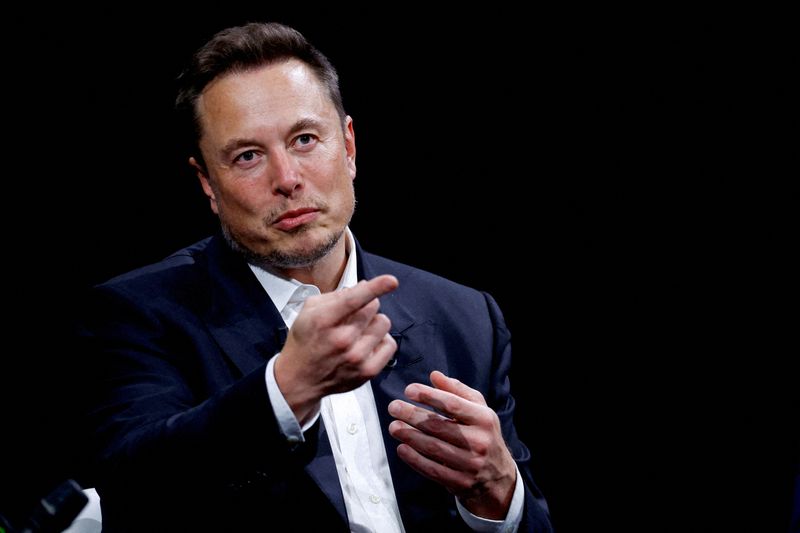
- Delivery Expectations: Cantor projects Tesla's Q2 deliveries at 397,414 vehicles, below the consensus of 408,609, yet maintains confidence in Tesla's transition into AI and robotics, deeming 2026 a 'transformational year'.
- Energy Storage Growth: The firm anticipates Tesla's energy storage deployments to reach 15.7 GWh, surpassing the consensus of 13.9 GWh, which will further solidify Tesla's market position in renewable energy.
- Free Cash Flow Performance: Tesla reported a Q1 free cash flow of $1.44 billion, significantly better than the expected outflow of $1.78 billion, indicating improvements in cash management, although the company expects negative free cash flow for the remainder of the year.
- Robot Production Line Progress: Tesla's first-generation Optimus robot production line in California aims for an annual capacity of 1 million units, while a second-generation line at Gigafactory Texas is being prepared for a long-term target of 10 million units, providing crucial momentum for future growth.
See More
SpaceX Completes IPO, Raising $86 Billion
- Massive Fundraising: SpaceX's IPO successfully raised approximately $86 billion, with an additional $25 billion expected from an upcoming bond issuance, bringing its total funding to over $110 billion, significantly enhancing the company's financial strength and market competitiveness.
- Close Collaboration with Tesla: The 370-page IPO prospectus mentions Tesla over 80 times, highlighting their collaboration on various projects, including using Tesla's Megapacks to power data centers and plans to utilize these battery systems in future moon bases, further solidifying Tesla's market positioning.
- Emerging Space Business: While Tesla is still primarily viewed as an electric vehicle manufacturer, its partnership with SpaceX is gradually positioning it as part of the space business, with potential for launching more hardware and software products into the space market, thereby increasing its overall valuation.
- Technological Innovation Driving Growth: The Terafab chip manufacturing initiative and Macrohard AI platform co-developed by SpaceX and Tesla aim to facilitate the deployment of data centers in space, which will not only enhance both companies' technological capabilities in the space sector but also lay the groundwork for future business model innovations.
See More
Tesla's Terafab Project Progress Update

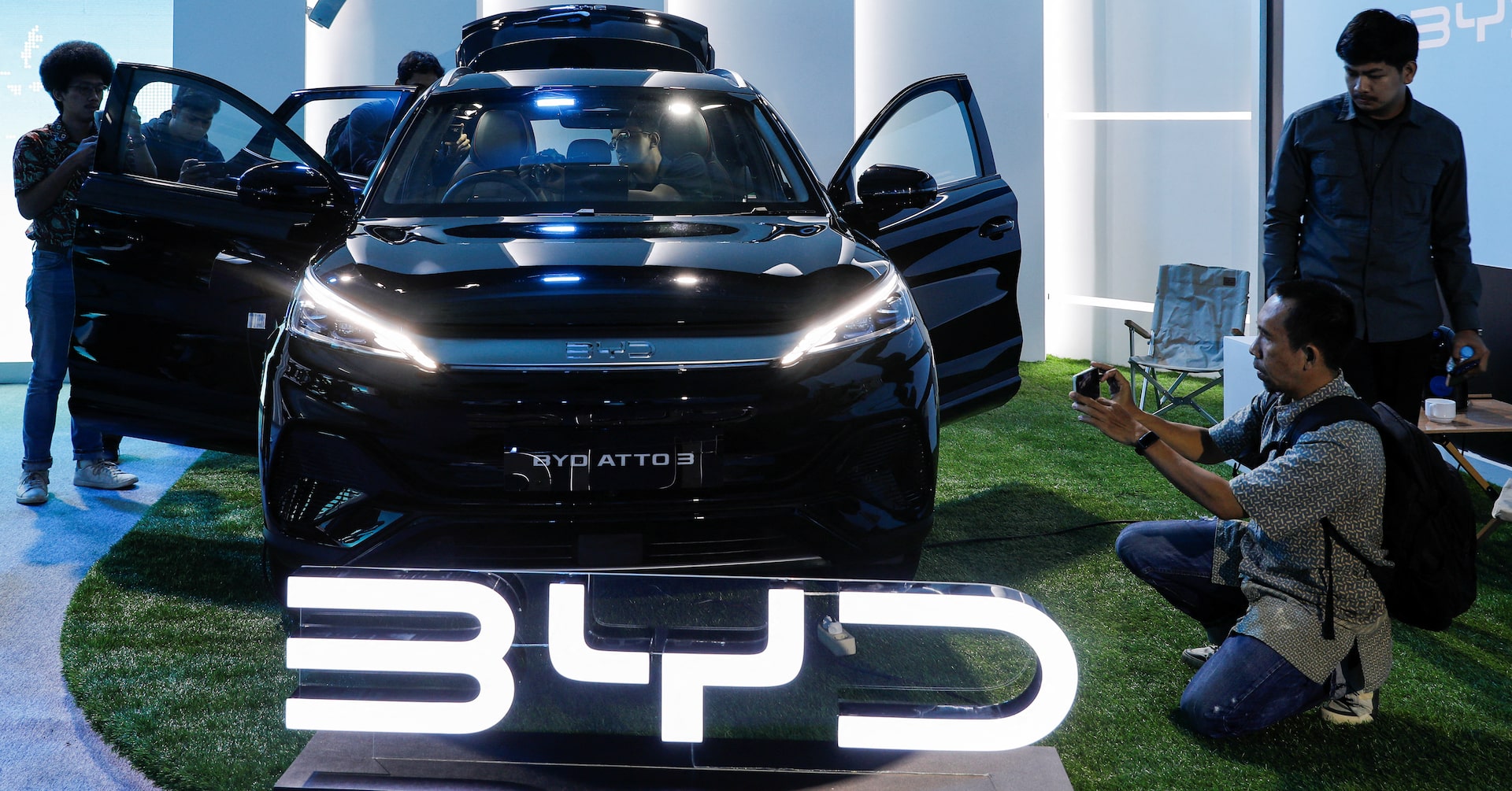
- New Director Appointment: Tesla has hired Gary Jiang, a nearly 18-year veteran of Intel, as the Director of the Terafab chip fabrication project, bringing expertise in technology transfer and cost reduction, which is expected to drive innovation in Tesla's semiconductor efforts.
- Terafab Project Goals: The initiative aims to establish a large-scale, vertically integrated semiconductor facility in Texas, targeting over 1 terawatt of AI compute capacity annually to meet the demands of both Tesla and SpaceX, showcasing Tesla's ambitions in chip manufacturing.
- Market Reaction Steady: Despite TSLA stock rising 2% on Tuesday, retail sentiment around TSLA remains neutral, indicating cautious optimism among investors ahead of the upcoming second-quarter delivery numbers.
- Delivery Expectations Growth: Analysts project Tesla will deliver 406,024 vehicles by the end of June, reflecting a year-on-year growth of approximately 6%, highlighting Tesla's ongoing growth potential in the electric vehicle market.
See More

Strong Stock Performance in H1 2026 Highlights Key Trends

- Small-Cap Outperformance: The Russell 2000 index surged nearly 22% in the first half of 2026, making it the top performer among major indices, indicating a strong rebound in small-cap stocks that has captured investor interest.
- Tech Sector Leadership: The Nasdaq 100 rose almost 20%, while the Nasdaq Composite gained nearly 13%, reflecting sustained growth in the tech sector and investor confidence in innovative companies, which may drive future investment inflows.
- Analyst Stock Picks: Morgan Stanley's recommendation of Applied Materials saw its stock rise 180% in 2026, while Bank of America's pick of Lam Research increased by 153%, showcasing strong analyst confidence that could influence investor decisions.
- Fuel Price Challenges: The national average gasoline price in the U.S. stands at $3.8470 per gallon, with President Trump aiming to reduce it to $2.50, although facing numerous challenges, this goal could impact energy stocks' performance and market expectations.
See More
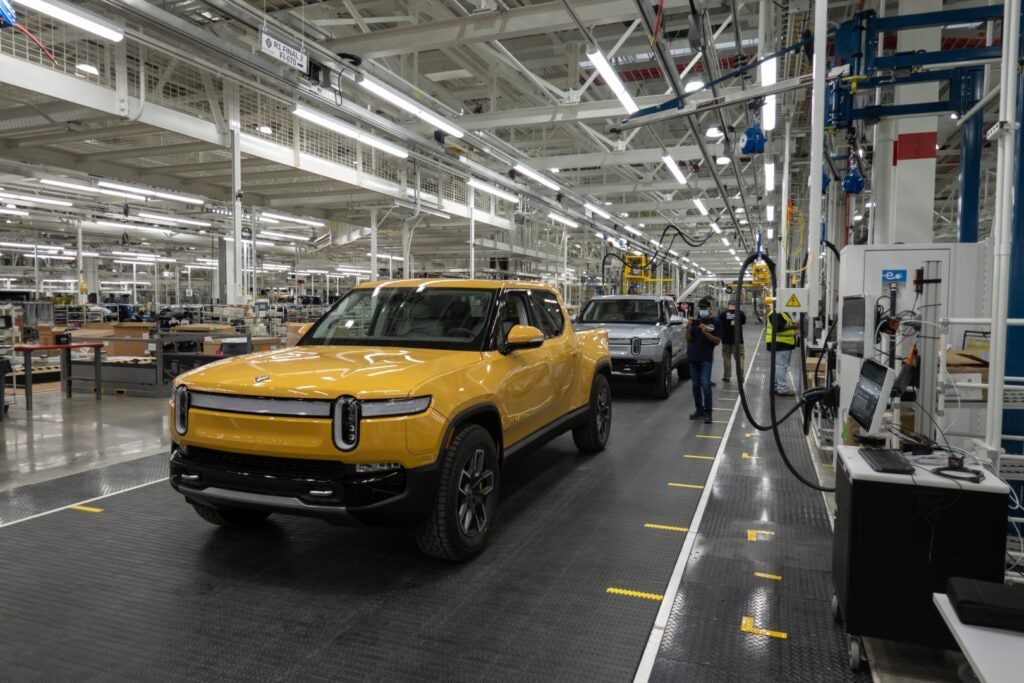
Intensifying EV Market Competition: A Comparative Analysis of Rivian and Tesla

- Rivian Financial Performance: In FY 2025, Rivian reported revenue of $5.4 billion, an 8.4% increase year-over-year, despite a net loss of $3.6 billion and a negative net margin of 67.7%, highlighting the significant capital investment and operational cost pressures associated with its manufacturing expansion.
- Tesla Revenue Dynamics: Tesla's revenue for FY 2025 was $94.8 billion, a 2.9% decline from the previous year, with a net income of $3.8 billion translating to a net margin of 4%, reflecting the impact of increased competition and shifts in product mix on profitability.
- Risk Analysis: Rivian faces substantial risks related to production execution and high scaling costs, relying on commercial agreements with Amazon while also managing a class-action lawsuit regarding vehicle autonomy in 2026; Tesla, on the other hand, navigates regulatory scrutiny and litigation concerning its driver-assistance systems.
- Valuation Comparison: Rivian's forward P/E ratio stands at 38.0x, while Tesla's is significantly higher at 200.5x, indicating the market's high growth expectations for Tesla, although Rivian's potential in the EV market remains promising.
See More
Rivian and Tesla Intensify Competition in Electric Vehicle Market
- Rivian Production Expansion: Rivian achieved $5.4 billion in revenue for FY 2025, an 8.4% increase, despite a net loss of $3.6 billion and a negative net margin of 67.7%, indicating significant capital pressure as it scales in the high-end EV market.
- Tesla Revenue Performance: Tesla reported $94.8 billion in revenue for FY 2025, a 2.9% decline, with a net income of $3.8 billion and a net margin dropping to 4%, reflecting the impact of increased competition and shifting product mix.
- Partnership Risk: Rivian's reliance on key commercial agreements with Volkswagen and Amazon adds a layer of risk due to customer concentration, particularly as Amazon remains a primary driver of sales.
- Tesla's Technological Shift: Tesla is actively expanding its autonomous ride-hailing service while integrating AI into its fleet, facing regulatory scrutiny and litigation risks, which could impact its future market position.
See More
Cantor Maintains Overweight Rating on Tesla Ahead of Q2 Delivery Update
- Delivery Expectations: Cantor projects Tesla's Q2 deliveries at 397,414 vehicles, below the consensus of 408,609, yet maintains confidence in Tesla's transition into AI and robotics, deeming 2026 a 'transformational year'.
- Energy Storage Growth: The firm anticipates Tesla's energy storage deployments to reach 15.7 GWh, surpassing the consensus of 13.9 GWh, which will further solidify Tesla's market position in renewable energy.
- Free Cash Flow Performance: Tesla reported a Q1 free cash flow of $1.44 billion, significantly better than the expected outflow of $1.78 billion, indicating improvements in cash management, although the company expects negative free cash flow for the remainder of the year.
- Robot Production Line Progress: Tesla's first-generation Optimus robot production line in California aims for an annual capacity of 1 million units, while a second-generation line at Gigafactory Texas is being prepared for a long-term target of 10 million units, providing crucial momentum for future growth.
See More
SpaceX Completes IPO, Raising $86 Billion
- Massive Fundraising: SpaceX's IPO successfully raised approximately $86 billion, with an additional $25 billion expected from an upcoming bond issuance, bringing its total funding to over $110 billion, significantly enhancing the company's financial strength and market competitiveness.
- Close Collaboration with Tesla: The 370-page IPO prospectus mentions Tesla over 80 times, highlighting their collaboration on various projects, including using Tesla's Megapacks to power data centers and plans to utilize these battery systems in future moon bases, further solidifying Tesla's market positioning.
- Emerging Space Business: While Tesla is still primarily viewed as an electric vehicle manufacturer, its partnership with SpaceX is gradually positioning it as part of the space business, with potential for launching more hardware and software products into the space market, thereby increasing its overall valuation.
- Technological Innovation Driving Growth: The Terafab chip manufacturing initiative and Macrohard AI platform co-developed by SpaceX and Tesla aim to facilitate the deployment of data centers in space, which will not only enhance both companies' technological capabilities in the space sector but also lay the groundwork for future business model innovations.
See More
Tesla's Terafab Project Progress Update
- New Director Appointment: Tesla has hired Gary Jiang, a nearly 18-year veteran of Intel, as the Director of the Terafab chip fabrication project, bringing expertise in technology transfer and cost reduction, which is expected to drive innovation in Tesla's semiconductor efforts.
- Terafab Project Goals: The initiative aims to establish a large-scale, vertically integrated semiconductor facility in Texas, targeting over 1 terawatt of AI compute capacity annually to meet the demands of both Tesla and SpaceX, showcasing Tesla's ambitions in chip manufacturing.
- Market Reaction Steady: Despite TSLA stock rising 2% on Tuesday, retail sentiment around TSLA remains neutral, indicating cautious optimism among investors ahead of the upcoming second-quarter delivery numbers.
- Delivery Expectations Growth: Analysts project Tesla will deliver 406,024 vehicles by the end of June, reflecting a year-on-year growth of approximately 6%, highlighting Tesla's ongoing growth potential in the electric vehicle market.
See More
Strong Stock Performance in H1 2026 Highlights Key Trends
- Small-Cap Outperformance: The Russell 2000 index surged nearly 22% in the first half of 2026, making it the top performer among major indices, indicating a strong rebound in small-cap stocks that has captured investor interest.
- Tech Sector Leadership: The Nasdaq 100 rose almost 20%, while the Nasdaq Composite gained nearly 13%, reflecting sustained growth in the tech sector and investor confidence in innovative companies, which may drive future investment inflows.
- Analyst Stock Picks: Morgan Stanley's recommendation of Applied Materials saw its stock rise 180% in 2026, while Bank of America's pick of Lam Research increased by 153%, showcasing strong analyst confidence that could influence investor decisions.
- Fuel Price Challenges: The national average gasoline price in the U.S. stands at $3.8470 per gallon, with President Trump aiming to reduce it to $2.50, although facing numerous challenges, this goal could impact energy stocks' performance and market expectations.
See More
Intensifying EV Market Competition: A Comparative Analysis of Rivian and Tesla
- Rivian Financial Performance: In FY 2025, Rivian reported revenue of $5.4 billion, an 8.4% increase year-over-year, despite a net loss of $3.6 billion and a negative net margin of 67.7%, highlighting the significant capital investment and operational cost pressures associated with its manufacturing expansion.
- Tesla Revenue Dynamics: Tesla's revenue for FY 2025 was $94.8 billion, a 2.9% decline from the previous year, with a net income of $3.8 billion translating to a net margin of 4%, reflecting the impact of increased competition and shifts in product mix on profitability.
- Risk Analysis: Rivian faces substantial risks related to production execution and high scaling costs, relying on commercial agreements with Amazon while also managing a class-action lawsuit regarding vehicle autonomy in 2026; Tesla, on the other hand, navigates regulatory scrutiny and litigation concerning its driver-assistance systems.
- Valuation Comparison: Rivian's forward P/E ratio stands at 38.0x, while Tesla's is significantly higher at 200.5x, indicating the market's high growth expectations for Tesla, although Rivian's potential in the EV market remains promising.
See More
Rivian and Tesla Intensify Competition in Electric Vehicle Market
- Rivian Production Expansion: Rivian achieved $5.4 billion in revenue for FY 2025, an 8.4% increase, despite a net loss of $3.6 billion and a negative net margin of 67.7%, indicating significant capital pressure as it scales in the high-end EV market.
- Tesla Revenue Performance: Tesla reported $94.8 billion in revenue for FY 2025, a 2.9% decline, with a net income of $3.8 billion and a net margin dropping to 4%, reflecting the impact of increased competition and shifting product mix.
- Partnership Risk: Rivian's reliance on key commercial agreements with Volkswagen and Amazon adds a layer of risk due to customer concentration, particularly as Amazon remains a primary driver of sales.
- Tesla's Technological Shift: Tesla is actively expanding its autonomous ride-hailing service while integrating AI into its fleet, facing regulatory scrutiny and litigation risks, which could impact its future market position.
See More




