Filterbaby Launches New Essential Collection at Target, Rolling Out to Over 1,800 Stores
Written by Emily J. Thompson, Senior Investment Analyst
Updated: Jan 16 2026
0mins
Source: Newsfilter
- National Retail Debut: Filterbaby announces its new Essential Collection will launch in January 2026 at over 1,800 Target stores and on Target.com, marking the brand's first foray into mass retail, which is expected to significantly boost brand visibility and sales.
- Efficient Water Filtration Technology: The new faucet and shower filters are lab-tested to remove up to 99.9% of chlorine, chloramine, and heavy metals, helping consumers improve skin and hair health, thereby reinforcing the brand's expertise in skincare.
- Simplified Design with High Standards: While the new collection features a slightly simplified design compared to flagship products, it still utilizes high-quality filtration materials that exceed NSF standards, ensuring consumers enjoy convenience without compromising effectiveness, thus enhancing market competitiveness.
- Industry Recognition and Awards: Filterbaby recently won the Glossy 2025 Brand of the Year and NewBeauty Best Shower Filter awards, further proving its innovative leadership at the intersection of water quality and skincare health, which is expected to attract more consumer attention and purchases.
Trade with 70% Backtested Accuracy
Stop guessing "Should I Buy TGT?" and start using high-conviction signals backed by rigorous historical data.
Sign up today to access powerful investing tools and make smarter, data-driven decisions.
Analyst Views on TGT
Wall Street analysts forecast TGT stock price to fall
26 Analyst Rating
8 Buy
14 Hold
4 Sell
Hold
Current: 128.330

Low
80.00
Averages
98.83
High
126.00
Current: 128.330
Low
80.00
Averages
98.83
High
126.00
About TGT
Target Corporation is a general merchandise retailer selling products to its guests through its stores and digital channels. The Company offers customers, referred to as guests, differentiated merchandise and everyday essentials at discounted prices. The majority of its stores offer a wide assortment of general merchandise and groceries. Its merchandise categories include apparel and accessories, beauty, food and beverage, hardlines, home furnishings and decor, household essentials, and other merchandise sales. Most of its stores are larger than over 170,000 square feet, offer a variety of general merchandise and a full line of groceries comparable to traditional supermarkets. Its digital channels include merchandise assortment, including many items found in its stores, along with a complementary assortment sold by the Company and third parties through our Target Plus digital marketplace. Its brands include A New Day, All in Motion, Art Class, Auden, Ava & Viv, among others.
About the author

Emily J. Thompson
Emily J. Thompson, a Chartered Financial Analyst (CFA) with 12 years in investment research, graduated with honors from the Wharton School. Specializing in industrial and technology stocks, she provides in-depth analysis for Intellectia’s earnings and market brief reports.

Best Buy Reports Strong Q1 Results, Exceeds Expectations


- Performance Growth: Best Buy's Q1 revenue reached $8.94 billion, a 2% increase year-over-year, surpassing market expectations of $8.83 billion, indicating positive sales growth across major product categories despite a decline in appliance sales.
- Profitability Improvement: The company reported a net income of $276 million, or $1.31 per share, significantly up from $202 million and $0.95 per share a year ago, reflecting success in expanding operating income rates and EPS growth.
- Leadership Transition: New CEO Jason Bonfig is set to take over on November 1, replacing current CEO Corie Barry, who stated that this is the right time for a leadership transition to drive sales growth and accelerate business development.
- Market Outlook: Despite challenges from higher tariffs and declining consumer confidence, Best Buy maintains its full-year revenue guidance between $41.2 billion and $42.1 billion, demonstrating confidence in future market conditions and strategic planning.
See More
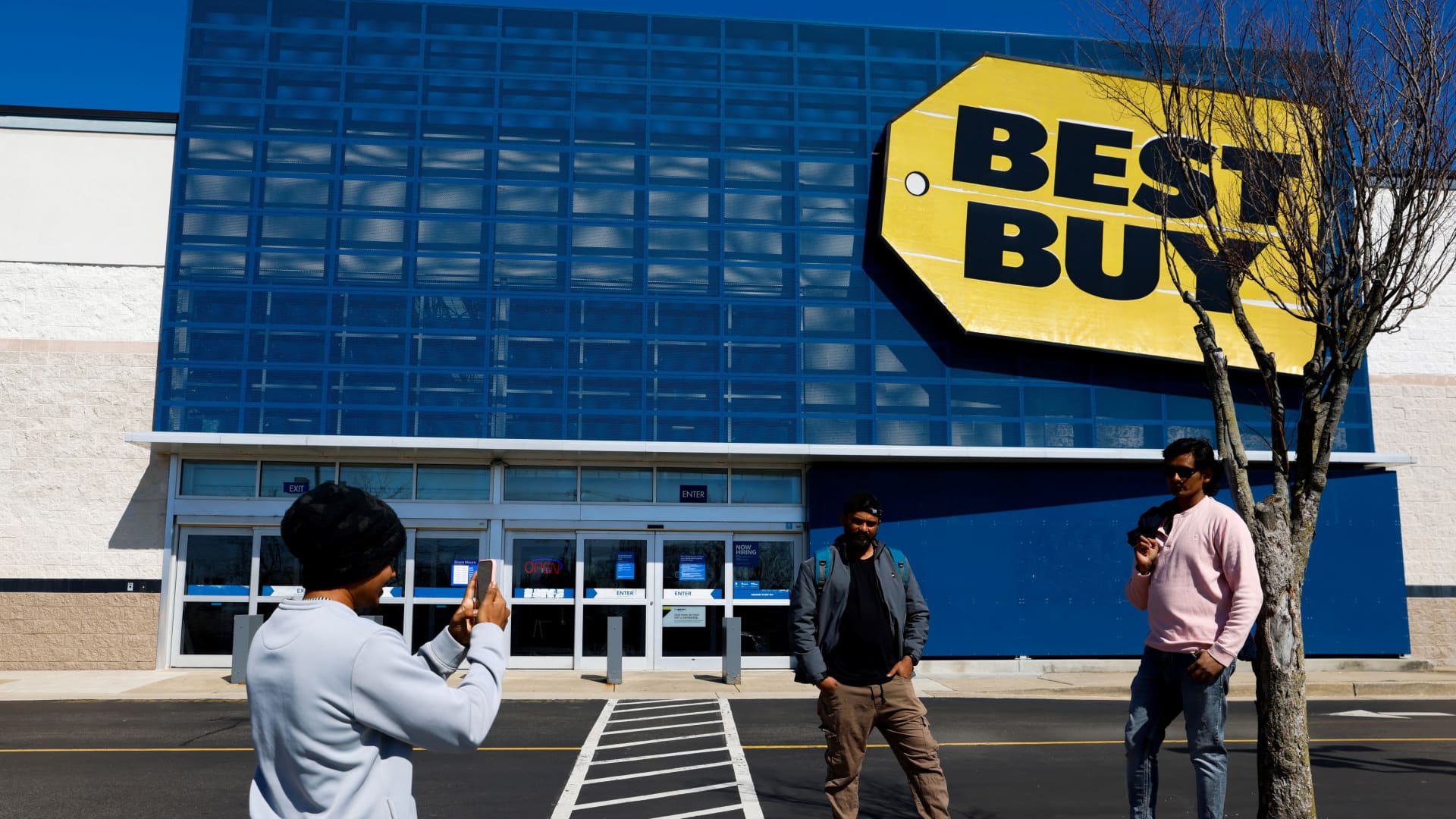
Best Buy Reports Better-Than-Expected Q1 Earnings Amid Leadership Change
- Earnings Growth Highlight: Best Buy reported first fiscal quarter revenue of $8.94 billion, a slight increase from $8.77 billion last year, exceeding market expectations of $8.83 billion, indicating positive progress in sales recovery efforts.
- Profitability Improvement: The company posted adjusted earnings per share of $1.28, surpassing analyst expectations of $1.23, with net income rising to $276 million from $202 million a year ago, reflecting improvements in cost control and operational efficiency.
- Leadership Change: Current CEO Corie Barry announced her resignation this fall, with Jason Bonfig set to take over on November 1, a leadership transition aimed at accelerating sales growth and enhancing customer experience, demonstrating the company's commitment to future development.
- Market Challenges and Opportunities: Despite facing challenges from higher tariffs and declining consumer confidence, Best Buy achieved a 2% comparable sales growth in gaming, computing, and mobile services, indicating that the company's strategic adjustments in product and service diversification are yielding results.
See More

Walmart Upgrades Omnichannel Capabilities Reshaping Retail Landscape

- Omnichannel Enhancement: Walmart's upgraded omnichannel capabilities are reshaping how consumers balance price, convenience, and delivery options, thereby strengthening its position in a highly competitive retail market.
- Competitive Comparison: Walmart's strategy contrasts sharply with Target's experience-driven approach, highlighting Walmart's flexibility and adaptability in meeting diverse consumer needs.
- Intensified Market Competition: As competition in the retail sector intensifies, Walmart's omnichannel upgrades enable it to more effectively respond to challenges from other major retailers, enhancing its market share.
- Shifting Consumer Behavior: With evolving consumer demands for price and convenience, Walmart's omnichannel strategy aims to address these needs, thereby increasing customer loyalty and purchase frequency.
See More

Walmart Enhances Delivery Capabilities to Strengthen Competitive Edge
- Delivery Capability Upgrade: Walmart's enhancements to its delivery and mobile ordering systems significantly improve everyday shopping convenience, optimizing the balance between price, convenience, and delivery options for consumers, thereby strengthening its market competitiveness.
- Market Strategy Comparison: Unlike Walmart's price competition strategy, Target is focusing on enhancing the high-end in-store experience, attempting to attract consumers through differentiated services, although this may place it at a disadvantage in price competition.
- Omnichannel Capability Reshaping: Walmart's omnichannel capabilities are reshaping how consumers shop, particularly among major retailers, as shoppers increasingly prioritize convenience and delivery options, which could impact Target's market share.
- Investor Attention: Although Target did not make it onto The Motley Fool's list of top stocks, Walmart's ongoing innovation and market adaptability may draw more investor interest in its stock performance.
See More
Amazon Launches Custom AI Shopping Assistants for Retailers


- AI Shopping Assistant Launch: Amazon is offering retailers the tools to create custom AI shopping assistants through AWS, enabling launches in as little as 60 days, which significantly enhances customer shopping experiences and strengthens market competitiveness.
- Internal Technology Application: The company has already utilized this technology internally to assist customers in comparing products, making purchases, and reordering, indicating the maturity and effectiveness of its technology, which helps attract more retail partnerships.
- Intensifying Market Competition: With competitors like OpenAI and Google ramping up their investments in AI shopping tools, Amazon's initiative serves not only as a technological expansion but also as a strategic move to counter rivals and solidify its market position.
- Positive Stock Reaction: Following the announcement of this new AI strategy, Amazon's stock rose over 2%, reflecting market optimism regarding its future growth potential and further boosting investor confidence.
See More
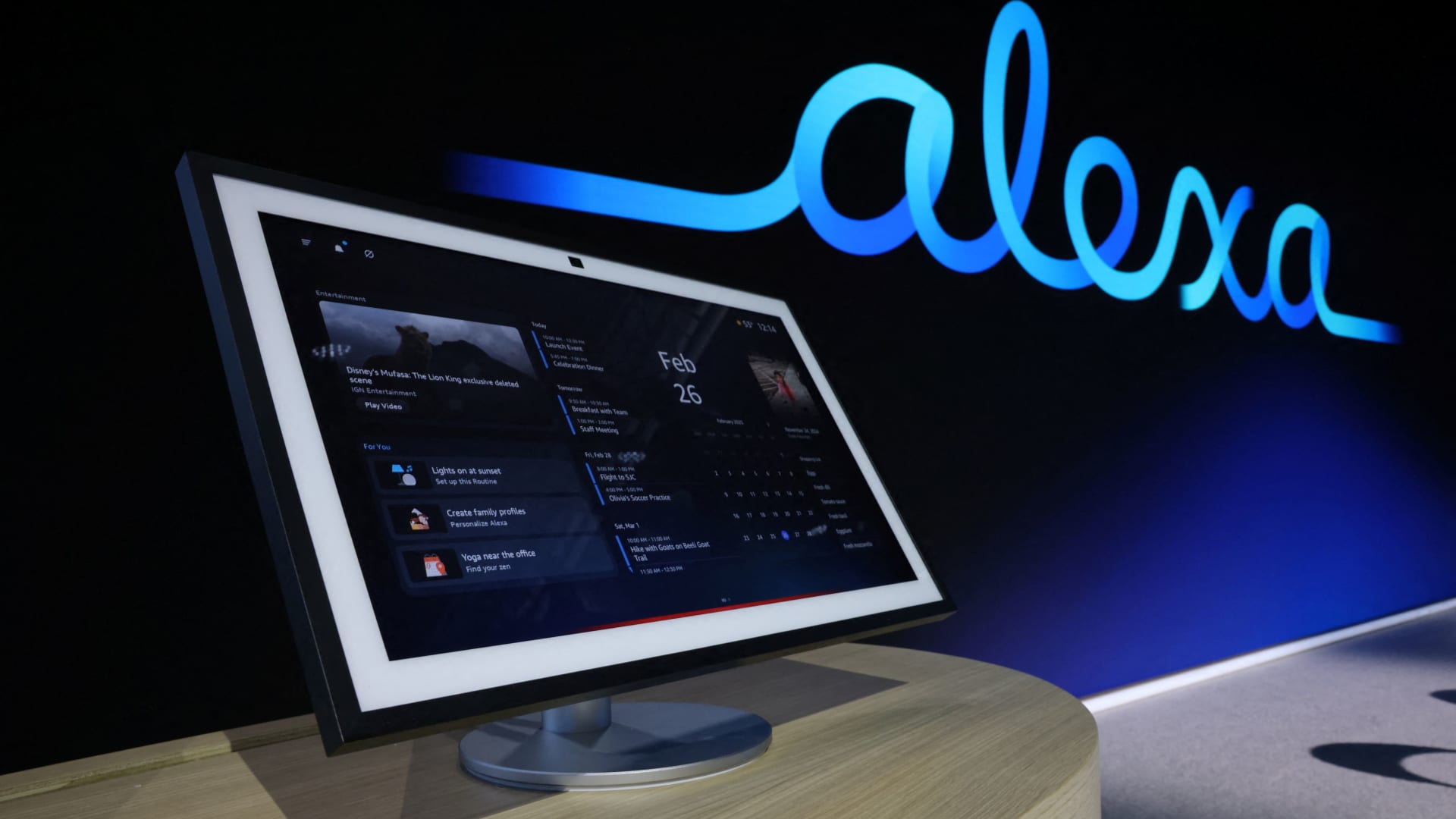
Amazon Licenses AI Shopping Technology to Retailers

- Technology Licensing Strategy: Amazon is licensing its internally developed AI shopping technology to other retailers, enabling them to launch customized shopping tools in as little as 60 days, thereby enhancing Amazon's technological influence in the retail sector.
- Customer Engagement: Amazon has signed a partnership with Tapestry-owned luxury brand Kate Spade to utilize the service for launching a gifting assistant, demonstrating market demand and application potential for its technology.
- Competitive Market Landscape: In the AI shopping space, Amazon faces challenges from competitors like OpenAI and Google, which are also rolling out shopping-related AI tools, although some initiatives have stumbled due to technical issues, highlighting market uncertainties.
- Retailer Autonomy: Amazon encourages retailers to develop their own AI tools, emphasizing their deep understanding of products and customers, which allows them to maintain control over the shopping experience and enhances their competitive edge in the market.
See More
Best Buy Reports Strong Q1 Results, Exceeds Expectations
- Performance Growth: Best Buy's Q1 revenue reached $8.94 billion, a 2% increase year-over-year, surpassing market expectations of $8.83 billion, indicating positive sales growth across major product categories despite a decline in appliance sales.
- Profitability Improvement: The company reported a net income of $276 million, or $1.31 per share, significantly up from $202 million and $0.95 per share a year ago, reflecting success in expanding operating income rates and EPS growth.
- Leadership Transition: New CEO Jason Bonfig is set to take over on November 1, replacing current CEO Corie Barry, who stated that this is the right time for a leadership transition to drive sales growth and accelerate business development.
- Market Outlook: Despite challenges from higher tariffs and declining consumer confidence, Best Buy maintains its full-year revenue guidance between $41.2 billion and $42.1 billion, demonstrating confidence in future market conditions and strategic planning.
See More
Best Buy Reports Better-Than-Expected Q1 Earnings Amid Leadership Change
- Earnings Growth Highlight: Best Buy reported first fiscal quarter revenue of $8.94 billion, a slight increase from $8.77 billion last year, exceeding market expectations of $8.83 billion, indicating positive progress in sales recovery efforts.
- Profitability Improvement: The company posted adjusted earnings per share of $1.28, surpassing analyst expectations of $1.23, with net income rising to $276 million from $202 million a year ago, reflecting improvements in cost control and operational efficiency.
- Leadership Change: Current CEO Corie Barry announced her resignation this fall, with Jason Bonfig set to take over on November 1, a leadership transition aimed at accelerating sales growth and enhancing customer experience, demonstrating the company's commitment to future development.
- Market Challenges and Opportunities: Despite facing challenges from higher tariffs and declining consumer confidence, Best Buy achieved a 2% comparable sales growth in gaming, computing, and mobile services, indicating that the company's strategic adjustments in product and service diversification are yielding results.
See More
Walmart Upgrades Omnichannel Capabilities Reshaping Retail Landscape
- Omnichannel Enhancement: Walmart's upgraded omnichannel capabilities are reshaping how consumers balance price, convenience, and delivery options, thereby strengthening its position in a highly competitive retail market.
- Competitive Comparison: Walmart's strategy contrasts sharply with Target's experience-driven approach, highlighting Walmart's flexibility and adaptability in meeting diverse consumer needs.
- Intensified Market Competition: As competition in the retail sector intensifies, Walmart's omnichannel upgrades enable it to more effectively respond to challenges from other major retailers, enhancing its market share.
- Shifting Consumer Behavior: With evolving consumer demands for price and convenience, Walmart's omnichannel strategy aims to address these needs, thereby increasing customer loyalty and purchase frequency.
See More
Walmart Enhances Delivery Capabilities to Strengthen Competitive Edge
- Delivery Capability Upgrade: Walmart's enhancements to its delivery and mobile ordering systems significantly improve everyday shopping convenience, optimizing the balance between price, convenience, and delivery options for consumers, thereby strengthening its market competitiveness.
- Market Strategy Comparison: Unlike Walmart's price competition strategy, Target is focusing on enhancing the high-end in-store experience, attempting to attract consumers through differentiated services, although this may place it at a disadvantage in price competition.
- Omnichannel Capability Reshaping: Walmart's omnichannel capabilities are reshaping how consumers shop, particularly among major retailers, as shoppers increasingly prioritize convenience and delivery options, which could impact Target's market share.
- Investor Attention: Although Target did not make it onto The Motley Fool's list of top stocks, Walmart's ongoing innovation and market adaptability may draw more investor interest in its stock performance.
See More
Amazon Launches Custom AI Shopping Assistants for Retailers
- AI Shopping Assistant Launch: Amazon is offering retailers the tools to create custom AI shopping assistants through AWS, enabling launches in as little as 60 days, which significantly enhances customer shopping experiences and strengthens market competitiveness.
- Internal Technology Application: The company has already utilized this technology internally to assist customers in comparing products, making purchases, and reordering, indicating the maturity and effectiveness of its technology, which helps attract more retail partnerships.
- Intensifying Market Competition: With competitors like OpenAI and Google ramping up their investments in AI shopping tools, Amazon's initiative serves not only as a technological expansion but also as a strategic move to counter rivals and solidify its market position.
- Positive Stock Reaction: Following the announcement of this new AI strategy, Amazon's stock rose over 2%, reflecting market optimism regarding its future growth potential and further boosting investor confidence.
See More
Amazon Licenses AI Shopping Technology to Retailers
- Technology Licensing Strategy: Amazon is licensing its internally developed AI shopping technology to other retailers, enabling them to launch customized shopping tools in as little as 60 days, thereby enhancing Amazon's technological influence in the retail sector.
- Customer Engagement: Amazon has signed a partnership with Tapestry-owned luxury brand Kate Spade to utilize the service for launching a gifting assistant, demonstrating market demand and application potential for its technology.
- Competitive Market Landscape: In the AI shopping space, Amazon faces challenges from competitors like OpenAI and Google, which are also rolling out shopping-related AI tools, although some initiatives have stumbled due to technical issues, highlighting market uncertainties.
- Retailer Autonomy: Amazon encourages retailers to develop their own AI tools, emphasizing their deep understanding of products and customers, which allows them to maintain control over the shopping experience and enhances their competitive edge in the market.
See More