

Is Lennar's Recent 6.6% Recovery Indicating a New Value Opportunity for 2025?
Current Performance: Lennar has seen a recent uptick in stock price, gaining 6.6% over the past week and 5.8% for the month, but remains down 2.3% year-to-date and 17.1% over the last year, despite strong long-term returns of 68.0% and 106.7% over 3 and 5 years, respectively.
Valuation Insights: The company scores poorly on traditional valuation checks, with a 1 out of 6 rating indicating it may be overvalued by 57.7% based on discounted cash flow analysis, while its current price-to-earnings (PE) ratio of 12.2x suggests it is attractively valued compared to its fair PE of 15.5x.
Future Projections: Analysts project a significant rebound in free cash flow for Lennar, estimating it will reach $2.15 billion by 2026, with long-term growth expected to peak at approximately $1.37 billion in 2035, despite current negative cash flow of $702.5 million.
Diverse Perspectives: Two contrasting narratives about Lennar's future value exist: a bullish case suggesting a fair value of $162.49 driven by long-term growth potential, and a bearish case estimating a fair value of $127.50, highlighting risks from weak demand and margin pressures.
Trade with 70% Backtested Accuracy
Analyst Views on LEN

About LEN
About the author


Oracle Reports Earnings Beat but Shares Drop Amid $20 Billion Raise


- Earnings Beat: Oracle's earnings report on Wednesday exceeded market expectations and raised profit guidance; however, shares fell over 7% in after-hours trading, indicating market concerns over its future financing plans.
- Financing Impact: The company plans to raise $20 billion in equity and debt to support business expansion, which led to a significant drop in share price during after-hours trading, reflecting investor worries about dilution effects.
- Price Decline: Oracle's shares have fallen 42% since the September high, and this substantial pullback may affect investor confidence and have negative implications for future market performance.
- Market Reaction: Against the backdrop of the overall market dropping more than 900 points, Oracle's stock performance stands out, highlighting investor caution towards tech stocks, which may influence the stock prices of other technology companies.
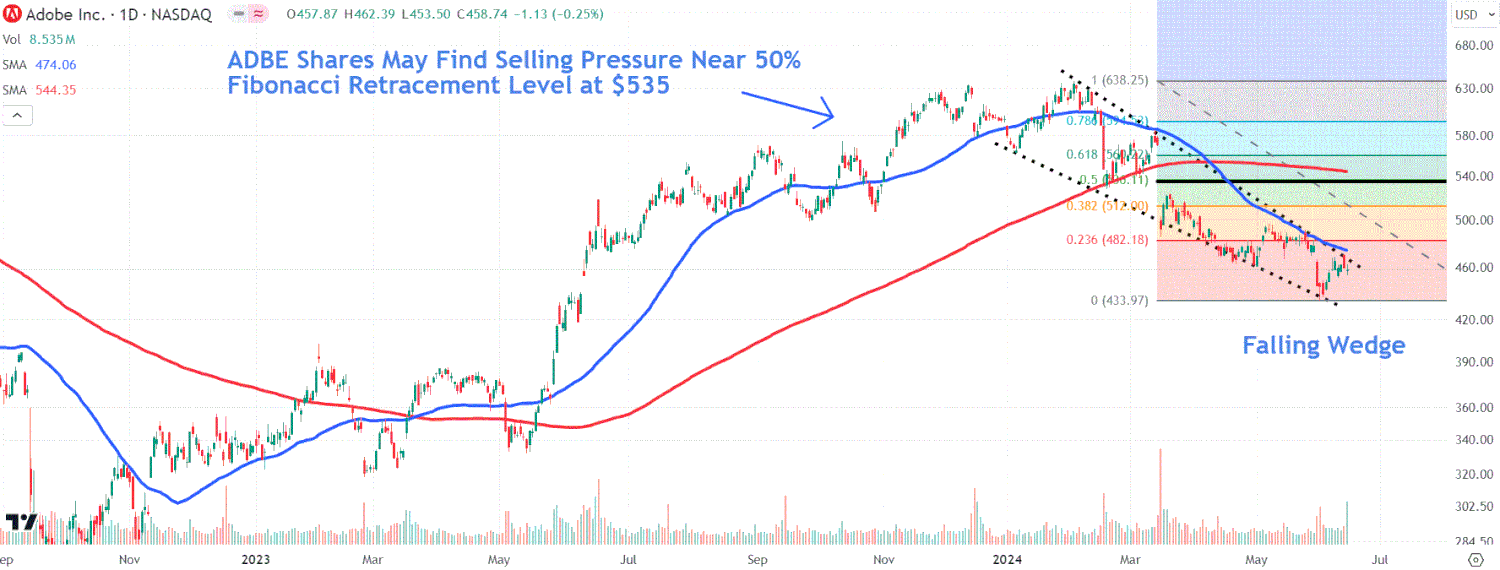
Investors Eye Adobe and Lennar Earnings Reports


- Earnings Reports: Adobe is set to release its quarterly earnings after the market closes on June 11, with investors seeking clarity on the CEO transition, which could overshadow the financial results.
- New Home Orders: Lennar will also report earnings on the same day, and investors will be watching for trends in new home orders, as the builder previously guided for a year-over-year decline in Q2.
- Economic Data Release: The Producer Price Index (PPI) will be released on the morning of June 11, with economists forecasting a slowdown in both headline and core producer prices compared to April, indicating easing wholesale inflation.
- Jobless Claims: Additionally, the latest reading on initial jobless claims will be published, with expectations for a slight dip in new claims compared to the previous week, as investors look for the Fed's next move on interest rates.

US Stocks Close: Nasdaq Hits 5-Week Low Amid Market Rotations


- Market Volatility: The S&P 500 index fell by 0.26% and the Nasdaq 100 dropped by 1.12% on Tuesday, indicating a shift to a downward trend after an early advance, reflecting investor concerns over tech stocks.
- Energy Price Impact: WTI crude oil prices plunged by 3% to a seven-week low, leading to widespread declines in energy producers' stocks, which exacerbated the overall market weakness and highlighted the direct impact of oil price fluctuations on related sectors.
- Real Estate Market Recovery: US existing home sales rose to 4.17 million in April, a five-month high, boosting the stocks of builders and suppliers, indicating that a recovery in the real estate market could provide positive signals for the economy.
- International Trade Data Improvement: China's May exports increased by 19.4% year-on-year, surpassing expectations, showcasing potential for global economic growth, which may positively influence the US market, despite ongoing uncertainties.

U.S. Stock Futures Rise as Market Sentiment Recovers


- Market Sentiment Recovery: After a significant drop on Friday, U.S. stock futures rose on Monday, with the S&P 500 gaining 0.30% despite the Dow Jones Industrial Average closing down 0.17%, indicating a slight improvement in investor sentiment.
- Rising Interest Rates Impact: The S&P 500 opened with its largest gap in eight weeks, but the rise in long-term Treasury yields, with the 30-year bond closing at 5.04%, weakened market support, preventing bulls from maintaining their initial gains.
- Oil Price Volatility: Global oil inventories continue to decline despite ceasefire efforts, with Brent crude closing at $94.22, up 1.21%, reflecting market expectations for rising oil prices that could influence investment decisions in related sectors.
- Cryptocurrency Market Recovery: Bitcoin rebounded to nearly $64,200 after shedding approximately $235 billion in market value, indicating market stabilization, although investor sentiment remains cautious, which may affect future investment flows.

Diverging Outlooks for Lennar and Toll Brothers Amid K-Shaped Economy

- Rating Downgrade: Keefe, Bruyette & Woods downgraded Lennar from market perform to underperform with an $86 price target, indicating a 5% decline from Monday's close, reflecting the struggles of lower-income consumers amid high housing costs and inflationary pressures.
- Toll Brothers Upgrade: The same bank upgraded Toll Brothers from market perform to outperform, setting a price target of $161, suggesting a 17% increase from Monday's close, highlighting strong demand in the luxury market and stable gross margin expectations.
- Market Environment Challenges: Analysts noted that weak consumer confidence, an uncertain job market, and high mortgage rates will compel builders to maintain elevated incentives, significantly impacting Lennar's entry-level sales, which are estimated to comprise around 50% of its offerings.
- Toll Brothers' Advantages: Toll Brothers' affluent positioning insulates it from entry-level market softness, with projected order growth of 6% to 8% for 2026 to 2027, characterized by buyers with high FICO scores, substantial down payments, and significant cash buyers, along with notable lot premiums and option upgrades per home.

Keefe Bruyette Upgrades Toll Brothers to Outperform
- Toll Brothers Upgrade: Keefe Bruyette upgraded Toll Brothers from 'Market Perform' to 'Outperform' and raised its price target to $161, indicating a 17% upside from the last closing price, reflecting strong demand from affluent buyers and advantages from land holdings.
- Profitability Comparison: Analysts noted a stark contrast in demand between the luxury housing market and entry-level market, with Toll Brothers demonstrating stronger profitability among high-income segments, while Lennar faces significant earnings pressure in the entry-level housing sector.
- Lennar Downgrade: Concurrently, Keefe Bruyette downgraded Lennar from 'Market Perform' to 'Underperform' and cut its price target from $97 to $86, reflecting concerns about weakening conditions affecting entry-level homebuyers, which are expected to impact profitability.
- Market Sentiment Shift: While Toll Brothers' stock has gained over 1% this year, Lennar's stock has declined over 11%, indicating differing investor expectations for the future performance of the two companies, with retail sentiment being bearish for Toll Brothers and relatively bullish for Lennar.
Oracle Reports Earnings Beat but Shares Drop Amid $20 Billion Raise
- Earnings Beat: Oracle's earnings report on Wednesday exceeded market expectations and raised profit guidance; however, shares fell over 7% in after-hours trading, indicating market concerns over its future financing plans.
- Financing Impact: The company plans to raise $20 billion in equity and debt to support business expansion, which led to a significant drop in share price during after-hours trading, reflecting investor worries about dilution effects.
- Price Decline: Oracle's shares have fallen 42% since the September high, and this substantial pullback may affect investor confidence and have negative implications for future market performance.
- Market Reaction: Against the backdrop of the overall market dropping more than 900 points, Oracle's stock performance stands out, highlighting investor caution towards tech stocks, which may influence the stock prices of other technology companies.
Investors Eye Adobe and Lennar Earnings Reports
- Earnings Reports: Adobe is set to release its quarterly earnings after the market closes on June 11, with investors seeking clarity on the CEO transition, which could overshadow the financial results.
- New Home Orders: Lennar will also report earnings on the same day, and investors will be watching for trends in new home orders, as the builder previously guided for a year-over-year decline in Q2.
- Economic Data Release: The Producer Price Index (PPI) will be released on the morning of June 11, with economists forecasting a slowdown in both headline and core producer prices compared to April, indicating easing wholesale inflation.
- Jobless Claims: Additionally, the latest reading on initial jobless claims will be published, with expectations for a slight dip in new claims compared to the previous week, as investors look for the Fed's next move on interest rates.
US Stocks Close: Nasdaq Hits 5-Week Low Amid Market Rotations
- Market Volatility: The S&P 500 index fell by 0.26% and the Nasdaq 100 dropped by 1.12% on Tuesday, indicating a shift to a downward trend after an early advance, reflecting investor concerns over tech stocks.
- Energy Price Impact: WTI crude oil prices plunged by 3% to a seven-week low, leading to widespread declines in energy producers' stocks, which exacerbated the overall market weakness and highlighted the direct impact of oil price fluctuations on related sectors.
- Real Estate Market Recovery: US existing home sales rose to 4.17 million in April, a five-month high, boosting the stocks of builders and suppliers, indicating that a recovery in the real estate market could provide positive signals for the economy.
- International Trade Data Improvement: China's May exports increased by 19.4% year-on-year, surpassing expectations, showcasing potential for global economic growth, which may positively influence the US market, despite ongoing uncertainties.
U.S. Stock Futures Rise as Market Sentiment Recovers
- Market Sentiment Recovery: After a significant drop on Friday, U.S. stock futures rose on Monday, with the S&P 500 gaining 0.30% despite the Dow Jones Industrial Average closing down 0.17%, indicating a slight improvement in investor sentiment.
- Rising Interest Rates Impact: The S&P 500 opened with its largest gap in eight weeks, but the rise in long-term Treasury yields, with the 30-year bond closing at 5.04%, weakened market support, preventing bulls from maintaining their initial gains.
- Oil Price Volatility: Global oil inventories continue to decline despite ceasefire efforts, with Brent crude closing at $94.22, up 1.21%, reflecting market expectations for rising oil prices that could influence investment decisions in related sectors.
- Cryptocurrency Market Recovery: Bitcoin rebounded to nearly $64,200 after shedding approximately $235 billion in market value, indicating market stabilization, although investor sentiment remains cautious, which may affect future investment flows.
Diverging Outlooks for Lennar and Toll Brothers Amid K-Shaped Economy
- Rating Downgrade: Keefe, Bruyette & Woods downgraded Lennar from market perform to underperform with an $86 price target, indicating a 5% decline from Monday's close, reflecting the struggles of lower-income consumers amid high housing costs and inflationary pressures.
- Toll Brothers Upgrade: The same bank upgraded Toll Brothers from market perform to outperform, setting a price target of $161, suggesting a 17% increase from Monday's close, highlighting strong demand in the luxury market and stable gross margin expectations.
- Market Environment Challenges: Analysts noted that weak consumer confidence, an uncertain job market, and high mortgage rates will compel builders to maintain elevated incentives, significantly impacting Lennar's entry-level sales, which are estimated to comprise around 50% of its offerings.
- Toll Brothers' Advantages: Toll Brothers' affluent positioning insulates it from entry-level market softness, with projected order growth of 6% to 8% for 2026 to 2027, characterized by buyers with high FICO scores, substantial down payments, and significant cash buyers, along with notable lot premiums and option upgrades per home.
Keefe Bruyette Upgrades Toll Brothers to Outperform
- Toll Brothers Upgrade: Keefe Bruyette upgraded Toll Brothers from 'Market Perform' to 'Outperform' and raised its price target to $161, indicating a 17% upside from the last closing price, reflecting strong demand from affluent buyers and advantages from land holdings.
- Profitability Comparison: Analysts noted a stark contrast in demand between the luxury housing market and entry-level market, with Toll Brothers demonstrating stronger profitability among high-income segments, while Lennar faces significant earnings pressure in the entry-level housing sector.
- Lennar Downgrade: Concurrently, Keefe Bruyette downgraded Lennar from 'Market Perform' to 'Underperform' and cut its price target from $97 to $86, reflecting concerns about weakening conditions affecting entry-level homebuyers, which are expected to impact profitability.
- Market Sentiment Shift: While Toll Brothers' stock has gained over 1% this year, Lennar's stock has declined over 11%, indicating differing investor expectations for the future performance of the two companies, with retail sentiment being bearish for Toll Brothers and relatively bullish for Lennar.




