Deere's (DE) Weaker 2026 Forecast May Transform Its Investment Story
Deere's Financial Performance: Deere & Company reported fourth-quarter revenue of $12.39 billion and net income of $1.07 billion, while providing a cautious fiscal 2026 guidance of net income between $4.00 billion and $4.75 billion due to challenges in the large agriculture sector.
Investment Considerations: Investors need to assess Deere's ability to navigate industry cycles and leverage precision agriculture technologies, as ongoing margin pressures and soft demand for large ag equipment pose short-term risks.
Long-term Outlook: Deere anticipates $45.1 billion in revenue and $8.6 billion in earnings by 2028, indicating a slight annual revenue decline but an increase in earnings, suggesting potential growth in small agriculture, turf, and construction segments.
Valuation Insights: Fair value estimates for Deere's stock range from $430 to $624.87 per share, with a current fair value of $525.78 indicating a 13% upside, highlighting the importance of understanding market dynamics and cost pressures in shaping investment decisions.
Trade with 70% Backtested Accuracy
Analyst Views on DE

About DE
About the author


Iran War Triggers Surge in U.S. Food Prices Ahead of Elections


- Food Price Surge: The Iran war has led to soaring oil prices, which are expected to significantly increase food prices in the U.S., impacting voter perceptions ahead of the midterm elections, particularly as the Trump administration faces economic pressures.
- Voter Reaction: Democrats are capitalizing on rising food prices by blaming Trump's war decisions, believing this will affect voter support for Republicans, especially as economic burdens increase.
- Supply Chain Challenges: The costs of food production and transportation are rising due to increased oil and fertilizer prices, with new crops planted this season likely to see higher market prices at harvest time in the fall, exacerbating consumer economic pressures.
- Rising Plastic Costs: The price of plastics needed for food packaging is increasing due to tight natural gas supplies, leading to higher transportation and storage costs for fresh produce, which may drive consumer prices up further in the coming months.

U.S. Manufacturing Severely Impacted by Tariffs

- Stock Performance Comparison: GE and DE shares rose 44% and 21% respectively over the past year, outperforming the S&P 500's 17% and Nasdaq's 13%, indicating some resilience among manufacturing stocks under tariff policies.
- Tariff Impact Analysis: Trump's 'Liberation Day' tariffs raised the minimum import tax rate to 10%, leading to declines in U.S. manufacturing investment, construction spending, and employment in the months following the policy, with construction spending down 11.1% and manufacturing jobs decreasing by 77,000, demonstrating the tariffs' failure to effectively stimulate domestic production.
- Company-Level Impact: 3M expects tariffs to reduce its 2025 adjusted earnings by $0.2 to $0.4 per share, while DE's tariff costs are projected to reach $1.2 billion, with CEO John May stating that tariffs will continue to pressure margins in its large farm equipment business.
- U.S.-China Trade Plunge: Following the tariffs, U.S. imports from China fell by 30% and exports to China decreased by over 25%, with Chinese goods accounting for only 10% of total U.S. imports by the end of 2025, highlighting a significant deterioration in trade relations.

John Deere Partners with MLB for Multi-Year Sponsorship
- Partnership Highlights: John Deere has entered into a multi-year sponsorship with Major League Baseball (MLB) to celebrate America's 250th anniversary, connecting two brands deeply rooted in everyday American life and enhancing brand recognition.
- Marketing Strategy: As the Official Tractor of MLB, John Deere will showcase its contributions to maintaining ballfields and community green spaces across digital and traditional media, enhancing brand image and attracting more consumers.
- Promotional Campaign: The new partnership will be promoted through a 360-degree multimedia advertising program, including experiential on-ground activities at the 2026 Field of Dreams game and MLB All-Star Week, further enhancing brand-consumer interaction.
- Community Engagement Commitment: The collaboration between John Deere and MLB not only celebrates baseball culture but also emphasizes the efforts of those working to build communities, showcasing the brand's support for American agriculture and community development.
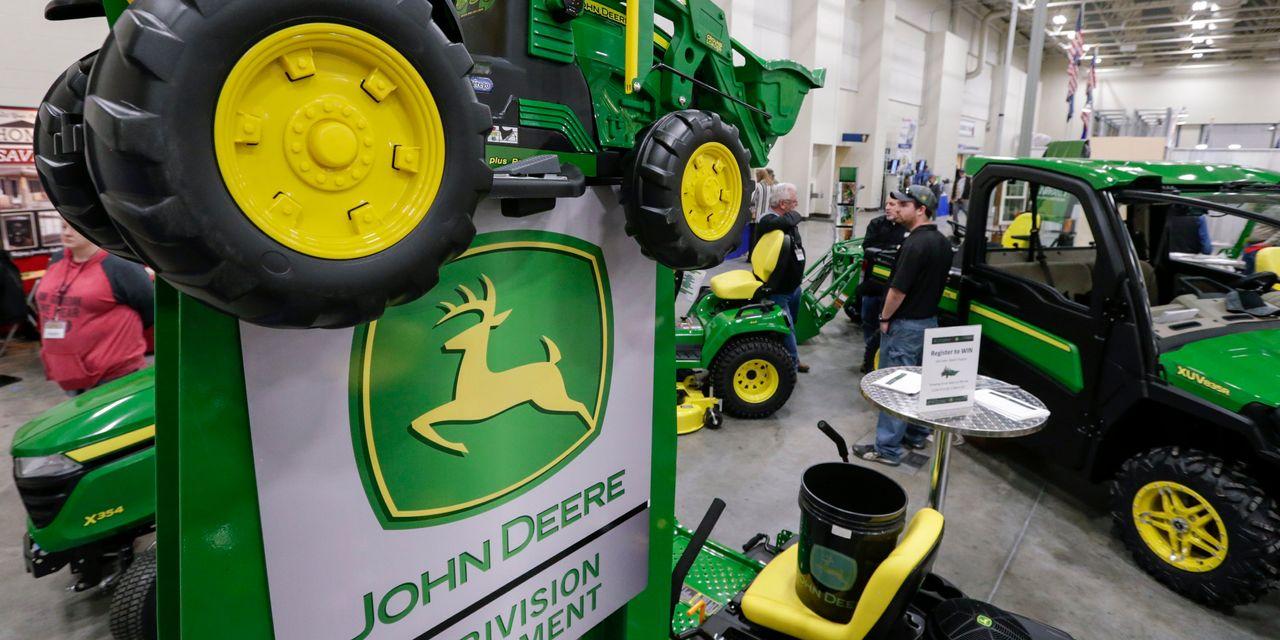
TRUMP CALLS FOR JOHN DEERE AND CATERPILLAR TO REDUCE FARMERS' TRACTOR AND EQUIPMENT EXPENSES

- Trump's Proposal: Trump is advocating for John Deere and Caterpillar to reduce costs for farmers by lowering the prices of tractors and equipment.
- Impact on Farmers: The proposal aims to alleviate financial burdens on farmers, making agricultural operations more affordable.

Deere & Co. Market Cap Surpasses Honeywell

- Market Cap Comparison: Deere & Co. (DE) boasts a market capitalization of $156.12 billion, surpassing Honeywell (HON) at $143.53 billion, indicating Deere's stronger market position which may attract more large-scale investors.
- Investor Misconceptions: Many novice investors often overlook the significance of market capitalization, mistakenly comparing stock prices without understanding share counts, highlighting the critical role of market cap in assessing true company value.
- Market Positioning Impact: Market capitalization not only affects a company's ranking among peers but also determines which mutual funds and ETFs are willing to hold the stock, particularly as large funds tend to favor companies valued over $10 billion.
- Stock Performance: At Thursday's close, DE's stock rose approximately 0.6%, while HON fell about 0.3%, reflecting positive market sentiment towards Deere and its relatively strong performance.
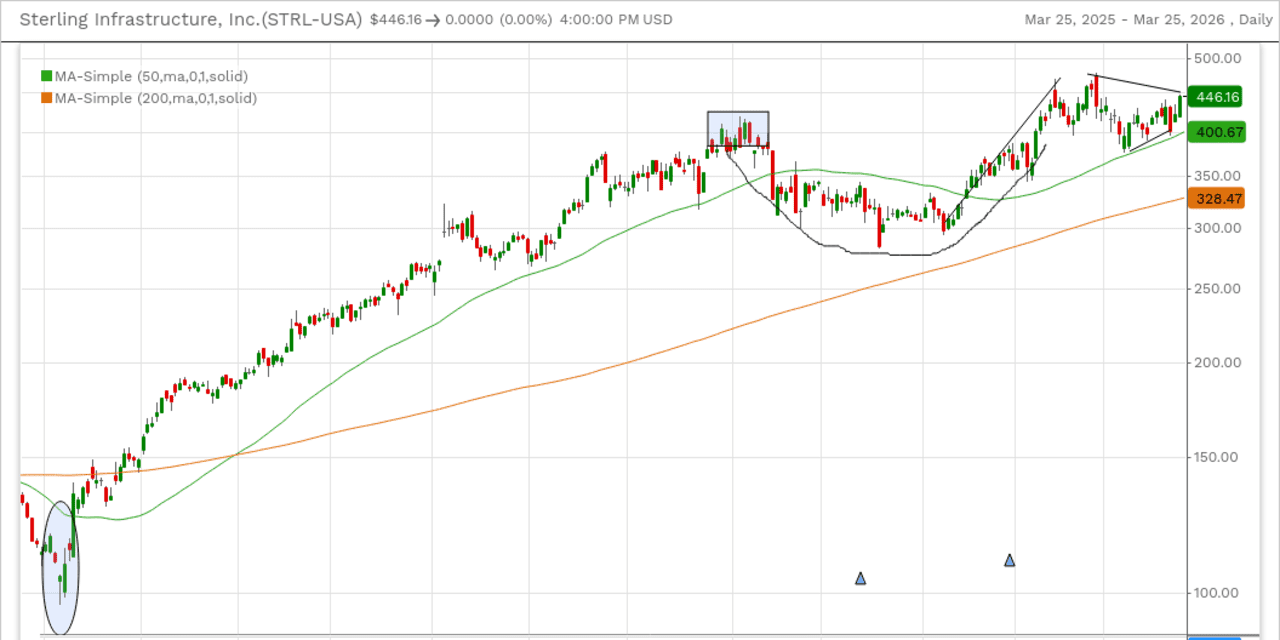
A Look Back at Previous Stock Selections: Sterling Infrastructure, Corpay, Deere


Importance of Revisiting Stock Picks: Reviewing former stock picks helps investors measure effectiveness and refine their strategies and discipline.
Identifying Patterns and Assumptions: By analyzing past calls, investors can recognize successful patterns and identify incorrect assumptions that may have influenced decisions.
Improving Decision-Making: Regular evaluations of past investments enhance future decision-making processes by learning from previous outcomes.
Reinforcing Accountability: This practice ensures that investment ideas are assessed based on their market performance, not just the initial investment thesis.
Iran War Triggers Surge in U.S. Food Prices Ahead of Elections
- Food Price Surge: The Iran war has led to soaring oil prices, which are expected to significantly increase food prices in the U.S., impacting voter perceptions ahead of the midterm elections, particularly as the Trump administration faces economic pressures.
- Voter Reaction: Democrats are capitalizing on rising food prices by blaming Trump's war decisions, believing this will affect voter support for Republicans, especially as economic burdens increase.
- Supply Chain Challenges: The costs of food production and transportation are rising due to increased oil and fertilizer prices, with new crops planted this season likely to see higher market prices at harvest time in the fall, exacerbating consumer economic pressures.
- Rising Plastic Costs: The price of plastics needed for food packaging is increasing due to tight natural gas supplies, leading to higher transportation and storage costs for fresh produce, which may drive consumer prices up further in the coming months.
U.S. Manufacturing Severely Impacted by Tariffs
- Stock Performance Comparison: GE and DE shares rose 44% and 21% respectively over the past year, outperforming the S&P 500's 17% and Nasdaq's 13%, indicating some resilience among manufacturing stocks under tariff policies.
- Tariff Impact Analysis: Trump's 'Liberation Day' tariffs raised the minimum import tax rate to 10%, leading to declines in U.S. manufacturing investment, construction spending, and employment in the months following the policy, with construction spending down 11.1% and manufacturing jobs decreasing by 77,000, demonstrating the tariffs' failure to effectively stimulate domestic production.
- Company-Level Impact: 3M expects tariffs to reduce its 2025 adjusted earnings by $0.2 to $0.4 per share, while DE's tariff costs are projected to reach $1.2 billion, with CEO John May stating that tariffs will continue to pressure margins in its large farm equipment business.
- U.S.-China Trade Plunge: Following the tariffs, U.S. imports from China fell by 30% and exports to China decreased by over 25%, with Chinese goods accounting for only 10% of total U.S. imports by the end of 2025, highlighting a significant deterioration in trade relations.
John Deere Partners with MLB for Multi-Year Sponsorship
- Partnership Highlights: John Deere has entered into a multi-year sponsorship with Major League Baseball (MLB) to celebrate America's 250th anniversary, connecting two brands deeply rooted in everyday American life and enhancing brand recognition.
- Marketing Strategy: As the Official Tractor of MLB, John Deere will showcase its contributions to maintaining ballfields and community green spaces across digital and traditional media, enhancing brand image and attracting more consumers.
- Promotional Campaign: The new partnership will be promoted through a 360-degree multimedia advertising program, including experiential on-ground activities at the 2026 Field of Dreams game and MLB All-Star Week, further enhancing brand-consumer interaction.
- Community Engagement Commitment: The collaboration between John Deere and MLB not only celebrates baseball culture but also emphasizes the efforts of those working to build communities, showcasing the brand's support for American agriculture and community development.
TRUMP CALLS FOR JOHN DEERE AND CATERPILLAR TO REDUCE FARMERS' TRACTOR AND EQUIPMENT EXPENSES
- Trump's Proposal: Trump is advocating for John Deere and Caterpillar to reduce costs for farmers by lowering the prices of tractors and equipment.
- Impact on Farmers: The proposal aims to alleviate financial burdens on farmers, making agricultural operations more affordable.
Deere & Co. Market Cap Surpasses Honeywell
- Market Cap Comparison: Deere & Co. (DE) boasts a market capitalization of $156.12 billion, surpassing Honeywell (HON) at $143.53 billion, indicating Deere's stronger market position which may attract more large-scale investors.
- Investor Misconceptions: Many novice investors often overlook the significance of market capitalization, mistakenly comparing stock prices without understanding share counts, highlighting the critical role of market cap in assessing true company value.
- Market Positioning Impact: Market capitalization not only affects a company's ranking among peers but also determines which mutual funds and ETFs are willing to hold the stock, particularly as large funds tend to favor companies valued over $10 billion.
- Stock Performance: At Thursday's close, DE's stock rose approximately 0.6%, while HON fell about 0.3%, reflecting positive market sentiment towards Deere and its relatively strong performance.
A Look Back at Previous Stock Selections: Sterling Infrastructure, Corpay, Deere
Importance of Revisiting Stock Picks: Reviewing former stock picks helps investors measure effectiveness and refine their strategies and discipline.
Identifying Patterns and Assumptions: By analyzing past calls, investors can recognize successful patterns and identify incorrect assumptions that may have influenced decisions.
Improving Decision-Making: Regular evaluations of past investments enhance future decision-making processes by learning from previous outcomes.
Reinforcing Accountability: This practice ensures that investment ideas are assessed based on their market performance, not just the initial investment thesis.