David Sacks Divests AI Stakes to Avoid Conflicts of Interest
Written by Emily J. Thompson, Senior Investment Analyst
Updated: Jan 11 2026
0mins
Should l Buy NVDA?
Source: Benzinga
- Conflict of Interest Management: David Sacks disclosed on a podcast that he divested his stakes in AI inference chip startup Groq and Elon Musk's xAI before assuming his role in the Trump administration to avoid potential conflicts of interest, demonstrating his commitment to transparency.
- Economic Loss Assessment: Venture capitalist Chamath Palihapitiya estimated that Sacks' economic sacrifice could exceed $1 billion, highlighting the significant financial cost associated with his public service, which may influence his future investment decisions.
- Company Valuation Growth: xAI recently raised funds at twice the valuation of the previous round, indicating strong performance in the AI sector despite Sacks' divestment, which could attract more investor interest in the company.
- Media Response: Sacks defended his divestment amid media scrutiny, emphasizing that he is not profiting from his government position but rather acting to maintain public trust, a move that could enhance his reputation in political circles.
Trade with 70% Backtested Accuracy
Stop guessing "Should I Buy NVDA?" and start using high-conviction signals backed by rigorous historical data.
Sign up today to access powerful investing tools and make smarter, data-driven decisions.
Analyst Views on NVDA
Wall Street analysts forecast NVDA stock price to rise
41 Analyst Rating
39 Buy
1 Hold
1 Sell
Strong Buy
Current: 198.350

Low
200.00
Averages
264.97
High
352.00
Current: 198.350
Low
200.00
Averages
264.97
High
352.00
About NVDA
NVIDIA Corporation is an artificial intelligence (AI) infrastructure company. The Company is engaged in accelerated computing to help solve the challenging computational problems. Its segments include Compute & Networking and Graphics. The Compute & Networking segment includes its Data Center accelerated computing and networking platforms and AI solutions and software, and automotive platforms and autonomous and electric vehicle solutions, including software. The Graphics segment includes GeForce GPUs for gaming and personal computers (PCs), and Quadro/NVIDIA RTX GPUs for enterprise workstation graphics. Its technology stack includes the foundational NVIDIA CUDA development platform that runs on all NVIDIA GPUs, as well as hundreds of domain-specific software libraries, frameworks, algorithms, software development kits (SDKs), and application programming interfaces (APIs). Its platforms address four markets, which include Data Center, Gaming, Professional Visualization, and Automotive.
About the author

Emily J. Thompson
Emily J. Thompson, a Chartered Financial Analyst (CFA) with 12 years in investment research, graduated with honors from the Wharton School. Specializing in industrial and technology stocks, she provides in-depth analysis for Intellectia’s earnings and market brief reports.

Nvidia's Stock Underperformance Despite Rapid Revenue Growth

- Significant Revenue Growth: Nvidia reported $68.1 billion in revenue for Q4 FY2026, a 73% increase year-over-year, with data center sales contributing $62.3 billion, up 75%, highlighting strong demand and market position in the AI sector.
- Capital Expenditure Commitments: The 'Magnificent Seven', including Alphabet, Microsoft, Amazon, and Meta, announced up to $700 billion in capital expenditures for 2023, which, while not all directed to Nvidia, will drive demand for its GPUs and impact future performance.
- Market Capitalization vs. Valuation: Despite Nvidia's market capitalization soaring to the highest in the past two years, its forward P/E ratio stands at 23.9, significantly below the three-year average of 79, indicating that the market may be underestimating its future growth potential, presenting a possible investment opportunity.
- Future Growth Expectations: CEO Jensen Huang forecasts that Nvidia could achieve $1 trillion in AI revenue by 2027, compared to just $215.9 billion in 2025, suggesting the company is on a trajectory of rapid growth that investors should closely monitor.
See More

Nvidia's Future Valuation Could Reach $20 Trillion

- Data Center Growth: Nvidia's data center business is projected to double in the coming years, targeting annual sales of $930 billion, which will drive the company's market capitalization towards $20 trillion, highlighting its critical role in AI infrastructure.
- Market Share Challenges: Despite CEO Jensen Huang's upward revisions on revenue and profit forecasts, Nvidia's price-to-sales ratio remains below historical averages, leading investors to question its ability to capture market share in the accelerating AI infrastructure spending, potentially impacting short-term stock performance.
- Optimistic Revenue Outlook: Analyst consensus estimates project Nvidia's revenue to reach $480 billion in fiscal 2028 and $758 billion by fiscal 2031, nearly doubling Wall Street's expectations from a year ago, reflecting the accelerating capital expenditure cycles among AI hyperscalers.
- Surge in Inference Demand: As the demand for AI model inference increases, Nvidia's overall market opportunity is expected to expand, and with efficiency improvements from its next-generation architecture, the company is poised to achieve premium pricing and unlock new revenue streams, solidifying its dominant position in enterprise infrastructure budgets.
See More

Iren's AI Computing Potential Shows Significant Promise


- Massive Market Potential: Iren's stock skyrocketed 775% over the past year, reflecting strong demand in the AI computing sector, and despite being 36.5% below all-time highs, it has the potential for a 10x return in the future.
- New Land Acquisition: Iren secured 1.6 gigawatts of grid-connected land in Oklahoma, complementing its 160 megawatts of data centers in Canada and 2.75 gigawatts in Texas, bringing its total capacity to 4.5 gigawatts and enhancing its competitive edge.
- Optimistic Revenue Forecast: The partnership with Microsoft is projected to generate $1.94 billion in annualized revenue with an 85% project-level EBITDA margin, laying a solid foundation for Iren's future growth.
- Significant Financing Challenges: Although Iren's potential earnings could reach $43.65 billion, the substantial capital required for building data centers poses a significant funding challenge, likely necessitating external financing that could dilute shareholder value.
See More
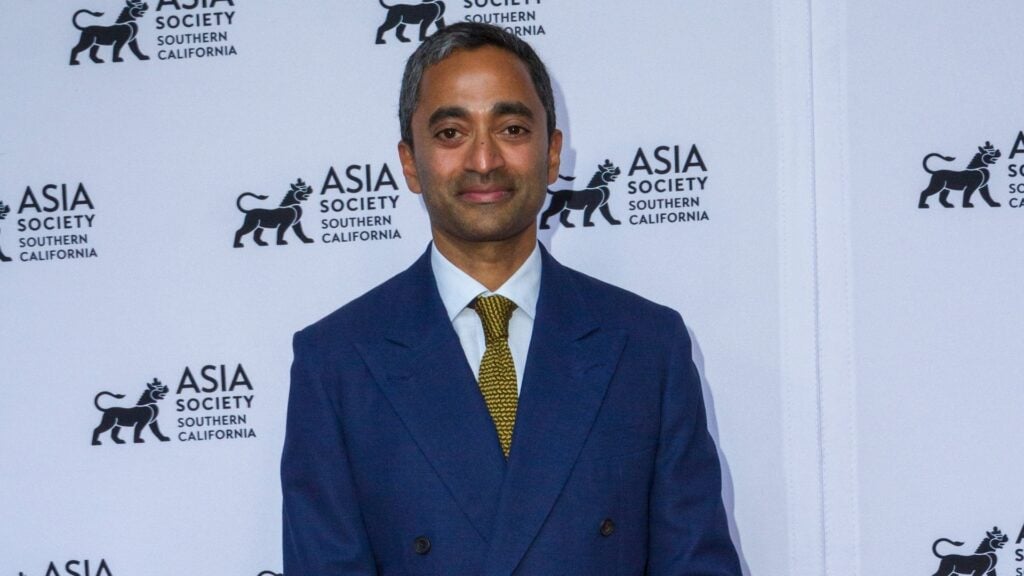
Chamath Warns of Risks in Tech Stocks Due to AI
- Structural Reset Warning: Chamath Palihapitiya warns that artificial intelligence is causing a structural reset in the pricing of high-risk assets, indicating that this change is likely to be permanent rather than temporary, which could impact investor strategies for tech stock valuations.
- Diminished Competitive Advantage: He refers to AI as a 'digital super-god' that can foster innovation but also allows competitors to retaliate quickly, leading to increased market pressure on tech companies and affecting their future profit expectations.
- Overvaluation Risks: Palihapitiya cautions investors against paying high premiums for future growth, suggesting that the high price-to-earnings ratios of tech stocks may face downward pressure due to uncertainties surrounding future earnings, impacting companies' financing capabilities and profitability.
- Equity Compensation Challenges: As valuations decline, tech companies may need to issue more shares or buy back shares to maintain stock prices and employee satisfaction, which could negatively affect their profitability and financial health.
See More

Bitcoin's Five-Year Outlook: Three Scenarios Explored

- Best-Case Scenario: In the best-case scenario, Bitcoin could reach $1 million by 2030, with high-profile investors like Cathie Wood and Coinbase CEO Brian Armstrong optimistic about new catalysts, such as the U.S. Treasury potentially buying Bitcoin, which could trigger a bull market.
- Base-Case Analysis: In the base-case scenario, Bitcoin may become highly correlated with tech stocks, posting annual returns of around 20%, leading to a projected price of $200,000 in five years, reflecting growing institutional investor interest.
- Worst-Case Scenario: In the worst-case scenario, the threat of quantum computing could see Bitcoin's price fall below $30,000, validating long-time skeptics like Peter Schiff and severely undermining market confidence.
- Market Expectation Adjustment: Despite Bitcoin's stellar performance over the past decade, it may struggle to double in value in the next ten years, prompting investors to remain cautious and consider other high-return stocks.
See More

Can XRP and Shiba Inu Reach $3?
- Shiba Inu Supply Issues: Currently trading at approximately $0.000006, Shiba Inu has a circulating supply of around 589 trillion coins, and to reach $3, it would require a market cap of about $1.77 quadrillion, far exceeding the global crypto market's $2.5 trillion, indicating an almost impossible price increase.
- Token Burning Mechanism: Shiba Inu attempts to address its massive supply through token burning; however, only 166,826,778 SHIB were burned in the 30 days ending April 15, which is insufficient to create meaningful price pressure given the vast circulating supply.
- XRP's Market Potential: XRP previously hit an all-time high of $3.65 in July 2025 and is currently priced around $1.35, requiring a 122% increase to reach $3, which would bring its market cap to approximately $184 billion, a challenging yet achievable target in a normal bull market.
- Ripple's Acquisition Strategy: Ripple spent about $2.4 billion on acquiring at least four crypto companies in 2025, with the largest being Hidden Road, which connects the XRP Ledger to traditional financial clearing systems, enhancing XRP's role as a financial infrastructure and potentially driving its price recovery in the future.
See More
Nvidia's Stock Underperformance Despite Rapid Revenue Growth
- Significant Revenue Growth: Nvidia reported $68.1 billion in revenue for Q4 FY2026, a 73% increase year-over-year, with data center sales contributing $62.3 billion, up 75%, highlighting strong demand and market position in the AI sector.
- Capital Expenditure Commitments: The 'Magnificent Seven', including Alphabet, Microsoft, Amazon, and Meta, announced up to $700 billion in capital expenditures for 2023, which, while not all directed to Nvidia, will drive demand for its GPUs and impact future performance.
- Market Capitalization vs. Valuation: Despite Nvidia's market capitalization soaring to the highest in the past two years, its forward P/E ratio stands at 23.9, significantly below the three-year average of 79, indicating that the market may be underestimating its future growth potential, presenting a possible investment opportunity.
- Future Growth Expectations: CEO Jensen Huang forecasts that Nvidia could achieve $1 trillion in AI revenue by 2027, compared to just $215.9 billion in 2025, suggesting the company is on a trajectory of rapid growth that investors should closely monitor.
See More
Nvidia's Future Valuation Could Reach $20 Trillion
- Data Center Growth: Nvidia's data center business is projected to double in the coming years, targeting annual sales of $930 billion, which will drive the company's market capitalization towards $20 trillion, highlighting its critical role in AI infrastructure.
- Market Share Challenges: Despite CEO Jensen Huang's upward revisions on revenue and profit forecasts, Nvidia's price-to-sales ratio remains below historical averages, leading investors to question its ability to capture market share in the accelerating AI infrastructure spending, potentially impacting short-term stock performance.
- Optimistic Revenue Outlook: Analyst consensus estimates project Nvidia's revenue to reach $480 billion in fiscal 2028 and $758 billion by fiscal 2031, nearly doubling Wall Street's expectations from a year ago, reflecting the accelerating capital expenditure cycles among AI hyperscalers.
- Surge in Inference Demand: As the demand for AI model inference increases, Nvidia's overall market opportunity is expected to expand, and with efficiency improvements from its next-generation architecture, the company is poised to achieve premium pricing and unlock new revenue streams, solidifying its dominant position in enterprise infrastructure budgets.
See More
Iren's AI Computing Potential Shows Significant Promise
- Massive Market Potential: Iren's stock skyrocketed 775% over the past year, reflecting strong demand in the AI computing sector, and despite being 36.5% below all-time highs, it has the potential for a 10x return in the future.
- New Land Acquisition: Iren secured 1.6 gigawatts of grid-connected land in Oklahoma, complementing its 160 megawatts of data centers in Canada and 2.75 gigawatts in Texas, bringing its total capacity to 4.5 gigawatts and enhancing its competitive edge.
- Optimistic Revenue Forecast: The partnership with Microsoft is projected to generate $1.94 billion in annualized revenue with an 85% project-level EBITDA margin, laying a solid foundation for Iren's future growth.
- Significant Financing Challenges: Although Iren's potential earnings could reach $43.65 billion, the substantial capital required for building data centers poses a significant funding challenge, likely necessitating external financing that could dilute shareholder value.
See More
Chamath Warns of Risks in Tech Stocks Due to AI
- Structural Reset Warning: Chamath Palihapitiya warns that artificial intelligence is causing a structural reset in the pricing of high-risk assets, indicating that this change is likely to be permanent rather than temporary, which could impact investor strategies for tech stock valuations.
- Diminished Competitive Advantage: He refers to AI as a 'digital super-god' that can foster innovation but also allows competitors to retaliate quickly, leading to increased market pressure on tech companies and affecting their future profit expectations.
- Overvaluation Risks: Palihapitiya cautions investors against paying high premiums for future growth, suggesting that the high price-to-earnings ratios of tech stocks may face downward pressure due to uncertainties surrounding future earnings, impacting companies' financing capabilities and profitability.
- Equity Compensation Challenges: As valuations decline, tech companies may need to issue more shares or buy back shares to maintain stock prices and employee satisfaction, which could negatively affect their profitability and financial health.
See More
Bitcoin's Five-Year Outlook: Three Scenarios Explored
- Best-Case Scenario: In the best-case scenario, Bitcoin could reach $1 million by 2030, with high-profile investors like Cathie Wood and Coinbase CEO Brian Armstrong optimistic about new catalysts, such as the U.S. Treasury potentially buying Bitcoin, which could trigger a bull market.
- Base-Case Analysis: In the base-case scenario, Bitcoin may become highly correlated with tech stocks, posting annual returns of around 20%, leading to a projected price of $200,000 in five years, reflecting growing institutional investor interest.
- Worst-Case Scenario: In the worst-case scenario, the threat of quantum computing could see Bitcoin's price fall below $30,000, validating long-time skeptics like Peter Schiff and severely undermining market confidence.
- Market Expectation Adjustment: Despite Bitcoin's stellar performance over the past decade, it may struggle to double in value in the next ten years, prompting investors to remain cautious and consider other high-return stocks.
See More
Can XRP and Shiba Inu Reach $3?
- Shiba Inu Supply Issues: Currently trading at approximately $0.000006, Shiba Inu has a circulating supply of around 589 trillion coins, and to reach $3, it would require a market cap of about $1.77 quadrillion, far exceeding the global crypto market's $2.5 trillion, indicating an almost impossible price increase.
- Token Burning Mechanism: Shiba Inu attempts to address its massive supply through token burning; however, only 166,826,778 SHIB were burned in the 30 days ending April 15, which is insufficient to create meaningful price pressure given the vast circulating supply.
- XRP's Market Potential: XRP previously hit an all-time high of $3.65 in July 2025 and is currently priced around $1.35, requiring a 122% increase to reach $3, which would bring its market cap to approximately $184 billion, a challenging yet achievable target in a normal bull market.
- Ripple's Acquisition Strategy: Ripple spent about $2.4 billion on acquiring at least four crypto companies in 2025, with the largest being Hidden Road, which connects the XRP Ledger to traditional financial clearing systems, enhancing XRP's role as a financial infrastructure and potentially driving its price recovery in the future.
See More