Costco Faces Membership Renewal Challenges
Written by Emily J. Thompson, Senior Investment Analyst
Updated: Feb 26 2026
0mins
Source: Fool
- Underperformance: Despite the S&P 500's 16% rise, Costco's stock has dipped 3% over the past year, indicating relative weakness in the market that could impact investor confidence.
- Declining Renewal Rates: Costco's global membership renewal rate fell from 90.4% to 89.7%, primarily due to lower engagement from digitally signed members, which may lead to future revenue uncertainty.
- Strategic Adjustments: To address the decline in renewal rates, Costco plans to enhance digital communications, promote auto-renewal features, and introduce additional perks to increase perceived membership value and loyalty.
- Future Growth Outlook: Despite renewal pressures, analysts expect Costco's net sales and EPS to grow at CAGRs of 8% and 11% from 2025 to 2028, indicating that its long-term investment value remains intact.
Trade with 70% Backtested Accuracy
Stop guessing "Should I Buy COST?" and start using high-conviction signals backed by rigorous historical data.
Sign up today to access powerful investing tools and make smarter, data-driven decisions.
Analyst Views on COST
Wall Street analysts forecast COST stock price to rise
24 Analyst Rating
19 Buy
4 Hold
1 Sell
Strong Buy
Current: 1050.450

Low
769.00
Averages
1061
High
1205
Current: 1050.450
Low
769.00
Averages
1061
High
1205
About COST
Costco Wholesale Corporation (Costco) operates membership warehouses and e-commerce sites that offer a selection of nationally branded and private-label products in a wide range of categories. The Company buys the majority of its merchandise directly from suppliers and route it to cross-docking consolidation points (depots) or directly to its warehouses. It operates 891 warehouses, including 614 in the United States and Puerto Rico, 108 in Canada, 40 in Mexico, 35 in Japan, 29 in the United Kingdom, 19 in Korea, 15 in Australia, 14 in Taiwan, seven in China, five in Spain, two in France, and one each in Iceland, New Zealand and Sweden. It also operates e-commerce sites in the United States, Canada, the United Kingdom, Mexico, Korea, Taiwan, Japan and Australia. The Company provides wide selection of merchandise, plus the convenience of specialty departments and exclusive member services.
About the author

Emily J. Thompson
Emily J. Thompson, a Chartered Financial Analyst (CFA) with 12 years in investment research, graduated with honors from the Wharton School. Specializing in industrial and technology stocks, she provides in-depth analysis for Intellectia’s earnings and market brief reports.
Wall Street Trading Week Outlook and Focus
- Salesforce Earnings Outlook: Salesforce is set to report earnings on Wednesday, with market concerns about its AI business still prevalent; analysts expect revenue of $11.05 billion and EPS of $3.12, and strong revenue growth could alleviate worries about slowing growth in its legacy business.
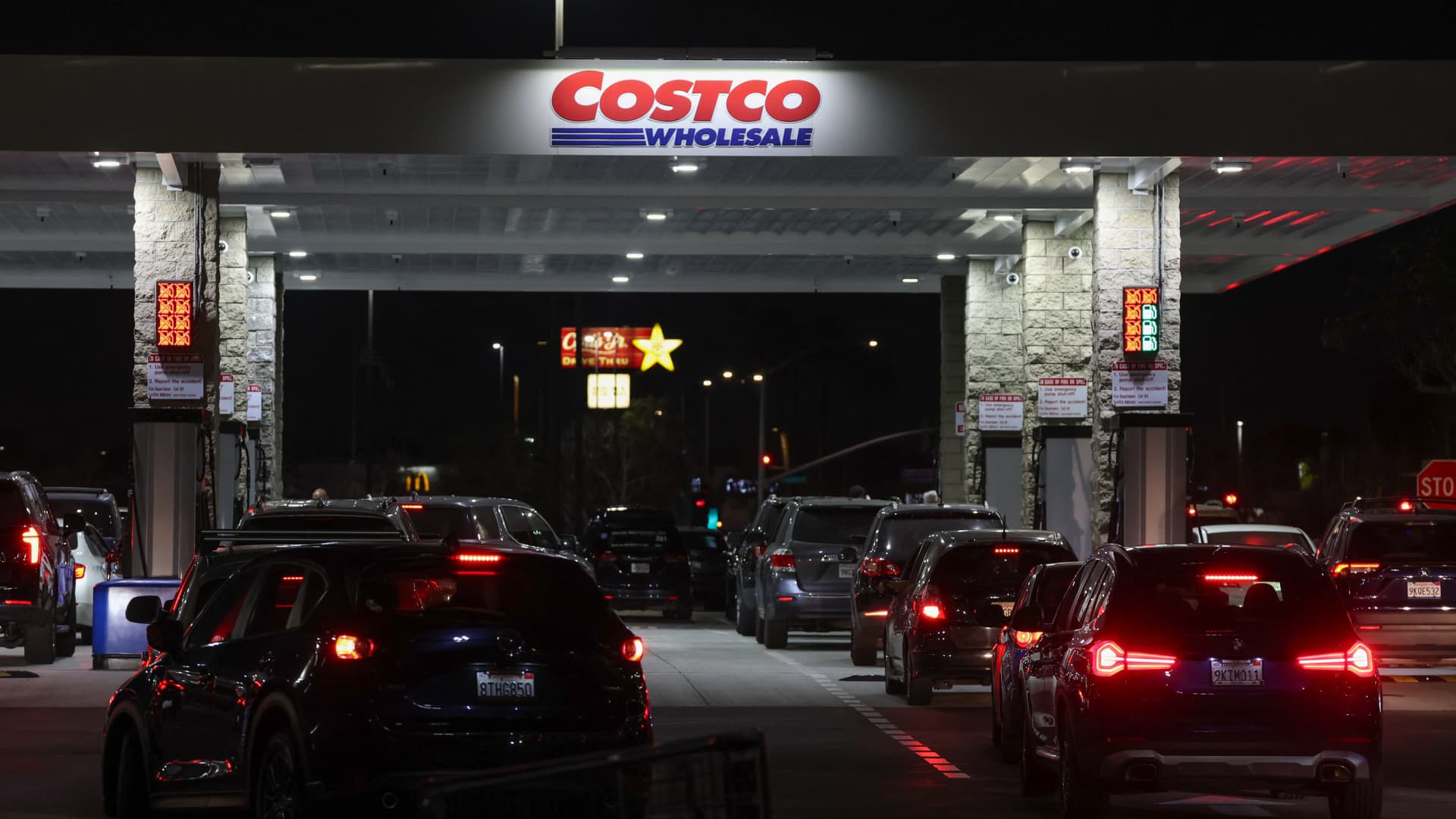
- Costco Membership Renewal Challenges: Costco will report earnings on Thursday, with expected revenue of $69.73 billion and EPS of $4.93; while high oil prices may pressure profit margins, its membership model and bulk selling strategy are likely to attract consumers, especially during periods of rising gas prices.
- Economic Data Focus: The personal consumption expenditures (PCE) price index will be released on Thursday, with a year-over-year increase expected at 3.8% and a core increase of 3.3%, which will influence the Federal Reserve's rate hike decisions, leaving the market uncertain about future rate changes.
- Investor Conference Season: This week marks the start of investor conference season, with Boeing, Johnson & Johnson, and others attending the Bernstein Strategic Decisions Conference, where analyst questions may reveal insights into market perceptions of company futures, making it a key event to watch.
See More

Walmart and Costco's Recession-Proof Advantages


- Operational Efficiency Analysis: Walmart and Costco have operating margins of 4.2% and 3.8%, respectively, and despite these low margins, both companies maintain stable growth by leveraging massive sales volumes and efficient supply chains to deliver customer value amid economic pressures.
- Private Label Competitiveness: Walmart's Great Value and Costco's Kirkland Signature private labels undercut name brands on price, catering to consumers' demand for value during economic downturns, thereby further solidifying their market share.
- E-commerce and Service Expansion: Walmart is rapidly expanding its e-commerce through Walmart+ while offering services like fuel, auto care, and pharmacy, enhancing customer loyalty and driving revenue growth despite challenges in the overall retail market.
- Valuation and Investment Recommendation: With Walmart's and Costco's P/E ratios at 44.4 and 54.6, indicating high valuations, Walmart's advantages in AI application and dividend growth make it a more attractive investment choice, especially in the current market environment.
See More

Analysis of Walmart and Costco's Market Performance
- Declining Dividend Yields: Both Walmart and Costco have dividend yields below 1%, indicating that while they perform steadily in the market, investors may face insufficient returns amid an economic slowdown, which could deter risk-averse investors.
- Low Operating Margins: With operating margins of 4.2% for Walmart and 3.8% for Costco, both companies convert only about $0.04 of every sales dollar into operating income; however, they offset this with massive sales volumes and efficient supply chains, maintaining competitive advantages.
- High Valuation Risks: Walmart's price-to-earnings ratio stands at 44.4, while Costco's is even higher at 54.6, suggesting that the market has fully recognized their competitive advantages, yet such high valuations may expose investors to significant risks in the current market environment.
- AI Technology Adoption: Walmart is actively leveraging artificial intelligence across its operations and customer experience, which is expected to enhance its operational efficiency and market competitiveness, while Costco continues to focus on brand value and customer loyalty, despite both companies appearing overpriced in the stock market.
See More

Costco's Dividend Growth and Market Valuation Analysis
- Stable Dividend Growth: Costco has consistently raised its quarterly dividend for 22 years, recently increasing it by about 13% to $1.47 per share, resulting in an annual dividend of $5.88, showcasing the company's strong profitability and cash flow, despite a current yield of only 0.6%.
- Special Dividend Payments: Every few years, Costco issues special dividends to shareholders, with the latest being $15 per share in January 2024, totaling approximately $6.7 billion, reflecting the company's ample cash flow and the likelihood of future special dividends as shareholder rewards.
- Membership Model Advantage: Costco's membership model ensures about 90% of members renew annually, with membership fee income rising nearly 14% to $1.355 billion in Q2 2026, highlighting the stability and resilience of its business model.
- Market Valuation Risks: Despite Costco's robust business model, its stock trades at about 53 times earnings, close to historical highs, which poses significant downside risk if growth slows, necessitating careful evaluation of its long-term investment value.
See More

Costco Increases Dividend for 22nd Consecutive Year
- Significant Dividend Increase: Costco raised its quarterly dividend by approximately 13% last month to $1.47 per share, resulting in an annual payout of $5.88, marking the 22nd consecutive year of dividend increases, which underscores the company's strong profitability and stable cash flow.
- Special Dividend Distribution: In January 2024, Costco distributed a special dividend of $15 per share, totaling around $6.7 billion, reflecting the company's ample cash flow and the likelihood of future special dividends to reward shareholders.
- Robust Membership Revenue: With a renewal rate near 90%, membership fee income rose nearly 14% year-over-year to $1.355 billion, indicating the stability and high-margin nature of its membership model, which provides a solid foundation for ongoing dividend payments.
- Market Valuation Risks: Despite Costco's strong business model, its stock currently trades at a high price-to-earnings ratio of about 53, posing valuation risks; any economic slowdown or setbacks in overseas expansion could pressure results, necessitating careful risk assessment by investors.
See More

Trump Claims Interim Agreement on Strait of Hormuz is Close

- Agreement Progress: President Trump stated that an interim agreement regarding the Strait of Hormuz is close to being finalized, although negotiations are still ongoing, which may alleviate market concerns over geopolitical tensions in the region.
- Geopolitical Impact: Should the agreement be reached, it would help ensure the safety of shipping through the Strait of Hormuz, thereby stabilizing global oil supply chains and reducing the risk of price volatility.
- Negotiation Dynamics: Trump's remarks indicate an active U.S. government stance in addressing tensions in the Middle East, which could influence international investor confidence in the region.
- Market Reaction Expectations: The market may respond positively to this news, with investors closely monitoring subsequent negotiation developments to assess potential impacts on the energy market.
See More
Wall Street Trading Week Outlook and Focus
- Salesforce Earnings Outlook: Salesforce is set to report earnings on Wednesday, with market concerns about its AI business still prevalent; analysts expect revenue of $11.05 billion and EPS of $3.12, and strong revenue growth could alleviate worries about slowing growth in its legacy business.
- Costco Membership Renewal Challenges: Costco will report earnings on Thursday, with expected revenue of $69.73 billion and EPS of $4.93; while high oil prices may pressure profit margins, its membership model and bulk selling strategy are likely to attract consumers, especially during periods of rising gas prices.
- Economic Data Focus: The personal consumption expenditures (PCE) price index will be released on Thursday, with a year-over-year increase expected at 3.8% and a core increase of 3.3%, which will influence the Federal Reserve's rate hike decisions, leaving the market uncertain about future rate changes.
- Investor Conference Season: This week marks the start of investor conference season, with Boeing, Johnson & Johnson, and others attending the Bernstein Strategic Decisions Conference, where analyst questions may reveal insights into market perceptions of company futures, making it a key event to watch.
See More
Walmart and Costco's Recession-Proof Advantages
- Operational Efficiency Analysis: Walmart and Costco have operating margins of 4.2% and 3.8%, respectively, and despite these low margins, both companies maintain stable growth by leveraging massive sales volumes and efficient supply chains to deliver customer value amid economic pressures.
- Private Label Competitiveness: Walmart's Great Value and Costco's Kirkland Signature private labels undercut name brands on price, catering to consumers' demand for value during economic downturns, thereby further solidifying their market share.
- E-commerce and Service Expansion: Walmart is rapidly expanding its e-commerce through Walmart+ while offering services like fuel, auto care, and pharmacy, enhancing customer loyalty and driving revenue growth despite challenges in the overall retail market.
- Valuation and Investment Recommendation: With Walmart's and Costco's P/E ratios at 44.4 and 54.6, indicating high valuations, Walmart's advantages in AI application and dividend growth make it a more attractive investment choice, especially in the current market environment.
See More
Analysis of Walmart and Costco's Market Performance
- Declining Dividend Yields: Both Walmart and Costco have dividend yields below 1%, indicating that while they perform steadily in the market, investors may face insufficient returns amid an economic slowdown, which could deter risk-averse investors.
- Low Operating Margins: With operating margins of 4.2% for Walmart and 3.8% for Costco, both companies convert only about $0.04 of every sales dollar into operating income; however, they offset this with massive sales volumes and efficient supply chains, maintaining competitive advantages.
- High Valuation Risks: Walmart's price-to-earnings ratio stands at 44.4, while Costco's is even higher at 54.6, suggesting that the market has fully recognized their competitive advantages, yet such high valuations may expose investors to significant risks in the current market environment.
- AI Technology Adoption: Walmart is actively leveraging artificial intelligence across its operations and customer experience, which is expected to enhance its operational efficiency and market competitiveness, while Costco continues to focus on brand value and customer loyalty, despite both companies appearing overpriced in the stock market.
See More
Costco's Dividend Growth and Market Valuation Analysis
- Stable Dividend Growth: Costco has consistently raised its quarterly dividend for 22 years, recently increasing it by about 13% to $1.47 per share, resulting in an annual dividend of $5.88, showcasing the company's strong profitability and cash flow, despite a current yield of only 0.6%.
- Special Dividend Payments: Every few years, Costco issues special dividends to shareholders, with the latest being $15 per share in January 2024, totaling approximately $6.7 billion, reflecting the company's ample cash flow and the likelihood of future special dividends as shareholder rewards.
- Membership Model Advantage: Costco's membership model ensures about 90% of members renew annually, with membership fee income rising nearly 14% to $1.355 billion in Q2 2026, highlighting the stability and resilience of its business model.
- Market Valuation Risks: Despite Costco's robust business model, its stock trades at about 53 times earnings, close to historical highs, which poses significant downside risk if growth slows, necessitating careful evaluation of its long-term investment value.
See More
Costco Increases Dividend for 22nd Consecutive Year
- Significant Dividend Increase: Costco raised its quarterly dividend by approximately 13% last month to $1.47 per share, resulting in an annual payout of $5.88, marking the 22nd consecutive year of dividend increases, which underscores the company's strong profitability and stable cash flow.
- Special Dividend Distribution: In January 2024, Costco distributed a special dividend of $15 per share, totaling around $6.7 billion, reflecting the company's ample cash flow and the likelihood of future special dividends to reward shareholders.
- Robust Membership Revenue: With a renewal rate near 90%, membership fee income rose nearly 14% year-over-year to $1.355 billion, indicating the stability and high-margin nature of its membership model, which provides a solid foundation for ongoing dividend payments.
- Market Valuation Risks: Despite Costco's strong business model, its stock currently trades at a high price-to-earnings ratio of about 53, posing valuation risks; any economic slowdown or setbacks in overseas expansion could pressure results, necessitating careful risk assessment by investors.
See More
Trump Claims Interim Agreement on Strait of Hormuz is Close
- Agreement Progress: President Trump stated that an interim agreement regarding the Strait of Hormuz is close to being finalized, although negotiations are still ongoing, which may alleviate market concerns over geopolitical tensions in the region.
- Geopolitical Impact: Should the agreement be reached, it would help ensure the safety of shipping through the Strait of Hormuz, thereby stabilizing global oil supply chains and reducing the risk of price volatility.
- Negotiation Dynamics: Trump's remarks indicate an active U.S. government stance in addressing tensions in the Middle East, which could influence international investor confidence in the region.
- Market Reaction Expectations: The market may respond positively to this news, with investors closely monitoring subsequent negotiation developments to assess potential impacts on the energy market.
See More