CoStar Group Refutes D.E. Shaw's Misleading Claims
CoStar Group issued the following statement: "Contrary to D. E. Shaw's misleading claims, CoStar Group has never reported Homes.com results as a separate segment. CoStar Group changed our reporting segments from geography-based to product portfolio-based to align with how we run our business. Our new segment disclosure actually offers more transparency by providing audited revenue, EBITDA, Adjusted EBITDA and margin disclosures for both the Residential and Commercial segments in our recent 10-K, as well as continuing to provide disaggregated revenue disclosures. Investors should expect similar Homes.com disclosures on our earnings calls that CoStar Group has always provided to stockholders. If D. E. Shaw is worried about transparency, it should start with itself. D.E. Shaw has never disclosed its economic exposure to CoStar Group, or even if it is a net long investor. Public filings suggest D. E. Shaw owns just 0.22% of CoStar Group's common stock, but almost 4x that value in CoStar Group competitors1 who would directly benefit from D. E. Shaw's push for us to abandon Homes.com and eliminate the fastest growing residential real estate platform in the industry. CoStar Group stockholders should ask if D. E. Shaw's real agenda is to unlock value through its investment in CoStar Group or in our competitors at the expense of CoStar Group stockholders. CoStar Group has also added Clare Locke, LLP, a leading litigation boutique representing clients in complex defamation matters and high-profile reputational attacks, to bolster its team of advisors, including Goldman Sachs & Co. LLC, as financial advisor, Latham & Watkins LLP as legal counsel, and Joele Frank, strategic communications advisor."
Trade with 70% Backtested Accuracy
Analyst Views on CSGP

About CSGP
About the author

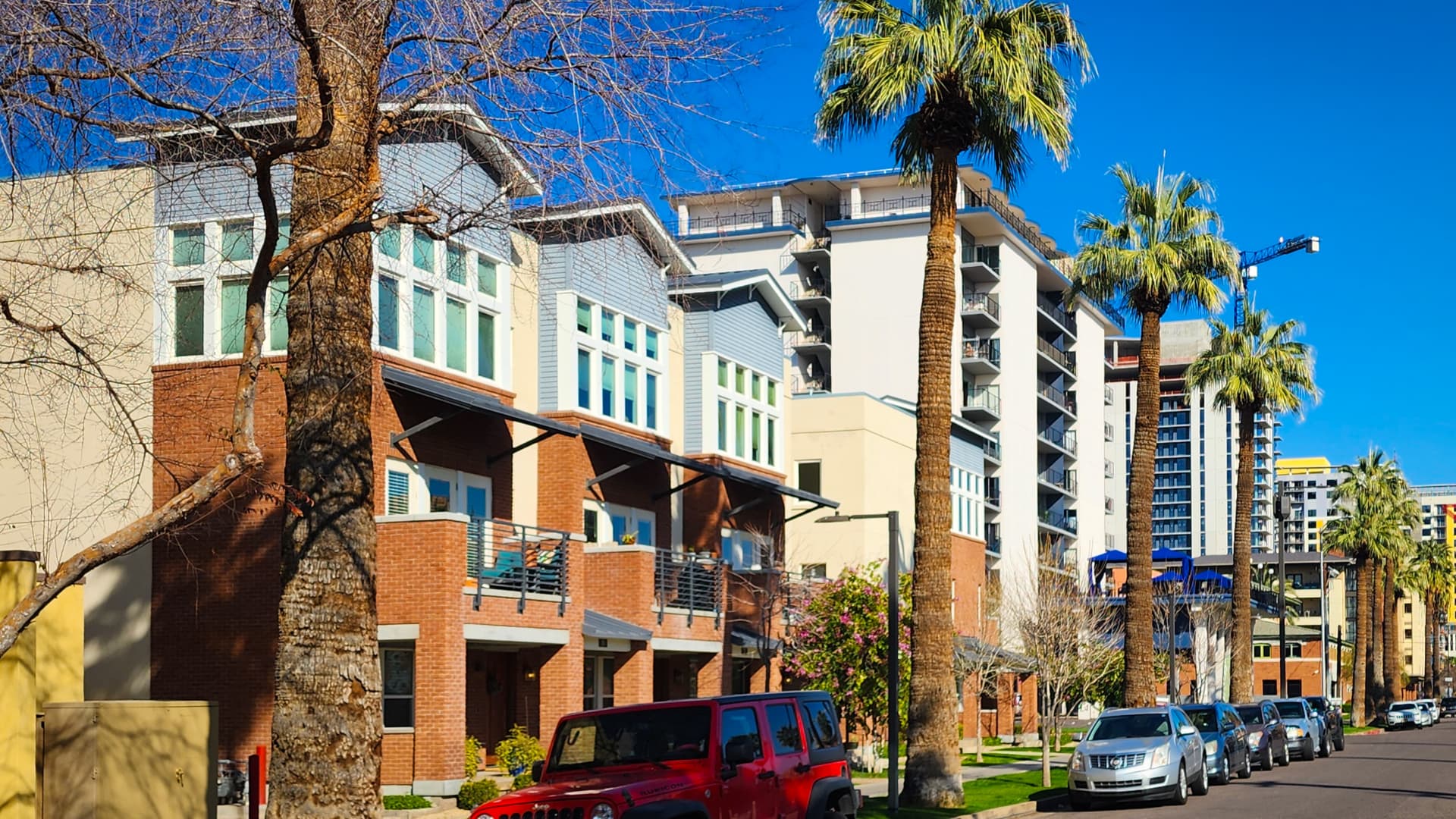
Apartment Rent Growth Slows Significantly

- Weak Rent Growth: According to Apartment List, the national median rent rose by only 0.4% in March to $1,363, significantly lower than last year's 0.6%, indicating a trend of sluggish rent growth.
- Annual Rent Decline: March rents fell by 1.7% year-over-year, marking the largest drop since 2017, reflecting a significant weakening in market demand and a 5.5% decrease from the peak in 2022.
- Rising Vacancy Rates: The national apartment vacancy rate remained at 7.3% in March, unchanged from February, reaching the highest level since 2017, highlighting the growing conflict between new apartment supply and sluggish demand.
- Increased Rent Concessions: As of January, 16.6% of stabilized apartment landlords were offering concessions such as free rent or gift cards, indicating heightened competition in the market, particularly in cities like Austin, Phoenix, and Denver where rent declines are notable.

U.S. Apartment Rent Growth Trends Analysis
- Rent Growth Overview: In March 2026, U.S. apartment rents increased to an average of $1,723, marking a 0.2% rise from February's $1,719, representing the fourth consecutive month of positive growth, indicating a gradual recovery after a flat to declining trend in the latter half of 2025.
- Regional Performance Disparities: While all five regions posted month-over-month increases, with the Midwest and Mountain regions leading at +0.3%, year-over-year growth was uneven, with the Midwest at +1.9% and declines in the South and Mountain regions at -1.3% and -2.2%, respectively, highlighting ongoing supply-demand imbalances.
- Market Dynamics Shift: Among the top 50 markets, 46 experienced month-over-month rent growth in March, led by San Francisco (+0.8%), Boston (+0.7%), and East Bay (+0.6%), while Oklahoma City and Northern New Jersey saw slight declines of -0.1%, reflecting intense market competition.
- Ongoing Supply Pressure: Despite many markets moving past peak construction activity, significant inventory overhang persists, particularly in Austin (-4.8% year-over-year) and Denver (-3.5%), indicating that new supply continues to outpace demand, thereby restraining further rent growth.

Southbank East Sees Demand Recovery
- Demand Recovery: In Q4 2025, Southbank East recorded an annual net absorption exceeding 200,000 sq ft, marking the strongest quarterly performance in over a decade, indicating signs of market recovery after two years of declining demand.
- Vacancy Rate Shift: The submarket's vacancy rate hit a 12-year high of 11.5% at the beginning of 2025, significantly up from less than 2% in 2019, reflecting the impact of new space deliveries coinciding with a slowdown in leasing activity.
- Development Completions: Nearly 1 million sq ft of new space has been delivered in Southbank East since 2020, with this development volume being more than five times that of the preceding five-year period, although over 20% of this new space remains available, suggesting gradual market improvement.
- Leasing Market Dynamics: The vacancy rate for floorplates larger than 15,000 sq ft stands at just 8.3%, lower than the London-wide rate of over 12%, indicating that tenants seeking larger spaces may face limited options, potentially impacting future leasing decisions.

Single Women Outpace Men in Homebuying Trends


- Income Disparity Reversal: According to the National Association of Realtors, first-time single women homebuyers have a median income of $73,000, surpassing single men's $66,400, marking a potential shift in long-term homebuying trends favoring women.
- Rising Homebuyer Proportion: Single women account for 25% of first-time homebuyers compared to 10% for single men, a significant increase from 11% and 9% in 1985, indicating a growing recognition of homeownership as a wealth-building tool among women.
- Mismatch of Home Prices and Income: From 2000 to 2024, median household income rose by approximately 155%, while home prices surged by about 207%, creating substantial challenges for single buyers, particularly women relying on a single income to qualify for mortgages.
- Financial Sacrifices for Goals: Among single women buyers, 41% reported making financial sacrifices to save for a down payment, compared to 31% of men, highlighting women's commitment to achieving homeownership and financial independence despite economic hurdles.
2026 CoStar Impact Awards Winners Announced
- Expert Selection: A panel of 570 industry experts across 129 global markets selected the winners of the 2026 CoStar Impact Awards, highlighting exemplary achievements in commercial real estate that elevate industry standards and market vitality.
- Outstanding Development: JPMorgan Chase's new headquarters at 270 Park Ave in New York City was recognized as the Commercial Development of the Year, with a 60-story, 2.5 million-square-foot skyscraper representing a $3 billion investment, expected to accommodate over 14,000 employees and set a new benchmark for premium office space.
- Montreal Innovation: The Champlain condo rental project in Montreal's Ville-Marie district was honored as the Commercial Development of the Year, transforming the former Odeon Champlain cinema site into a mixed-use development with 226 units, achieving 65% occupancy shortly after launch and advancing transit-oriented density goals.
- Defense Manufacturing Investment: Anduril Industries' lease at 4611 Airbase Road in Columbus, Ohio was awarded Lease of the Year, expected to create over 4,000 direct jobs, marking the largest job-creation project in Ohio's history and significantly boosting local economic growth and tax revenues.

Nomura Focused Large Growth ETF Sees Unusual Trading Volume Surge


- Volume Surge: The Nomura Focused Large Growth ETF experienced an unusual trading volume of over 699,000 shares on Monday afternoon, significantly exceeding the three-month average of approximately 69,000 shares, indicating heightened market interest in the ETF.
- Key Component Performance: Among the ETF's components, Nvidia traded over 100.9 million shares, rising about 1.4%, while Amazon saw over 22.7 million shares traded with a price increase of approximately 2.8%, reflecting strong investor interest in tech stocks.
- Ferrari's Strong Performance: Ferrari stood out on Monday with a price increase of about 4.2%, showcasing its robust market performance and investor confidence.
- Costar Group Lagging: In contrast, Costar Group underperformed with a decline of about 1.3%, potentially reflecting market concerns regarding its future growth prospects.
Apartment Rent Growth Slows Significantly
- Weak Rent Growth: According to Apartment List, the national median rent rose by only 0.4% in March to $1,363, significantly lower than last year's 0.6%, indicating a trend of sluggish rent growth.
- Annual Rent Decline: March rents fell by 1.7% year-over-year, marking the largest drop since 2017, reflecting a significant weakening in market demand and a 5.5% decrease from the peak in 2022.
- Rising Vacancy Rates: The national apartment vacancy rate remained at 7.3% in March, unchanged from February, reaching the highest level since 2017, highlighting the growing conflict between new apartment supply and sluggish demand.
- Increased Rent Concessions: As of January, 16.6% of stabilized apartment landlords were offering concessions such as free rent or gift cards, indicating heightened competition in the market, particularly in cities like Austin, Phoenix, and Denver where rent declines are notable.
U.S. Apartment Rent Growth Trends Analysis
- Rent Growth Overview: In March 2026, U.S. apartment rents increased to an average of $1,723, marking a 0.2% rise from February's $1,719, representing the fourth consecutive month of positive growth, indicating a gradual recovery after a flat to declining trend in the latter half of 2025.
- Regional Performance Disparities: While all five regions posted month-over-month increases, with the Midwest and Mountain regions leading at +0.3%, year-over-year growth was uneven, with the Midwest at +1.9% and declines in the South and Mountain regions at -1.3% and -2.2%, respectively, highlighting ongoing supply-demand imbalances.
- Market Dynamics Shift: Among the top 50 markets, 46 experienced month-over-month rent growth in March, led by San Francisco (+0.8%), Boston (+0.7%), and East Bay (+0.6%), while Oklahoma City and Northern New Jersey saw slight declines of -0.1%, reflecting intense market competition.
- Ongoing Supply Pressure: Despite many markets moving past peak construction activity, significant inventory overhang persists, particularly in Austin (-4.8% year-over-year) and Denver (-3.5%), indicating that new supply continues to outpace demand, thereby restraining further rent growth.
Southbank East Sees Demand Recovery
- Demand Recovery: In Q4 2025, Southbank East recorded an annual net absorption exceeding 200,000 sq ft, marking the strongest quarterly performance in over a decade, indicating signs of market recovery after two years of declining demand.
- Vacancy Rate Shift: The submarket's vacancy rate hit a 12-year high of 11.5% at the beginning of 2025, significantly up from less than 2% in 2019, reflecting the impact of new space deliveries coinciding with a slowdown in leasing activity.
- Development Completions: Nearly 1 million sq ft of new space has been delivered in Southbank East since 2020, with this development volume being more than five times that of the preceding five-year period, although over 20% of this new space remains available, suggesting gradual market improvement.
- Leasing Market Dynamics: The vacancy rate for floorplates larger than 15,000 sq ft stands at just 8.3%, lower than the London-wide rate of over 12%, indicating that tenants seeking larger spaces may face limited options, potentially impacting future leasing decisions.
Single Women Outpace Men in Homebuying Trends
- Income Disparity Reversal: According to the National Association of Realtors, first-time single women homebuyers have a median income of $73,000, surpassing single men's $66,400, marking a potential shift in long-term homebuying trends favoring women.
- Rising Homebuyer Proportion: Single women account for 25% of first-time homebuyers compared to 10% for single men, a significant increase from 11% and 9% in 1985, indicating a growing recognition of homeownership as a wealth-building tool among women.
- Mismatch of Home Prices and Income: From 2000 to 2024, median household income rose by approximately 155%, while home prices surged by about 207%, creating substantial challenges for single buyers, particularly women relying on a single income to qualify for mortgages.
- Financial Sacrifices for Goals: Among single women buyers, 41% reported making financial sacrifices to save for a down payment, compared to 31% of men, highlighting women's commitment to achieving homeownership and financial independence despite economic hurdles.
2026 CoStar Impact Awards Winners Announced
- Expert Selection: A panel of 570 industry experts across 129 global markets selected the winners of the 2026 CoStar Impact Awards, highlighting exemplary achievements in commercial real estate that elevate industry standards and market vitality.
- Outstanding Development: JPMorgan Chase's new headquarters at 270 Park Ave in New York City was recognized as the Commercial Development of the Year, with a 60-story, 2.5 million-square-foot skyscraper representing a $3 billion investment, expected to accommodate over 14,000 employees and set a new benchmark for premium office space.
- Montreal Innovation: The Champlain condo rental project in Montreal's Ville-Marie district was honored as the Commercial Development of the Year, transforming the former Odeon Champlain cinema site into a mixed-use development with 226 units, achieving 65% occupancy shortly after launch and advancing transit-oriented density goals.
- Defense Manufacturing Investment: Anduril Industries' lease at 4611 Airbase Road in Columbus, Ohio was awarded Lease of the Year, expected to create over 4,000 direct jobs, marking the largest job-creation project in Ohio's history and significantly boosting local economic growth and tax revenues.
Nomura Focused Large Growth ETF Sees Unusual Trading Volume Surge
- Volume Surge: The Nomura Focused Large Growth ETF experienced an unusual trading volume of over 699,000 shares on Monday afternoon, significantly exceeding the three-month average of approximately 69,000 shares, indicating heightened market interest in the ETF.
- Key Component Performance: Among the ETF's components, Nvidia traded over 100.9 million shares, rising about 1.4%, while Amazon saw over 22.7 million shares traded with a price increase of approximately 2.8%, reflecting strong investor interest in tech stocks.
- Ferrari's Strong Performance: Ferrari stood out on Monday with a price increase of about 4.2%, showcasing its robust market performance and investor confidence.
- Costar Group Lagging: In contrast, Costar Group underperformed with a decline of about 1.3%, potentially reflecting market concerns regarding its future growth prospects.