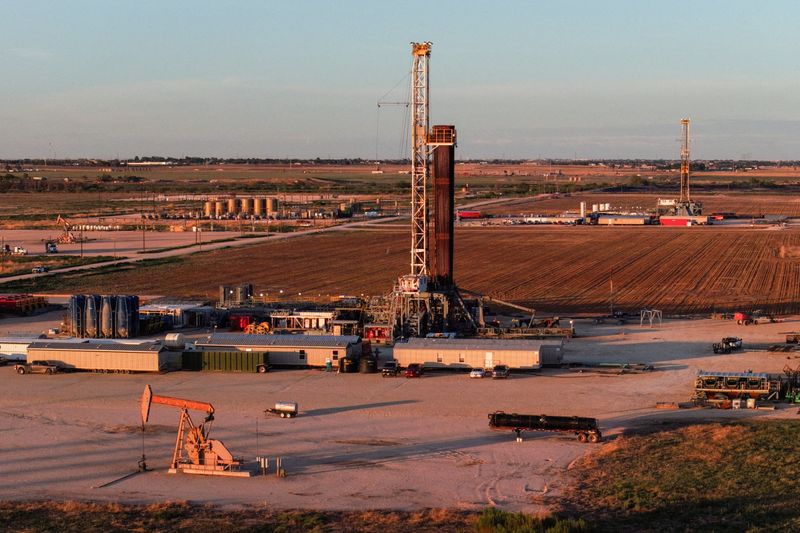
Chevron Thrives Amid Geopolitical Tensions and Rising Oil Prices
Written by Emily J. Thompson, Senior Investment Analyst
Updated: 47 minutes ago
0mins
Should l Buy CVX?
Source: Fool
- Consistent Shareholder Returns: Chevron has returned over $5 billion in capital to shareholders over the last 16 quarters, with $3.5 billion allocated to dividends, showcasing its robust financial management in a volatile market and reinforcing its position as a preferred investment choice.
- Low Break-even Cost: With a corporate break-even price of $50 per barrel for Brent crude, Chevron's investments in high-quality assets enable it to continue rewarding shareholders in the current environment of nearly $100 oil prices, and this low break-even point is expected to persist through 2030.
- Optimistic Market Outlook: The U.S. Energy Information Administration projects oil prices could peak at $115 per barrel in Q2 and remain above $90 until Q4, providing a strong tailwind for Chevron's earnings and enhancing its attractiveness as an energy investment.
- Strategic Asset Integration: Chevron's successful integration of Hess, acquiring a 30% stake in the Stabroek Block containing over 11 billion barrels of oil equivalent, demonstrates its strategic focus on high-margin assets, thereby strengthening its competitive position in the market.
Trade with 70% Backtested Accuracy
Stop guessing "Should I Buy CVX?" and start using high-conviction signals backed by rigorous historical data.
Sign up today to access powerful investing tools and make smarter, data-driven decisions.
Analyst Views on CVX
Wall Street analysts forecast CVX stock price to fall
19 Analyst Rating
15 Buy
4 Hold
0 Sell
Strong Buy
Current: 182.500

Low
158.00
Averages
176.95
High
206.00
Current: 182.500
Low
158.00
Averages
176.95
High
206.00
About CVX
Chevron Corporation is an integrated energy company. The Company produces crude oil and natural gas; manufactures transportation fuels, lubricants, petrochemicals and additives; and develops technologies that enhance its business and industry. The Company’s segments include Upstream and Downstream. Upstream operations consist primarily of exploring for, developing, producing and transporting crude oil and natural gas; liquefaction, transportation and regasification associated with LNG; transporting crude oil by major international oil export pipelines; processing, transporting, storage and marketing of natural gas; carbon capture and storage; and a gas-to-liquids plant. Downstream operations consist primarily of the refining of crude oil into petroleum products; marketing crude oil, refined products, and lubricants; manufacturing and marketing of renewable fuels, and transporting of crude oil and refined products by pipeline, marine vessel, motor equipment and rail car.
About the author

Emily J. Thompson
Emily J. Thompson, a Chartered Financial Analyst (CFA) with 12 years in investment research, graduated with honors from the Wharton School. Specializing in industrial and technology stocks, she provides in-depth analysis for Intellectia’s earnings and market brief reports.

Oil Stocks Surge Amid Ongoing Conflict in Iran

- Shareholder Return History: Chevron has returned over $5 billion in capital to shareholders over the last 16 quarters, with $3.5 billion allocated to dividends, demonstrating the company's ability to consistently reward investors even in volatile markets, thereby enhancing investor confidence.
- Low Break-even Point: Chevron maintains a break-even price of $50 per barrel for Brent crude oil, thanks to investments in high-quality assets and disciplined cost management, allowing it to generate higher free cash flow in the current environment where prices are nearing $100 per barrel.
- Optimistic Market Outlook: The U.S. Energy Information Administration projects oil prices could peak at $115 per barrel in the second quarter and not fall below $90 until the fourth quarter, providing a strong tailwind for Chevron's earnings and further solidifying its position in the energy market.
- Investment in High-margin Assets: Chevron focuses on high-margin assets such as the Permian Basin and the Gulf of Mexico, successfully integrating Hess to gain a 30% stake in the Stabroek Block, ensuring future growth potential and competitive strength in the market.
See More

Chevron Thrives Amid Geopolitical Tensions and Rising Oil Prices
- Consistent Shareholder Returns: Chevron has returned over $5 billion in capital to shareholders over the last 16 quarters, with $3.5 billion allocated to dividends, showcasing its robust financial management in a volatile market and reinforcing its position as a preferred investment choice.
- Low Break-even Cost: With a corporate break-even price of $50 per barrel for Brent crude, Chevron's investments in high-quality assets enable it to continue rewarding shareholders in the current environment of nearly $100 oil prices, and this low break-even point is expected to persist through 2030.
- Optimistic Market Outlook: The U.S. Energy Information Administration projects oil prices could peak at $115 per barrel in Q2 and remain above $90 until Q4, providing a strong tailwind for Chevron's earnings and enhancing its attractiveness as an energy investment.
- Strategic Asset Integration: Chevron's successful integration of Hess, acquiring a 30% stake in the Stabroek Block containing over 11 billion barrels of oil equivalent, demonstrates its strategic focus on high-margin assets, thereby strengthening its competitive position in the market.
See More

Steady Investment Choices Amid High Oil Prices


- Attractive Yields: Enterprise Products Partners and Enbridge offer dividend yields of 5.6% and 5.1%, respectively, and despite the tax complexities for investors, their stable cash flows and long histories of dividend growth make them ideal for conservative investors.
- Stable Cash Flows: Both companies operate large energy infrastructure in North America, where their fee-based model prioritizes transportation volumes over energy price fluctuations, allowing them to maintain strong cash flows even in a high oil price environment, ensuring dividend sustainability.
- Chevron's Diversification Advantage: Chevron provides a 3.7% dividend yield, and with its globally diversified operations and strong balance sheet (debt-to-equity ratio of about 0.25), it demonstrates resilience amid oil price volatility, making it suitable for investors looking to invest directly in oil production.
- Future Oil Price Expectations: While current oil prices are high, history shows that volatility is the norm, so investors should proceed cautiously, considering the potential for future price declines; the stable dividends from Enterprise, Enbridge, and Chevron provide a safety margin for investors.
See More

Oil Price Volatility Influences Investment Strategies
- High-Yield Investment Options: Enterprise Products Partners and Enbridge offer attractive yields of 5.6% and 5.1%, respectively, appealing to conservative investors seeking stable cash flows amidst high oil prices, thereby mitigating investment risks.
- Dividend Reliability: Enterprise has increased its dividend for 27 consecutive years, while Enbridge has done so for 31 years, demonstrating their ability to maintain stability in a volatile energy market, which enhances investor confidence.
- Attractiveness of Chevron: Despite oil price fluctuations, Chevron provides a 3.7% dividend yield, and its strong balance sheet, with a debt-to-equity ratio of approximately 0.25, showcases its resilience throughout the energy cycle, making it suitable for investors wanting direct exposure to oil production.
- Cautious Investment Advice: Given the current geopolitical tensions driving up oil prices, investors should proceed with caution, as high prices are not sustainable; opting for stable high-yield stocks like Enterprise and Enbridge can help protect investments when oil prices eventually decline.
See More

Iran War Reshapes Global Energy Landscape


- Energy Security Priority: The Iranian blockade of the Strait of Hormuz has resulted in a loss of nearly one billion barrels of oil, highlighting the fragility of the global energy system and prompting governments and companies to prioritize energy security, leading to increased investment in oil exploration and production.
- Supply Diversification Demand: The closure of the Strait has underscored Asian economies' dependence on Middle Eastern crude oil and LNG, prompting nations to reassess their energy security and seek diversified supplies to mitigate risks in the future.
- Inventory Rebuilding Plans: Due to war impacts, global oil inventories have been hit, and countries are expected to rebuild stockpiles above historical levels to ensure energy security, further driving demand for U.S. crude.
- African Investment Opportunities: Elevated oil prices will stimulate investments in offshore and deepwater opportunities in Africa, the Americas, and Asia, with SLB's CEO noting Africa as a key long-term investment area, anticipating a favorable shift in portfolio allocations towards the region.
See More
Chevron: The Top Long-Term Energy Stock to Hold
- Sector Performance: The energy sector has emerged as the best-performing sector this year, with Chevron, as an oil and gas giant, showcasing strong market competitiveness through its operations across the entire value chain, including upstream, midstream, and downstream.
- Diverse Revenue Streams: Chevron's business encompasses exploration, production, transportation, and refining, ensuring that it can maintain profitability through multiple revenue channels during market fluctuations, thereby enhancing its long-term investment appeal.
- Stable Dividend Growth: With 39 consecutive years of dividend increases, Chevron demonstrates its ability to create shareholder value even amid economic cycles, further boosting investor confidence in its stock.
- Optimistic Market Outlook: Despite the cyclical nature of the energy industry, Chevron's vertically integrated business model allows it to effectively manage market downturn risks, making it a prudent choice for long-term stockholders.
See More
Oil Stocks Surge Amid Ongoing Conflict in Iran
- Shareholder Return History: Chevron has returned over $5 billion in capital to shareholders over the last 16 quarters, with $3.5 billion allocated to dividends, demonstrating the company's ability to consistently reward investors even in volatile markets, thereby enhancing investor confidence.
- Low Break-even Point: Chevron maintains a break-even price of $50 per barrel for Brent crude oil, thanks to investments in high-quality assets and disciplined cost management, allowing it to generate higher free cash flow in the current environment where prices are nearing $100 per barrel.
- Optimistic Market Outlook: The U.S. Energy Information Administration projects oil prices could peak at $115 per barrel in the second quarter and not fall below $90 until the fourth quarter, providing a strong tailwind for Chevron's earnings and further solidifying its position in the energy market.
- Investment in High-margin Assets: Chevron focuses on high-margin assets such as the Permian Basin and the Gulf of Mexico, successfully integrating Hess to gain a 30% stake in the Stabroek Block, ensuring future growth potential and competitive strength in the market.
See More
Chevron Thrives Amid Geopolitical Tensions and Rising Oil Prices
- Consistent Shareholder Returns: Chevron has returned over $5 billion in capital to shareholders over the last 16 quarters, with $3.5 billion allocated to dividends, showcasing its robust financial management in a volatile market and reinforcing its position as a preferred investment choice.
- Low Break-even Cost: With a corporate break-even price of $50 per barrel for Brent crude, Chevron's investments in high-quality assets enable it to continue rewarding shareholders in the current environment of nearly $100 oil prices, and this low break-even point is expected to persist through 2030.
- Optimistic Market Outlook: The U.S. Energy Information Administration projects oil prices could peak at $115 per barrel in Q2 and remain above $90 until Q4, providing a strong tailwind for Chevron's earnings and enhancing its attractiveness as an energy investment.
- Strategic Asset Integration: Chevron's successful integration of Hess, acquiring a 30% stake in the Stabroek Block containing over 11 billion barrels of oil equivalent, demonstrates its strategic focus on high-margin assets, thereby strengthening its competitive position in the market.
See More
Steady Investment Choices Amid High Oil Prices
- Attractive Yields: Enterprise Products Partners and Enbridge offer dividend yields of 5.6% and 5.1%, respectively, and despite the tax complexities for investors, their stable cash flows and long histories of dividend growth make them ideal for conservative investors.
- Stable Cash Flows: Both companies operate large energy infrastructure in North America, where their fee-based model prioritizes transportation volumes over energy price fluctuations, allowing them to maintain strong cash flows even in a high oil price environment, ensuring dividend sustainability.
- Chevron's Diversification Advantage: Chevron provides a 3.7% dividend yield, and with its globally diversified operations and strong balance sheet (debt-to-equity ratio of about 0.25), it demonstrates resilience amid oil price volatility, making it suitable for investors looking to invest directly in oil production.
- Future Oil Price Expectations: While current oil prices are high, history shows that volatility is the norm, so investors should proceed cautiously, considering the potential for future price declines; the stable dividends from Enterprise, Enbridge, and Chevron provide a safety margin for investors.
See More
Oil Price Volatility Influences Investment Strategies
- High-Yield Investment Options: Enterprise Products Partners and Enbridge offer attractive yields of 5.6% and 5.1%, respectively, appealing to conservative investors seeking stable cash flows amidst high oil prices, thereby mitigating investment risks.
- Dividend Reliability: Enterprise has increased its dividend for 27 consecutive years, while Enbridge has done so for 31 years, demonstrating their ability to maintain stability in a volatile energy market, which enhances investor confidence.
- Attractiveness of Chevron: Despite oil price fluctuations, Chevron provides a 3.7% dividend yield, and its strong balance sheet, with a debt-to-equity ratio of approximately 0.25, showcases its resilience throughout the energy cycle, making it suitable for investors wanting direct exposure to oil production.
- Cautious Investment Advice: Given the current geopolitical tensions driving up oil prices, investors should proceed with caution, as high prices are not sustainable; opting for stable high-yield stocks like Enterprise and Enbridge can help protect investments when oil prices eventually decline.
See More
Iran War Reshapes Global Energy Landscape
- Energy Security Priority: The Iranian blockade of the Strait of Hormuz has resulted in a loss of nearly one billion barrels of oil, highlighting the fragility of the global energy system and prompting governments and companies to prioritize energy security, leading to increased investment in oil exploration and production.
- Supply Diversification Demand: The closure of the Strait has underscored Asian economies' dependence on Middle Eastern crude oil and LNG, prompting nations to reassess their energy security and seek diversified supplies to mitigate risks in the future.
- Inventory Rebuilding Plans: Due to war impacts, global oil inventories have been hit, and countries are expected to rebuild stockpiles above historical levels to ensure energy security, further driving demand for U.S. crude.
- African Investment Opportunities: Elevated oil prices will stimulate investments in offshore and deepwater opportunities in Africa, the Americas, and Asia, with SLB's CEO noting Africa as a key long-term investment area, anticipating a favorable shift in portfolio allocations towards the region.
See More
Chevron: The Top Long-Term Energy Stock to Hold
- Sector Performance: The energy sector has emerged as the best-performing sector this year, with Chevron, as an oil and gas giant, showcasing strong market competitiveness through its operations across the entire value chain, including upstream, midstream, and downstream.
- Diverse Revenue Streams: Chevron's business encompasses exploration, production, transportation, and refining, ensuring that it can maintain profitability through multiple revenue channels during market fluctuations, thereby enhancing its long-term investment appeal.
- Stable Dividend Growth: With 39 consecutive years of dividend increases, Chevron demonstrates its ability to create shareholder value even amid economic cycles, further boosting investor confidence in its stock.
- Optimistic Market Outlook: Despite the cyclical nature of the energy industry, Chevron's vertically integrated business model allows it to effectively manage market downturn risks, making it a prudent choice for long-term stockholders.
See More