Brookfield Asset Management Stock Dips Below $55, Dividend Yield Hits 3.3%

- Increased Dividend Yield: Brookfield Asset Management's dividend yield has risen to 3.3%, which is three times higher than the S&P 500's 1.1%, attracting more income-seeking investors.
- Significant Revenue Growth: Over the past 12 months, Brookfield's fee-related earnings have increased by 19% to $1.72 per share, demonstrating strong performance and demand in the alternative investment sector.
- Strategic Investment Expansion: The company acquired the remaining 26% interest in Oaktree for approximately $1.6 billion and majority interest in Angel Oak, further strengthening its market position in alternative asset management.
- Future Growth Potential: Brookfield anticipates achieving over 20% annual earnings growth over the next five years, particularly through strategies targeting individual investors and AI infrastructure, which will significantly boost its AUM and earnings.
Trade with 70% Backtested Accuracy
Analyst Views on BAM

About BAM
About the author


Brookfield in Talks to Acquire World Freight Co. for Up to $1.3 Billion
- Acquisition Talks Underway: Brookfield Asset Management is in discussions to acquire World Freight Co. from EQT AB and PAI Partners for between $1.2 billion and $1.3 billion, which would enhance its market position in the logistics sector.
- Financing Considerations: To support the potential acquisition, Brookfield is weighing an acquisition loan, indicating its commitment to the deal and confidence in future returns.
- Market Response Cautious: Although discussions are ongoing, reports suggest there is no guarantee of a deal being finalized, which may lead to cautious market reactions regarding Brookfield's stock price volatility.
- Strategic Expansion Intent: By acquiring World Freight, Brookfield aims to expand its influence in the global logistics market and lay the groundwork for future growth, particularly in the rapidly evolving e-commerce and supply chain management sectors.

PAPA JOHN'S EVALUATING IRTH CAPITAL MANAGEMENT'S BID, SUPPORTED BY BROOKFIELD ASSET MANAGEMENT - WSJ

Overview of the Bid: The article discusses the bid from IRT Capital Management, which includes backing from Brookfield Asset Management.
Key Players Involved: IRT Capital Management and Brookfield Asset Management are highlighted as significant players in the investment landscape.
Investment Strategy: The bid reflects a strategic approach to asset management and investment opportunities in the current market.
Implications for the Market: The involvement of major firms like IRT and Brookfield may influence market dynamics and investor confidence.

Bloom Energy Stock Soars 550%, Investors Weigh Buy or Hold


- Stock Surge: Bloom Energy's stock skyrocketed over 80% at the start of 2026, trading above $150 as of March 5, reflecting a staggering 550% increase over the past 12 months, indicating strong market demand for its clean energy solutions.
- Significant Revenue Growth: The company reported over $2 billion in revenue for 2025, a 37.3% year-over-year increase, while achieving its second consecutive year of positive free cash flow, generating $113.9 million, showcasing ongoing financial improvement.
- Strong Market Demand: The solid-oxide fuel cell market is projected to reach $11.6 billion in the next four years, growing at a CAGR of over 31%, with Bloom's $20 billion backlog providing excellent visibility into future revenue streams.
- Clear Competitive Advantage: Bloom completed a massive fuel cell system order in just 55 days, significantly faster than traditional grid connections that can take years, enhancing its competitive position in the rapidly evolving AI data center and industrial electrification markets.
Bloom Energy Stock Soars 602% Amid AI Demand

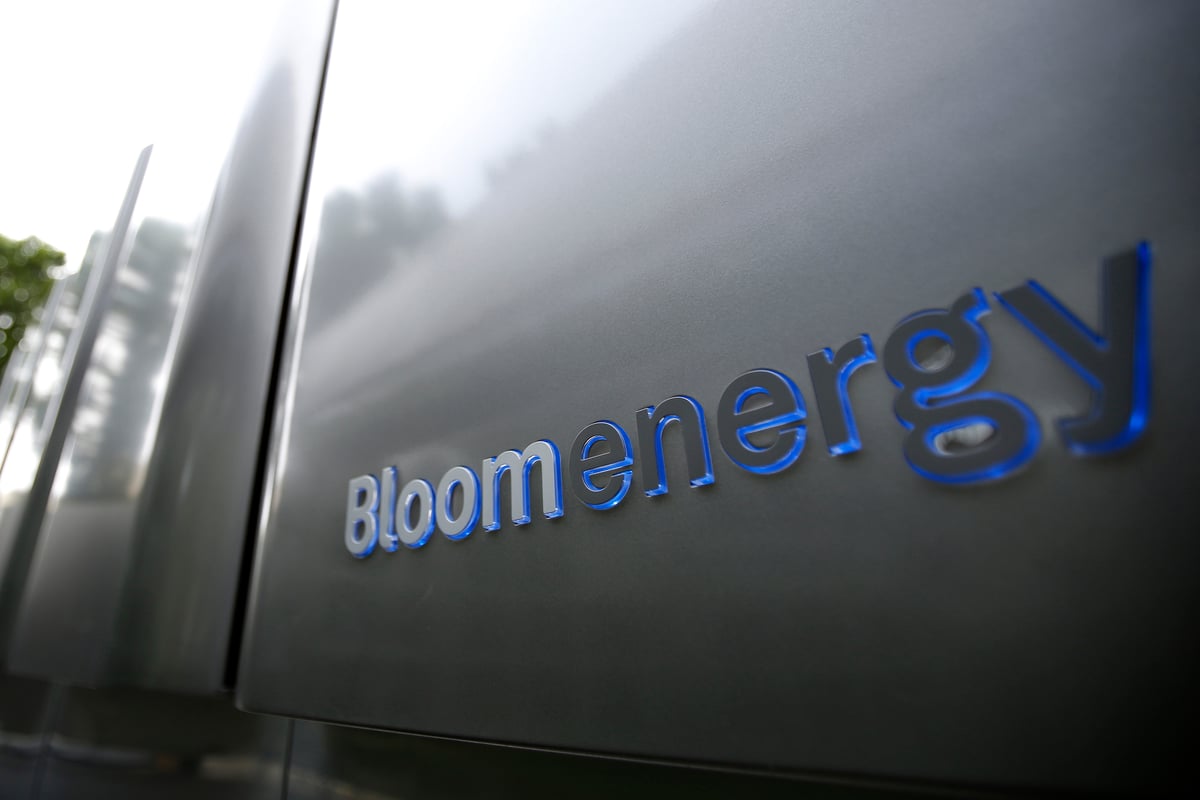
- Surging Demand: Bloom Energy has seen explosive demand for its solid oxide fuel cells, becoming a key power supplier for AI data centers, with its backlog growing 2.5 times year-over-year to $6 billion, indicating strong market demand and future growth potential.
- Financing Framework: The company entered a financing framework with Brookfield Asset Management worth up to $5 billion to support its data center projects, providing crucial funding for Bloom Energy's expansion and further solidifying its market position.
- Revenue Guidance Upgrade: Bloom Energy raised its 2026 revenue guidance to $3.1 billion to $3.3 billion, significantly above Wall Street's $2.58 billion estimate, demonstrating strong profitability and competitive strength in a rapidly growing market.
- Expansion Risks: Despite the optimistic outlook, Bloom Energy aims to double its manufacturing capacity from 1 GW to 2 GW by the end of 2026, but this capital-intensive expansion carries execution risks, including potential cost overruns and supply chain disruptions, prompting investors to carefully assess the risks associated with its current high valuation.

BAM Options Contract Analysis and Investment Opportunities
- Put Option Appeal: The current bid for the $42.50 put option is 30 cents, and if an investor sells this contract, they will commit to purchasing BAM stock at $42.50, effectively lowering their cost basis to $42.20, which represents a 5% discount compared to the current price of $44.63, making it attractive for those looking to enter at a lower price.
- Yield Potential Assessment: Should the put option expire worthless, it would yield a 0.71% return on the cash commitment, equating to an annualized yield of 3.85%, known as YieldBoost, highlighting the potential profitability of this strategy.
- Call Option Profit Analysis: The $47.50 call option currently bids at 70 cents, and if an investor buys BAM shares at $44.63 and sells this call, they could achieve an 8% total return if the stock is called away at expiration, showcasing the profit potential of this approach.
- Risk-Reward Trade-off: Given that the $47.50 strike price represents a 6% premium over the current trading price, with a 56% chance of the call option expiring worthless, investors could retain both their shares and the premium collected, enhancing the flexibility of their investment strategy.

Five Dividend Stocks for Reliable Income


- Verizon Reliable Income: Verizon Communications offers a forward-looking dividend yield of 5.6%, having raised its dividend for 19 consecutive years, reflecting strong demand for mobile services in the U.S. market, ensuring stable cash flow and investor confidence.
- Realty Income Monthly Dividends: As a real estate investment trust, Realty Income pays dividends monthly with a current yield of 4.9%, and has increased its per-share payout for 31 consecutive years, attracting investors seeking stable cash flow.
- ADP Steady Growth: Automatic Data Processing has doubled its dividend over the past decade, with a current yield of 3.2%, and its business model and expansion of additional services enable it to consistently provide reliable dividends, enhancing investor trust.
- Brookfield Asset Management: Brookfield Asset Management has a forward-looking yield of 4.3%, focusing on growth industries like renewable energy and AI, with an expected annual growth rate between 15% and 20%, appealing to long-term investors.
Brookfield in Talks to Acquire World Freight Co. for Up to $1.3 Billion
- Acquisition Talks Underway: Brookfield Asset Management is in discussions to acquire World Freight Co. from EQT AB and PAI Partners for between $1.2 billion and $1.3 billion, which would enhance its market position in the logistics sector.
- Financing Considerations: To support the potential acquisition, Brookfield is weighing an acquisition loan, indicating its commitment to the deal and confidence in future returns.
- Market Response Cautious: Although discussions are ongoing, reports suggest there is no guarantee of a deal being finalized, which may lead to cautious market reactions regarding Brookfield's stock price volatility.
- Strategic Expansion Intent: By acquiring World Freight, Brookfield aims to expand its influence in the global logistics market and lay the groundwork for future growth, particularly in the rapidly evolving e-commerce and supply chain management sectors.
PAPA JOHN'S EVALUATING IRTH CAPITAL MANAGEMENT'S BID, SUPPORTED BY BROOKFIELD ASSET MANAGEMENT - WSJ
Overview of the Bid: The article discusses the bid from IRT Capital Management, which includes backing from Brookfield Asset Management.
Key Players Involved: IRT Capital Management and Brookfield Asset Management are highlighted as significant players in the investment landscape.
Investment Strategy: The bid reflects a strategic approach to asset management and investment opportunities in the current market.
Implications for the Market: The involvement of major firms like IRT and Brookfield may influence market dynamics and investor confidence.
Bloom Energy Stock Soars 550%, Investors Weigh Buy or Hold
- Stock Surge: Bloom Energy's stock skyrocketed over 80% at the start of 2026, trading above $150 as of March 5, reflecting a staggering 550% increase over the past 12 months, indicating strong market demand for its clean energy solutions.
- Significant Revenue Growth: The company reported over $2 billion in revenue for 2025, a 37.3% year-over-year increase, while achieving its second consecutive year of positive free cash flow, generating $113.9 million, showcasing ongoing financial improvement.
- Strong Market Demand: The solid-oxide fuel cell market is projected to reach $11.6 billion in the next four years, growing at a CAGR of over 31%, with Bloom's $20 billion backlog providing excellent visibility into future revenue streams.
- Clear Competitive Advantage: Bloom completed a massive fuel cell system order in just 55 days, significantly faster than traditional grid connections that can take years, enhancing its competitive position in the rapidly evolving AI data center and industrial electrification markets.
Bloom Energy Stock Soars 602% Amid AI Demand
- Surging Demand: Bloom Energy has seen explosive demand for its solid oxide fuel cells, becoming a key power supplier for AI data centers, with its backlog growing 2.5 times year-over-year to $6 billion, indicating strong market demand and future growth potential.
- Financing Framework: The company entered a financing framework with Brookfield Asset Management worth up to $5 billion to support its data center projects, providing crucial funding for Bloom Energy's expansion and further solidifying its market position.
- Revenue Guidance Upgrade: Bloom Energy raised its 2026 revenue guidance to $3.1 billion to $3.3 billion, significantly above Wall Street's $2.58 billion estimate, demonstrating strong profitability and competitive strength in a rapidly growing market.
- Expansion Risks: Despite the optimistic outlook, Bloom Energy aims to double its manufacturing capacity from 1 GW to 2 GW by the end of 2026, but this capital-intensive expansion carries execution risks, including potential cost overruns and supply chain disruptions, prompting investors to carefully assess the risks associated with its current high valuation.
BAM Options Contract Analysis and Investment Opportunities
- Put Option Appeal: The current bid for the $42.50 put option is 30 cents, and if an investor sells this contract, they will commit to purchasing BAM stock at $42.50, effectively lowering their cost basis to $42.20, which represents a 5% discount compared to the current price of $44.63, making it attractive for those looking to enter at a lower price.
- Yield Potential Assessment: Should the put option expire worthless, it would yield a 0.71% return on the cash commitment, equating to an annualized yield of 3.85%, known as YieldBoost, highlighting the potential profitability of this strategy.
- Call Option Profit Analysis: The $47.50 call option currently bids at 70 cents, and if an investor buys BAM shares at $44.63 and sells this call, they could achieve an 8% total return if the stock is called away at expiration, showcasing the profit potential of this approach.
- Risk-Reward Trade-off: Given that the $47.50 strike price represents a 6% premium over the current trading price, with a 56% chance of the call option expiring worthless, investors could retain both their shares and the premium collected, enhancing the flexibility of their investment strategy.
Five Dividend Stocks for Reliable Income
- Verizon Reliable Income: Verizon Communications offers a forward-looking dividend yield of 5.6%, having raised its dividend for 19 consecutive years, reflecting strong demand for mobile services in the U.S. market, ensuring stable cash flow and investor confidence.
- Realty Income Monthly Dividends: As a real estate investment trust, Realty Income pays dividends monthly with a current yield of 4.9%, and has increased its per-share payout for 31 consecutive years, attracting investors seeking stable cash flow.
- ADP Steady Growth: Automatic Data Processing has doubled its dividend over the past decade, with a current yield of 3.2%, and its business model and expansion of additional services enable it to consistently provide reliable dividends, enhancing investor trust.
- Brookfield Asset Management: Brookfield Asset Management has a forward-looking yield of 4.3%, focusing on growth industries like renewable energy and AI, with an expected annual growth rate between 15% and 20%, appealing to long-term investors.