Broadcom's Growth Potential in AI Infrastructure Market
Written by Emily J. Thompson, Senior Investment Analyst
Updated: Mar 10 2026
0mins
Source: Fool
- Surging AI Infrastructure Investment: The five largest hyperscalers plan to invest $700 billion in AI data centers in 2023, positioning Broadcom as a key supplier of custom AI chips, which is expected to significantly enhance its market share.
- Rising Demand for Custom Chips: Broadcom leads in ASIC technology, providing customers with high-performance, energy-efficient custom solutions, and as the inference market expands, this technological advantage will help clients reduce long-term costs.
- Notable Success Stories: The TPU chips developed in collaboration with Alphabet are widely used in its internal workloads and cloud computing division, with Alphabet starting to sell these chips externally, highlighted by Anthropic's $21 billion TPU order, showcasing Broadcom's strong market influence.
- Rapid Growth in Networking Business: Broadcom's data center networking revenue grew by 60% in Q1 2026, with acceleration expected in Q2, and as AI clusters expand, Broadcom's leadership in networking will further solidify, driving explosive growth in overall company performance.
Trade with 70% Backtested Accuracy
Stop guessing "Should I Buy AVGO?" and start using high-conviction signals backed by rigorous historical data.
Sign up today to access powerful investing tools and make smarter, data-driven decisions.
Analyst Views on AVGO
Wall Street analysts forecast AVGO stock price to rise
30 Analyst Rating
29 Buy
1 Hold
0 Sell
Strong Buy
Current: 392.900

Low
370.00
Averages
457.75
High
525.00
Current: 392.900
Low
370.00
Averages
457.75
High
525.00
About AVGO
Broadcom Inc. is a global technology firm that designs, develops, and supplies a range of semiconductors, enterprise software and security solutions. The Company operates through two segments: semiconductor solutions and infrastructure software. Its semiconductor solutions segment includes all of its product lines and intellectual property (IP) licensing. It provides a variety of radio frequency semiconductor devices, wireless connectivity solutions, custom touch controllers, and inductive charging solutions for mobile applications. Its infrastructure software segment includes its private and hybrid cloud, application development and delivery, software-defined edge, application networking and security, mainframe, distributed and cybersecurity solutions, and its FC SAN business. It provides a portfolio of software solutions that enable customers to plan, develop, automate, manage and secure applications across mainframe, distributed, mobile and cloud platforms.
About the author

Emily J. Thompson
Emily J. Thompson, a Chartered Financial Analyst (CFA) with 12 years in investment research, graduated with honors from the Wharton School. Specializing in industrial and technology stocks, she provides in-depth analysis for Intellectia’s earnings and market brief reports.

FedEx Set to Report Earnings Amid Market Changes


- Earnings Complexity: FedEx is set to report its fiscal 2026 Q4 earnings on Tuesday, covering the March-to-May period, with the complexity arising from the spin-off of FedEx Freight, which complicates direct financial comparisons and may impact market expectations for the company’s future.
- Profitability Expectations: Analysts forecast FedEx to report revenues of $24.04 billion and earnings per share of $5.96, although the combination of the fiscal year calendar change and the spin-off may lead to mixed market reactions, necessitating a focus on profitability metrics.
- Freight Business Outlook: FedEx Freight is expected to achieve modest revenue growth post-spin-off, despite facing pressure on adjusted operating margins due to spin-off-related costs such as technology investments, with the market keenly awaiting insights during Thursday's investor day.
- Inflation Data Impact: The personal consumption expenditures price index (PCE) will be released on Thursday, and while the May consumer price index (CPI) hit a three-year high of 4.2%, the recent drop in oil prices may alleviate future inflation pressures, influencing the Fed's rate hike outlook.
See More
Investment Opportunities in Undervalued Semiconductor Stocks

- Stock Recommendations: The analyst team has identified 10 stocks as the best investment choices currently, indicating that despite the overall rise in tech stocks, there are still undervalued opportunities, particularly in the semiconductor sector.
- Historical Returns: For instance, a $1,000 investment in Netflix in December 2004 would have grown to $417,305, while Nvidia's recommendation in April 2005 would have yielded $1,293,148, showcasing the immense potential of these picks.
- Investment Performance: Stock Advisor boasts an average return of 936%, significantly outperforming the S&P 500's 209%, indicating that the recommended stocks excel in the market, and investors can gain more insights by joining.
- Analyst Holdings: Analyst Parkev Tatevosian holds positions in Broadcom and Nvidia, and The Motley Fool recommends these companies, reflecting the analysts' confidence in these stocks, which investors should consider for potential gains.
See More

Semiconductor Stocks Soar, Yet Four Remain Undervalued
- Market Performance Analysis: As of the afternoon of June 17, 2026, semiconductor stocks have shown strong performance, indicating signs of industry recovery; however, some stocks remain undervalued, presenting investment opportunities.
- Undervalued Stocks Identification: Among numerous semiconductor companies, analysts have identified four stocks whose valuations do not reflect their potential growth, potentially offering higher return prospects for investors.
- Timing the Investment: With the continued growth in semiconductor demand, investors should focus on these undervalued stocks to achieve better returns as the market rebounds.
- Industry Outlook: Despite the overall strong market performance, it is essential to carefully assess the fundamentals of individual stocks to ensure the rationality and effectiveness of investment decisions.
See More

SpaceX IPO Raises Investor Concerns Over Lockup Period


- IPO Fundraising Scale: SpaceX raised $75 billion through its IPO, becoming one of the largest companies in Wall Street history with a valuation of $2.66 trillion, surpassing well-known firms like Amazon and Tesla, showcasing its strong potential in the space economy and AI sectors.
- Index Inclusion Rule Changes: Structural changes in Nasdaq and Russell indexes allow SpaceX to be included in the Nasdaq-100 within just 15 trading days, forcing passive funds to rapidly purchase its stock post-IPO, which is expected to generate tens of billions in demand and further elevate its share price.
- Lockup Period Risks: SpaceX's staggered lockup schedule permits some insiders to sell shares earlier than typical IPO lockup periods, posing significant wealth transfer risks for retail investors, especially amid heightened market enthusiasm.
- Financial Health Concerns: The company's prospectus warns of using debt issuance and share dilution to fund the expansion of AI data center infrastructure and M&A opportunities, combined with its historically high price-to-sales ratio of 142, indicating potential vulnerabilities in profitability and sales growth.
See More

SpaceX Raises $75 Billion in Record IPO, Surpassing Major Competitors

- Record IPO Financing: SpaceX raised $75 billion through its IPO, becoming one of the largest in history with a valuation of $2.66 trillion, surpassing giants like Amazon and Tesla, highlighting its significant potential in the space economy and AI sectors.
- Index Inclusion Rule Changes: Structural changes in Nasdaq and Russell indexes allow SpaceX to be included in relevant indexes within just 5 to 15 trading days, expected to trigger billions in passive fund buying, further boosting its stock price.
- Lockup Period Arrangement: SpaceX's staggered lockup schedule permits some insiders to cash out shortly after the first quarterly report, potentially exposing retail investors to risks of passive selling that could impact their returns.
- Future Financing Risks: SpaceX plans to utilize debt issuances and share dilution to fund the expansion of its AI data center infrastructure, which may further dilute shareholder equity and increase financial risks for retail investors.
See More
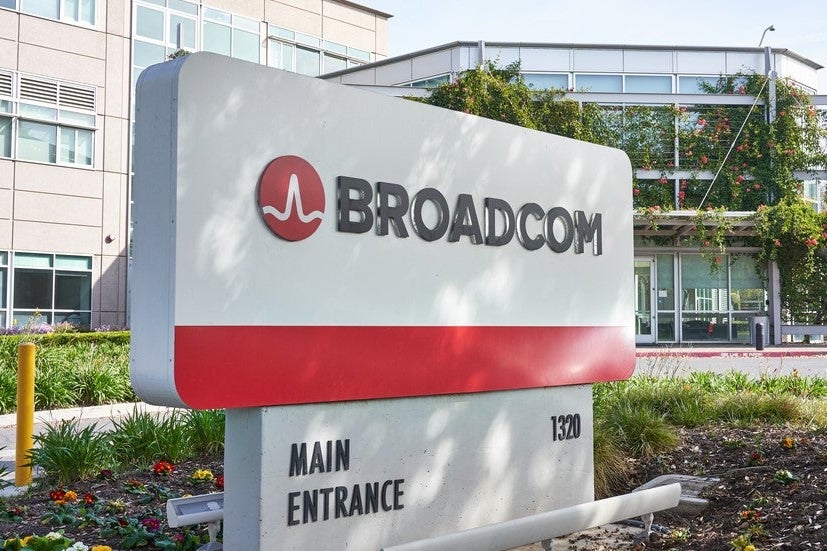
Broadcom's Rapid Growth in the AI Market

- Surge in AI Chip Sales: In fiscal 2025, Broadcom's AI chip sales soared by 65% to $20 billion, accounting for 31% of its total revenue, with projections indicating this could rise to at least $100 billion by fiscal 2027, representing over 58% of revenue, highlighting its robust growth potential in the AI sector.
- Rising Customer Demand: As the AI market expands, Broadcom's hyperscale customers are expected to ramp up chip purchases, enabling them to reduce infrastructure costs by installing more custom ASICs, thereby decreasing long-term dependence on Nvidia and enhancing competitive positioning.
- Diverse Product Portfolio: Broadcom also offers a wide range of non-AI chips across mobile, data center, and networking sectors; while these segments are not growing as rapidly, bundling products can lock in customers and widen its competitive moat across various markets.
- Attractive Investment Value: Analysts forecast Broadcom's revenue and EPS to grow at CAGRs of 53% and 66% from fiscal 2025 to 2028, yet it trades at just 25 times next year's earnings, indicating a compelling investment opportunity relative to its growth rate in the booming AI market.
See More
FedEx Set to Report Earnings Amid Market Changes
- Earnings Complexity: FedEx is set to report its fiscal 2026 Q4 earnings on Tuesday, covering the March-to-May period, with the complexity arising from the spin-off of FedEx Freight, which complicates direct financial comparisons and may impact market expectations for the company’s future.
- Profitability Expectations: Analysts forecast FedEx to report revenues of $24.04 billion and earnings per share of $5.96, although the combination of the fiscal year calendar change and the spin-off may lead to mixed market reactions, necessitating a focus on profitability metrics.
- Freight Business Outlook: FedEx Freight is expected to achieve modest revenue growth post-spin-off, despite facing pressure on adjusted operating margins due to spin-off-related costs such as technology investments, with the market keenly awaiting insights during Thursday's investor day.
- Inflation Data Impact: The personal consumption expenditures price index (PCE) will be released on Thursday, and while the May consumer price index (CPI) hit a three-year high of 4.2%, the recent drop in oil prices may alleviate future inflation pressures, influencing the Fed's rate hike outlook.
See More
Investment Opportunities in Undervalued Semiconductor Stocks
- Stock Recommendations: The analyst team has identified 10 stocks as the best investment choices currently, indicating that despite the overall rise in tech stocks, there are still undervalued opportunities, particularly in the semiconductor sector.
- Historical Returns: For instance, a $1,000 investment in Netflix in December 2004 would have grown to $417,305, while Nvidia's recommendation in April 2005 would have yielded $1,293,148, showcasing the immense potential of these picks.
- Investment Performance: Stock Advisor boasts an average return of 936%, significantly outperforming the S&P 500's 209%, indicating that the recommended stocks excel in the market, and investors can gain more insights by joining.
- Analyst Holdings: Analyst Parkev Tatevosian holds positions in Broadcom and Nvidia, and The Motley Fool recommends these companies, reflecting the analysts' confidence in these stocks, which investors should consider for potential gains.
See More
Semiconductor Stocks Soar, Yet Four Remain Undervalued
- Market Performance Analysis: As of the afternoon of June 17, 2026, semiconductor stocks have shown strong performance, indicating signs of industry recovery; however, some stocks remain undervalued, presenting investment opportunities.
- Undervalued Stocks Identification: Among numerous semiconductor companies, analysts have identified four stocks whose valuations do not reflect their potential growth, potentially offering higher return prospects for investors.
- Timing the Investment: With the continued growth in semiconductor demand, investors should focus on these undervalued stocks to achieve better returns as the market rebounds.
- Industry Outlook: Despite the overall strong market performance, it is essential to carefully assess the fundamentals of individual stocks to ensure the rationality and effectiveness of investment decisions.
See More
SpaceX IPO Raises Investor Concerns Over Lockup Period
- IPO Fundraising Scale: SpaceX raised $75 billion through its IPO, becoming one of the largest companies in Wall Street history with a valuation of $2.66 trillion, surpassing well-known firms like Amazon and Tesla, showcasing its strong potential in the space economy and AI sectors.
- Index Inclusion Rule Changes: Structural changes in Nasdaq and Russell indexes allow SpaceX to be included in the Nasdaq-100 within just 15 trading days, forcing passive funds to rapidly purchase its stock post-IPO, which is expected to generate tens of billions in demand and further elevate its share price.
- Lockup Period Risks: SpaceX's staggered lockup schedule permits some insiders to sell shares earlier than typical IPO lockup periods, posing significant wealth transfer risks for retail investors, especially amid heightened market enthusiasm.
- Financial Health Concerns: The company's prospectus warns of using debt issuance and share dilution to fund the expansion of AI data center infrastructure and M&A opportunities, combined with its historically high price-to-sales ratio of 142, indicating potential vulnerabilities in profitability and sales growth.
See More
SpaceX Raises $75 Billion in Record IPO, Surpassing Major Competitors
- Record IPO Financing: SpaceX raised $75 billion through its IPO, becoming one of the largest in history with a valuation of $2.66 trillion, surpassing giants like Amazon and Tesla, highlighting its significant potential in the space economy and AI sectors.
- Index Inclusion Rule Changes: Structural changes in Nasdaq and Russell indexes allow SpaceX to be included in relevant indexes within just 5 to 15 trading days, expected to trigger billions in passive fund buying, further boosting its stock price.
- Lockup Period Arrangement: SpaceX's staggered lockup schedule permits some insiders to cash out shortly after the first quarterly report, potentially exposing retail investors to risks of passive selling that could impact their returns.
- Future Financing Risks: SpaceX plans to utilize debt issuances and share dilution to fund the expansion of its AI data center infrastructure, which may further dilute shareholder equity and increase financial risks for retail investors.
See More
Broadcom's Rapid Growth in the AI Market
- Surge in AI Chip Sales: In fiscal 2025, Broadcom's AI chip sales soared by 65% to $20 billion, accounting for 31% of its total revenue, with projections indicating this could rise to at least $100 billion by fiscal 2027, representing over 58% of revenue, highlighting its robust growth potential in the AI sector.
- Rising Customer Demand: As the AI market expands, Broadcom's hyperscale customers are expected to ramp up chip purchases, enabling them to reduce infrastructure costs by installing more custom ASICs, thereby decreasing long-term dependence on Nvidia and enhancing competitive positioning.
- Diverse Product Portfolio: Broadcom also offers a wide range of non-AI chips across mobile, data center, and networking sectors; while these segments are not growing as rapidly, bundling products can lock in customers and widen its competitive moat across various markets.
- Attractive Investment Value: Analysts forecast Broadcom's revenue and EPS to grow at CAGRs of 53% and 66% from fiscal 2025 to 2028, yet it trades at just 25 times next year's earnings, indicating a compelling investment opportunity relative to its growth rate in the booming AI market.
See More