Broadcom Stock Rebounds with Promising AI Business Outlook
Written by Emily J. Thompson, Senior Investment Analyst
Updated: 1 hour ago
0mins
Should l Buy AVGO?
Source: Fool
- Stock Recovery: Broadcom's stock rebounded after a 15% decline at the start of 2026, surging 23% year-to-date since April, indicating strong market recovery and attracting investor interest.
- AI Business Growth: The company earned $20 billion from AI last year, with projections suggesting AI revenue could skyrocket to $100 billion next year, representing a potential fivefold increase, highlighting its robust potential in the AI sector.
- Competitive Market Advantage: Broadcom's innovation in custom silicon chips, particularly its XPUs for AI hyperscalers, has attracted high-profile clients like Alphabet and OpenAI, enhancing its competitive position in the market.
- Future Growth Expectations: Wall Street analysts forecast an annualized earnings growth rate of 41% for Broadcom over the next three to five years, making its current high valuation attractive due to its growth potential.
Trade with 70% Backtested Accuracy
Stop guessing "Should I Buy AVGO?" and start using high-conviction signals backed by rigorous historical data.
Sign up today to access powerful investing tools and make smarter, data-driven decisions.
Analyst Views on AVGO
Wall Street analysts forecast AVGO stock price to rise
30 Analyst Rating
29 Buy
1 Hold
0 Sell
Strong Buy
Current: 420.710

Low
370.00
Averages
457.75
High
525.00
Current: 420.710
Low
370.00
Averages
457.75
High
525.00
About AVGO
Broadcom Inc. is a global technology firm that designs, develops, and supplies a range of semiconductors, enterprise software and security solutions. The Company operates through two segments: semiconductor solutions and infrastructure software. Its semiconductor solutions segment includes all of its product lines and intellectual property (IP) licensing. It provides a variety of radio frequency semiconductor devices, wireless connectivity solutions, custom touch controllers, and inductive charging solutions for mobile applications. Its infrastructure software segment includes its private and hybrid cloud, application development and delivery, software-defined edge, application networking and security, mainframe, distributed and cybersecurity solutions, and its FC SAN business. It provides a portfolio of software solutions that enable customers to plan, develop, automate, manage and secure applications across mainframe, distributed, mobile and cloud platforms.
About the author

Emily J. Thompson
Emily J. Thompson, a Chartered Financial Analyst (CFA) with 12 years in investment research, graduated with honors from the Wharton School. Specializing in industrial and technology stocks, she provides in-depth analysis for Intellectia’s earnings and market brief reports.

Broadcom's AI Revenue Expected to Reach $100 Billion

- AI Revenue Growth Potential: Broadcom is projected to reach $100 billion in AI revenue by 2027, driven by partnerships with high-profile clients like Alphabet and OpenAI for its XPU chips, showcasing the company's robust growth potential in the AI market.
- Stock Performance Recovery: Despite a 15% decline in early 2026, Broadcom's stock rebounded in April, rising 23% year-to-date, reflecting market optimism regarding its AI business prospects.
- Market Share Expansion: Broadcom's XPUs are customized for clients, enhancing efficiency in inference workloads, and are expected to significantly boost AI revenue from $20 billion last year, further solidifying its market position.
- Long-Term Growth Outlook: Wall Street analysts forecast an annualized earnings growth rate of 41% for Broadcom over the next three to five years, indicating that despite a current P/E ratio exceeding 80, its growth potential remains attractive to investors.
See More

Broadcom Stock Rebounds with Promising AI Business Outlook
- Stock Recovery: Broadcom's stock rebounded after a 15% decline at the start of 2026, surging 23% year-to-date since April, indicating strong market recovery and attracting investor interest.
- AI Business Growth: The company earned $20 billion from AI last year, with projections suggesting AI revenue could skyrocket to $100 billion next year, representing a potential fivefold increase, highlighting its robust potential in the AI sector.
- Competitive Market Advantage: Broadcom's innovation in custom silicon chips, particularly its XPUs for AI hyperscalers, has attracted high-profile clients like Alphabet and OpenAI, enhancing its competitive position in the market.
- Future Growth Expectations: Wall Street analysts forecast an annualized earnings growth rate of 41% for Broadcom over the next three to five years, making its current high valuation attractive due to its growth potential.
See More

US Stocks Close Lower as Tech Rally Falters


- Market Decline: The S&P 500 and Nasdaq 100 fell by 0.67% and 0.61%, respectively, reaching 1.5-week lows, indicating concerns over a pullback in tech stocks, particularly as the AI-driven rally loses momentum, which may affect investor confidence.
- Rising Bond Yields: The 10-year T-note yield surged to a 16-month high of 4.69%, triggering risk-off sentiment that led to increased stock liquidation, further heightening market uncertainty and potentially prompting the Fed to adopt tighter monetary policies.
- Supportive Economic Data: April pending home sales rose by 1.4% month-over-month, surpassing expectations of 1.0%, and March figures were revised up to 1.7%, demonstrating resilience in the housing market that could provide some support for stocks.
- Oil Price Volatility: WTI crude prices fell nearly 1% following President Trump's comments on Iran, while the IEA reported a decline in global oil inventories of about 4 million bpd, suggesting that the market will remain undersupplied in the near term, impacting related energy stocks.
See More
Nvidia Earnings Report Sparks Market Focus and AI Sector Reactions


- Earnings Expectations: Nvidia is expected to report an adjusted EPS of $1.76 and revenue of $78.86 billion, indicating strong market demand and profitability, which could drive stock price increases and impact the entire AI ecosystem.
- Market Volatility Anticipation: The options market is pricing in a move of approximately +/-6% post-earnings, reflecting high investor attention to the results, which may lead to significant short-term market sentiment shifts.
- Stock Correlation Analysis: Historical data shows Advanced Micro Devices is highly correlated with Nvidia's earnings reactions, with a beta of 0.28, suggesting AMD generates about 0.28 percentage points in excess returns for each 1% move Nvidia makes, highlighting its significance in the semiconductor sector.
- Broader Industry Impact: Beyond traditional chip companies, mechanical and electrical contractors like Comfort Systems and United Rentals also show high correlation with Nvidia's earnings, reflecting growing investor interest in the
See More

US Stocks Retreat as Tech Rally Falters

- Market Retreat: The S&P 500 index fell by 0.68% and the Nasdaq 100 by 0.95%, both hitting 1.5-week lows, indicating a weakening confidence in tech stocks that could affect investor sentiment and future capital flows.
- Rising Bond Yields: The 10-year T-note yield climbed to a 16-month high of 4.69%, intensifying concerns over rising inflation that may prompt the Fed to pursue tighter monetary policy, thereby impacting stock market performance.
- Supportive Economic Data: April pending home sales rose by 1.4% month-over-month, surpassing expectations of 1.0%, demonstrating resilience in the housing market that could provide some support for stocks, despite overall market pressures.
- Oil Price Volatility: WTI crude oil prices dropped over 1% today due to geopolitical factors, with market concerns about future supply tightness intensifying, potentially affecting stock performance in related sectors, particularly airlines and mining stocks.
See More
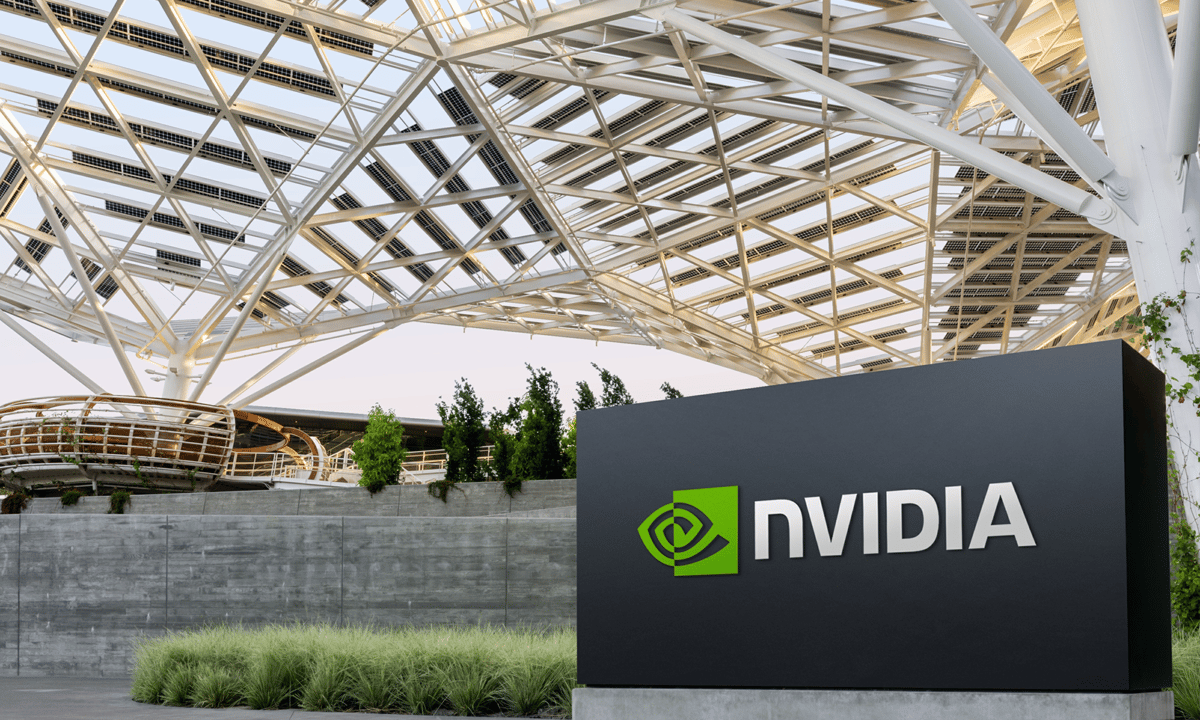
Nvidia Stock Soars, Approaching $6 Trillion Market Cap

- Optimistic Earnings Outlook: Ahead of its first-quarter fiscal 2027 earnings call, Nvidia's stock has surged approximately 20% since its fourth-quarter fiscal 2026 results, reflecting strong market expectations for future performance, despite a 5.7% pullback from its all-time high on May 14.
- Revenue and Profit Growth: In fiscal 2026, Nvidia reported $215.9 billion in revenue and $120.1 billion in net income, indicating robust demand in the cloud computing and AI chip markets, which continues to drive high-margin growth and solidify its market leadership.
- Surge in Orders: Founder Jensen Huang forecasted $1 trillion in orders for Blackwell and Rubin chips through 2027 during the GTC 2026 conference, highlighting strong market demand for its next-generation Rubin architecture and further expanding the company's product offerings.
- Shifting Market Dynamics: Although Nvidia's stock initially failed to reflect its strong performance and market expectations, increased capital expenditure budgets from key customers have bolstered confidence in AI spending, potentially propelling Nvidia's market cap past the $6 trillion threshold.
See More
Broadcom's AI Revenue Expected to Reach $100 Billion
- AI Revenue Growth Potential: Broadcom is projected to reach $100 billion in AI revenue by 2027, driven by partnerships with high-profile clients like Alphabet and OpenAI for its XPU chips, showcasing the company's robust growth potential in the AI market.
- Stock Performance Recovery: Despite a 15% decline in early 2026, Broadcom's stock rebounded in April, rising 23% year-to-date, reflecting market optimism regarding its AI business prospects.
- Market Share Expansion: Broadcom's XPUs are customized for clients, enhancing efficiency in inference workloads, and are expected to significantly boost AI revenue from $20 billion last year, further solidifying its market position.
- Long-Term Growth Outlook: Wall Street analysts forecast an annualized earnings growth rate of 41% for Broadcom over the next three to five years, indicating that despite a current P/E ratio exceeding 80, its growth potential remains attractive to investors.
See More
Broadcom Stock Rebounds with Promising AI Business Outlook
- Stock Recovery: Broadcom's stock rebounded after a 15% decline at the start of 2026, surging 23% year-to-date since April, indicating strong market recovery and attracting investor interest.
- AI Business Growth: The company earned $20 billion from AI last year, with projections suggesting AI revenue could skyrocket to $100 billion next year, representing a potential fivefold increase, highlighting its robust potential in the AI sector.
- Competitive Market Advantage: Broadcom's innovation in custom silicon chips, particularly its XPUs for AI hyperscalers, has attracted high-profile clients like Alphabet and OpenAI, enhancing its competitive position in the market.
- Future Growth Expectations: Wall Street analysts forecast an annualized earnings growth rate of 41% for Broadcom over the next three to five years, making its current high valuation attractive due to its growth potential.
See More
US Stocks Close Lower as Tech Rally Falters
- Market Decline: The S&P 500 and Nasdaq 100 fell by 0.67% and 0.61%, respectively, reaching 1.5-week lows, indicating concerns over a pullback in tech stocks, particularly as the AI-driven rally loses momentum, which may affect investor confidence.
- Rising Bond Yields: The 10-year T-note yield surged to a 16-month high of 4.69%, triggering risk-off sentiment that led to increased stock liquidation, further heightening market uncertainty and potentially prompting the Fed to adopt tighter monetary policies.
- Supportive Economic Data: April pending home sales rose by 1.4% month-over-month, surpassing expectations of 1.0%, and March figures were revised up to 1.7%, demonstrating resilience in the housing market that could provide some support for stocks.
- Oil Price Volatility: WTI crude prices fell nearly 1% following President Trump's comments on Iran, while the IEA reported a decline in global oil inventories of about 4 million bpd, suggesting that the market will remain undersupplied in the near term, impacting related energy stocks.
See More
Nvidia Earnings Report Sparks Market Focus and AI Sector Reactions
- Earnings Expectations: Nvidia is expected to report an adjusted EPS of $1.76 and revenue of $78.86 billion, indicating strong market demand and profitability, which could drive stock price increases and impact the entire AI ecosystem.
- Market Volatility Anticipation: The options market is pricing in a move of approximately +/-6% post-earnings, reflecting high investor attention to the results, which may lead to significant short-term market sentiment shifts.
- Stock Correlation Analysis: Historical data shows Advanced Micro Devices is highly correlated with Nvidia's earnings reactions, with a beta of 0.28, suggesting AMD generates about 0.28 percentage points in excess returns for each 1% move Nvidia makes, highlighting its significance in the semiconductor sector.
- Broader Industry Impact: Beyond traditional chip companies, mechanical and electrical contractors like Comfort Systems and United Rentals also show high correlation with Nvidia's earnings, reflecting growing investor interest in the
See More
US Stocks Retreat as Tech Rally Falters
- Market Retreat: The S&P 500 index fell by 0.68% and the Nasdaq 100 by 0.95%, both hitting 1.5-week lows, indicating a weakening confidence in tech stocks that could affect investor sentiment and future capital flows.
- Rising Bond Yields: The 10-year T-note yield climbed to a 16-month high of 4.69%, intensifying concerns over rising inflation that may prompt the Fed to pursue tighter monetary policy, thereby impacting stock market performance.
- Supportive Economic Data: April pending home sales rose by 1.4% month-over-month, surpassing expectations of 1.0%, demonstrating resilience in the housing market that could provide some support for stocks, despite overall market pressures.
- Oil Price Volatility: WTI crude oil prices dropped over 1% today due to geopolitical factors, with market concerns about future supply tightness intensifying, potentially affecting stock performance in related sectors, particularly airlines and mining stocks.
See More
Nvidia Stock Soars, Approaching $6 Trillion Market Cap
- Optimistic Earnings Outlook: Ahead of its first-quarter fiscal 2027 earnings call, Nvidia's stock has surged approximately 20% since its fourth-quarter fiscal 2026 results, reflecting strong market expectations for future performance, despite a 5.7% pullback from its all-time high on May 14.
- Revenue and Profit Growth: In fiscal 2026, Nvidia reported $215.9 billion in revenue and $120.1 billion in net income, indicating robust demand in the cloud computing and AI chip markets, which continues to drive high-margin growth and solidify its market leadership.
- Surge in Orders: Founder Jensen Huang forecasted $1 trillion in orders for Blackwell and Rubin chips through 2027 during the GTC 2026 conference, highlighting strong market demand for its next-generation Rubin architecture and further expanding the company's product offerings.
- Shifting Market Dynamics: Although Nvidia's stock initially failed to reflect its strong performance and market expectations, increased capital expenditure budgets from key customers have bolstered confidence in AI spending, potentially propelling Nvidia's market cap past the $6 trillion threshold.
See More