Bristol Myers Squibb's Valuation Attractiveness Analysis
Written by Emily J. Thompson, Senior Investment Analyst
Updated: 4 days ago
0mins

Source: NASDAQ.COM
- Valuation Metrics Appeal: Bristol Myers Squibb (BMS) has a market cap of approximately $120 billion and a low forward P/E ratio of 9.4, significantly below the healthcare sector average of 17.3, indicating its attractiveness as a value investment, particularly for income-focused investors.
- Growth Prospects Challenges: While BMS's growth portfolio achieved a 17% sales increase in 2025, the expiration of patents for its top drugs, Eliquis and Opdivo, in 2028 is expected to significantly pressure future revenues, leading investors to adopt a cautious outlook on its growth potential.
- Dividend Appeal: With a forward dividend yield of 4.3% and a record of increasing dividends for 17 consecutive years, BMS remains attractive to income investors despite a lack of significant growth, helping to maintain investor confidence in the stock.
- Market Competition Analysis: Although BMS's valuation metrics are relatively low, Pfizer's forward P/E ratio stands at 9.1, indicating that there are other more attractive investment options in the market, and BMS needs to identify its unique value proposition to attract more investors.
Trade with 70% Backtested Accuracy
Stop guessing "Should I Buy BMY?" and start using high-conviction signals backed by rigorous historical data.
Sign up today to access powerful investing tools and make smarter, data-driven decisions.
Analyst Views on BMY
Wall Street analysts forecast BMY stock price to fall
20 Analyst Rating
8 Buy
11 Hold
1 Sell
Moderate Buy
Current: 60.590

Low
37.00
Averages
55.86
High
68.00
Current: 60.590
Low
37.00
Averages
55.86
High
68.00
About BMY
Bristol-Myers Squibb Company is a global biopharmaceutical company. It is engaged in the discovery, development, and delivery of transformational medicines for patients facing serious diseases in areas: oncology, hematology, immunology, cardiovascular, neuroscience and other areas. Its growth portfolio includes Opdivo (nivolumab), Opdivo Qvantig (nivolumab and hyaluronidase-nvhy), Orencia (abatacept), Yervoy (ipilimumab), Reblozyl (luspatercept-aamt), Breyanzi (lisocabtagene maraleucel), Opdualag (nivolumab and relatlimab-rmbw), Camzyos (mavacamten), Zeposia (ozanimod), Abecma (idecabtagene vicleucel), Sotyktu (deucravacitinib), Krazati (adagrasib), and Cobenfy (xanomeline and trospium chloride). Its other growth products include Augtyro, Onureg, Inrebic, Nulojix, and Empliciti. Its legacy portfolio includes Eliquis (apixaban), Revlimid (lenalidomide), Pomalyst/Imnovid (pomalidomide), Sprycel (dasatinib), and Abraxane (paclitaxel albumin-bound particles for injectable suspension).
About the author

Emily J. Thompson
Emily J. Thompson, a Chartered Financial Analyst (CFA) with 12 years in investment research, graduated with honors from the Wharton School. Specializing in industrial and technology stocks, she provides in-depth analysis for Intellectia’s earnings and market brief reports.
Bristol-Myers Squibb Q1 2026 Earnings Call Highlights

- Solid Financial Performance: Bristol-Myers Squibb reported a 1% year-over-year increase in total revenue for Q1 2026, reaching approximately $11.5 billion, while diluted earnings per share stood at $1.58, reflecting the company's stability and ongoing profitability in the market.
- Strong Growth Portfolio: The company's growth portfolio sales rose by 9% year-over-year to $6.2 billion, indicating sustained demand for key product lines and enhancing its competitive position in the pharmaceutical industry.
- Significant R&D Progress: The FDA accepted the filing for iberdomide for relapsed or refractory multiple myeloma with breakthrough therapy designation, with a PDUFA date set for August 17, which will provide crucial support for the company's future product line expansion.
- Positive Future Outlook: Management reaffirmed its financial guidance for 2026, anticipating multiple pivotal readouts in the second half of the year, including results from milvexian and Cobenfy clinical trials, which could drive potential growth and bolster investor confidence.
See More
Biotech Dealmaking Accelerates Ahead of Patent Cliffs

- Surge in M&A Activity: Biotech M&A deal value reached $84 billion in Q1 2026, a staggering 89.4% increase from $44.4 billion a year earlier, indicating a robust market recovery, with projections suggesting total annual deal value could exceed $250 billion, ranking second only to 2019.
- Patent Cliffs Catalyst: Pharmaceutical companies are accelerating M&A due to impending patent cliffs, with over $300 billion in revenue facing loss of exclusivity in the next five years, particularly with Merck's Keytruda losing exclusivity in 2028, adding to market uncertainty.
- Strong Cash Reserves Fuel Acquisitions: Eli Lilly, for instance, ended 2025 with over $7.27 billion in cash and equivalents, having spent over $35 billion on acquisitions in 2023, demonstrating that strong financial positions make M&A decisions more justifiable at the board level.
- Mid-Sized Deals Dominate: Recent CEO transitions at GSK and Novo Nordisk have led to more aggressive M&A strategies, with analysts noting that the global revenue exposed to patent expirations over the next seven years is 2.5 times higher than in the last 16 years, further driving the activity in mid-sized deals.
See More

Bristol Myers Squibb Reports Strong Q1 Performance
- Performance Growth Driver: Bristol Myers Squibb's Q1 revenue rose 3% year-over-year to $11.5 billion, primarily driven by a 12% sales increase in its growth portfolio, contributing $6.2 billion, which reflects the company's strong performance in new drug development and boosts investor confidence.
- Earnings Beat Expectations: Despite a decline in non-GAAP net income to $3.2 billion ($1.58 per share), the results exceeded analyst expectations of $1.42 per share, indicating the company's resilience in profitability and reinforcing market confidence in its future prospects.
- Product Portfolio Performance: Every drug in the growth portfolio, except for cancer treatment Opdivo, saw year-over-year sales increases, while the legacy portfolio experienced a 6% decline, highlighting the company's competitive advantage and market potential in emerging therapeutic areas.
- Future Outlook: Bristol Myers Squibb reaffirmed its guidance for 2026, projecting total revenue between $46 billion and $47.5 billion, with adjusted earnings per share forecasted at $6.05 to $6.35, aligning with average analyst projections, indicating the company's growth potential and stability moving forward.
See More
Bristol-Myers Squibb Q1 Earnings Beat Expectations
- Strong Financial Performance: Bristol-Myers Squibb reported $11.5 billion in revenue for Q1 2026, reflecting a ~3% year-over-year growth that exceeded market expectations by $580 million, demonstrating the company's financial resilience amid challenges.
- Growth Portfolio Outperformance: The growth portfolio contributed $6.2 billion in revenue with ~12% year-over-year growth, driven by cancer therapy Opdivo and rheumatoid arthritis drug Orencia generating $2.1 billion and $818 million, respectively, indicating strong market acceptance of new product lines.
- Legacy Product Decline: Despite the strong performance of the growth portfolio, the legacy product line contracted ~6% year-over-year, generating $5.3 billion, highlighting the impact of generics on other products and the need for a faster transition to maintain competitive positioning.
- Reaffirmed Full-Year Outlook: The company reaffirmed its full-year revenue guidance of $46.0 billion to $47.5 billion and adjusted EPS of $6.05 to $6.35, aligning with market consensus, reflecting management's confidence in future performance.
See More

Bristol-Myers Squibb Exceeds Earnings Expectations
- Strong Earnings Report: Bristol-Myers Squibb reported a non-GAAP EPS of $1.58 for Q1, surpassing expectations by $0.16, which demonstrates robust profitability and boosts investor confidence.
- Revenue Growth: The company achieved $11.5 billion in revenue for the first quarter, exceeding forecasts by $580 million, indicating sustained growth in its product portfolio and reinforcing its market position.
- Growth Potential: Despite facing patent expiration challenges, Bristol-Myers Squibb's growth portfolio remains undervalued by the market, with analysts suggesting that upcoming milestones could significantly enhance the company's prospects.
- Market Reaction: The better-than-expected earnings report may prompt investors to reassess the stock's value, likely resulting in a positive impact on the share price and further enhancing the company's competitiveness in the biopharmaceutical sector.
See More
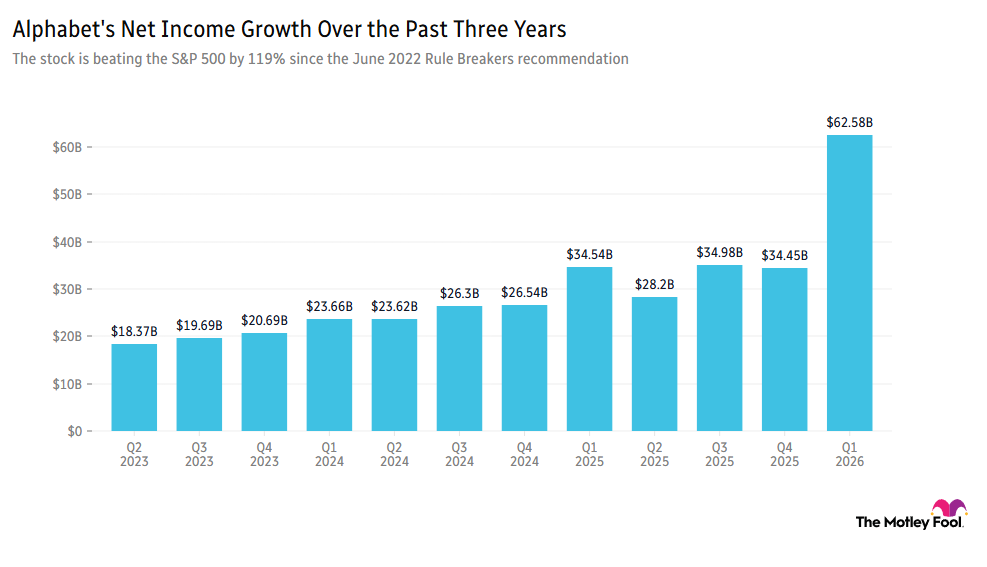
Alphabet CEO Highlights Significant AI Investment Payoff


- Earnings Beat Expectations: Alphabet's Q1 earnings report revealed a 63% year-over-year increase in cloud revenue and an 81% rise in net income, with CEO Sundar Pichai stating that the full-stack approach to AI investments is driving strong performance.
- Consumer Subscription Surge: The adoption of the Gemini app reached an all-time high, indicating robust demand for consumer subscription AI plans, with analyst Sanmeet Deo noting that Alphabet's substantial investments in AI are translating into impressive financial returns, boosting investor confidence.
- Positive Market Reaction: Ahead of the earnings release, Alphabet's stock surged over 7%, reflecting investor optimism about the company's future, particularly its potential to dominate the AI revolution.
- Clear Strategic Positioning: Analysts believe that Alphabet's AI investments not only enhance current performance but also lay the groundwork for future market competition, ensuring the company's leadership in the rapidly evolving AI landscape.
See More
Bristol-Myers Squibb Q1 2026 Earnings Call Highlights
- Solid Financial Performance: Bristol-Myers Squibb reported a 1% year-over-year increase in total revenue for Q1 2026, reaching approximately $11.5 billion, while diluted earnings per share stood at $1.58, reflecting the company's stability and ongoing profitability in the market.
- Strong Growth Portfolio: The company's growth portfolio sales rose by 9% year-over-year to $6.2 billion, indicating sustained demand for key product lines and enhancing its competitive position in the pharmaceutical industry.
- Significant R&D Progress: The FDA accepted the filing for iberdomide for relapsed or refractory multiple myeloma with breakthrough therapy designation, with a PDUFA date set for August 17, which will provide crucial support for the company's future product line expansion.
- Positive Future Outlook: Management reaffirmed its financial guidance for 2026, anticipating multiple pivotal readouts in the second half of the year, including results from milvexian and Cobenfy clinical trials, which could drive potential growth and bolster investor confidence.
See More
Biotech Dealmaking Accelerates Ahead of Patent Cliffs
- Surge in M&A Activity: Biotech M&A deal value reached $84 billion in Q1 2026, a staggering 89.4% increase from $44.4 billion a year earlier, indicating a robust market recovery, with projections suggesting total annual deal value could exceed $250 billion, ranking second only to 2019.
- Patent Cliffs Catalyst: Pharmaceutical companies are accelerating M&A due to impending patent cliffs, with over $300 billion in revenue facing loss of exclusivity in the next five years, particularly with Merck's Keytruda losing exclusivity in 2028, adding to market uncertainty.
- Strong Cash Reserves Fuel Acquisitions: Eli Lilly, for instance, ended 2025 with over $7.27 billion in cash and equivalents, having spent over $35 billion on acquisitions in 2023, demonstrating that strong financial positions make M&A decisions more justifiable at the board level.
- Mid-Sized Deals Dominate: Recent CEO transitions at GSK and Novo Nordisk have led to more aggressive M&A strategies, with analysts noting that the global revenue exposed to patent expirations over the next seven years is 2.5 times higher than in the last 16 years, further driving the activity in mid-sized deals.
See More
Bristol Myers Squibb Reports Strong Q1 Performance
- Performance Growth Driver: Bristol Myers Squibb's Q1 revenue rose 3% year-over-year to $11.5 billion, primarily driven by a 12% sales increase in its growth portfolio, contributing $6.2 billion, which reflects the company's strong performance in new drug development and boosts investor confidence.
- Earnings Beat Expectations: Despite a decline in non-GAAP net income to $3.2 billion ($1.58 per share), the results exceeded analyst expectations of $1.42 per share, indicating the company's resilience in profitability and reinforcing market confidence in its future prospects.
- Product Portfolio Performance: Every drug in the growth portfolio, except for cancer treatment Opdivo, saw year-over-year sales increases, while the legacy portfolio experienced a 6% decline, highlighting the company's competitive advantage and market potential in emerging therapeutic areas.
- Future Outlook: Bristol Myers Squibb reaffirmed its guidance for 2026, projecting total revenue between $46 billion and $47.5 billion, with adjusted earnings per share forecasted at $6.05 to $6.35, aligning with average analyst projections, indicating the company's growth potential and stability moving forward.
See More
Bristol-Myers Squibb Q1 Earnings Beat Expectations
- Strong Financial Performance: Bristol-Myers Squibb reported $11.5 billion in revenue for Q1 2026, reflecting a ~3% year-over-year growth that exceeded market expectations by $580 million, demonstrating the company's financial resilience amid challenges.
- Growth Portfolio Outperformance: The growth portfolio contributed $6.2 billion in revenue with ~12% year-over-year growth, driven by cancer therapy Opdivo and rheumatoid arthritis drug Orencia generating $2.1 billion and $818 million, respectively, indicating strong market acceptance of new product lines.
- Legacy Product Decline: Despite the strong performance of the growth portfolio, the legacy product line contracted ~6% year-over-year, generating $5.3 billion, highlighting the impact of generics on other products and the need for a faster transition to maintain competitive positioning.
- Reaffirmed Full-Year Outlook: The company reaffirmed its full-year revenue guidance of $46.0 billion to $47.5 billion and adjusted EPS of $6.05 to $6.35, aligning with market consensus, reflecting management's confidence in future performance.
See More
Bristol-Myers Squibb Exceeds Earnings Expectations
- Strong Earnings Report: Bristol-Myers Squibb reported a non-GAAP EPS of $1.58 for Q1, surpassing expectations by $0.16, which demonstrates robust profitability and boosts investor confidence.
- Revenue Growth: The company achieved $11.5 billion in revenue for the first quarter, exceeding forecasts by $580 million, indicating sustained growth in its product portfolio and reinforcing its market position.
- Growth Potential: Despite facing patent expiration challenges, Bristol-Myers Squibb's growth portfolio remains undervalued by the market, with analysts suggesting that upcoming milestones could significantly enhance the company's prospects.
- Market Reaction: The better-than-expected earnings report may prompt investors to reassess the stock's value, likely resulting in a positive impact on the share price and further enhancing the company's competitiveness in the biopharmaceutical sector.
See More
Alphabet CEO Highlights Significant AI Investment Payoff
- Earnings Beat Expectations: Alphabet's Q1 earnings report revealed a 63% year-over-year increase in cloud revenue and an 81% rise in net income, with CEO Sundar Pichai stating that the full-stack approach to AI investments is driving strong performance.
- Consumer Subscription Surge: The adoption of the Gemini app reached an all-time high, indicating robust demand for consumer subscription AI plans, with analyst Sanmeet Deo noting that Alphabet's substantial investments in AI are translating into impressive financial returns, boosting investor confidence.
- Positive Market Reaction: Ahead of the earnings release, Alphabet's stock surged over 7%, reflecting investor optimism about the company's future, particularly its potential to dominate the AI revolution.
- Clear Strategic Positioning: Analysts believe that Alphabet's AI investments not only enhance current performance but also lay the groundwork for future market competition, ensuring the company's leadership in the rapidly evolving AI landscape.
See More