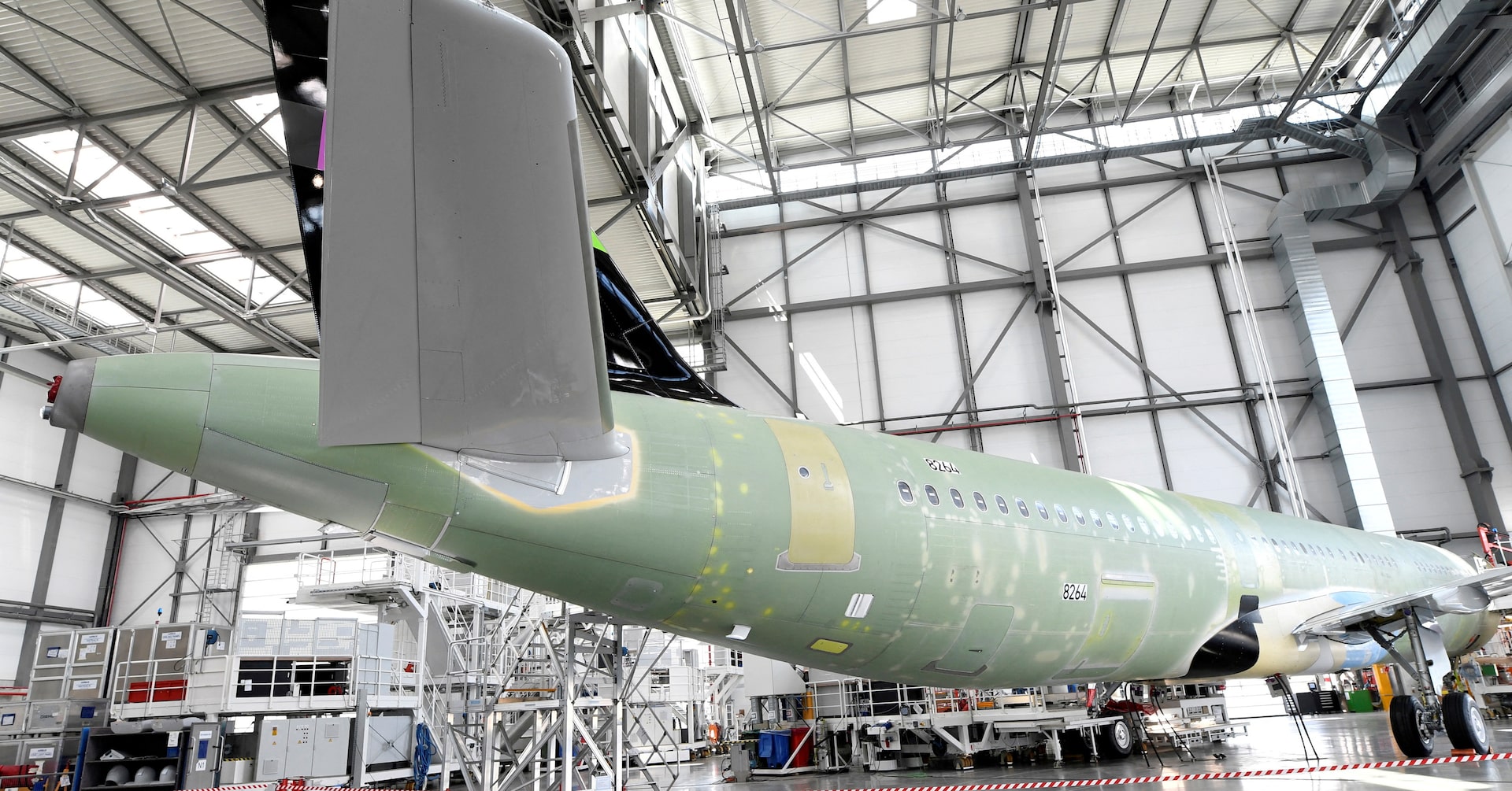
Boeing Reports Highest Deliveries Since 2018, Plans Production Increase for 2026
Written by Emily J. Thompson, Senior Investment Analyst
Updated: Jan 11 2026
0mins


Source: Newsfilter
- Delivery Recovery: Boeing delivered 528 aircraft in 2023 and is set to deliver 348 in 2024, marking the highest delivery numbers since 2018, indicating a gradual recovery in production capabilities after safety crises.
- Production Plan Update: Boeing plans to increase its 737 Max production capacity from 38 to 42 aircraft per month by early 2026, which will further enhance its competitive position in the market.
- Order Growth: As of November, Boeing secured 1,000 new orders, surpassing Airbus's 797, reflecting airline confidence in Boeing's products, particularly regarding the certification progress of the 737 Max 10.
- Strong Market Demand: Global air travel demand remains robust, with an 84% load factor in November, the highest on record, driving continued growth in aircraft orders for both Boeing and Airbus over the next decade.
Trade with 70% Backtested Accuracy
Stop guessing "Should I Buy BA?" and start using high-conviction signals backed by rigorous historical data.
Sign up today to access powerful investing tools and make smarter, data-driven decisions.
Analyst Views on BA
Wall Street analysts forecast BA stock price to rise
16 Analyst Rating
14 Buy
1 Hold
1 Sell
Strong Buy
Current: 229.740

Low
150.00
Averages
269.14
High
298.00
Current: 229.740
Low
150.00
Averages
269.14
High
298.00
About BA
The Boeing Company is an aerospace company. Its segments include Commercial Airplanes (BCA), Defense, Space & Security (BDS), and Global Services (BGS). Its BCA segment develops, produces and markets commercial jet aircraft principally for the commercial airline industry worldwide. Its family of commercial jet aircraft in production includes the 737 narrow-body model and the 767, 777 and 787 wide-body models. Its BDS segment is engaged in the research, development, production and modification of manned and unmanned military aircraft and weapons systems for strike, surveillance and mobility. Its BGS segment provides services to its commercial and defense customers worldwide. It sustains aerospace platforms and systems with a range of products and services, including supply chain and logistics management, engineering, maintenance and modifications, upgrades and conversions, spare parts, pilot and maintenance training systems and services, technical and maintenance documents, and others.
About the author

Emily J. Thompson
Emily J. Thompson, a Chartered Financial Analyst (CFA) with 12 years in investment research, graduated with honors from the Wharton School. Specializing in industrial and technology stocks, she provides in-depth analysis for Intellectia’s earnings and market brief reports.
U.S. Department of Defense's New Contracts Highlight Modernization Investments

- Navy Contract Award: Hornbeck Offshore Operators has been awarded a $291.7 million Navy contract for the operation and maintenance of four government-owned Transportation Auxiliary General Submarine Escort vessels, set to conclude on August 31, 2031, if all options are exercised, highlighting the Pentagon's ongoing investment in naval modernization.
- Boeing Contract Update: Boeing secured a $166.8 million Navy contract to provide engineering analysis and software maintenance for P-8A systems, with work expected to be completed by December 2030, reflecting a strong emphasis on enhancing naval software and hardware capabilities to address obsolescence issues.
- L3 Technologies Contract: L3 Harris Maritime Services and others received a combined $49 million contract for engine room control system maintenance on Military Sealift Command vessels, with a five-year ordering period, indicating a long-term commitment to naval vessel maintenance.
- Night Vision Device Development: L3 Technologies was awarded a $465 million Army contract for the development and testing of binocular night observation devices, expected to be completed by February 27, 2033, underscoring the Army's strategic investment in enhancing nighttime operational capabilities.
See More

UK Stock Market Resilience Amid Middle East Conflict

- Defensive Stock Advantage: The FTSE 100 index has shown relative resilience amid market volatility caused by Middle Eastern conflicts, benefiting from its defensive mix of pharmaceutical, utility, and consumer goods stocks, which enhances its ability to withstand uncertainty.
- Defense Sector Gains: Companies like BAE Systems, Babcock International, and Rolls-Royce, which are part of the defense contracting sector, are likely to benefit from the turmoil, positioning these constituents for growth during geopolitical tensions and reinforcing their market presence.
- Commodity Price Upside: Mining stocks such as Rio Tinto, Glencore, and Anglo American could see gains from rising commodity prices due to supply chain disruptions, particularly with gold prices potentially increasing, providing additional profit opportunities for investors.
- Energy Price Volatility Impact: As a net energy importer, the UK economy faces pressure from rising natural gas prices, especially after QatarEnergy suspended LNG production, leading to a more than 40% rise in UK natural gas futures, which could trigger renewed inflationary pressures.
See More

Trump's Ambiguous Objectives in Iran War


- Unclear War Objectives: Trump's military action against Iran has seen its objectives shift multiple times within 48 hours, ranging from preventing nuclear weapons to regime change, raising questions about U.S. strategic intentions and potentially affecting Congressional support for the war.
- Rising U.S. Casualties: With U.S. service member deaths climbing to six, opposition from Democrats has intensified, and some Republicans are beginning to question Trump's military strategy, which could lead to increased pressure on the administration in Congress.
- Divergent Cabinet Opinions: Trump's cabinet members have differing views on the nature and goals of the war, with the Defense Secretary stating it is not a
See More
Dubai Airport Flight Resumption Amid Conflict

- Flight Resumption: Following U.S. and Israeli strikes on Iran, most flights to and from Dubai were grounded, resulting in hundreds of cancellations and thousands stranded; however, Emirates and Etihad announced a limited number of repatriation flights, demonstrating their operational resilience amid conflict.
- Safety Concerns: On an Emirates flight from Mumbai to Dubai, the aircraft had to turn back due to missiles fired by Iran, although it eventually received clearance to land, highlighting the ongoing safety issues affecting air travel in the region.
- Passenger Sentiment: The flight was primarily filled with UAE residents and expatriates, many of whom had attempted to return via Saudi Arabia or Oman, illustrating a mix of eagerness to return home and anxiety over safety in the current geopolitical climate.
- Airport Conditions: Upon arrival, Dubai Airport was eerily quiet with a blank arrivals board, reflecting the significant impact of travel restrictions and safety concerns on airport operations, reminiscent of the emptiness experienced during the COVID-19 pandemic.
See More

Market Watch: Oil Price Surge and Corporate Developments


- Oil Price Surge: Global benchmark Brent crude prices have surged 8% to over $84 per barrel, reaching a new 52-week high, driven by fears of prolonged supply disruptions that could hinder global economic recovery.
- Apple Price Target Raised: Barclays raised its price target on Apple from $239 to $248, adjusting estimates based on expectations for the upcoming foldable and Pro models, although the market's muted response suggests a need to monitor its performance among megacaps.
- MongoDB Shares Plummet: MongoDB shares fell 27% after its flagship database product Atlas reported a slower-than-expected growth rate of 29% in Q4, coupled with disappointing revenue guidance for fiscal 2027, indicating increased competitive pressures.
- Target Shares Rise: Target's stock rose over 4% in premarket trading after the retailer reported better-than-expected earnings for the holiday quarter, with new CEO indicating positive year-over-year sales in February, marking a significant milestone in the company's growth trajectory.
See More

Could the U.S. Deplete Its Missile Supply? Lockheed Martin and Other Stocks Working to Avert This.


- Ongoing Conflict: The U.S. and Iran are currently engaged in a conflict characterized by numerous missile launches and interceptions.
- Defense Stocks Impact: Companies like Lockheed Martin, RTX, and Boeing are expected to see potential benefits from the increased military activity.
See More
U.S. Department of Defense's New Contracts Highlight Modernization Investments
- Navy Contract Award: Hornbeck Offshore Operators has been awarded a $291.7 million Navy contract for the operation and maintenance of four government-owned Transportation Auxiliary General Submarine Escort vessels, set to conclude on August 31, 2031, if all options are exercised, highlighting the Pentagon's ongoing investment in naval modernization.
- Boeing Contract Update: Boeing secured a $166.8 million Navy contract to provide engineering analysis and software maintenance for P-8A systems, with work expected to be completed by December 2030, reflecting a strong emphasis on enhancing naval software and hardware capabilities to address obsolescence issues.
- L3 Technologies Contract: L3 Harris Maritime Services and others received a combined $49 million contract for engine room control system maintenance on Military Sealift Command vessels, with a five-year ordering period, indicating a long-term commitment to naval vessel maintenance.
- Night Vision Device Development: L3 Technologies was awarded a $465 million Army contract for the development and testing of binocular night observation devices, expected to be completed by February 27, 2033, underscoring the Army's strategic investment in enhancing nighttime operational capabilities.
See More
UK Stock Market Resilience Amid Middle East Conflict
- Defensive Stock Advantage: The FTSE 100 index has shown relative resilience amid market volatility caused by Middle Eastern conflicts, benefiting from its defensive mix of pharmaceutical, utility, and consumer goods stocks, which enhances its ability to withstand uncertainty.
- Defense Sector Gains: Companies like BAE Systems, Babcock International, and Rolls-Royce, which are part of the defense contracting sector, are likely to benefit from the turmoil, positioning these constituents for growth during geopolitical tensions and reinforcing their market presence.
- Commodity Price Upside: Mining stocks such as Rio Tinto, Glencore, and Anglo American could see gains from rising commodity prices due to supply chain disruptions, particularly with gold prices potentially increasing, providing additional profit opportunities for investors.
- Energy Price Volatility Impact: As a net energy importer, the UK economy faces pressure from rising natural gas prices, especially after QatarEnergy suspended LNG production, leading to a more than 40% rise in UK natural gas futures, which could trigger renewed inflationary pressures.
See More
Trump's Ambiguous Objectives in Iran War
- Unclear War Objectives: Trump's military action against Iran has seen its objectives shift multiple times within 48 hours, ranging from preventing nuclear weapons to regime change, raising questions about U.S. strategic intentions and potentially affecting Congressional support for the war.
- Rising U.S. Casualties: With U.S. service member deaths climbing to six, opposition from Democrats has intensified, and some Republicans are beginning to question Trump's military strategy, which could lead to increased pressure on the administration in Congress.
- Divergent Cabinet Opinions: Trump's cabinet members have differing views on the nature and goals of the war, with the Defense Secretary stating it is not a
See More
Dubai Airport Flight Resumption Amid Conflict
- Flight Resumption: Following U.S. and Israeli strikes on Iran, most flights to and from Dubai were grounded, resulting in hundreds of cancellations and thousands stranded; however, Emirates and Etihad announced a limited number of repatriation flights, demonstrating their operational resilience amid conflict.
- Safety Concerns: On an Emirates flight from Mumbai to Dubai, the aircraft had to turn back due to missiles fired by Iran, although it eventually received clearance to land, highlighting the ongoing safety issues affecting air travel in the region.
- Passenger Sentiment: The flight was primarily filled with UAE residents and expatriates, many of whom had attempted to return via Saudi Arabia or Oman, illustrating a mix of eagerness to return home and anxiety over safety in the current geopolitical climate.
- Airport Conditions: Upon arrival, Dubai Airport was eerily quiet with a blank arrivals board, reflecting the significant impact of travel restrictions and safety concerns on airport operations, reminiscent of the emptiness experienced during the COVID-19 pandemic.
See More
Market Watch: Oil Price Surge and Corporate Developments
- Oil Price Surge: Global benchmark Brent crude prices have surged 8% to over $84 per barrel, reaching a new 52-week high, driven by fears of prolonged supply disruptions that could hinder global economic recovery.
- Apple Price Target Raised: Barclays raised its price target on Apple from $239 to $248, adjusting estimates based on expectations for the upcoming foldable and Pro models, although the market's muted response suggests a need to monitor its performance among megacaps.
- MongoDB Shares Plummet: MongoDB shares fell 27% after its flagship database product Atlas reported a slower-than-expected growth rate of 29% in Q4, coupled with disappointing revenue guidance for fiscal 2027, indicating increased competitive pressures.
- Target Shares Rise: Target's stock rose over 4% in premarket trading after the retailer reported better-than-expected earnings for the holiday quarter, with new CEO indicating positive year-over-year sales in February, marking a significant milestone in the company's growth trajectory.
See More
Could the U.S. Deplete Its Missile Supply? Lockheed Martin and Other Stocks Working to Avert This.
- Ongoing Conflict: The U.S. and Iran are currently engaged in a conflict characterized by numerous missile launches and interceptions.
- Defense Stocks Impact: Companies like Lockheed Martin, RTX, and Boeing are expected to see potential benefits from the increased military activity.
See More