Bank of America Raises Global Memory Chip Market Outlook
Written by Emily J. Thompson, Senior Investment Analyst
Updated: Mar 14 2026
0mins
Source: Yahoo Finance
- Market Outlook Upgrade: Bank of America has raised its outlook for the global memory chip market, asserting that the ongoing Middle East conflict is unlikely to disrupt semiconductor production, reflecting confidence in market stability.
- Sufficient Inventory: Memory chipmakers currently hold approximately four to six months of key material inventory, which reduces the risk of near-term shortages and indicates the industry's capability to manage potential crises.
- Diversified Supply Chain: Companies are diversifying supply sources by increasing orders from producers in the United States and Japan to offset potential disruptions in the Middle East, further enhancing market resilience.
- Price and Revenue Forecasts Raised: Bank of America expects memory chip prices and industry revenue to rise due to strong contract pricing trends and growing demand from artificial intelligence infrastructure, indicating stronger revenue growth for the global memory market in 2026.
Trade with 70% Backtested Accuracy
Stop guessing "Should I Buy BAC?" and start using high-conviction signals backed by rigorous historical data.
Sign up today to access powerful investing tools and make smarter, data-driven decisions.
Analyst Views on BAC
Wall Street analysts forecast BAC stock price to rise
19 Analyst Rating
15 Buy
4 Hold
0 Sell
Strong Buy
Current: 51.490

Low
55.00
Averages
61.64
High
71.00
Current: 51.490
Low
55.00
Averages
61.64
High
71.00
About BAC
Bank of America Corporation is a bank holding company and a financial holding company. Its segments include Consumer Banking, Global Wealth & Investment Management (GWIM), Global Banking and Global Markets. Consumer Banking segment offers a range of credit, banking and investment products and services to consumers and small businesses. The GWIM includes two businesses: Merrill Wealth Management, which provides tailored solutions to meet clients' needs through a full set of investment management, brokerage, banking and retirement products and Bank of America Private Bank, which provides comprehensive wealth management solutions. Global Banking segment provides a range of lending-related products and services, integrated working capital management and treasury solutions, and underwriting and advisory services. Global Markets segment offers sales and trading services and research services to institutional clients across fixed-income, credit, currency, commodity, and equity businesses.
About the author

Emily J. Thompson
Emily J. Thompson, a Chartered Financial Analyst (CFA) with 12 years in investment research, graduated with honors from the Wharton School. Specializing in industrial and technology stocks, she provides in-depth analysis for Intellectia’s earnings and market brief reports.

SpaceX and OpenAI IPOs May Trigger Bubble Concerns
- Rising Market Concentration: Bank of America's Michael Hartnett estimates that the IPOs of SpaceX and OpenAI could push US market concentration from 40% to 48%, surpassing historical peaks, indicating heightened investor interest in the AI sector.
- Inflation Risks Intensifying: The Consumer Price Index (CPI) rose 3.8% in April, nearing the 4% threshold flagged by BofA, with historical data showing that when CPI exceeds 4%, the S&P 500 typically experiences an average loss of about 4% over the next three months, raising concerns about future growth.
- Bond Yield Pressure: The 30-year Treasury yield is approaching the 5% mark, a level that has historically pressured stocks, suggesting that investor expectations for future growth are being impacted by the rising interest rate environment, potentially affecting IPO market performance.
- IPO Performance Uncertainty: While a strong debut for SpaceX or OpenAI could extend the AI trade, if inflation continues to rise and yields keep climbing, the market may begin to question the value of future growth, complicating the potential success of these IPOs.
See More
Multiple Factors Impact Long-Term Borrowing Costs
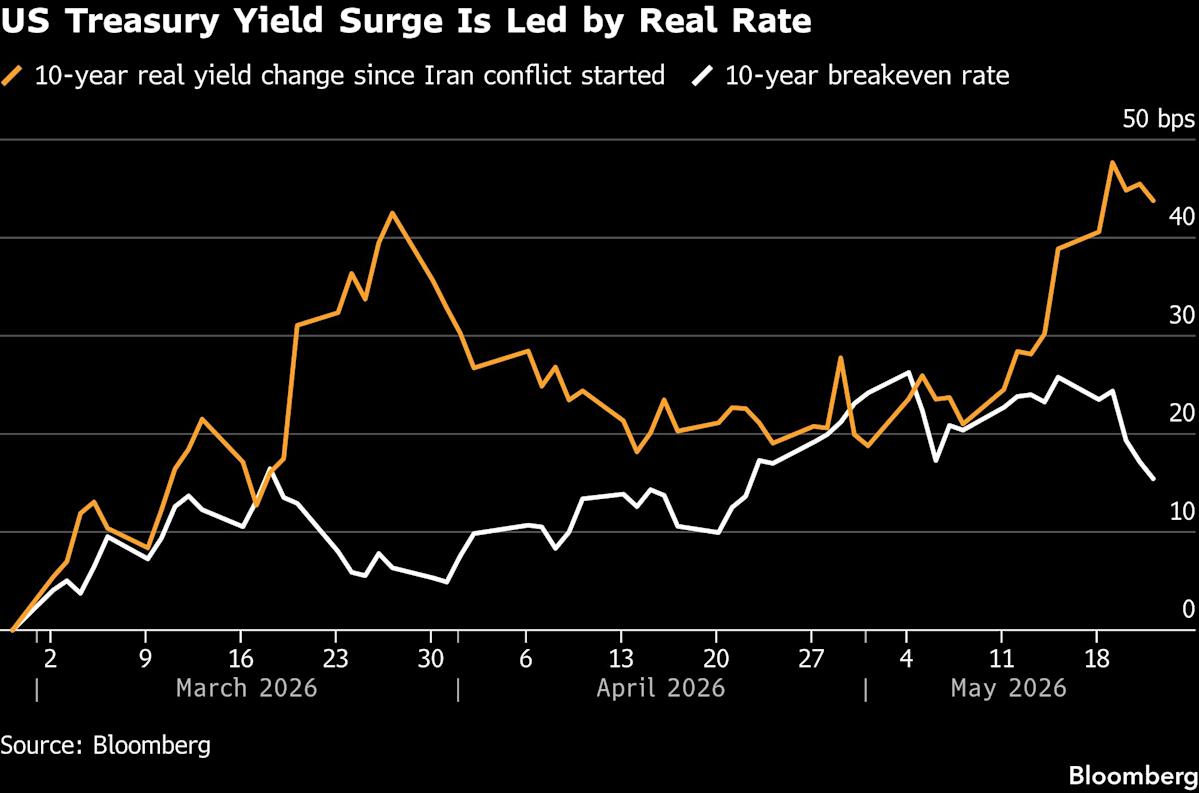
- Rising Debt Burden: The ongoing increase in U.S. public debt is expected to swell further, raising concerns about long-term borrowing costs and impacting government financing capabilities and economic growth.
- Interest Rate Hike Expectations: Anticipation of potential interest rate hikes by the Federal Reserve has weakened demand for long-term bonds, resulting in rising yields that reflect investor caution regarding future economic conditions.
- AI Investment Impact: While the AI investment boom may enhance productivity in the long run, it exacerbates inflationary pressures in the short term, leading bond markets to demand higher returns on long-term debt, thereby affecting capital allocation.
- Global Economic Shifts: The balance between global saving and investment is reversing, resulting in rising interest rates and a more pessimistic outlook on future borrowing costs, which could influence fiscal policies and economic recovery across nations.
See More
Wall Street Banks Increase Credit Derivative Trading with Hyperscalers


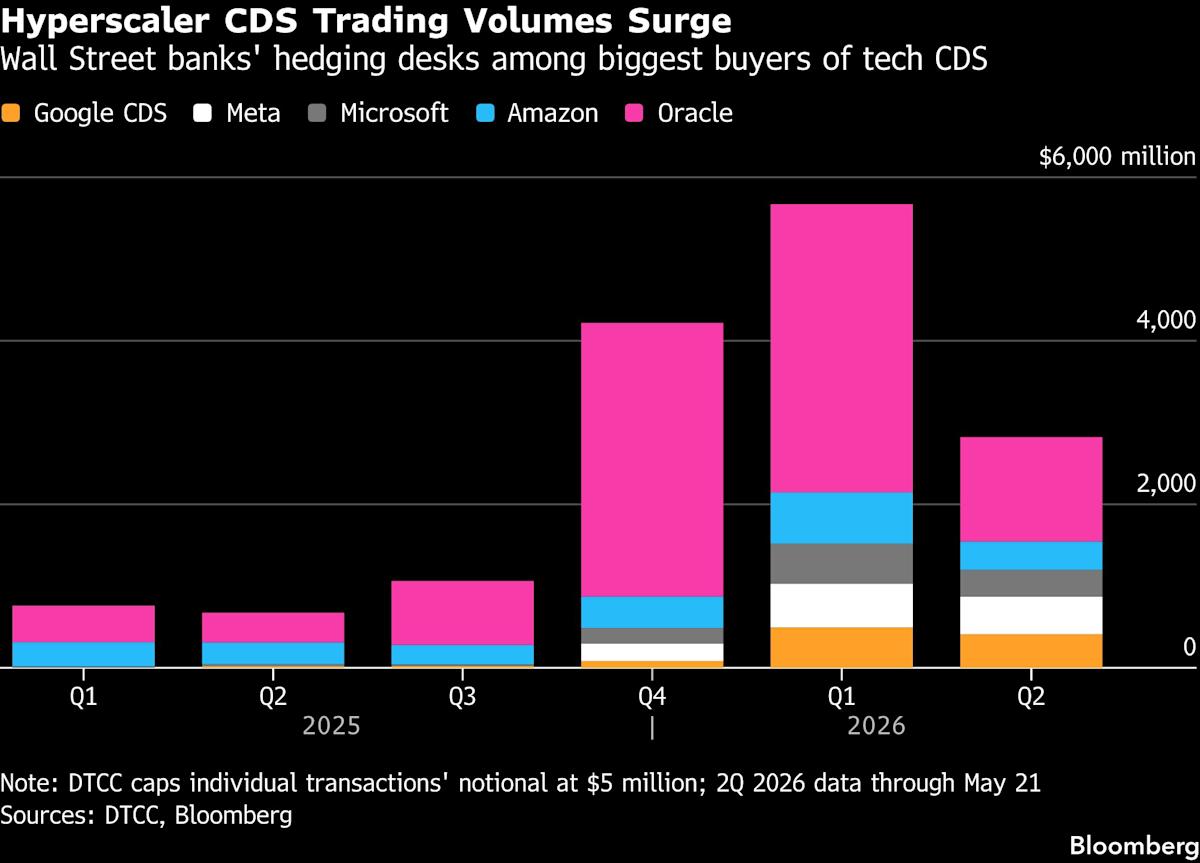
- Surge in Derivative Demand: As hyperscalers like Meta and Alphabet raise over $250 billion for AI, Wall Street banks are experiencing a significant increase in credit derivative trading volumes, driving market activity and rising trading costs.
- Hedging Needs Rise: Banks are purchasing credit derivatives to mitigate risk exposure to single companies, allowing them to increase lending and derivative trading without breaching credit limits, thereby enhancing overall profitability.
- Hedge Fund Profit Opportunities: With credit derivatives for hyperscalers priced unusually high relative to their credit ratings, Andrew Weinberg of Saba Capital Management notes that now is an optimal time to sell high-rated credit default swaps, anticipating substantial returns.
- Market Structure Shift: As borrowing demands from hyperscalers continue to rise, banks' credit valuation adjustment (CVA) desks are actively engaging in trades, leading to record growth in CDS trading volumes, reflecting a dual demand for confidence and risk management in the market.
See More

U.S. Consumers Face Record Inflation Pressure Ahead of Memorial Day


- Rising Inflation Rate: According to federal data, the consumer inflation rate rose 3.8% year-over-year in April, marking the highest level since 2023, with sharp increases in travel, recreation, and food prices draining American wallets as they approach the holiday weekend.
- Food Price Surge: Due to rising cattle and fertilizer costs, prices for hot dogs, ground beef, and tomatoes have increased by 16%, 11%, and nearly 40%, respectively, significantly raising the cost of summer barbecues and further straining household budgets.
- Increased Travel Costs: An estimated 45 million Americans are expected to travel, facing gasoline prices that soared over 28% year-over-year, creating additional financial challenges during the holiday period, particularly during the traditional driving peak.
- Entertainment Spending Pressure: Ticket prices for movies, concerts, and sporting events have risen by 5.5% year-over-year, while sporting goods prices increased by 4.3%, indicating that even those opting for staycations will still feel the impact of inflation.
See More
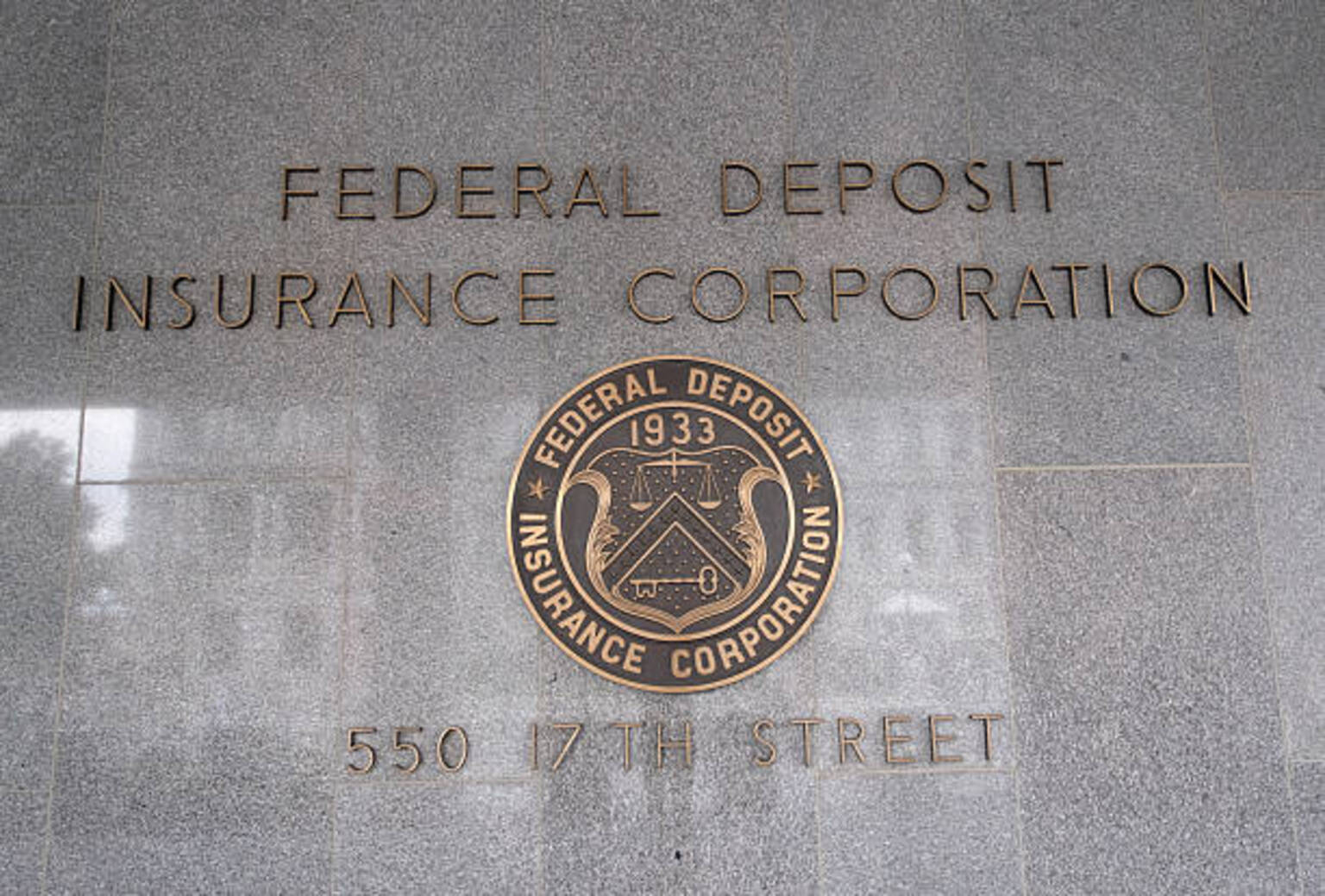
Federal Reserve Confirms Compliance of Major Banks' Resolution Plans
- Resolution Plan Compliance: The Federal Reserve and FDIC confirmed that the resolution plans submitted by major banks, including JPMorgan Chase, Bank of America, Citigroup, and Wells Fargo in July 2025, show no 'shortcomings or deficiencies,' indicating enhanced resilience in managing potential financial crises.
- Addressing Derivatives Risks: The Fed noted that weaknesses related to derivatives in the plans from Bank of America, Goldman Sachs, and JPMorgan Chase have been satisfactorily addressed, reflecting ongoing improvements in risk management that could bolster market confidence.
- Regulatory Feedback Mechanism: The Fed and FDIC issued feedback letters to Bank of New York Mellon, Goldman Sachs, and Morgan Stanley regarding their resolution plans, highlighting the importance of compliance and risk management capabilities, which may influence market performance and investor sentiment towards these banks.
- Future Outlook: With the confirmation of compliance in resolution plans, these banks are expected to operate more robustly in capital management and risk mitigation, thereby laying a solid foundation for long-term growth and enhancing investor confidence in their stocks.
See More

Generation Z's New Financial Management Trends
- Increased Financial Responsibility: 81% of Generation Z (ages 18-29) consider it important to be perceived as financially responsible, indicating a significant rise in their focus on financial management and reflecting their pursuit of social acceptance.
- Decreased Family Support: 34% of Generation Z report relying on family financial support, down from 46% in 2024, suggesting progress in their economic independence, which may influence family consumption patterns.
- Cost of Living Adjustments: Nearly 70% of Generation Z have taken measures in the past year to cope with rising living costs, including reducing dining out (40%) and taking on side jobs (16%), indicating their adaptability to financial pressures to achieve their goals.
- Changing Consumption Psychology: 92% of Generation Z occasionally indulge in luxuries, yet 41% feel financial guilt at least once a week, highlighting the internal conflict between enjoying life and maintaining financial responsibility.
See More
SpaceX and OpenAI IPOs May Trigger Bubble Concerns
- Rising Market Concentration: Bank of America's Michael Hartnett estimates that the IPOs of SpaceX and OpenAI could push US market concentration from 40% to 48%, surpassing historical peaks, indicating heightened investor interest in the AI sector.
- Inflation Risks Intensifying: The Consumer Price Index (CPI) rose 3.8% in April, nearing the 4% threshold flagged by BofA, with historical data showing that when CPI exceeds 4%, the S&P 500 typically experiences an average loss of about 4% over the next three months, raising concerns about future growth.
- Bond Yield Pressure: The 30-year Treasury yield is approaching the 5% mark, a level that has historically pressured stocks, suggesting that investor expectations for future growth are being impacted by the rising interest rate environment, potentially affecting IPO market performance.
- IPO Performance Uncertainty: While a strong debut for SpaceX or OpenAI could extend the AI trade, if inflation continues to rise and yields keep climbing, the market may begin to question the value of future growth, complicating the potential success of these IPOs.
See More
Multiple Factors Impact Long-Term Borrowing Costs
- Rising Debt Burden: The ongoing increase in U.S. public debt is expected to swell further, raising concerns about long-term borrowing costs and impacting government financing capabilities and economic growth.
- Interest Rate Hike Expectations: Anticipation of potential interest rate hikes by the Federal Reserve has weakened demand for long-term bonds, resulting in rising yields that reflect investor caution regarding future economic conditions.
- AI Investment Impact: While the AI investment boom may enhance productivity in the long run, it exacerbates inflationary pressures in the short term, leading bond markets to demand higher returns on long-term debt, thereby affecting capital allocation.
- Global Economic Shifts: The balance between global saving and investment is reversing, resulting in rising interest rates and a more pessimistic outlook on future borrowing costs, which could influence fiscal policies and economic recovery across nations.
See More
Wall Street Banks Increase Credit Derivative Trading with Hyperscalers
- Surge in Derivative Demand: As hyperscalers like Meta and Alphabet raise over $250 billion for AI, Wall Street banks are experiencing a significant increase in credit derivative trading volumes, driving market activity and rising trading costs.
- Hedging Needs Rise: Banks are purchasing credit derivatives to mitigate risk exposure to single companies, allowing them to increase lending and derivative trading without breaching credit limits, thereby enhancing overall profitability.
- Hedge Fund Profit Opportunities: With credit derivatives for hyperscalers priced unusually high relative to their credit ratings, Andrew Weinberg of Saba Capital Management notes that now is an optimal time to sell high-rated credit default swaps, anticipating substantial returns.
- Market Structure Shift: As borrowing demands from hyperscalers continue to rise, banks' credit valuation adjustment (CVA) desks are actively engaging in trades, leading to record growth in CDS trading volumes, reflecting a dual demand for confidence and risk management in the market.
See More
U.S. Consumers Face Record Inflation Pressure Ahead of Memorial Day
- Rising Inflation Rate: According to federal data, the consumer inflation rate rose 3.8% year-over-year in April, marking the highest level since 2023, with sharp increases in travel, recreation, and food prices draining American wallets as they approach the holiday weekend.
- Food Price Surge: Due to rising cattle and fertilizer costs, prices for hot dogs, ground beef, and tomatoes have increased by 16%, 11%, and nearly 40%, respectively, significantly raising the cost of summer barbecues and further straining household budgets.
- Increased Travel Costs: An estimated 45 million Americans are expected to travel, facing gasoline prices that soared over 28% year-over-year, creating additional financial challenges during the holiday period, particularly during the traditional driving peak.
- Entertainment Spending Pressure: Ticket prices for movies, concerts, and sporting events have risen by 5.5% year-over-year, while sporting goods prices increased by 4.3%, indicating that even those opting for staycations will still feel the impact of inflation.
See More
Federal Reserve Confirms Compliance of Major Banks' Resolution Plans
- Resolution Plan Compliance: The Federal Reserve and FDIC confirmed that the resolution plans submitted by major banks, including JPMorgan Chase, Bank of America, Citigroup, and Wells Fargo in July 2025, show no 'shortcomings or deficiencies,' indicating enhanced resilience in managing potential financial crises.
- Addressing Derivatives Risks: The Fed noted that weaknesses related to derivatives in the plans from Bank of America, Goldman Sachs, and JPMorgan Chase have been satisfactorily addressed, reflecting ongoing improvements in risk management that could bolster market confidence.
- Regulatory Feedback Mechanism: The Fed and FDIC issued feedback letters to Bank of New York Mellon, Goldman Sachs, and Morgan Stanley regarding their resolution plans, highlighting the importance of compliance and risk management capabilities, which may influence market performance and investor sentiment towards these banks.
- Future Outlook: With the confirmation of compliance in resolution plans, these banks are expected to operate more robustly in capital management and risk mitigation, thereby laying a solid foundation for long-term growth and enhancing investor confidence in their stocks.
See More
Generation Z's New Financial Management Trends
- Increased Financial Responsibility: 81% of Generation Z (ages 18-29) consider it important to be perceived as financially responsible, indicating a significant rise in their focus on financial management and reflecting their pursuit of social acceptance.
- Decreased Family Support: 34% of Generation Z report relying on family financial support, down from 46% in 2024, suggesting progress in their economic independence, which may influence family consumption patterns.
- Cost of Living Adjustments: Nearly 70% of Generation Z have taken measures in the past year to cope with rising living costs, including reducing dining out (40%) and taking on side jobs (16%), indicating their adaptability to financial pressures to achieve their goals.
- Changing Consumption Psychology: 92% of Generation Z occasionally indulge in luxuries, yet 41% feel financial guilt at least once a week, highlighting the internal conflict between enjoying life and maintaining financial responsibility.
See More