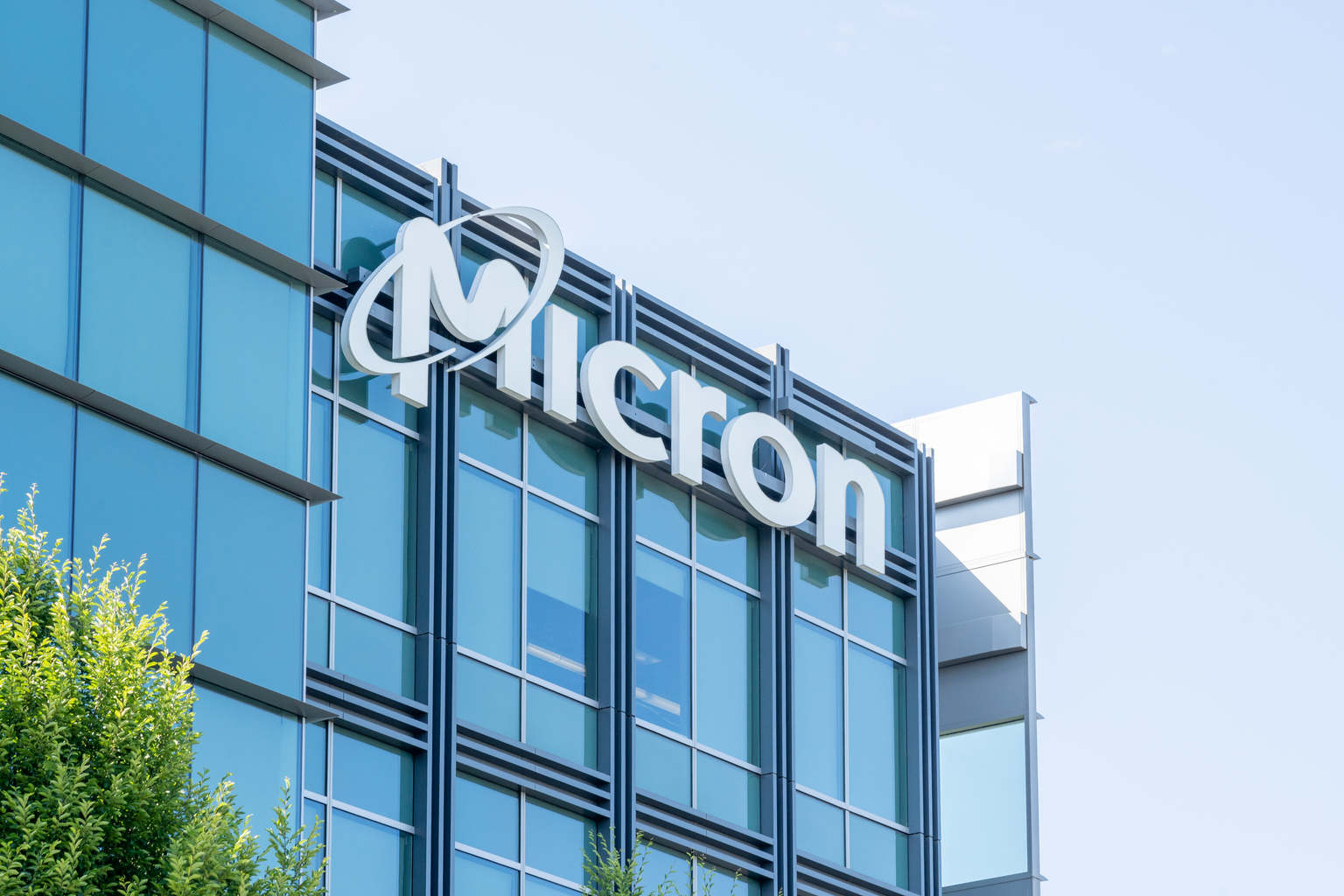
ASML says it may not achieve 2026 growth as chipmakers face US tariff uncertainty
Written by Emily J. Thompson, Senior Investment Analyst
Updated: Jul 16 2025
0mins

Should l Buy NVDA?
Source: Reuters
ASML's Growth Concerns: ASML, the leading supplier of chip-making equipment, has expressed uncertainty about achieving growth in 2026 due to potential U.S. tariffs impacting chipmakers' investments, leading to a significant drop in its shares.
Strong Demand Amidst Uncertainty: Despite tariff-related concerns, ASML reported strong net bookings of €5.54 billion, driven by demand from AI-related chipmakers and elevated sales in China, indicating solid market interest in their advanced lithography machines.
Trade with 70% Backtested Accuracy
Stop guessing "Should I Buy NVDA?" and start using high-conviction signals backed by rigorous historical data.
Sign up today to access powerful investing tools and make smarter, data-driven decisions.
Analyst Views on NVDA
Wall Street analysts forecast NVDA stock price to rise
41 Analyst Rating
39 Buy
1 Hold
1 Sell
Strong Buy
Current: 175.750

Low
200.00
Averages
264.97
High
352.00
Current: 175.750
Low
200.00
Averages
264.97
High
352.00
About NVDA
NVIDIA Corporation is an artificial intelligence (AI) infrastructure company. The Company is engaged in accelerated computing to help solve the challenging computational problems. Its segments include Compute & Networking and Graphics. The Compute & Networking segment includes its Data Center accelerated computing and networking platforms and AI solutions and software, and automotive platforms and autonomous and electric vehicle solutions, including software. The Graphics segment includes GeForce GPUs for gaming and personal computers (PCs), and Quadro/NVIDIA RTX GPUs for enterprise workstation graphics. Its technology stack includes the foundational NVIDIA CUDA development platform that runs on all NVIDIA GPUs, as well as hundreds of domain-specific software libraries, frameworks, algorithms, software development kits (SDKs), and application programming interfaces (APIs). Its platforms address four markets, which include Data Center, Gaming, Professional Visualization, and Automotive.
About the author

Emily J. Thompson
Emily J. Thompson, a Chartered Financial Analyst (CFA) with 12 years in investment research, graduated with honors from the Wharton School. Specializing in industrial and technology stocks, she provides in-depth analysis for Intellectia’s earnings and market brief reports.

Nvidia Anticipates Massive Growth in Data Center Spending

- Data Center Spending Forecast: Nvidia anticipates that global data center capital expenditures will reach $3 trillion to $4 trillion by 2030, indicating strong demand for AI technology and significant market potential that could drive substantial revenue growth for the company.
- Capital Expenditure Trends: By 2026, the big four hyperscalers are expected to spend $650 billion, excluding expenditures from China and other major AI players, highlighting the increasing reliance on Nvidia's products in the market.
- Industry Growth Rate: Nvidia projects a 48% compound annual growth rate (CAGR) for the industry, and if this rate continues through 2030, the company's revenue could reach $1.53 trillion, significantly surpassing the $216 billion generated in the past 12 months, showcasing its potential market leadership.
- Investor Confidence: While Nvidia is considered a top stock pick, it was not included in the Motley Fool's current list of best investment stocks, reflecting differing market perceptions about its future performance, prompting investors to carefully assess risks and opportunities.
See More

Analysis of Vanguard S&P 500 ETF Investment Value
- Low Expense Ratio Advantage: The Vanguard S&P 500 ETF charges an ultra-low expense ratio of just 0.03%, allowing investors to gain exposure to 500 of America's largest companies at minimal cost, thereby achieving higher net returns over the long term.
- Long-Term Performance: Over the past decade, this ETF has generated a total return of 274%, translating to an annualized gain of 14%, demonstrating strong performance in volatile markets and attracting investors optimistic about the American economy.
- Tech Sector Dominance: The information technology sector accounts for 32.4% of the ETF's portfolio, with Nvidia, Apple, and Microsoft making up 19% combined, reflecting investor confidence in the future of artificial intelligence and its significance in the market.
- Market Volatility Strategy: Despite heightened market volatility, the Vanguard S&P 500 ETF is still viewed as an ideal long-term investment choice, as it is expected to provide stable returns for investors over the next five years and beyond.
See More
Intensifying Competition Among AI Infrastructure Giants

- Nvidia's Market Dominance: Nvidia has achieved a 90% market share in GPUs, with parabolic revenue growth over the past few years, showcasing its strong leadership in the AI infrastructure sector and indicating it will continue to lead the market in the future.
- Acquisition Strategy: By acquiring companies like Groq and SchedMD, Nvidia has enhanced its AI inference solutions, further solidifying its position within the CUDA ecosystem and ensuring its technology remains forward-thinking.
- Key Role of TSMC: As a primary supplier for AI chip manufacturing, TSMC has nearly monopolized the production of advanced chips due to its scale and technological expertise, ensuring high yields and low defect rates, thus becoming the
See More

Nvidia and TSMC's Competitive Edge in AI Sector
- Market Dominance: Nvidia has achieved parabolic revenue growth over the past few years, capturing a 90% market share in the GPU space, which positions it as a leader in AI infrastructure and will continue to benefit from the widespread adoption of AI technologies.
- Strategic Acquisitions: Nvidia has bolstered its competitive edge in AI inference solutions through acquisitions of companies like Groq and SchedMD, integrating critical software elements into its CUDA ecosystem, thereby further solidifying its market position.
- TSMC's Unique Position: As a key player in the AI value chain, TSMC has nearly monopolized the manufacturing of advanced chips due to its scale and technological expertise, ensuring high yields and low defect rates, effectively becoming the
See More

Investment Strategies Amid Market Decline

- Market Status: As of now, the S&P 500 is down nearly 6% from its peak and the Nasdaq Composite has fallen about 9%, indicating a need for investors to be cautious despite not being in a market crash.
- Avoid Panic Selling: Selling investments during a market downturn can lead to greater losses, as history shows that markets can rebound quickly, making it wise to hold onto investments.
- Importance of Long-Term Investing: Analysis from Bespoke Investment Group indicates that since 1929, the average bear market for the S&P 500 lasts about nine months, while bull markets last nearly three years, suggesting that long-term holding can effectively mitigate market volatility.
- Invest in High-Quality Stocks: Focusing on financially sound companies with competitive advantages can enhance a portfolio's resilience during economic downturns, ensuring positive long-term returns.
See More
AI Infrastructure Giants Compete for Dominance
- Nvidia's Market Dominance: Nvidia has achieved approximately 90% market share in GPUs over the past few years, leveraging its forward-thinking strategy and successful deployment of the CUDA platform to drive rapid advancements in the AI revolution, thereby solidifying its leadership in AI infrastructure.
- TSMC's Critical Role: As a key player in the AI value chain, TSMC has nearly monopolized the production of GPUs and AI ASICs due to its advanced chip manufacturing capabilities, ensuring high yields and low defect rates, making it the preferred partner for chip designers.
- Shifting Market Dynamics: While Nvidia excels in the AI space, customers are beginning to seek cheaper alternatives, which may lead to a gradual erosion of its market share, whereas TSMC benefits from the diversification of market power, enhancing its bargaining position.
- Long-Term Investment Outlook: With a significant increase in demand for data center CPUs anticipated in the coming years, TSMC is poised for substantial growth, and its smaller company size combined with changing market dynamics positions its stock for better long-term performance.
See More
Nvidia Anticipates Massive Growth in Data Center Spending
- Data Center Spending Forecast: Nvidia anticipates that global data center capital expenditures will reach $3 trillion to $4 trillion by 2030, indicating strong demand for AI technology and significant market potential that could drive substantial revenue growth for the company.
- Capital Expenditure Trends: By 2026, the big four hyperscalers are expected to spend $650 billion, excluding expenditures from China and other major AI players, highlighting the increasing reliance on Nvidia's products in the market.
- Industry Growth Rate: Nvidia projects a 48% compound annual growth rate (CAGR) for the industry, and if this rate continues through 2030, the company's revenue could reach $1.53 trillion, significantly surpassing the $216 billion generated in the past 12 months, showcasing its potential market leadership.
- Investor Confidence: While Nvidia is considered a top stock pick, it was not included in the Motley Fool's current list of best investment stocks, reflecting differing market perceptions about its future performance, prompting investors to carefully assess risks and opportunities.
See More
Analysis of Vanguard S&P 500 ETF Investment Value
- Low Expense Ratio Advantage: The Vanguard S&P 500 ETF charges an ultra-low expense ratio of just 0.03%, allowing investors to gain exposure to 500 of America's largest companies at minimal cost, thereby achieving higher net returns over the long term.
- Long-Term Performance: Over the past decade, this ETF has generated a total return of 274%, translating to an annualized gain of 14%, demonstrating strong performance in volatile markets and attracting investors optimistic about the American economy.
- Tech Sector Dominance: The information technology sector accounts for 32.4% of the ETF's portfolio, with Nvidia, Apple, and Microsoft making up 19% combined, reflecting investor confidence in the future of artificial intelligence and its significance in the market.
- Market Volatility Strategy: Despite heightened market volatility, the Vanguard S&P 500 ETF is still viewed as an ideal long-term investment choice, as it is expected to provide stable returns for investors over the next five years and beyond.
See More
Intensifying Competition Among AI Infrastructure Giants
- Nvidia's Market Dominance: Nvidia has achieved a 90% market share in GPUs, with parabolic revenue growth over the past few years, showcasing its strong leadership in the AI infrastructure sector and indicating it will continue to lead the market in the future.
- Acquisition Strategy: By acquiring companies like Groq and SchedMD, Nvidia has enhanced its AI inference solutions, further solidifying its position within the CUDA ecosystem and ensuring its technology remains forward-thinking.
- Key Role of TSMC: As a primary supplier for AI chip manufacturing, TSMC has nearly monopolized the production of advanced chips due to its scale and technological expertise, ensuring high yields and low defect rates, thus becoming the
See More
Nvidia and TSMC's Competitive Edge in AI Sector
- Market Dominance: Nvidia has achieved parabolic revenue growth over the past few years, capturing a 90% market share in the GPU space, which positions it as a leader in AI infrastructure and will continue to benefit from the widespread adoption of AI technologies.
- Strategic Acquisitions: Nvidia has bolstered its competitive edge in AI inference solutions through acquisitions of companies like Groq and SchedMD, integrating critical software elements into its CUDA ecosystem, thereby further solidifying its market position.
- TSMC's Unique Position: As a key player in the AI value chain, TSMC has nearly monopolized the manufacturing of advanced chips due to its scale and technological expertise, ensuring high yields and low defect rates, effectively becoming the
See More
Investment Strategies Amid Market Decline
- Market Status: As of now, the S&P 500 is down nearly 6% from its peak and the Nasdaq Composite has fallen about 9%, indicating a need for investors to be cautious despite not being in a market crash.
- Avoid Panic Selling: Selling investments during a market downturn can lead to greater losses, as history shows that markets can rebound quickly, making it wise to hold onto investments.
- Importance of Long-Term Investing: Analysis from Bespoke Investment Group indicates that since 1929, the average bear market for the S&P 500 lasts about nine months, while bull markets last nearly three years, suggesting that long-term holding can effectively mitigate market volatility.
- Invest in High-Quality Stocks: Focusing on financially sound companies with competitive advantages can enhance a portfolio's resilience during economic downturns, ensuring positive long-term returns.
See More
AI Infrastructure Giants Compete for Dominance
- Nvidia's Market Dominance: Nvidia has achieved approximately 90% market share in GPUs over the past few years, leveraging its forward-thinking strategy and successful deployment of the CUDA platform to drive rapid advancements in the AI revolution, thereby solidifying its leadership in AI infrastructure.
- TSMC's Critical Role: As a key player in the AI value chain, TSMC has nearly monopolized the production of GPUs and AI ASICs due to its advanced chip manufacturing capabilities, ensuring high yields and low defect rates, making it the preferred partner for chip designers.
- Shifting Market Dynamics: While Nvidia excels in the AI space, customers are beginning to seek cheaper alternatives, which may lead to a gradual erosion of its market share, whereas TSMC benefits from the diversification of market power, enhancing its bargaining position.
- Long-Term Investment Outlook: With a significant increase in demand for data center CPUs anticipated in the coming years, TSMC is poised for substantial growth, and its smaller company size combined with changing market dynamics positions its stock for better long-term performance.
See More