Arcus Overhauls Cancer Development Strategy After Trial Setback, Focuses on Kidney Medication
Discontinuation of STAR-221 Study: Arcus Biosciences has halted the Phase 3 STAR-221 study in collaboration with Gilead Sciences due to futility, as the combination treatment did not show improved overall survival compared to the standard therapy.
Impact on Stock Performance: Following the announcement, Arcus Biosciences' stock (RCUS) fell by 11.10%, reflecting investor concerns over the study's results and future prospects.
Focus on Casdatifan: Arcus will shift its research and development efforts towards casdatifan, a promising HIF-2α inhibitor, which has shown strong efficacy in late-line clear cell renal cell carcinoma patients.
Advancements in Oncology and I&I Pipelines: The company is also progressing with quemliclustat for pancreatic cancer and plans to introduce new oral small-molecule candidates targeting inflammatory conditions by 2026.
Trade with 70% Backtested Accuracy
Analyst Views on GILD

About GILD
About the author


Gilead Sciences Shares Snap Losing Streak

- Stock Recovery: Gilead Sciences (GILD) shares rose 0.56% to $133.64 on Thursday, breaking a six-session losing streak, although the stock has declined over 2% in the past month, indicating a potential short-term rebound.
- Analyst Ratings: Seeking Alpha's Quant Rating gives GILD a Hold rating of 3.11, with 22 out of 30 analysts rating it Buy or higher, yet analysts remain cautious about its future profitability, reflecting skepticism regarding new acquisitions.
- M&A Activity: Despite Gilead's $11 billion M&A spree in oncology and immunology, analyst Edmund Ingham highlights skepticism due to a lack of near-term revenue contributions and a poor historical performance, which may hinder investor confidence.
- Earnings Outlook: Ingham anticipates Gilead's Q1 earnings to be underwhelming with sluggish growth and minor IPR&D charges, although the company maintains a robust HIV franchise and a dividend yield exceeding 2%, which may support its stock price.

Stocks Decline on Iran News, ServiceNow and Tesla Drop

- Market Decline: Stocks fell sharply due to news related to Iran, with ServiceNow and Tesla experiencing significant drops, indicating the market's sensitivity to geopolitical risks.
- AI Stock Volatility: Despite the overall market downturn, Intel and Comfort Systems reported strong earnings in their AI-related segments, highlighting potential growth opportunities in the tech sector.
- Earnings Impact: The earnings reports from Intel and Comfort Systems drew investor attention, suggesting that despite a declining market, their performance in AI could provide new investment perspectives moving forward.
- Shifting Market Sentiment: As geopolitical tensions rise, investor sentiment has turned cautious, potentially leading to increased market volatility in the short term and affecting overall investment strategies.
IBM Shares Drop Amid Inflation and Geopolitical Concerns


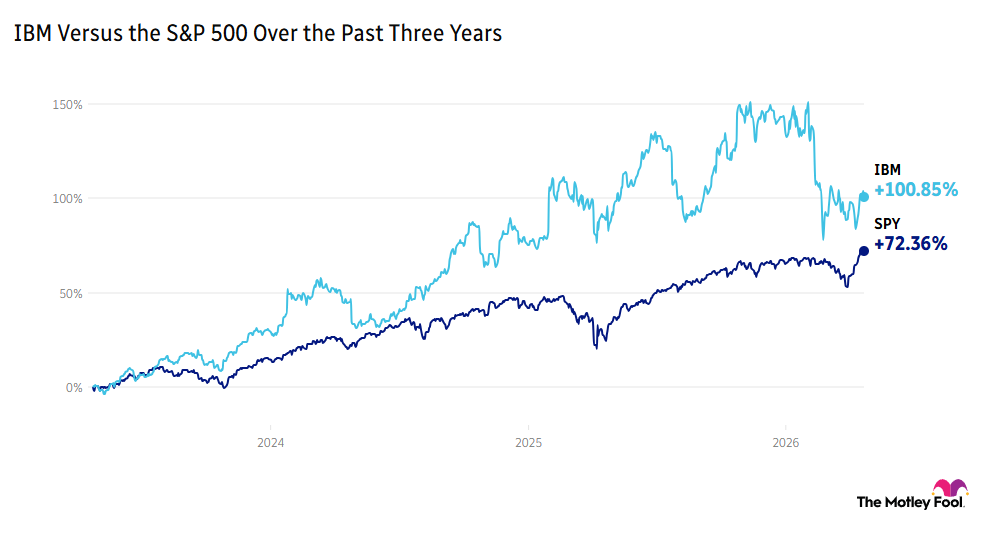
- Strong Earnings but Cautious Outlook: IBM's quarterly results exceeded revenue and earnings expectations; however, the stock fell over 7% pre-market due to cautious full-year guidance, with CEO Arvind Krishna attributing this to broader geopolitical uncertainties, indicating market concerns about future performance.
- Inflation's Impact on Client Spending: Krishna highlighted that inflation could lead to reduced consumer spending at clients like Walmart, indirectly affecting IBM's business activity, reflecting the potential threats economic conditions pose to tech companies.
- Dual Impact of AI Tools: IBM's consulting business faces threats from more sophisticated AI tools, although TMF's CIO Andy Cross noted that mainframes remain essential infrastructure for complex computing systems, suggesting that AI's impact on the industry is multifaceted.
- Long-term Performance vs. Market Comparison: While IBM has risen 85% over the past five years, outperforming the S&P 500's 70% increase, the stock is down 15% this year, including its worst single-day drop in over 25 years, indicating that advancements in AI may be fundamentally altering the investment case.

Eli Lilly to Acquire Kelonia Therapeutics for Up to $7 Billion

- Acquisition Scale: Eli Lilly announced its acquisition of biotech firm Kelonia Therapeutics for up to $7 billion, with $3.25 billion paid upfront and remaining payments contingent on clinical, regulatory, and commercial milestones, expected to close in the second half of 2026.
- Innovative Treatment Technology: Kelonia is developing in vivo CAR-T technology that reprograms patients' T-cells to attack cancer, offering a more convenient alternative to traditional ex vivo methods, potentially transforming treatment for blood cancers and solid tumors.
- Market Competitive Advantage: Lilly plans to leverage Kelonia's technology to expand into hematology, with Van Naarden emphasizing the appeal of a one-time infusion, which could attract more physicians and break the current limitations of treatments confined to academic medical centers.
- Strategic Transformation Direction: Alongside the Kelonia acquisition, Lilly is diversifying its business through multiple acquisitions, such as Centessa Pharmaceuticals and Orna Therapeutics, gradually shifting from being primarily known for GLP-1 drugs for weight loss to a comprehensive biopharmaceutical company covering more therapeutic areas.

Arcus Biosciences Halts Late-Stage Lung Cancer Trial

- Trial Termination Reason: Arcus Biosciences announced the discontinuation of the STAR-121 trial in collaboration with Gilead Sciences due to futility, indicating poor clinical prospects for the anti-TIGIT therapy domvanalimab, which may impact the company's future R&D direction.
- Clinical Trial Details: The STAR-121 trial evaluated domvanalimab combined with chemotherapy and the anti-PD-1 antibody zimberelimab as a first-line treatment for metastatic non-small cell lung cancer, but the Independent Data Monitoring Committee's recommendation led to its early termination, revealing insufficient efficacy of the therapy.
- Other Study Cessation: The company also announced the halt of the Phase 2 EDGE-Lung study, which assessed domvanalimab with various immunotherapies, further indicating significant challenges in its lung cancer research and potentially affecting its market competitiveness.
- Collaboration Rights Change: Arcus disclosed that effective July 14, 2026, Gilead will no longer hold option rights to certain early-stage pipeline projects due to the non-payment of option continuation fees, which may impact Arcus's cash flow and future collaboration opportunities.

Eli Lilly to Acquire Kelonia Therapeutics for Up to $7 Billion

- Acquisition Scale: Eli Lilly announced its agreement to acquire Kelonia Therapeutics for an upfront payment of $3.25 billion, with a total deal value of up to $7 billion, indicating a strategic move in the oncology sector.
- Technological Innovation: Kelonia is developing in vivo CAR-T technology that reprograms T-cells within patients' bodies to attack cancer, potentially simplifying existing cell therapy processes and enhancing treatment efficiency.
- Market Potential: Lilly's oncology head noted that Kelonia's data is 'nothing short of remarkable,' suggesting that this technology could play a significant role in blood cancer treatment, thereby strengthening Lilly's competitive position in the market.
- Future Outlook: The acquisition is expected to close in the second half of 2026, providing Lilly with an opportunity to expand its product line in hematology and further solidify its leadership in the biopharmaceutical industry.
Gilead Sciences Shares Snap Losing Streak
- Stock Recovery: Gilead Sciences (GILD) shares rose 0.56% to $133.64 on Thursday, breaking a six-session losing streak, although the stock has declined over 2% in the past month, indicating a potential short-term rebound.
- Analyst Ratings: Seeking Alpha's Quant Rating gives GILD a Hold rating of 3.11, with 22 out of 30 analysts rating it Buy or higher, yet analysts remain cautious about its future profitability, reflecting skepticism regarding new acquisitions.
- M&A Activity: Despite Gilead's $11 billion M&A spree in oncology and immunology, analyst Edmund Ingham highlights skepticism due to a lack of near-term revenue contributions and a poor historical performance, which may hinder investor confidence.
- Earnings Outlook: Ingham anticipates Gilead's Q1 earnings to be underwhelming with sluggish growth and minor IPR&D charges, although the company maintains a robust HIV franchise and a dividend yield exceeding 2%, which may support its stock price.
Stocks Decline on Iran News, ServiceNow and Tesla Drop
- Market Decline: Stocks fell sharply due to news related to Iran, with ServiceNow and Tesla experiencing significant drops, indicating the market's sensitivity to geopolitical risks.
- AI Stock Volatility: Despite the overall market downturn, Intel and Comfort Systems reported strong earnings in their AI-related segments, highlighting potential growth opportunities in the tech sector.
- Earnings Impact: The earnings reports from Intel and Comfort Systems drew investor attention, suggesting that despite a declining market, their performance in AI could provide new investment perspectives moving forward.
- Shifting Market Sentiment: As geopolitical tensions rise, investor sentiment has turned cautious, potentially leading to increased market volatility in the short term and affecting overall investment strategies.
IBM Shares Drop Amid Inflation and Geopolitical Concerns
- Strong Earnings but Cautious Outlook: IBM's quarterly results exceeded revenue and earnings expectations; however, the stock fell over 7% pre-market due to cautious full-year guidance, with CEO Arvind Krishna attributing this to broader geopolitical uncertainties, indicating market concerns about future performance.
- Inflation's Impact on Client Spending: Krishna highlighted that inflation could lead to reduced consumer spending at clients like Walmart, indirectly affecting IBM's business activity, reflecting the potential threats economic conditions pose to tech companies.
- Dual Impact of AI Tools: IBM's consulting business faces threats from more sophisticated AI tools, although TMF's CIO Andy Cross noted that mainframes remain essential infrastructure for complex computing systems, suggesting that AI's impact on the industry is multifaceted.
- Long-term Performance vs. Market Comparison: While IBM has risen 85% over the past five years, outperforming the S&P 500's 70% increase, the stock is down 15% this year, including its worst single-day drop in over 25 years, indicating that advancements in AI may be fundamentally altering the investment case.
Eli Lilly to Acquire Kelonia Therapeutics for Up to $7 Billion
- Acquisition Scale: Eli Lilly announced its acquisition of biotech firm Kelonia Therapeutics for up to $7 billion, with $3.25 billion paid upfront and remaining payments contingent on clinical, regulatory, and commercial milestones, expected to close in the second half of 2026.
- Innovative Treatment Technology: Kelonia is developing in vivo CAR-T technology that reprograms patients' T-cells to attack cancer, offering a more convenient alternative to traditional ex vivo methods, potentially transforming treatment for blood cancers and solid tumors.
- Market Competitive Advantage: Lilly plans to leverage Kelonia's technology to expand into hematology, with Van Naarden emphasizing the appeal of a one-time infusion, which could attract more physicians and break the current limitations of treatments confined to academic medical centers.
- Strategic Transformation Direction: Alongside the Kelonia acquisition, Lilly is diversifying its business through multiple acquisitions, such as Centessa Pharmaceuticals and Orna Therapeutics, gradually shifting from being primarily known for GLP-1 drugs for weight loss to a comprehensive biopharmaceutical company covering more therapeutic areas.
Arcus Biosciences Halts Late-Stage Lung Cancer Trial
- Trial Termination Reason: Arcus Biosciences announced the discontinuation of the STAR-121 trial in collaboration with Gilead Sciences due to futility, indicating poor clinical prospects for the anti-TIGIT therapy domvanalimab, which may impact the company's future R&D direction.
- Clinical Trial Details: The STAR-121 trial evaluated domvanalimab combined with chemotherapy and the anti-PD-1 antibody zimberelimab as a first-line treatment for metastatic non-small cell lung cancer, but the Independent Data Monitoring Committee's recommendation led to its early termination, revealing insufficient efficacy of the therapy.
- Other Study Cessation: The company also announced the halt of the Phase 2 EDGE-Lung study, which assessed domvanalimab with various immunotherapies, further indicating significant challenges in its lung cancer research and potentially affecting its market competitiveness.
- Collaboration Rights Change: Arcus disclosed that effective July 14, 2026, Gilead will no longer hold option rights to certain early-stage pipeline projects due to the non-payment of option continuation fees, which may impact Arcus's cash flow and future collaboration opportunities.
Eli Lilly to Acquire Kelonia Therapeutics for Up to $7 Billion
- Acquisition Scale: Eli Lilly announced its agreement to acquire Kelonia Therapeutics for an upfront payment of $3.25 billion, with a total deal value of up to $7 billion, indicating a strategic move in the oncology sector.
- Technological Innovation: Kelonia is developing in vivo CAR-T technology that reprograms T-cells within patients' bodies to attack cancer, potentially simplifying existing cell therapy processes and enhancing treatment efficiency.
- Market Potential: Lilly's oncology head noted that Kelonia's data is 'nothing short of remarkable,' suggesting that this technology could play a significant role in blood cancer treatment, thereby strengthening Lilly's competitive position in the market.
- Future Outlook: The acquisition is expected to close in the second half of 2026, providing Lilly with an opportunity to expand its product line in hematology and further solidify its leadership in the biopharmaceutical industry.